One-Player/Two-Homer Innings … A few Trivia Tidbits (and a list)

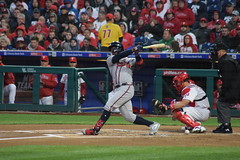
Yesterday (April 23, 2022), Red Sox’ rookie  LF (and cleanup hitter) Masataka  Yoshida became the 60th MLB player to connect for two home runs in a single inning.   He accomplished the feat in the eighth innings of the Red Sox’ 12-5 win over the Brewers in Milwaukee. He hit a solo home run to right on a 1-2 pitch from Matt Bush after DH Justin Turner led off the frame with a solo shot to left.  Yoshida came up again with two outs in the inning, facing Javy Guerra with the bases loaded. This time, he smacked a Grand Slam to right on an 0-2 pitch.  They were Yoshida’s second and third homers of the season.

Yoshida, by the way, was on Baseball Roundtable pre-/early-season watch list. For that post, noting key players to watch for each team, click here for the AL and here for the NL.

The Red Sox signed the Japanese outfielder  to a reportedly five-year $90 million deal last December. The 28-year-old is coming off a .335-21-88 season (119 games) in Japan and has shown a combination of power and plate discipline in Nippon Professional  Baseball.   In seven seasons there, Yoshida averaged .326, with 135 home runs.  Perhaps more important, he walked more times (427) than he struck out (307).   After his first seventeen games with the Red Sox, Yoshida’s  stat line is .231-3-15.

Side note:  Some recent articles have indicated only 58 players have hit two home runs in an inning.  Those lists do  not include early Players League and American Association players (those leagues were added to MLB records in a 1969 ruling). Also, this list may change as Negro Leagues records from 1920-48 are fully documented and incorporated into MLB records.

Now, more on two-homer innings, with a full list to follow.

Two Grand Slams in One Inning

Fernando Tatis – only player with two Grand Slams in one inning.

The most historic two-homer inning belongs to the Cardinals’ Fernando Tatis who, on April 23, 1999, not only hit two homers in an inning – but hit two grand slams in one inning.  It was the 11-run third inning of the Cardinals’ 12-5 win over the Dodgers in LA.  Equally surprising to BBRT is the fact that Dodgers’ starter Chan Ho Park was on the mound for both grand slams (the second finally drove Park from the game).  Park’s inning went like this:  single – hit batsman – single – home run – ground out, first base to pitcher – home run – walk – walk – fielder’s choice – error by first baseman – single – fly out to right field – home run – relieved by Carlos Perez, who got the final out of the inning on a foul pop up.

Teaming Up for a Two-Homer Inning

On May 2, 2002, Brett Boone and Mike Cameron became the only two teammates to hit two home runs in one inning in the same game – and they did it in the same inning (a ten-run first in a 15-4 win over the White Sox) and they did it back-to-back.

Two Times Two = A Record

Only five  players have achieved two home runs an inning twice in their careers:

  • Jeff King, Pirates (April 8, 1995 and April, 30, 1996);
  • Willie McCovey, Giants (April 12, 1973 and June 27, 1977);
  • Andre Dawson, Expos (June 30, 1978 and Sept. 24, 1985);
  • Alex Rodriguez, Yankees (September 5, 2007 and October 4, 2009).
  • Edwin Encarnacion, Blue Jays and Mariners (July 26, 2013 and April 8, 2019, respectively.

From Both Side Now

The Indians’ Carlos Baerga (August 8, 1993), the Cubs’ Mark Bellhorn (August 29, 2002) and the Angels’c Kendrys Morales (July 30, 2012) are the only players to homer from both sides of the plate in the same inning.

Two in One Frame … How About Two More?

The Braves’ (Boston) Bobby Lowe (May 30, 1894) and Mariners’ Mike Cameron (May 2, 2002) each achieved a two-homer inning in the midst of a record  four-homer game.

Team Totals

The Giants have had the most two-homer innings accomplished by individual players with seven.  The Yankees follow with six, the Red Sox and Expos/Nationals ranked third with five.  (All five Expos/Nationals two-homer player innings were accomplished in Expos’ uniforms.)  The Mets, White Sox, Royals, Diamondbacks and, surprisingly, high-altitude Rockies have never had a player with a two-home inning.

Lucky Seven

In 2002, a record seven MLB players produce a two-home inning.

Here is your two-homer inning list:

2023, April 23 …. Masataka Yoshida, Red Sox

2022, September 21 … Gleyber Torres, Yankees

2019, April 19 … Edwin Encarnacion, Mariners

2016, April 15 … Mark Trumbo, Orioles

2013, July 26 … Edwin Encarnacion, Blue Jays

2012, August 22 … Adrian Beltre, Rangers

2012, July 30 … Kendrys Morales, Angels

2011, Sept. 18 … Pablo Sandoval, Giants

2010, Sept. 23 … Juan Uribe, Giants

2009, October 4 … Alex Rodriguez, Yankees

2009, August 23 … Michael Cuddyer, Twins

2008, August 12 … David Ortiz, Red Sox

2008, June 21 … Jim Edmonds, Cubs

2007, Sept. 5 … Alex Rodriguez, Yankees

2007, August 12 …  Magglio Ordonez, Tigers

2007, May 7 … Benji Molina, Giants

2006, July 22 … Julio Lugo, Rays

2004, June 19 … Juan Rivera, Expos

2003, August 20 … Reggie Sanders, Pirates

2002, August 29 … Mark Bellhorn, Cubs

2002, August 9 … Aaron Boone, Reds

2002, July 26 … Carl Everett, Rangers

2002, July 23 … Nomar Garciaparra, Red Sox

2002, June 11 … Jared Sandberg, Rays

2002, May 2 … Mike Cameron, Mariners

2002, May 2 … Brett Boone, Mariners

2000, August 22 … Eric Karros, Dodgers

1999, April 23 … Fernando Tatis, Cardinals

1997, July 13 … Gary Sheffield, Marlins

1997, May 7 … Mike Lansing, Expos

1996, Sept. 22 … Mark McGwire, A’s

1996, May 17 … Dave Nilsson, Brewers

1996, May 16 … Sammy Sosa, Cubs

1996, April 30 … Jeff King, Pirates

1995, April 8 … Jeff King, Pirates

1994, June 24 … Jeff Bagwell, Astros

1993, Oct. 3 … Joe Carter, Blue Jays

1993, April 8 … Carlos Baerga, Indians

1990, August 27 … Ellis Burks, Red Sox

1989, July 27 … Dale Murphy, Braves

1985, Sept. 24 … Andre Dawson, Expos

1985, June 11 … Von Hayes, Phillies

1980, May 13 … Ray Knight, Reds

1978, July 30 …Andre Dawson, Expos

1977, June 30 … Cliff Johnson, Yankees

1977, June 27 … Willie McCovey, Giants

1974, April 29 … Lee May, Astros

1973, July 6 … John Boccabella, Expos

1973, April 12 … Willie McCovey, Giants

1966, April 30 … Rick Reichardt, Angels

1962, May 23 … Joe Pepitone, Yankees

1959, Sept. 4 … Jim Lemon, Senators

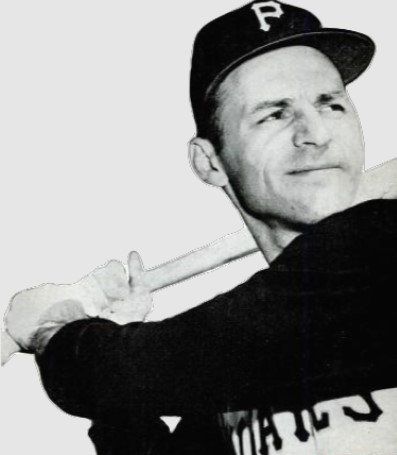
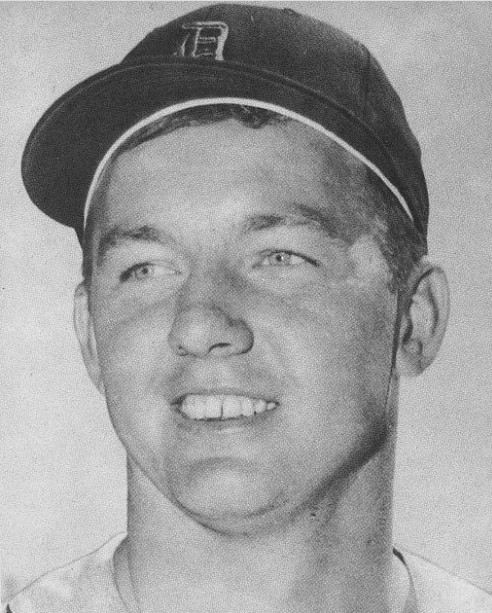
1955, April 17 … Al Kaline Tigers

1949, July 31 … Sid Gordon, Giants

1949, June 2 … Andy Seminick, Phillies

1936, June 24 … Joe DiMaggio, Yankees

1935, August 24 … Hank Leiber, Giants

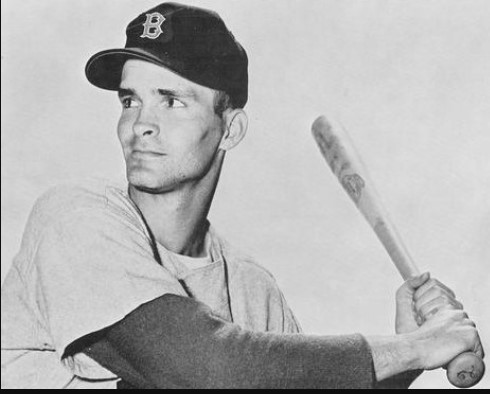
1928, June 16 … Bill Regan, Red Sox

1925, July 1 … Hack Wilson, Giants

1922, August 7 … Kenny Williams, Browns

1894, June 6 … Jake Stenzel, Pirates

1894, June 30 … Bobby Lowe, Braves

1890, September 23 … Ed Cartwright, St. Louis Browns, American Association

1890, September 12 … Lou Bierbauer,  Brooklyn Ward’s Wonders, Player League

1880, June 10 … Charley Jones, Braves

Primary Resources:  Baseball-Almanac.com; Baseball-Reference.com


Baseball Roundtable – Blogging Baseball Since 2012.

100Baseball Roundtable is on the Feedspot list of the Top 100 Baseball Blogs.  To see the full list, click here.

Baseball Roundtable is also on the Anytime Baseball Supply Top 66 Baseball Sites list.  For the full list, click here

I tweet (on X) baseball @DavidBaseballRT

Follow Baseball Roundtable’s Facebook Page here.  More baseball c

A Look at Those Lucky 13-Game, Season-Opening Winning Streaks

On Friday the 14th (of April, 2023), the Toronto Blue Jays topped the Tampa Bay Rays 6-4, stopping the Rays’ season-opening winning steak at 13 games (leaving the Rays tied with the 1987 Brewers and 1982 Braves for the longest season-opening winning streak since 1900).  Who led the charge the put an end to the streak?  Blue Jays’ starting (and winning) pitcher Jose Berrios, who came into the game with an 0-2 record and a 11.17 ERA over his first two starts, played a major role.   Berrios went  five innings (four hits, one run, zero walks, six whiffs).  Also contributing were: Jays’ RF and leadoff hitter George Springer, who opened the bottom of the first with a home run; and SS Bo Bichette, who went five-for-five with a pair of doubles.

A lot has been written about the Rays’ streak. In this post, Baseball Roundtable would like to add a few thoughts about all three of MLB’s post-1900, 13-game, season-opening wining streaks – comparing how they were built, some challenging moments along the way and some unexpected performances .

2023 Rays

Randy Arozarena Photo: All-Pro Reels from District of Columbia, USA, CC BY-SA 2.0 <https://creativecommons.org/licenses/by-sa/2.0>, via Wikimedia Commons

The Rays’ streak included ten home wins and three on the road, with just one one-run win and six by five or more tallies.  It was easily the most dominant showing by any of the three teams with 13 season-opening wins.

During their streak, the Rays:

  • Outscored their opponents 101-30;
  • Outhit them .287 to .189;
  • Out-homered them 32-6;
  • Put up a 2.23 earned run average to the opponents’ 8.24;
  • Walked 31 batters to the opponents’ 46;
  • Fanned 122 hitters to the opponents’ 94.

Challenging Moment: The closest the Rays came to being stropped mid-streak came on April 10 – Game 10 of the streak – when the they were tied 0-0 with the Red Sox after seven innings and won the game 1-0  on a Brandon Lowe home run in the eighth.

Key contributors to the Rays’ streak (and their stats over the length of the streak);

  • 2B Brandon Lowe – .333-5-12;
  • LF Randy Arozarena – .314-3-16;
  • SS Wander Franco – .333-4-12;
  • SP Shane McClanahan – 3-0, 1.59 in three starts;
  • SP Jeffrey Springs – 2-0, 0.56 in three starts;
  • SP Drew Rasmussen – 2-0, 0.00 in three starts.

Unexpected Hero:  SS Isaac Paredes.  The 24-year-old, opened the 2023 season with a .209 career batting average (168 games over three season), although he had shown some power (.205-20-45 in 111 games in 2022). Paredes played in 12 games during the streak and went .308-3-10.

1987 Brewers

The 1987 Brewers – who finished third in AL East at 91-72 – built their 13-game, season-opening  winning streak on power – outscoring their opponents 91-53, while out-homering them 22 to 12.  They picked up seven road wins and six home victories and faced more challenges than the Rays. The Brewers’ streak included three one-run victories. .Here’s the tale of the tape.

During their streak, the Brewers:

  • Outscored their opponents 91-53;
  • Outhit them .302 to .246;
  • Out-homered them 22-12;
  • Put up a 3.64 earned run average to the opponents’ 6.82;
  • Walked 36 and fanned 78, to the opponents’ issuing of 52 walks, while fanning 89.

Plenty of contributors on offense:

  • LF Rob Deer – .391-7-17;
  • CF Robin Yount – .321-2-11;
  • 3B Paul Molitor – .370-2-9, with 15 runs scored and six steals.;
  • 1B Greg Brock – .349-4-13;
  • SS Dale Sveum – .383-2-13.

Om the mound, closer Dan Plesac appeared in seven games, picked up five saves and put up a 2.32 ERA;  Teddy Higuera started three games and won all three (23 inning pitched, 2.74 ERA) ; Juan Nieves went 2-0, 4.26 in three stats, but one was an April 15, complete-game no-hitter versus the Orioles.

Challenging Moment: On April 12 – Game Six of the streak – the Brewers needed 12 innings to top the Rangers (in Texas) in a contest in which they trailed 2-1 after seven innings.  It looked like the Brewers had the game won when the plated three runs in the top of the 11th, but the Rangers scored three in the bottom of the inning (two with two out) to retie the game. A two-run, 12th-inning single by Brewers’ C B.J. Surhoff provided the winning margin.

Unexpected Hero: LF Rob Deer gets the nod here – for his sustained performance during the streak. Deer, a power hitter who came intro the season with a career .227 average, hit .391, with seven home runs, 17 RBI and 13 runs scored during the streak (he played in 12 of the 13 games). Deer collected multiple hits in seven of his 12 games. Deer ended the season with a .238-28-80 line in 134 games.  Those 12 games within the streak represented 9 percent of Deer’s season total, but during the streak he accumulated 25 percent of his season home run  total, 21 percent of his RBI total, 18 percent of his runs scored and 16 percent of his base hits. (For those who like to know such things, Deer was a career .220 hitter -11 seasons – with 230 home runs and 600 RBI).

__________________________________________________

The all-time MLB record of 20 wins to start a season belongs to the 1884 Union Association St. Louis Maroons.  The Union Association did not have a lot of balance in 1884.  The Maroons finished 94-19-1 … a full 21 games ahead of their nearest competitor. During their opening 20-game win streak, they recorded 16 home wins and just four on the road – and outscored their opponents 234-67. On the season, they outscored their opponents 887 to 429. 

__________________________________________________

1982 Braves

The 1982 Braves started the season 13-0 and won the National League West title with an 89-73 record.

During the streak, the Braves:

  • Outscored their opponents 66-34;
  • Outhit them .272 to .232;
  • Out-homered them ten to two.
  • Put up a 1.83 earned run average to the opponents’ 4.67;
  • Struck out 66 batters to the opponents’ 58;
  • Gave up 50 walks to the opponents’ 66.

The Braves’ streak included eight road wins (five home wins); three one-run games; one extra-inning  contest; and one walk-off.

Key players in the Braves 13-game streak were:

  • SS Rafael Ramirez (.333-1-9);
  • 1B Chris Chambliss (.356-3-5);
  • CF Dale Murphy (.256-4-12, with ten runs scored and ten walks).

On the pitching staff, notable contributions were made by relievers Rick Camp (who appeared  seven games and went 2-0, with three saves and a 1.74 ERA) and Gene Garber (who appeared in five games and went 1-0, with three saves an a 0.00 ERA in 11 1/3 innings).  Bob Walk started three games (the Braves won all three) and went 2-0, 0.96.

Challenging Moment:  The Braves’ streak might have been over before it started.  On Opening Day (April 6), the Braves faced the Padres in San Diego – and came away with a 1-0 win.  Brett Butler (who had walked)  scored the only tally on a one-out double by 2B Glen Hubbard in the top of the fifth.   Braves’ starter Rick Mahler, who would go 9-10, 4.21 on the season (and 96-111, 3.99 in 13 MLB seasons) pitched a two-hit, complete-game shutout.

Unexpected Hero(s) : SS Rafael Ramirez, a .235 career hitter coming into the season (two seasons, 145 games), hit .333, with 16 hits, one home run, nine RBI and eight runs scored over the 13 games.  He collected 11 hits over the  first six games of the season.  Ramirez finished the season at .278-10-52 and was .261-53-484 over a 13-season MLB career (1,539 games).  More unusual than unexpected, Rick Camp, who would end up starting 21 games in 1982, opened the season in the bullpen and had two wins and three saves during the streak. He would pick up just two more saves that season, ending the year 11-13, 3.65 with 21 starts and 30 relief appearances, five saves and three complete games.

The Braves first loss came at home on April 22 – as the Reds topped them 2-1.  In that one, Reds’ starting (and winning) pitcher Bruce Berenyi drove in what proved to be the winning run, with a fifth-inning , two-out single off Bob Walk.

Primary Resource:  Baseball-Reference.com

Baseball Roundtable – Blogging Baseball Since 2012.

100Baseball Roundtable is on the Feedspot list of the Top 100 Baseball Blogs.  To see the full list, click here.

Baseball Roundtable is also on the Anytime Baseball Supply Top 66 Baseball Sites list.  For the full list, click here

I tweet (on X) baseball @DavidBaseballRT

Follow/Like Baseball Roundtable’s Facebook Page here.  More baseball commentary; blog post notifications; PRIZES.

Member: Society for American Baseball Research (SABR); Negro Leagues Baseball Museum; The Baseball Reliquary. 


Walk(s) On The Wild Side

Yesterday’s (April 14), Mets/Athletics game – won by the Mets 17-6 – featured 17 walks to Mets’ batters, as well as two separate innings in which the Mets scored six runs on just one hit.  Mets’ shortstop Francisco Lindor had both of those hits and collected seven RBI in the process. That contest brought back memories of (and seems an appropriate time to reflect on) perhaps the wildest MLB inning ever – one in which the White Sox scored 11 runs on just one hit.  More on that, but first a look at the Mets’ two wild innings.


Top of the Second Inning:

James Kaprielian pitching for Oakland.

  • Mets’ DH Daniel Vogelbach walks (on a 3-2 pitch).
  • 3B Eduardo Escobar lines out to right.
  • 2B Luis Guillorme walks (on four pitches).
  • C Tomas Nido walks (on four pitches), loading the bases.
  • CF Brandon Nimmo walks (on a 3-2 pitch), forcing in a run.
  • RF Starling Marte walks (on a 3-2 pitch), forcing in a run.
  • SS Francisco Lindor hits the first pitch he sees for a Grand Slam.
  • 1B Pete Alonso fans (on a 1-2 pitch).
  • LF Jeff McNeil pops out to first base.

Top of Sixth inning:

Hogan Harris on the mound for Oakland.

  • Daniel Vogelbach grounds out second-to-first.
  • Eduardo Escobar walks (on a 3-2 pitch).
  • Luis Guiillorme walks (on a 3-2 pitch).
  • Tomas Nido walks (on four pitches).
  • Brandon Nimmo is hit by a pitch, forcing in a run.
  • Staring Marte walks, forcing in a run.
  • Francisco Lindor hits a double, scoring all three base runners.
  • Pete Alonso walks

Chad Smith comes in to pitch.

  • Jeff McNeil is hit by a pitch loading the bases.
  • Daniel Vogelbach his into a fielders choice (SS-2B, scoring a run.
  • Eduardo Escobar strikes out.

For the game, the Mets scored 17 runs on 11 hits, 17 walks and two hit batsmen. The A’s scored six times on 13 hits and four walks. Surprisingly, there we no wild pitches.

Now for that wildest of all innings – eleven runs on one hit.

On April 22, 1959, the Chicago White Sox completed what may be the weirdest MLB offensive inning ever.

In the seventh inning of a 20-6 road win over the Kansas City A’s, the Chicago White Sox scored 11 runs on just one base hit. In fact, they got only one ball out of the infield.

Nellie Fox drew two bases-loaded walks in the seventh inning of a White Sox 20-6 win.

Nellie Fox drew two bases-loaded walks in the seventh inning of a White Sox 20-6 win.

This unique offensive “outburst” would prove to be a portent of things to come. The 1959 AL pennant-winning White Sox were became known as the “Go-Go Sox” for their ability to manufacture runs despite a punchless offense. (The Sox finished last in the league in home runs and sixth – out of the eight AL teams – in batting average and runs scored, but first in stolen bases and second in walks).

Still, it would have been hard to predict an inning in which the boys from Chicago would plate eleven runs on just one hit (a single) – or to anticipate a frame which included ten walks, a hit batsman, and three opposition errors. Here are few “numbers” from that 11-run inning:

  • The Sox sent 17 batters to the plate, but collected just one hit – and, in fact, got only one ball out of the infield.
  • Sox’ hitters stepped into the box with runners in scoring position 14 times.
  • Sox’ hitters batted with the bases loaded 12 times and never got the ball past the pitcher.
  • Eight different White Sox’ players drew walks.
  • The Sox drew eight bases-loaded walks (and had one bases-loaded hit batsman).

White Sox 2B Nellie Fox walked twice with the bases loaded in the inning.

Here’s how it went that inning (per baseball-reference.com):

  • 1B Ray Boone is safe on a throwing error by A’s shortstop Joe DeMaestri.
  • RF Al Smith attempts to sacrifice Boone to second (score was 8-6 at the time) and reaches safely on an error by A’s third baseman Hal Smith.
  • LF Johnny Callison singles to right. Scoring Boone and Smith (with the help of an error by A’s right fielder Roger Maris). Callison ends up on third.
  • SS Louis Aparicio walks – steals second (runners now on second and third).
  • P Bob Shaw walks (loading bases).
  • PH Earl Torgeson (batting for 3B Sammy Esposito) walks (scoring Callison).
  • 2B Nellie Fox walks (scoring Aparicio).
  • CF Jim Landis reaches on fielder’s choice – grounding back to pitcher Mark Freeman, who takes the force at home (bases still loaded).
  • C Sherman Lollar walks (scoring Torgeson, bases still loaded).
  • Ray Boone makes his second plate appearance of the inning and walks (scoring Nellie Fox).
  • Al Smith makes his second plate appearance of the inning and walks (scoring Landis).
  • Johnny Callison, who had the only hit of the inning in his first plate appearance, is hit by a pitch (scoring Lollar, bases still loaded). Lou Skizas comes in to run for Callison.
  • Louis Aparicio draws his second walk of the inning (scoring Boone, bases still loaded).
  • Bob Shaw strikes out.
  • PH Bubba Phillips (batting for Torgeson, who batted for Esposito earlier in the inning) walks (scoring Smith, bases still full).
  • Nellie Fox draws his second bases loaded walk of the inning (scoring Skizas).
  • Jim Landis grounds out pitcher to first to end the inning.

The 20-runs the White Sox scored that day were the most they plated in any game that season.  Another side note: It did not start out like it was going to be a good day for the White Sox.  The A’s knocked Chicago’s starting pitcher Early Wynn – who would go on to lead the AL in wins with 22 – out of the game with six runs on six hits and two walks in the first 1 2/3 innings. The Sox actually trailed 6-1 after two frames. A few other stats:

  • The Sox collected a total of 16 hits and 13 walks in the contest; which also saw four Kansas City errors.
  • In addition, to scoring 20 times, Chicago left eleven runners on base.
  • Nellie Fox was the offensive star of the game – with four hits (five at bats), two walks and five RBI.
  • The A’s used six pitchers in the contest, three in the seventh inning.

Primary Resource:  Baseball-Reference.com

Baseball Roundtable – Blogging Baseball Since 2012.

100Baseball Roundtable is on the Feedspot list of the Top 100 Baseball Blogs.  To see the full list, click here.

Baseball Roundtable is also on the Anytime Baseball Supply Top 66 Baseball Sites list.  For the full list, click here

I tweet (on X) baseball @DavidBaseballRT

Follow/Like Baseball Roundtable’s Facebook Page here.  More baseball commentary; blog post notifications; PRIZES.

Member: Society for American Baseball Research (SABR); Negro Leagues Baseball Museum; The Baseball Reliquary. 

Baseball Roundtable 2023 Trivia Tidbit … Gotta Love Old Milwaukee County Stadium

Throughout the season, Baseball Roundtable will present Trivia Tidbits … in the form of a question.  If you are reading this, you most likely saw the questions on Facebook or Twitter and have followed the link to this answer.

Let’s review before we get to the answer itself. Many – if not most – fans know that Hall of Fame 3B Eddie Mathews is the only player to play for the Braves in Boston, Milwaukee and Atlanta.

Fewer, but still a good number of fans know that Hall of Fame pitcher Robin Roberts is only pitcher to record wins against the Boston, Milwaukee and Atlanta Braves.

Probably fewer fans know that Mathews played both major- and minor-league ball in Milwaukee and Atlanta. (Milwaukee Brewers and Atlanta Crackers. (He only played in three minor-league cities – all as a teenager. )

The answer to this Trivia Tidbit – like Mathews and Roberts – has ties to both Milwaukee and the Braves.

Before we get to the question, a few other pieces of info “for those who like to know such things.” Roberts, whose career record was 286-245, 3.41, was 34-30, 3.38 in starts against the Boston/Milwaukee/Atlanta Braves.  Mathews, whose career stat line was .271-512-1,453, was .323-11-30 in 56 games versus Roberts. As an 18- and 19-year-old, Mathews hit .287-38-135 in 183 gamers for the Double-A Atlanta Crackers (1950-51) and, as a 19-year-old, he hit .333-1-5 in 12 games for the Triple-A Milwaukee Brewers (1951).  As a 20-year-old, he was the regular third baseman for the major-league Boston Braves.

Now, today’s question.  On this date (April 12) in 1970, what player became the first of only three players to play for both the major-league Milwaukee Braves and Milwaukee Brewers?  Possibly helpful hint.  He also played for the Athletics in both Kansas City and Oakland.   Kudos if you get this one right.  Extra credit for getting all three names (One is really a “gimmee.” )

Answer.  Catcher Phil Roof, who played for the Milwaukee Braves in 1961 and 1964 (one game in each season).  And later, played for the Milwaukee Brewers in 1970 and 1971. (151 total games).

Roof played in 15 MLB seasons (1961, 1964-77), taking the field for the Braves, Angels, Indians, Athletics (Kansas City & Oakland), Brewers, Twins, White Sox and Blue Jays. Roof played 857 MLB games, hitting .215-43-210.  His best season was probably 1975, when he hit .302-7-21 in 63 games for the Twins. It was the only season in which he averaged higher than .241.

The other two players to play for both the major-league Milwaukee Braves and Brewers had somewhat stronger credentials.  Hank Aaron, who suited up for the Milwaukee Braves (1954-1965) and Milwaukee Brewers (1975-76) and Felipe Alou, who took the field for the Milwaukee Braves (1964-65) and Milwaukee Brewers (1974).

Primary Resources:  Baseball-Reference.com; MLB.com


Baseball Roundtable – Blogging Baseball Since 2012.

100Baseball Roundtable is on the Feedspot list of the Top 100 Baseball Blogs.  To see the full list, click here.

Baseball Roundtable is also on the Anytime Baseball Supply Top 66 Baseball Sites list.  For the full list, click here

I tweet (on X) baseball @DavidBaseballRT

Follow/Like Baseball Roundtable’s Facebook Page here.  More baseball commentary; blog post notifications; PRIZES.

Member: Society for American Baseball Research (SABR); Negro Leagues Baseball Museum; The Baseball Reliquary. 


Baseball Roundtable 2023 AL Watch LIst

As each MLB season get underway, there are players that particularly spark Baseball Roundtable’s interest:  young prospects or veteran players hoping to deliver on expectations; players who are particularly crucial to their team’s prospects for the season; players who offer The Roundtable’s favored combination of Leather and Lumber;  retiring players making a last go-round; or players making adjustments to new positions, new roles or new teams.  You get the idea.  In this post, Baseball Roundtable will present its team-by-team American League Watch List for 2023, one (or two) players from each AL team that The Roundtable will pay particular attention to over the coming months.  For the previously published National League Watch List, click here.

Here is Baseball Roundtable’s 2023 Junior Circuit Watch List.

Baltimore Orioles- Andy Rutschman. Gunnar Henderson, Grayson Rodriguez

Orioles top pitching prospect Grayson Rodriguez. Photo: Jeffrey Hayes, CC BY 2.0 <https://creativecommons.org/licenses/by/2.0>, via Wikimedia Commons

With the Orioles the watch list is all about youth.

C Andy Rutschman (25-years-old) lived up to all the hype surrounding his rookie campaign – going .254-13-42 in 113 games, but even more important providing  s solid presence behind the plate. Baseball Roundtable expects to see offensive growth in 2023, while Rutschman’s defense and game management remain top notch.

The Orioles also expect good things from 3B Gunnar Henderson (who can also play SS).  Henderson hit .297-19-76, with 22 steals (as a 21-year-old) in 112 games at Double-A and Triple-A a year ago. He also looked comfortable in 34 late-season games with the Orioles, with a .259-4-18 stat line (and, remember, he was just 21).  It will be fun to watch his growth as a major leaguer in 2023.

Finally, there is  23-tear-old RHP Grayson Rodriguez, the Orioles’ top pitching prospect. In five minor-league seasons, Rodriguez has gone 25-9, 2.49 in 70 games (69 starts – one of those in 2023).  The 6’5” 230-pounder has a dominant mound presence – to go with a mid-90s fastball (that can reach triple digits), an effective mid-80s change up, a mid-80s slider and a work-in-progress, low-80s curve.  In 296 minor-league innings, Rodriguez has fanned 421 batters (102 walks).  Grayson made his first MLB start April 5 of this season, giving up two runs on four hits and a walk over five innings (five strikeouts).  More to come.

This trio should help keep the Orioles competitive in 2023 – and are solid building blocks for the future.

Boston Red Sox – Masataka Yoshida, Chris Sale and Tristan Casas

The Red Sox finished last (78-84) in the tough AL East last season and they need considerable help if they are going to move out of the basement.

The Roundtable will be watching three players – a Japanese import, a veteran and a rookie – who could contribute to that effort.

The Red Sox signed Japanese outfielder Masataka Yoshida to a reportedly five-year $90 million deal last December. The 28-year-old is coming off a .335-21-88 season (119 games) in Japan and has shown a combination of power and plate discipline in Nippon Professional  Baseball.   In seven seasons there, Yoshida averaged .326, with 135 home runs.  Perhaps more important, he walked more times (427) than he struck out (307).  It’ll be fun to see how he adjusts to the American game.

Veteran  southpaw Chris Sale, a  seven-time All Star, has finished in the top five in Cy Young Award voting in six of 12 MLB seasons. Between mid- August of 2019 and Opening Day 2023, however, he has started just 11 games and  pitched only 48 1/3 innings (elbow injury, Tommy John surgery, Covid, right-rib stress fracture, broken finger, broken wrist).  The Red Sox say he’s healthy now.  If he can return to form, it would give Boston a much-needed boost.

Triston  Casas, at 23-years-old, looks to have earned the 1B slot in the lineup. A 2018 first round draft pick, he’s shown both power and plate discipline as a minor-leaguer.  In 2022, he went .281-12-41 in 76 games at Rookie-Level and Triple-A (.273-11-38 in 72 Triple-A games).  That earned him a September call up – and while he hit just .192 (27 games), he did poke five home runs and put up a .358 on-base percentage (19 walks/23 strikeouts).  Casas  hit .327-3-9 in 19 2023 Spring Training games. We’ll see if he’s ready to contribute at the major league level.

Chicago White Sox – Oscar Colas

The White Sox signed Cuban outfielder Oscar Colas in January of 2022. Although he’s only 24-years old, Colas has been around – playing in both the Cuban National Series and Nippon Professional Baseball. He showed his abilities right from the get-go.  In 2022, he moved from High-A, to Double-A to Triple-A – hitting a combined .314-23-79 in 117 games.  Look from him to find success in  a White Sox uniform in 2023.


Cleveland Guardians – Jose Ramirez and Emmanuel Clase

On the Guardians squad, I intend to enjoy watching a couple of proven performers.

Third baseman Jose Ramirez holds the key to the Guardians’ offense. In 2022, the switch-hitter  went .280-29-126, with 20 steals.  He also drew 69 walks and fanned just 82 times.  Since 2017, Ramirez has  made four All Star teams, averaged .280, hit 20 or more home runs five times (only missing in the Covid-shortened 2020 season), drove in 100+ runs three times and led the league in doubles twice.  It’ll be a pleasure to watch this steady switch-hitter go to work again.

Also on the watch list is 25-year-old closer Emmanuel Clase. The Guardians (then Indians) acquired him a trade with the Rangers before the 2020 season.  (The Indians got Clase and Delino DeShields for Corey Kluber and cash.)  It worked out pretty well for the Guardians. In the 2021 and 2022 seasons, Clase went 7-9, with 66 saves and a minuscule 1.33 ERA.  Unlike The Roundtable, opponents are not happy to watch Clase come to the hill.

Detroit Tigers …. Miguel Cabrera

Photo: Jeffrey Hayes, CC BY 2.0 <https://creativecommons.org/licenses/by/2.0>, via Wikimedia Commons

Only one choice here.  Have to watch future Hall of Famer Miguel Cabrera in his twenty-first – and final – MLB season.  Coming into the season, Cabrera, a two-time MVP and 2012 AL Triple Crown winner (.330-44-139) had a total of 3,088 hits (25th all time), 507 home runs (27th all time) and  1,847 RBI (14th all time). Going into this final season, he needs:

  • 100 hits to make the top-16 all time;
  • 14 home runs to make the top-20 all time;
  • 62 RBI to make number-12 all time.

The Numbers Game

In his first 15 MLB seasons, Miguel Cabrera averaged .321 – and averaged 32 home runs and 11 RBI per season.

It will be fun to watch Cabrera climb up the stats ladder as he makes his farewell tour.

Houston Astros – Jose Abreu and Hunter Brown

The 2023 Astros look a lot like the 2022 versions (Why not?  They won 106 regular-season games and a World Series title). So, they are worth watching.  They are going to be good.  With that in mind, I decided to put the “new guy” – free-agent-signee 1B Jose Abreu – on the watch list.   His veteran bat will fit right into the middle of the Astros’  lineup – and he should get lots of opportunities to drive in runs.  What the Roundtable will be looking for is to see if the short left-field distances at Minute Maid Park will help Abreu return to 30-homer form.  Last season, he hit .304-15-75 in 157 games for the White Sox.  Abreu, however, has hit 30 or more long balls in five of his first nine MLB seasons and driven in 100+ runs in six. I look for a .290-30-100 season.

I also be watching prospect RHP Hunter Brown, whom I expected to make some noise in the Astros’ rotation before the 2023 season is over. Brown was a  2019 fifth-round draft choice (out of Wayne State University, where he went 9-0, 2.21 in his final season).  In three minor-league seasons, he has gone 17-11, 2.40 with 134 strikeouts in 106 innings.  He earned a call up last September and went 2-0, with a 0.89 ERA in 20 1/3 innings (seven appearances/two starts).

Kansas City Royals –  Vinnie Pasquantino

Okay, I admit, I love seeing “Pasquantino” across the back of an MLB uniform. Plus, the 24-year-old (an eleventh-round pick in the 2019 draft) has shown solid power and a good eye at the plate. In three minor-league seasons, he hit .292, with 56 long balls in 246 games – and walked 131 times, while fanning 143.

Last season, he hit .277-18-70 in 73 games at Triple-A (with 40 walks and just 39 strikeouts) – earning a late-June call up.  In 72 games for Kansas City, he went .295-10-26, with 35 walks and 34 whiffs.  He’s big-time ready.

Kinda Shifty if You Ask Me

Pasquantino gets extra credit as a watch list candidate, given the fact that the shift was used against him in 93 percent of his 2022 at bats. The Roundtable will be watching to see if the new rules boost his numbers.  

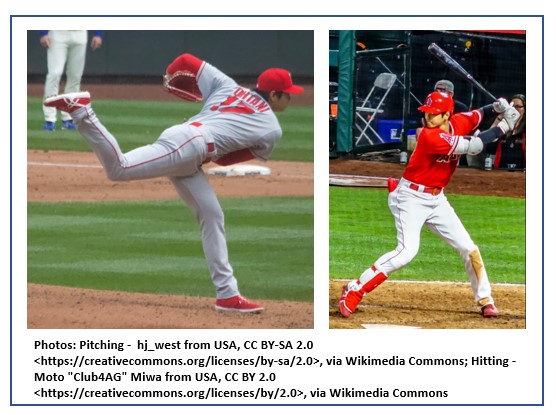
Los Angeles Angels – Shohei Ohtani

Photo: ogami Kariya, CC BY-SA 2.0 <https://creativecommons.org/licenses/by-sa/2.0>, via Wikimedia Commons

No challenge here,  How can you not pick a player who seems to set some new “first” every time out.  Last season, Ohtani hit .273-34-95 with 11 steals – and went 15-9, 2.22 with 219 strikeouts in 166 innings on the mound. Why wouldn’t you want to watch a player with the following on his  resume – a 15-win and 200-strikeout season as a pitcher and a 46-homer, 100-RBI, 26-steal season as a hitter/baserunner.  Ohtani is another MVP award waiting to happen (he won the AL MVP in 2021).

More “Firsts” for Ohtani

On  April 5, Shohei Ohtani became the first MLB player to be hit with a pitch clock violation both as a pitcher and a hitter in the same game. In the first inning of his start on the mound against the Mariners, he was called for a pitch clock violation  (a called ball) for taking too long to deliver a pitch to  Mariners’ cleanup hitter Cal Raleigh (with two on and no out). Raleigh eventually fanned on a 3-2 pitch.

In the seventh, facing the Mariners’ Andres Munoz, with two on and one  out. Ohtani was penalized (a called strike) for taking too long to get set in the batter’s box.  Ohtani rapped an RBI single in the at bat.

Ohtani finished the game one-for-two at the plate (with two walks and an RBI), and got the victory after throwing six innings of three-hit, one-run ball (four walks eight strikeouts).

Minnesota Twins – Byron Buxton

It all about health with the Twins’ Byron Buxton – a Gold Glove defender and an offensive force (speed and power). He is also oft-injured (due partly to his all-out style of play). Healthy, he’s legitimate CF Gold Glover and 30-30 (HR/SB) guy.  However, in his first eight MLB seasons, Buxton played 100 or more games in a campaign just once.  Still, he has shown what he can do when he’s in the lineup.  In 2021, Buxton hit .306 and scored 50 runs in just 61 games. In 2022, he poled 28 home runs in  92 games.  In 2017, his only season of at least 100 games played, he swiped 29 bases in 140 games and won a Gold Glove for his defensive work in CF.  The Twins know how having Buxton in the lineup can change the game and have put emphasis on keeping him in the lineup (more time at DH).   Looking forward to seeing how that works out.

New York Yankees – DJ LeMahieu and Anthony Volpe

Lots to watch in New York – Aaron Judge and Gerrit Cole are probably at the top of most fan lists.  For the Roundtable, I’ll be watching veteran DH LeMahieu and rookie Anthony Volpe.

The 34-year-old LeMahieu is a two-time AL batting champion, who can play around the infield (LeMahieu has won four Gold Gloves, three at second base and one as a utility player). From 2011 through 2020, LeMahieu averaged .305.  In 2020-22, he average .265.  The Roundtable will be watching to see if LeMahieu can up his game (close in on his career .297 average) in 2023. A productive LeMahieu gives the Yankees not only another solid offensive weapon, but considerable lineup flexibility.

I’ll also be watching 22-year-old rookie Anthony Volpe, who won the SS job coming out of Spring Training. A first-round pick (right out of high school) in the 2019 MLB Draft, Volpe has shown power and speed in three minor-league seasons.  In 2022,  at Double-A and Triple-A, Volpe hit .249,with 21 home runs, 65 RBI, 86 runs scored and 50 steals in 12 games.

DJ LeMahieu is the only player (since 1900) to win a batting title in both the AL and NL. (.348 for the Rockies in 2016 and .364 for the Yankees in 2020). 

Oakland Athletics – Ryan Noda

A Rule Five Selection (from the Dodgers) last December, the 27-year-old Ryan Noda could provide some much-needed power to the A’s lineup. In the Dodgers’ farm system (at Double-A and Triple-A), Noda hit 54 home runs and drove in 168 over the past two seasons.  His 2022 Triple-A numbers were .259-25-90, with 20 steals.  It’ll be interesting to see how he handles major-league pitching.

Seattle Mariners – Julio Rodriguez

Mariners’ CF Julio Rodriguez was the runaway winner of the AL Rookie of the Year Award in 2022 – receiving 29 of 30 first placed votes.  (For those who need to know such stuff, the other first-place vote went to Orioles’ C  Adley Rutschman.)   Rodriguez also finished seventh in the MLB voting.

Rodriguez is a five-tool player (.284-28-75, with 25 steals in 132 games,  with a strong arm and ground-covering defense). The 22-year-old is a youngster worth watching, who may very well win an MVP award in the near future.  For 2023,  .a 30-30 season would not surprise me,


Tampa Bay Rays – Kevin Cash

I supposed it’s odd to pick a manager here, but Kevin Cash has proven has proven his ability to keep Tampa Bay competitive – without the “cash” available to other AL East clubs.  It’s always interesting to watch how Cash juggles his lineup and pitching strategies to get the most out of the resources on hand.

Kevin Cash was selected the American league in 2020 and 2021, joining the Braves’ Bobby Cox as the only MLB manage to capture the award in consecutive seasons.

Texas Rangers – Jacob deGrom and Josh Jung

When he’s healthy, Rangers’ free-agent-signee Jacob deGrom is one of the most dominant pitchers in the game (I can offer a Rookie of the Year  and two Cy Young Awards as evidence).  Ahh, but those health issues.  The right-hander  has has not made more than 15 starts or pitched more than 92 innings in a season since 2019, when he went 11-8, 2.43 in 32 starts (204 innings) for the Mets.  The Roundtable will be watching to see if the Rangers got the  pitcher who averaged 30 starts per season from 2015 through 2019 or the one who averaged 13 starts per season in 2021-22 (I left out the short 2020 season).

I’ll also be keeping an eye on Josh Jung, who looks to be given a shot at the 3B position, despite only 153 minor-league games on his resume.   In those 153 games, he went a sterling .311-30-118. Jung earned a call up – last September and hit five homers in 102 MLB at bats.  However, his .204 average and 39 strikeouts to four walks seem problematic.  Still, he had strong spring.314-3-6 ion 19 games (51 at bats) and bears watching.

Toronto Blue Jays – The Outfield

Blue Jays fans – and Blue Jays pitchers – will enjoy watching the revamped outfield.  This season, the  Blue Jays’ garden will feature three superior defenders.  Returnee George Springer – moving from CF to RF to make room for free-agent-signee Kevin Kiermaier (a three-time Gold Glover).  Joining these two will be another superior defender, LF Daulton Varsho, acquired in a trade with the Diamondbacks.  The three will boost Toronto’s defense,  Spring and Varsho should also provide some power and Kiermaier bring some speed to the base paths.  It’s on defense, however, where the trio is worth a watch. If the Blue Jays overtake the Yankees in 2023, these three will play a major roe.


Primary Resources:  Baseball-Reference.com; MLB.com


Baseball Roundtable – Blogging Baseball Since 2012.

100Baseball Roundtable is on the Feedspot list of the Top 100 Baseball Blogs.  To see the full list, click here.

Baseball Roundtable is also on the Anytime Baseball Supply Top 66 Baseball Sites list.  For the full list, click here

I tweet (on X) baseball @DavidBaseballRT

Follow Baseball Roundtable’s Facebook Page here.  More baseball commentary; blog post notifications.

Member: Society for American Baseball Research (SABR); Negro Leagues Baseball Museum; The Baseball Reliquary. 


Baseball Roundtable 2023 NL Watch List

As each MLB season get underway, there are players that particularly spark Baseball Roundtable’s interest:  young prospects or veteran players hoping to deliver on expectations; players who are particularly crucial to their team’s prospects for the season; players who offer The Roundtable’s favored combination of Leather and Lumber;  retiring players making a last go-round; or players making adjustments to new positions, new roles or new teams.  You get the idea.  In this post, Baseball Roundtable will present its team-by-team National League Watch List for 2023, one (or two) players from each NL team that  The Roundtable will pay particular attention to over the coming months.  For the AL Watch List, click here. 

 Arizona Diamondbacks … OF  Corbin Carroll

Diamondbacks’ OF Corbin Carroll made his MLB debut last August 29, just eight days after his 22nd birthday. In the course of the season, he had made his way up through Rookie Ball, Double-A and Triple-A – hitting a combined .307-24-62, with 36 steals in 36 attempts – while also providing  elite outfield defense.  In 32 games for the Diamondbacks, the former first-round (2019) MLB Draft pick went .260-4-14, with two steals.  He followed up by hitting .370 in 2023 Spring Training.  The Diamondbacks expect big things of the 5’10” 165-pounder – and the Roundtable is looking forward to seeing him in “The Show” for a full season. Extra credit here for the fact that Carroll has shown notable power for a player his size.  Nice to see an average-sized guy delivering above average power.

Atlanta Braves … Michael Harris II and Spencer Strider

Atlanta’s CF Michael Harris II and RHP Spencer Strider finished 1 & 2 in the 2022 NL Rookie of the Year voting (far outdistancing the competition).  Harris had 22 first-place votes and 134 total points, Strider had eight-first place votes and 103 points.  Third place went to the Cardinals’  Brendan Donovan with just 22 points. Harris, who made his MLB debut on May 28, went .297-19-64, with twenty steals (22 attempts) in just 114 games; while Strider, who worked out of the bullpen until May 20, went 11-5, 2.67 overall and 10-4, 2.77 as a starter.  On the season, Strider fanned 13.8 batters per nine innings (202 whiffs in 131 2/3 frames).

A Nice Round Number

Spencer Strider reached 200 career strikeouts after 130 innings pitched, becoming the quickest ever in AL/NL history  (in terms of career innings) to 200 whiffs.  He broke Hall of Famer Randy Johnson’s mark of 130 2/3 innings.

Harris entered the 2023 season as a 22 year-year-old, while Striker was 24.  Baseball Roundtable is anxious to see how this pair develops and delivers on 2022’s promise.

Chicago  Cubs – Seiya Suzuki

In March of 2022, the Cubs signed Japanese star outfielder Seiya Suzuki to a five-year contract reportedly worth in the neighborhood of $85 million (exact terms were not released).  Playing for the Hiroshima Carp, Suzuki had been a five-time Japanese All Star, five-time Gold Glover and two-time batting champ.  In 2021, he went he went .317-38-88 in 132 games for Hiroshima.  In nine seasons in Nippon Professional Baseball, Suzuki hit .315, with 189 home runs and 621 RBI in 902 games. That record (and contract) has resulted in high expectations.

In his first season  with the Cubs, somewhat hampered by a hand injury, Suzuki hit .262-14-46 with nine steals.  The 28-year-old started the 2023 season on the injured list (oblique), but is expected to return sometime in April.

The Roundtable is will be watching to see what a fully healthy Suzuki can deliver for the Cubbies.

Cincinnati Reds – Hunter Greene

No doubt, Reds’ righty Hunter Greene is a potential “ace” (once he masters his command).  Greene, the second overall pick in the 2017 MLB draft – out of Notre Dame High School in Sherman Oaks, California – has brought triple-digit heat wherever he’s pitched.  In four minor-league seasons, he whiffed 249 batters in 186 innings. He’s been doing it with a four-seamer that averages 99 MPH and a solid (high-80’s)  slider.  Still, some command issues,  injury issues (a 2002 stint on the IL – shoulder) and the need for a third effective pitch have kept him from delivering on what seems to be his true potential.  A stronger squad behind him would also help.  Keep in mind, he’s just 23-years-old.

In 2022, Greene was 5-13, 4.44 in 24 starts, with 164 strikeouts in 125 2/3 innings pitched for the Reds.  There were some positive signs. In his last eight starts of 2022, Greene went 2-3, but put up a 1.75 ERA and fanned 66 batters in 46 1/3 innings.

Baseball Roundtable will be watching Greene’s development – as well as those triple-digit numbers he keeps putting up on the board.

Reds-Hot Heat

On April 16, 2022, the Reds’ 22-year-old rookie Hunter Greene threw 39 pitches of 100 MPH or more – setting a new MLB single game record (in the pitch tracking era) for bringing the heat. And, he did it in just 5 1/3 innings versus a powerful, veteran Dodgers’ squad. That record stood until September 17, when Greene launched 47 missiles of  100 MPH or more in six innings against the NL Central-leading Cardinals.

Colorado Rockies – Ezequiel Tovar

SS Ezequiel Tovar was signed by the Rockies  (out of Venezuela) as a 16-year-old in 2017. The Reds saw solid potential in him then – and that perceived potential has grown as Tovar has matured.  In 2021, at 19-years-old, Tovar hit .287-15-72, with 24 steals in 104 games at Low- and High-A.  He followed up with a solid season at Double-A and Triple-A in 2022, hitting .319-14-49 with 17 steals and showing solid defensive skills.  He had a brief call up in September (.212 in nine games), and became the youngest position player ever to debut for the Rockies. Tovar appears to have won the Rockies’ shortstop job for 2023.  Rockies fans should enjoy watching his continued growth.  So will Baseball Roundtable.

Los Angeles Dodgers … JD Martinez

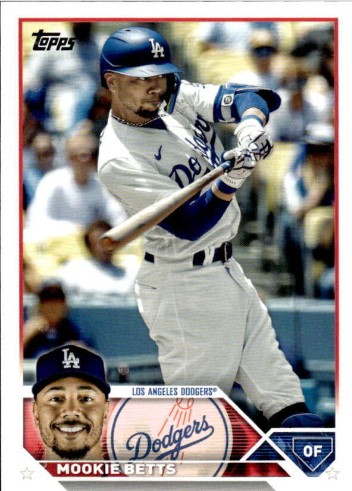
Lots of star power to watch here – like former MVPs Freddie Freeman, Mookie Betts and  Clayton Kershaw. Baseball  Roundtable is eager to see what impact newcomer free-agent J.D. Martinez will have on the Dodger lineup and what impact having more protection in the lineup will have on Martinez.  Last season, Martinez was .274-16-62 in 139 games for the Red Sox, but he has six seasons of 25+ home runs and a .288 career average on his resume.

I’ll also be  keeping an eye on the Dodgers’ shortstop “hole.”  With the departure of All Star Trea Turner, Gavin Lux was expected to fill the spot.  Lux went down with a season-ending injury, so now the Dodgers have to look to Miguel Rojas, Chris Taylor (or others).  I’ll be watching to  watch to see who ends up there.

______________________________________________

BONUS TRIVIA TIDBIT

With all the rule changes taking effect this season – pitch clocks, limits on pickoff attempts, shift restrictions – Baseball Roundtable decided to look back at a major rule change that took place in the American League in 1973.

On this date, April 6, 1973, the first-ever designated hitter appeared in an MLB  lineup.  A few bits of trivia.

  • The first DH to come to the plate was the Yankees Ron Blomberg; the pitcher who faced him was the Red Sox’ Luis Tiant.
  • The first-ever MLB DH (Blomberg, batting sixth ) came to the plate with two out the bases loaded (Graig Nettles on first, Bobby Murcer on second, Matty Alou on third).
  • The first-ever DH (Blomberg) drew a bases-loaded walk.
  • Ron Blomberg was also the first MLB DH to get a base hit – a single off Tiant in the third inning.
  • Later that Day, Twins DH Tony Oliva  became the first DH to hit a home run – a first-inning, two-run homer off Catfish Hunter (in Oakland).
  • Here’s your list of players appearing at DH on April 6, 1973: Ron Blomberg, Yankees; Orlando Cepeda, Red Sox; Tony Oliva, Twins; Bill North, Athletics; Ed Kirkpatrick, Royals; Tom McGraw, Angels; Ollie Brown, Brewers; Terry Crowley, Orioles.  (On the following day, these players became the first DH’s for their teams: John Ellis, Indians; Gates Brown, Tigers; Mike Andrews, White Sox; Rico Carty, Rangers).

______________________________________________

Miami Marlins – Sandy Alcantara

Photo: Ryan Casey Aguinaldo, CC BY-SA 4.0 <https://creativecommons.org/licenses/by-sa/4.0>, via Wikimedia Commons

No contest on who to watch here – 2022 NL Cy Young Award winner Sandy Alcantara (14-9, 2.28). The 27-year-old righty’s arsenal includes a 98-MPH four-seam fastball,  a 98-MPH sinker and a 91-MPH change.  And, of all his offering have good movement.  He’s also a bit old school, leading MLB with six complete games and 228 2/3 innings pitched in 2022. His 2022 record could (should?) have been better – in 32 starts, Alcantara gave up two or fewer runs 24 times.  Looking to see more of the same in 2023.  Want to see and old-fashioned complete game?  Keep an eye on Alcantara.

Talk about Old School

In just his second outing of the 2023 season, Sandy Alcantara threw a three-hit, 100-pitch, complete game shutout – topping the Twins in Miami) 1-0 in a game that took just 1 hour and 57 minutes.  


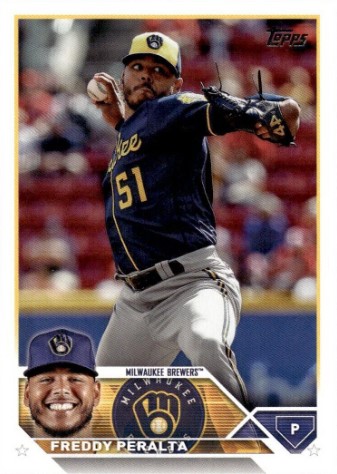
Milwaukee Brewers – Brice Turang

Brewers’ 23-year-old second baseman Brice Turang – a first-round pick in the 2018 MLB Draft – looks ready for the big leagues. In 2022, with the Triple-A Nashville Sounds, Turang hit .286-13-78, with 34 steals in 131 games.  He came north with the Brewers after a .289-1-4 Spring Training (17 games).  A natural shortstop (in the minors, Turang made 326 starts at SS, 44 at 2B, 13 in the OF and eight at 3B), Turang is making the transition to full-time at the keystone sack. I’m anxious to see how he fares in the regular season.

I’ll also be keeping an eye on Christian Yelich to see if he can recapture the form that made him the 2018 MVP and the number-two vote-getter for MVP in 2019. (From 2013 trough 2019, Yelich went .301-139-500), from 2020-2022, he went .243-35-130.

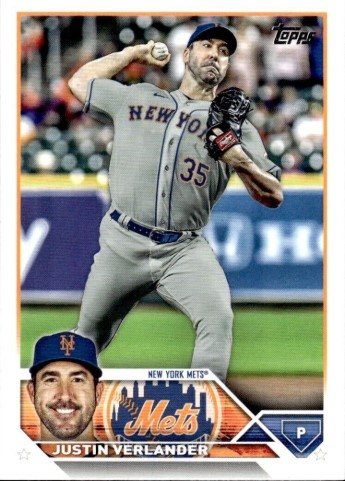
New York Mets … Justin Verlander

Justin Verlander missed pretty much all of the 2019 and 2021 seasons (Tommy John surgery), but made a remarkable comeback with the Astros in 2022 – going  18-4, 1.75, while  leading the AL in wins and ERA and picking up his third Cy Young Award.  He signed as a free agent with the Mets in the off-season and is a key to their pennant chances. Verlander, now 40-years-old, started the 2023 season on the IL (shoulder strain).  The Roundtable will be watching to see how the veteran right-hander recovers (he is not expected to be out long) and how he performs in his 18th MLB season.

Can Old Guys Rule (again)?

The Mets are looking to Max Scherzer and Justin Verlander as a 1-2 PUNCH  at the top of their 2023 rotation. The pair have a combined six Cy Young Awards. They also have a combined 78 years in age.  It will be fun to see if Old Guys can rule.

Philadelphia Phillies – Trea Turner

Signed as a free agent, SS Tea Turner went .298-21-100, with 101 runs scored and 27 steals for the Dodgers in 2022. With Bryce Harper out until the All Star break and Rhys Hoskins out for the season, the Phillies need Turner to repeat those numbers if they are going to compete in the East. His MLB resume says he should.   I’ll also be keeping an eye on Kyle Schwarber, who hit a career-high 46 home runs and drove in a career-high 94 tallies  (despite a .218 average and a league-leading 200 whiffs). The Philllies also need Schwarber to step up in the absence  of Harper and Hoskins.

First Signs of Spring

Trea Turner went .478-2-7 in eight 2023 Spring Training games.

Pittsburgh Pirate – Andrew McCutchen

A sentimental choice here.  Andrew McCutchen, in his fifteenth MLB season, is back with the Pirates (free-agent signing), where he began his MLB career, won the NL MVP Award in 2013 and  made five All Star teams in nine seasons.

He’s still got some pop in his bat (.237-17-69 for the Brewers last season). It would be nice to see the veteran energized by a return to Pittsburgh –  say in the neighborhood .275-25-80.

St. Louis Cardinals  – Paul Goldschmidt and Nolan Arenado

Baseball Roundtable likes players who flash leather and lumber, so I’ll be watching the Cardinals’ corner infielders (1B  Paul Goldschmidt and 3B  Nolan Arenado), who (appropriately) finished first and third, respectively, in 2022 NL MVP voting.  Goldschmidt went .317-35-115 and showed his usual sterling form on defense (he has four Gold Gloves and seven season of 30+ home runs to his credit).  Arenado went .293-30-103 and picked up his tenth Gold Glove. Arenado has won three home run titles, has three seasons of 40+ home runs and three more of 30 or more.

They Call Him the Streak

Nolan Arenado has won the NL Gold Glove at third base in every season since (and including) his rookie campaign of 2013.

The RoundTable will enjoy watching these two veterans ply their trade on the field and at the plate.

San Diego Padres – Fernando Tatis Jr.

Photo: Ryan Casey Aguinaldo, CC BY-SA 4.0 <https://creativecommons.org/licenses/by-sa/4.0>, via Wikimedia Commons

Fernando Tatis Jr. broke out as a 22-year-old in 2021  (.282-42-97, with 25 steals in 130 games). Since then, he hasn’t played a game – wrist and shoulder surgery and an 80-game PED-related suspension. He comes off suspension on April 20 and will be moving into a new position (moving to the outfield  from primary duty as a shortstop as a result of the Padres’ acquisition of Xander Bogaerts).  He’s got a lot on his plate coming into the season and will be worth a watch.

San Francisco Giants – Blake Sabol

Picked up from the Reds, 25-year-old Blake Sabol won a roster spot with a .348-3-10 Spring (20 Spring Training games).  There seems to be plenty of potential here.  In three minor-league seasons, Sabol went .282-34-142 in 246 games.  In 2022, at Double- and Triple-A, Sabol hit .284-19-75 and even swiped ten bags. A versatile player Sabol looks to spend some time in the outfield and behind the plate.  For The Roundtable, the watch will focus on whether Sabol can claim (and retain) the regular catching duties (over Roberto Perez and Joey Bart).

Washington Nationals – Joey Meneses

Nationals’ 1B  Joey Meneses was one of the feel good stories of 2022. Making his MLB debut on August 2 – as a 30-year-old called up in his tenth minor-league season, he had truly paid his dues.   Meneses, who also spent time on the field  in Mexico, the Caribbean and Japan, was hitting .286-20-64 at Triple-A (96 games) when called up.  He quickly collected on all those due she paid, going .324-13-34 in 56 games for the Nationals.  The Roundtable will be watching to see if the Cinderella story continues.


Primary Resources:  Baseball-Reference.com; MLB.com


Baseball Roundtable – Blogging Baseball Since 2012.

100Baseball Roundtable is on the Feedspot list of the Top 100 Baseball Blogs.  To see the full list, click here.

Baseball Roundtable is also on the Anytime Baseball Supply Top 66 Baseball Sites list.  For the full list, click here

I tweet (on X) baseball @DavidBaseballRT

Follow Baseball Roundtable’s Facebook Page here.  More baseball commentary; blog post notifications.

Member: Society for American Baseball Research (SABR); Negro Leagues Baseball Museum; The Baseball Reliquary. 


Twins Raise the Food & Beverage Bar (again) … Minnesota Style

Yesterday (April 3), Baseball Roundtable took part in what has become a Roundtable rite of spring – the Twins’ Annual Food and Beverage Preview. Sponsored by the Minnesota Twins and Delaware North (the team’s food and retail partner), this annual media event features a look at (and taste of) the upcoming season’s new Target Field food and beverage offerings.

The Twins Keep Raising the Bar

As I’ve noted here before, when I first began attending MLB games, standard fare consisted of (not always piping-hot) hot dogs and (not always ice-cold) beer and soda.  For those wanting to step outside the box, there were peanuts, popcorn and Cracker Jack® (which was, of course, in the box and with a toy).  For the really adventurous, there were frozen malt cups (with a wooden spoon after taste).  When pizza and burgers arrived on the scene, we all thought baseball’s culinary landscape was complete.

Side note:  I must admit, I do miss in-the-stands vendors who had mastered the art of applying decorative ribbons of mustard and/or ketchup to a steamed hot dog.  Those days, however, are past. 

The 2023 Target Field Food and Beverage Preview (like those that went before it ) brought home how wrong we were about reaching the ultimate in ballpark fare – and how committed the Twins are to continually raising the ballpark food and beverage bar, while also  building an ever-stronger Minnesota connection.

Here are a few of Baseball Roundtable’s favorite new Target Field offerings for 2023 – as judged by super-taster Bob King and me.   Those items that are Minnesota made are identified.  I attempted to include prices and locations wherever possible. Note:  Many, not all, of the photos show the sample size from the Food and Beverage Preview, rather than full size offering  (generally, if the descriptive sign is in the photo, it’s a full -size offering).  And of course, prices and availability  are subject to change. 

Let’s start with the Baseball Roundtable Taste Team’s  top-six new items.

Number OneJr.  Gong Jerk Chicken Bowl (Minnesota made), Soul Bowl, Section 113, $14.50.

Roasted jerk chicken thighs, glazed with pineapple jerk sauce and served with sweet plantains and yellow rice.  Bob and I both rated this number-one among the new tastes of the Twins.  The chicken was both spicy and juicy (take an extra napkin), with just enough sweet in the pineapple and plantain to balance the “heat.”

________________________________

Number Two … Cochinita Sliders, Truly on Deck.

Pork wrapped in banana leaves and braised in adobe sauce, with habanero pickled red onions and tequila pickles – served on a Sweet Hawaiian Roll.  Bob rated this as “the most unique and original offering.” He liked the combination of the braised pork flavor and  the “tang” of the tequila pickles.  This one really wakes up the taste buds.

___________________________

Number ThreeSummer Strawberries and Cream Waffles, Waffles and More, Section 114.

Need desert?  We were both impressed by the Summer Strawberries and Cream Waffles.  Waffles crunchy on the outside, fluffy on the inside – topped with true summer sweetness.  The stand also offers Chicken and Waffles and Belgian Waffles with locally-sourced maple syrup.

__________________________


Number Four … Legacy Salad (Minnesota made), Roots for the Home Team, Look for the concession cart.  (In recent seasons, near Gate 34 on weekends).

Lighter Fair?  A salad of brown rice, pickled vegetables, edamame, snap pears and bok choy. Crisp, fresh with just the right level of zip in the dressing. Good food for a good cause. Roots for the Home Team works with area young people  participating in community garden programs to cultivate personal and professional growth.

_________________________________


Number Five … Banh Mi Sandwich … Sous vide pork belly served on a hoagie roll with dark soy aioli, picked vegetables add sweet soy caramel. Bob noted that “This is a winner for me.  Nice and meaty.  The pork belly has a nice crunch and the hardy bun holds up to the sandwich.” Truly on Deck.

________________________________

Number Six … Chicken Sandwich (Minnesota made), Official Fried Chicken, Section 133, $8.99.

Official Fried Chicken offers a Chicken Sandwich ($8.99), as well as four- and eight-piece bone-in chicken and chicken tenders and fries ($12.99-$27.99). All the chicken was tasty, so it’s a matter of personal preference as to how you like your fowl served.  Bob and I both preferred the Chicken Sandwich – juicy broasted chicken in a sandwich that was just spicy enough.    Also, worth a try for the technology.  You order put in your at a kiosk, leave a phone number and then receive a text when it ready.  You’ll find it in one of the convenient heated pick-up boxes (see photo), ready to go.  No fuss, no lines.

___________________________________

Three Adult Beverages We Think Would All be

a Refreshing Way to Lift Your Ballpark Spirits.

Lovejoy Bloody Mary

Bomboozled … Bomba Juice (Strawberry/Lemonade Hard Seltzer) with an extra kick (60-Proof Strawberry/Basil/Chili Muddle). Gray Duck Deck, left field corner.

Lovejoy Thai Basil Bloody Mary (Minnesota made), garnished with Lovejoy-seasoned Minnesota Duroc Pork Belly.  Gate 34 Pub.

Double Play … (Minnesota made), Keeper’s Heart Rye and Keeper’s Heart Bourbon with pineapple and cranberry juice. Truly on Deck.


__________________________________


A  few other items to consider:


Hmong Sausage and Khao Sen/Rice  Noodle Bowl (Minnesota made) …  Seared Kramarczuk’s Hmong Sausage, served with chilled rice noodles, fresh herbs, cabbage, and vegetable slaw in a sweet chili vinaigrette.  Union Hmong Kitchen, Section 127.

________________________________

Loaded Potatoes … Looking for some comfort food at the ballyard? Fried baby red potatoes topped with cheddar cheese, sour cream, bacon and scallions, Truly on Deck.

____________________________________

T-Rex Cookies (Minnesota made) … These sweet treats (Chocolate  Chip and Monster Flavor) are the size of a catcher’s mitt (or, at about 8-inches across, seem nearly so).   A chewy-chocolaty dessert to share or, given the new pitch-count rules, one that should last a full inning or more. Multiple locations.

________________________________


Mrs. Parker Donut Peach Cobbler (Minnesota made) … Feeling the need for something super sweet?  A yeast donut topped with sweet peach cobbler, caramel drizzle and crushed vanilla wafers. Truly on Deck.

__________________________________

Jonny Pops (Minnesota made)  … Summer Strawberries and Cream, Chocolate Fudge and Oat Milk, Rainbow Fruit Snacks, Watermelon, and Red, White and Boom.   Section 126.

Beer Bats … Souvenir bat filled with ice-cold beer. This bat should be a hit with fans of beer and baseball – you pick the order. Multiple locations.

Wine Carafes … Wine, champagne, Mimosas and more in a unique carafe you’ll probably want to take home.   Section 114.

This is just a sampling of the new items for 2023.  Many favorites from past seasons will also be back: like Hot Indian Chicken Tikka, Kramarczuk’s Sausages, Tony O’s Cuban Sandwich, Murray’s Smoked Beef Sandwich and more.  And, don’t forget more traditional ballpark favorites like the Twins Big Dog, Nachos Grande in a helmet, bratwurst, pizza, peanuts, Cracker Jacks, and ice cream in a helmet.   The point is, when you head into the Target Field, you have plenty of choices when it comes to food and beverage.  Enjoy – and try not to spill on your scorecard.  (Okay, I’m old school, I still keep a scorecard.)

For a full listing  of concession  offerings, locations and prices, click here to go to the Twins Concession page.


Baseball Roundtable – Blogging Baseball Since 2012.

100Baseball Roundtable is on the Feedspot list of the Top 100 Baseball Blogs.  To see the full list, click here.

Baseball Roundtable is also on the Anytime Baseball Supply Top 66 Baseball Sites list.  For the full list, click here

I tweet (on X) baseball @DavidBaseballRT

Follow Baseball Roundtable’s Facebook Page here.  More baseball commentary; blog post notifications.

Member: Society for American Baseball Research (SABR); Negro Leagues Baseball Museum; The Baseball Reliquary. 


The More Things Change … Well, The More Things Change … New Lineups for 2023

Marcus Stroman – called for the first-ever regular-season pitch clock violation.

Opening Day (as I begin putting together this post) is upon us (as you read this, it will be behind us). As has been usual in recent seasons, the day is marked by change in MLB.  This year it’s shift-restricting regulations, a strictly enforced time clock, limits on pickoff attempts, a revamped schedule (each team will face all 29 other MLB teams at some point in the schedule, which means 24 fewer in-division games) and permanency for the extra-inning “ghost” runner.  As baseball fans we will, of course, learn to live with these changes.  (Well, most of them anyway. I remain steadfast in refusing to recognize ghost runners on my scorecard.)

In this post, Baseball Roundtable will look at a different kind of annual change.  The change we see in each season’s Opening Day lineups. Consider.  Of the 299 players who found themselves in the 2022 Opening Day lineups  (Shohei Ohtani is the reason the total is one short of ten per team), just 183 (61%) found themselves among the 2023 Opening Day starters.  Further, less than half (135/45 percent)  of 2023 Opening Day starters found themselves on the field to start Opening Day for the same team they “opened” for in 2022.

The highest number of repeat  Opening Day starters was six – by the Yankees, Rays, Orioles, Guardians, Tigers, Astros, Mariners, Braves, Mets, Marlins and Giants.  The fewest number of repeat Opening Day starters was two – Athletics, Pirates, Reds and Diamondbacks.

The Brewers had the highest number of 2022 Opening Day starters appearing in the Opening Day lineups of a new teams in 2023 at five:  2B Kolten Wong (Mariners); DH Andrew McCutchen (Pirates); RF Hunter Renfroe (Angels); C Omar Narvaez (Mets); 3B Jace Peterson (Athletics).  The Cardinals, Rockies and Astros had zero 2022 Opening Day starters appearing in another teams 2022 Opening Day lineup.

So, how does all this lineup change come about? Several ways:

  • Trades:  Think the Twins/Marlins trade that made former-Twin and AL batting champ Luis Arreaz (who started Opening Day 2022 for the Twins) the first player to come to the plate  for the Marlins this season and made former-Marlin Pablo Lopez the first pitcher to take the mound for the Twins in the 2023 campaign.
  • Injuries:   Think players stepping in for Bryce Harper and Rhys Hoskins of the Phillies or Jose Altuve of the Astros (all of whom were Opening Day 2022 starters).
  • Free Agent signings:  Think Jose Abreu , who started at 1B for the White Sox  on Opening Day 2022 and at 1B for the Astros this Opening Day – or Trea Turner, who started at SS for the Dodgers on Opening Day 2022 and at the same spot for the Phillies this Opening Day.
  • Players getting their first Opening Day start:  Think players  like Yankees’ SS Anthony Volpe and Cardinals LF  Jordan Walker,whose first Opening Day starts were also their MLB debuts. 

In the remainder of this post, Baseball Roundtable will take a look at the 2023 and 2022 lineups, in the order I predict  the teams will finish.  And, for those who are a little more nostalgic, I’ll toss in a look at team lineups from five and ten years ago.

Before we get started, for Roundtable readers from warmer climates, here’s ho we approach the home opener in Minnesota (at least this season).

Now for those lineups (and predictions).

–NATIONAL LEAGUE EAST–

First Place … Atlanta Braves

Second … New York Mets

Third – Phillies


Fourth … Marlins

Fifth … Nationals 

–NATIONAL LEAGUE CENTRAL–

First Place … Cardinals

Second – Brewers


Third … Cubs

Fourth …. Pirates


Fifth … Reds 


–NATIONAL LEAGUE WEST–

First  Place… Padres

Second … Dodgers

Third … Diamondbacks


Fourth … Giants

Fifth … Rockies

–AMERICAN LEAGUE EAST–

First Place …. Yankees

Second … Blue Jays

Third … Rays

Fourth … Orioles

Fifth … Red Sox

AMERICAN LEAGUE CENTRAL

First Place … Twins

Second … Guardians

Third … White Sox

Fourth … Royals


Fifth … Tigers

–AMERICAN LEAGUE WEST–

First Place… Astros

Second … Mariners

Third … Angels 

Fourth … Rangers

Fifth … Athletics


Primary Resource:  Baseball-Reference.com

Coming Soon: The Roundtable picks one player from each team for its 2023 “One to Watch List.”

Baseball Roundtable – Blogging Baseball Since 2012.

100Baseball Roundtable is on the Feedspot list of the Top 100 Baseball Blogs.  To see the full list, click here.

Baseball Roundtable is also on the Anytime Baseball Supply Top 66 Baseball Sites list.  For the full list, click here

I tweet (on X) baseball @DavidBaseballRT

Follow Baseball Roundtable’s Facebook Page here.  More baseball commentary; blog post notifications.

Member: Society for American Baseball Research (SABR); Negro Leagues Baseball Museum; The Baseball Reliquary. 


Why I Love Baseball

With Opening Day 2023 on the horizon, I find myself looking forward to the months ahead and  reflecting on why I love baseball.  With that in mind, I’ll dedicate this post to a review of the ten top reasons I love the national pastime – and also include links (at the end of this post) to posts on the topic of “Why I Love Baseball” from  guest writers ranging from Grammy nominee Leonard Eckhaus to 2013 MLB Draft sixth-round pick John Micheal Murphy to sportswriter and author Larry LaRue.

Let’s start with Baseball Roundtable’s ten Reasons to love the national pastime.

OD intros

1.  Baseball comes along every spring,  accompanied by sunshine and optimism.

Baseball is the harbinger of better times.  It signifies the end of winter (not a small thing if you’re from Minnesota) and the coming of spring – a season of rebirth, new life and abundant optimism.   Each season, you start with a clean slate.   Last year’s successes can still be savored, but last year’s failures can be set aside (although rival fans may try to refresh your memory), replaced by hope and anticipation.   On Opening Day, in our hearts, we can all be in contention.

People ask me what I do in winter, when there’s no baseball. 

I’ll tell you what I do.  I stare out the window and wait for spring.

 Honus Wagner, Hall of Famer

 2.  The pace of the game invites contemplation.

Between innings, between batters or pitchers, and even between pitches, baseball leaves us time to contemplate what just occurred, speculate on what might happen next and even share those thoughts with nearby spectators.  Baseball is indeed a thinking person’s game. (Side note:  I am waiting to see what impact the new pitch clock rules will have on this aspect of the national pastime.) 

3.  Baseball is timeless and, ultimately, fair in the offering of opportunity.

The clock doesn’t run out.  There is no coin flip to determine who gets the ball first in sudden death overtime.  No matter what the score, your team gets its 27 outs and an equal opportunity to secure victory.  What could be more fair?   And then there is the prospect of “extra” innings, bonus baseball for FREE.

When I was young my heroes didn't wear capes or cowboy hat. They wore stirrups and baseball caps. Many still do.

When I was young my heroes didn’t wear capes or cowboy hat. They wore stirrups and baseball caps. Many still do.

4.  Plays and players are distinct (in space and time).

Baseball, while a game of inches, is also a game of considerable space.   The players are not gathered along an offensive line or elbow-to-elbow under a basket. They are widely spaced, each with his own area of responsibility and each acting (as part of a continuing play) in their own time frame.  (On a 6-3 play, for example,  first baseman can’t catch the ball for the putout until after the shortstop throws it.)   This enable fans to follow, understand  and analyze each play (maybe not always accurately) in detail.   And, baseball’s distinct spacing and timing makes it possible to see the game even when you are not there.  A lot of people grinned at President Gerald Ford’s comment that he “watched a lot of baseball on the radio.”  In my view, he was spot on.  You can see baseball on the radio – you can create a “visual” of the game in your mind with minimal description.    That’s why on summer nights, in parks, backyards and garages across the country, you’ll find radios tuned to the national pastime.

 5. The scorecard.

Can there be anything more satisfying than keeping an accurate scorecard at the ball park?  It serves so many purposes.  The keeping of a scorecard ensures your attention to the happenings on the field.

Boxscore photo

Photo by mwlguide

Maintaining the score card also makes you, in a way understandable only to fellow fans, more a part of the game.   That magical combination of names, numbers and symbols also enables you to go back and check the progress of the game at any time.  “Oh, Johnson’s up next.  He’s walked and grounded out twice.”  It’s also a conversation starter, when the fan in the row behind you asks, “How many strikeouts does Ryan have today?”   And, it leaves you (if you choose to keep it) with a permanent record of the game, allowing you to replay it in your mind (or share it with others) at will.  Ultimately, a well-kept scorecard enhances the game experience and offers a true post-game sense of accomplishment.

6.  The long season.

Baseball, so many have pointed out, is a marathon rather than a sprint.  It’s a long season with ample opportunity to prove yourself and lots of chances to redeem yourself.  For fans, the long season also represents a test of your passion for the game.  Endurance is part of the nature of the true baseball fan.  And, and in the end, the rigors of a 162-game season prove your mettle and that of your team.   Not only that, but like a true friend … baseball is there for you every day.

 7.  Baseball invites, encourages, even demands, conversation.

Reason number two hinted at the importance of conversation, noting that the pace of the game offers time to contemplate the action (past and future) and share those thoughts with others.   I love that about the game, but I also love the fact that whenever baseball fans gather, their passion comes out in conversation – and they find plenty to talk about:

  •  Statistics,  statistics, statistics.  Baseball and its fans will count anything.  Did you know that Yankee Jim Bouton’s hat flew off 37 times in his 2-1, complete-game victory over the Cardinals in game three of the 1964 World Series?  More seriously, statistics are part of a common language and shared passion that bring baseball fans together in spirited conversation.  As best-selling author Pat Conroy observed “Baseball fans love numbers.  They love to swirl them around in their mouths like Bordeaux wine.”  I agree, to the fan, statistics are intoxicating.
  • Stories, stories, stories.  Baseball and its fans celebrate the game’s history.  And, I’m not talking just about statistics.  I’m talking about the stories that give this great game color, character and characters.  Ty Cobb sharpening his spikes on the dugout steps, Babe Ruth’s called shot, Louis Tiant’s wind-up, Willie Mays’ basket catch, Dock Ellis’s LSD-fueled no-hitter.
  • Trivia, trivia, trivia.  This may fall close to the “stories, stories , stories” category, but fans cherish the trivia that surrounds our national pastime – whether that trivia is iconic or ironic.  For example, t’s ironic that the iconic Babe Ruth holds the best winning percentage against the Yankees of any pitcher with 15 or more decision against them (17-5, .773). And, it’s ironic that the more recent player to steal home twice in one game (Vic Power, August 14, 1958) did it in a season when he only stole a total of three bases).  Then there is the iconic performance of Ralph Kiner, who led the NL in home runs as a rookie in 1948 – and successfully defended that title in each of the next six seasons – the most consecutive home runs titles by any major leaguer ever.

Basically, I took a long time to say I love the fact that baseball fans will talk with passion about something that happened in today’s game, yesterday’s game, over time or even in a game that took place on May 30, 1894 (Bobby Lowe of the Boston Beaneaters records MLB’s first four-homer game).  And, as a bonus, all this conversation – all the statistics, stories and trivia – make the games, moments within the games and the characters of the game (heroes, goats and mere participants) as timeless as baseball itself.

 8.  The box score. 

Today's box score - a thing of beauty.

Today’s box score – a thing of beauty.

BBRT editor’s  mother used to refer to an accordion as “an orchestra in a box.”  That’s how I view the daily box score – the symphony of a game recorded in a space one-column wide by four inches deep.   Some would say the box score reduces the game to statistics, I would say it elevates the game to history.  What do you want to know about the contest?   Who played where, when?  At bats, hits, stolen bases, strikeouts, errors, caught stealing, time, attendance, even the umpires’ names?   It’s all there and more – so much information, captured for baseball fans in a compact and orderly space.  I am, of course, dating myself here, but during baseball season, the morning newspaper, through its box scores, is a treasure trove of information for baseball fans.

 9. The irony of a team game made up of individual performances.

While baseball and baseball fans live for individual statistics and, while the spacing of the players drives individual accountability, the game is, ironically, deeply dependent on the concept of “team.”

Consider the offense.  Unlike other sports , where you can deliver victory by giving the ball or puck – time and time again (particularly as the clock runs down) –  to your best runner, skater, receiver or shooter, in baseball, your line-up determines who will be “on the spot” and at the plate when the game is on the line.  It may be your .230-hitting second basemen, rather than your .320-hitting outfielder.  Yet, even as the team depends on the hitter, he is totally alone in his individual battle with the pitcher.  And, achieving individual statistics that signify exceptional performance also demands a sense of team.  You don’t score 100 runs without a team mate to drive you in (although the statistic remains your measure of performance) …  and, you don’t drive in 100 runs if no one gets on base in front of you.   And, can you think of any other sport that keeps track of – and honors – the team-oriented “sacrifice.”

On defense, the story is the same.  A ground ball pitcher, for example, needs a good infield behind him to optimize his statistical presence in the “win” column.  And the six-four-three double play requires masterful teamwork as well as individual performance –  duly recorded in the record books as an assist for the shortstop, a putout and an assist for the second baseman and a put out for the first baseman.  Then there is the outfield assist – a perfect throw from a right fielder to nail a runner at third earns an assist – even if the third baseman drops the ball and earns an error.  Two individual results (one good / one bad) highlighted, but without the necessary team work – a good play on both ends – a negative outcome in terms of the game.

Ultimately, baseball is a game of individual accomplishments that must be connected by the thread of “team” to produce a positive outcome.

10. Baseball’s assault on the senses.  (Indoor ballparks fall a bit short here).

The sight of a blue sky and bright sun above the ballpark or a full moon over a black sky above a well-lit stadium.  The feel of the warm sun or a crisp evening breeze.  The scent of freshly mowed grass or steaming hot dogs.  The taste of cold beer and peanuts.  The sound of the crack of the bat, the cheers (or moans) of the crowd, the musical pitch of the vendors.  Baseball assaults all the senses ―  in  a good way.

The ballet of the double play … a beautiful thing.
Photo by roy.luck

Now, I could go on and on, there are lots more reasons to love this game: its combination of conformity (all infields are laid out the same) and individualism (outfield configurations not so much); its contributions to culture (literature and movies); its strategy (hit-and-run, run-and-hit, sacrifice bunts, infield / outfield positioning, pitching changes, etc.); triples; the 6-4-3 double play; knuckleballs; and more.  But to protect myself – and BBRT’s readers – I’ve limited myself to ten.   I probably could have saved a lot of time and words  had I just started with this so-perfect comment from sportscaster Bryant Gumbel, “The other sports are just sports.  Baseball is love.”  That says it all.


Bonus Reason to Love Baseball – Opening Day

In the words of Joe DiMaggio:

“You always get a special kick on Opening Day, no matter how many you go through. You look forward to it like a birthday party when you were a kid. You think something wonderful is going to happen.”

Now. here are links to guest posts on “Why I Love Baseball.”

  • For a post from author, poet and Grammy nominee Leonard Eckhaus (that includes an original poem) click here.
  • For a post from John Micheal Murphy, Yankees’ sixth-round pick in the 2013 MLB draft, click here.
  • For a post from Jason Love, author of “Slices of Americana – A Road Trip Through American Baseball History, click here.
  • For a post from sportswriter and author Larry LaRue, click here.
  • For a post from college football coach Alex Smith, click here.
  • For a post from baseball blogger Bill Ivie (I70baseball.com), click here.
  • For a post from dedicated autograph seeker Scott Perry, click here.
  • For a post from lifelong baseball fan Tom Cuggino, click here.


Baseball Roundtable – Blogging Baseball Since 2012.

100Baseball Roundtable is on the Feedspot list of the Top 100 Baseball Blogs.  To see the full list, click here.

Baseball Roundtable is also on the Anytime Baseball Supply Top 66 Baseball Sites list.  For the full list, click here

I tweet (on X) baseball @DavidBaseballRT

Follow Baseball Roundtable’s Facebook Page here.  More baseball commentary; blog post notifications.

Member: Society for American Baseball Research (SABR); Negro Leagues Baseball Museum; The Baseball Reliquary. 


Looking Ahead by Looking Back – 2022’s Improbable Games and Coincidences

As MLB Opening Day approaches, Baseball Roundtable is  looking forward to another season in which – as usual – fans can expect to see something new, different or at least improbable every time they go to the ballpark.  After all, in 2002 alone, fans saw six triple plays (including the first-ever MLB CF-to-3B  triple play); four no-hitters; four games in which the winning team plated 20 or more runs; a player picking up his tenth win on the mound and his 25th home run at the plate in the same game; a pitcher  with only three balks in an eight-season MLB career tying an MLB record by committing all three balks in the same inning … and I could go on and on.  With that in mind, and to get in the mood for another season of big-league ball, I would like to use this post to reflect on Baseball Roundtable’s Top Dozen  Improbables from the 2022 season.   I’ll also throw in a few bonus Improbables from seasons past.

Baseball Roundtable Top Dozen MLB Improbables From 2022

Number One … A Beer and a Burger, Please.

This one is kind of a two-fer.  April 7 was National Beer Day – and guess  what? Diamondbacks’ DH Seth Beer (gotta love that baseball name) hit a walk-off home run to push the Diamondbacks past the Padres 4-2.  It was just Beer’s second career homer and first career walk-off long ball – and the only home run he would hit in 2022.  Beer ended the 2022 season at .189-1-9 in 38 games.

Then, on May 28 (National Hamburger Day),  White Sox’ 3B Jake Burger homered in the Sox 5-1 win over the Cubs. It was Burger’s fourth homer of 2022 and fifth of his career. Burger finished with a .250-8-26 stat line for 20222 (51 games).

A Beer and a Burger.  That kind of coincidence in a single season is the kind of Improbable that catches The Roundtable’s eye.

Bonus Improbable from the Past

On September 23, 1969, fans in Cincinnati saw Dodgers’ pinch hitter John Miller hit his second (and final) MLB career home run.  They also witnessed Miller becoming just the second MLB player ever to homer in his very first MLB plate appearance (for the Yankees on  September 11, 1966) and very last MLB plate appearance. How improbable was that feat?  Remember, Miller hit only two home runs in his entire (32-game) MLB career – and, to this date, is still only one of two players to homer in his first and final plate MLB appearances. Miller’s final MLB stat line .164-2-3.

What further makes Miller’s homer an Improbable is how close he came to not homering in his final at bat.   Miller almost came to the plate one more time – on September 27, as the Dodgers and Giants faced off at Dodger Stadium.  That game was tied 1-1 in the bottom of the eleventh inning. Southpaw Ron Bryant was on the mound for the Giants and, after getting Dodgers’ SS Maury Wills to pop out, he gave up singles to LF Manny Mota and CF Willie Davis. Dodgers’ manager Walt Alston sent the right-handed hitting Miller up to hit for LA pitcher Jim Brewer.  Giants’ skipper Clyde King –playing the percentages – brought in veteran righty Don McMahon to pitch.  Alston countered by calling Miller back and sending up left-handed swinging Len Gabrielson (who singled in the winning tally.)  Without the switch, Miller’s final plate appearance home run could have become just an obscure next-to-last at bat dinger.

Number Two … The Rangers Didn’t have a Prayer.

Now, these days, “Immaculate Innings” (three up, three down, three strikeouts, nine [pitches) are not all that improbable – after all, there were seven  of them in 2022 alone. But how improbable is it to see two Immaculate Innings in one game? It’s only been done once – on June 15 of last season.  And, the “Improbability Factor” was raised even further by the fact that those two Immaculate frames were thrown by two pitchers on the same team and the same three opposing batters were the strikeout victims.

On June 15, Astros’ pitchers Luis Garcia and Phil Maton pitched their way into the record books. The two Houston hurlers each tossed an “Immaculate Inning.”  It was, as noted,  the first-ever MLB game in which two pitchers each tossed an Immaculate Inning and, of course, also made them the first and (currently) only teammates to toss an Immaculate Inning in the same game.

Garcia tossed his nine-pitch, three-whiff fame in the bottom of the second, while Maton achieved the feat in the bottom of the seventh. The Astros, by the way, won the game  (started by Garcia) 9-2 and four Houston pitchers notched a total of 14 strikeouts. Also of note is that the Rangers’ 1B Nathaniel Lowe, 2B Ezequiel Duran and 3B Brad Miller (the 6-7-8 hitters) were the victims in both Immaculate Innings – making them, of course, the first and currently only three players to be victims in two Immaculate frames in the same game.

Garcia finished the season at 15-8, 3.72 (28 starts)  – with 157 whiffs in 157 1/3 innings pitched. Maton was 0-2, 3.84 in 67 appearances – with 73 strikeouts in 65 2/3 innings.

Bonus Improbable from the Past

On September 12, 1962, fans in Baltimore saw the Senators’ Tom Cheney throw a sixteen-inning complete game, as the Senators topped the Orioles 2-1.  Now, a sixteen-inning complete game was much more probable back then,  what was improbable was Cheney’s 21 strikeouts, the highest total ever for a pitcher in an MLB game. What makes it even more improbable is that, in 1962, Cheney averaged   7.6 whiffs per nine (for his career,  he averaged 6.7 whiffs per nine innings).  In 1962, Cheney went 7-9, 3.17 in 37 games (23 starts). His career mark (eight seasons) was 19-29,  3.77.  

Number Three … You Balkin’ to Me? 

On September 27 of last season, in the eighth inning of a Marlins/Mets game (in New York), Mets’ 1B Pete Alonso came to the plate with  two outs and Mets’ 2B Jeff McNeil on first base.  McNeil scored during Alonso’s at bat, but no RBI was awarded.  Had an RBI been assigned it could have gone to Mets’ pitcher Richard Bleier who – during Alonso’s plate appearance – was charged with three balks (sending McNeil, to second, third and, finally, home).  Hence a Baseball Roundtable RBI – Run Balked In. (Bleier and Marlins’ skipper Don Mattingly would argue –  and did – so, maybe, the RBI should go to the umpires.) The Marlins won the contest 6-4, but neither Bleier nor Mattingly were around to see it.  Both were ejected.

This one comes up high on the Improbables list since the three balks (which tied the MLB mark for balks in an inning) are the only balks Bleier has been charged with in seven MLB seasons (308 appearances – 299 2/3 innings pitched).  Bleier finished 2022 with a 2-2, 3.55 record (with one save) in 55 appearances.

Number Four … Twenty-One Equals Luck in more than Black Jack.

In 2002, MLB established  September 15 as Roberto Clemente Day. This past season, Roberto Clemente Day saw an expanded list of  players, coaches and manager wearing Clemente’s’ number 21 on Clemente Day – all the players, coaches and managers in the Pirates/Mets game; along with all Puerto Rican born players.  In addition, the 2022 Clemente Award Nominees, past Clemente Award Winners and players who wore number 21 during the 2021 recognition had the opportunity to wear 21.

Among the players donning number 21 in the September 15 Royals-Twins game (at Target Field), were Twins’ SS Carlos Correa (usually number four) and Royals’ C Salvador Perez (usually number 13).  I single these two players out because, on that day, each of these one-day number 21’s  went yard – and it was the 21st home run of the season for each of them.  It’s the kind of cosmic numerical coincidence that catches The Roundtable’s attention. Oh, and the Twins prevailed 3-2.

Number Five …  Won’t Somebody Put the Ball in Play?

Okay, how’s this for improbable – an inning that featured six batters, three base runners, 28 pitches, no runs scored and not a single ball put in play? Yep, it happened (and without the aid of an extra-inning Ghost Runner).

On June 17, Evan Lee was on the mound for the Nationals, who were trailing the Phillies 5-3 in the top of the seventh innings. Here’s what happened:

  • Nationals’ DH Bryce Harper walked on four pitches.
  • RF Nick Castellanos walked on four pitches – two of which were wild pitches – sending Harper to third base.

Carl Edwards replaced Lee on the mound.

  • SS Didi Gregorius walked on four pitches, loading the bases. (So far, no balls in play and not even one strike thrown).
  • CF Odubel Herrera struck out looking at a 2-2 pitch.
  • 3B Alec Bohm fanned looking at a 3-2 pitch.
  • 2B Bryson Stott struck out on an 0-2 pitch.

The Phillies, by the way, own the game 5-3.

Number Six …. Lucky Seven? Maybe Not So Much.

Seeing a team bash seven or more  home runs in a game.  A bit improbable, but not overly so.  It’s been done 116 times in MLB history.  Seeing the home team accomplish the feat? 53 times.  All those home runs  being solo shots?  Just six times.  The team with seven or more long balls losing losing the game?  Just six times.  Having seven or more solo home runs account for all of the teams runs? Just once.    That was on August 4 of last season, when the Angels hammered seven solo home runs in an 8-7 loss to the A’s.  Here’s the count down:

First Inning – DH Shohei Ohtani

Second Inning – C Kurt Suzuki

Third Inning – RF Taylor Ward

Fourth Inning – LF Jo Adell

Sixth Inning – 1B Jared Walsh

Seventh Inning – Ohtani

Ninth Inning – CF Mickey Moniak

Number Seven … Three’s Company.

On July 4 of last season, the Twins celebrated with MLB first-ever 8-5 triple play. In the bottom of the seventh, the White Sox had runners on second (Adam Engel, pinch runner) and first (Yoan Moncada, single) and  in , with the score knotted at two apiece.   Twins’ CF Byron Buxton made an impressive (and improbable … Okay, perhaps not for Buxton) running catch in deep centerfield  on a fly ball by AJ Pollock. The runners were going (more evidence that the  catch was improbable) and when Buxton throw came in to 3B Gio Urshela (between second and third), Engel (who had started on second) had already rounded third and  was headed toward home, while, Moncada (who had started on first had rounded second. Urshela who chased down and  tagged Moncada (for out number two) as he reversed direction and retreat toward second base. Urshela then continued toward second, tagging the keystone sac to retired Engel for out number three  –  and  the first-ever 8-5 Triple Play in MLB history.  Improbable?   Well, Baseball Almanac show a total of 733 MLB Triple plays since 1876. This one was number 731 and the first started  by a centerfielder since 2010 – as well as the first-ever MLB triple killing involving only a centerfielder and third baseman.  The Twins, by the way, own the game 6-3 and triple play hero Buxton had contributed a two-run home run.

https://youtu.be/Dcyz3sqwD-M

Bonus Improbable from the past.

On July 17, 1990, 34,113 fans at Boston’s Fenway Park not only got to see a tense 1-0 Red Sox win.  They were witness to the Improbable – one team returning two triple plays in one game – an improbable feat that still has happened just once in MLB history. The triple killings  in the fourth and eighth innings were both were of what The Roundtable see as  the “purest” variety (ground ball leading to outs at third, second and first).   In the fourth, with the bases loaded, former Twin (then Boston right fielder) Tom Brunansky hit a ground ball to Twins’ third sacker Gary Gaetti, who stepped on the bag and threw to second baseman Al Newman (for out number-two), who relayed to first baseman Kent Hrbek to complete the triple play.  In the eighth, with runners on first and second, Red Sox second baseman Jody Reed grounded to Gaetti at third, and the around-the-horn triple play was duplicated.

Number Eight …  Swing and a Miss, Now, that’s Rare.

Photo: Erik Drost, CC BY 2.0 <https://creativecommons.org/licenses/by/2.0>, via Wikimedia Commons

On April 13, Guardians’ rookie outfielder Steven Kwan did something he hadn’t done in his entire MLB career (to that point), he swung and missed a pitch. It came in his sixth MLB game, in his 25th MLB plate appearance, his sixteenth at bat, 117th pitch and 40th swing.  An eventual miss probably was probable (I apologize, couldn’t resit the word twist), going an entire career without a swing and miss seems unlikely.  Still, it caught my attention. (And actually, Kwan did make some contact, foul tipping the pitch into the catcher’s glove – which counts and a swing and miss.) For those who like to know such things, the first MLB pitcher to get a ball past Kwan was Nick Lodolo of the Reds, the pitch was a low-80s curveball and Kwan ended up striking out in a six-pitch at bat.  In those first six MLB games, Kwan collected ten hits (two doubles, one triple), eight walks and one hit-by-pitch  (a .526 batting average and  .655 on-base percentage). He finished his rookie campaign at .298-5-52, with 19 steals.

Kwan was a fifth round draft choice (2018) out of Oregon State University, where he hit .329 over three seasons (156 games). In three minor-league seasons (217 games), he stroked the ball at a .301 pace – including .328-12-44 in 77 games at Double- and Triple-A last season.

Number Nine … First All Latino Lineup.

On September 15 – MLB Roberto Clemente Day 2022 – Rays’ manager Kevin Cash made a bit of history sending  the first all-Latino lineup to the plate (against the Blue Jays in Toronto)

It went like this:

3B Yandy Diaz (born in Sagua le Grande, Cuba)

RF  Randy Arozarena (La Habana, Cuba)

SS Wander Franco (Bani, Dominican Republic)

1B Harold Ramirez (Cartagena, Colombia)

DH Manuel Margot (San Cristobal, Dominican Republic)

LF David Peralta (Valencia, Venezuela)

2B Isaac Parades (Hermosillo, Mexico)

C – Rene Pinto (Maracay, Venezuela)

CF Jose Siri (Sabana Grande de Boya, Dominican Republic)

The Rays, by the way, prevailed 11-0 over the Blue Jays.  For those who like to know such things, the Rays’ starting and winning pitcher was Shane McClanahan.

Baseball Roundtable Side Note:

After the close of the 1963 season, MLB had it first (and what proved to be only) All Hispanic All Star Game – featuring such stars as Tony Oliva, Minnie Minoso, Orlando Cepeda, Roberto Clemente, Luis Aparicio, Juan Marichal and others. One of The Roundtable’s favorite trivia questions is “Who was the inning pitcher in the only MLB All Hispanic All Star Game? The answer: A Latino All Star with an improbable name …  Alvin O’Neal McBean. McBean was born in the Virgin Island to Inger Emanuel and O’Neal Alfredo McBean.

Bonus Improbable from the Past

On September 1, 1971, the Pittsburgh Pirates fielded the first MLB lineup consisting of all  “players of color.”

Rennie Stennett 2B

CF Gene Clines

RF Roberto Clemente

LF Willie Stargell

C Manny Sanguillen

3B Dave Cash

1B Al Oliver

SS Jackie Hernandez

P Dock Ellis

The Pirates prevailed in the contest 10-7 – with six members of the starting lineup enjoying multi-hit games.

Number Ten  … Probably Will See This Again, but Don’t Want To.

This one was up close and personal. On April 13, 2022, I braved Minnesota’s uber-chilly spring to take in the Twins-Dodgers at Target Field.  Despite the fact that the Twins were down 3-0, there was plenty of drama on the field and plenty of excitement in the crowd, After seven frames,  many of us anticipated a chance to see Dodgers’ starter Clayton Kershaw try for MLB’s 24th-ever Perfect Game.  At the time, Kershaw had thrown just 80 pitches (53 strikes) and had fanned 13 batters. Only three balls had been hit out of the infield. He was cruising and it was a masterful performance to watch.

Kershaw, however, did not come out to pitch the eighth. Dodgers’ skipper Dave Roberts instead put in Alex Vesia. I might add the change was met with a chorus of boos, from Twins fans and a large contingent of Dodger Faithful seated behind the third base dugout.

Now, there’s never been a combined Perfect Game, so I had a bit of hope. One out and five pitches after Vesia took the mound, Twins’ catcher Gary Sanchez lined a single to right and the Perfect Game and even the no-hitter were gone. (The Twins, ultimately, lost 7-0 and Sanchez’ single was their only safety.)

Why did this disappointment rate to high on the Improbables list. Later, I learned, via the Elias Sports Bureau, that only twice since 1900 has an MLB pitcher been pulled after the seventh inning with a Perfect Game intact.  Both times, Roberts was the manager.  (The first was on September 10, 2016, when he pulled Rich Hill – a reported finger issue –  after seven innings with Perfect Game intact against the Marlins (and the Dodgers up 5-0). Hill had thrown 89 pitches (62 strikes) and fanned nine. Hill was replaced by Joe Blanton and ten pitches and two outs later, Marlins’ LF Jeff Francoeur collected the first of two Miami hits in the game.

Number Eleven … It’s Nice to be First.

In the April 7, 2022, Angels game, Shohei Ohtani became the first MLB player to throw his team’s first pitch of the season and also be in the batter’s  box to take his team’s first pitch of the season – as he started on the mound and lead off at DH.  He also recorded his team’s first strikeout of the season getting the first batter he faced  and made his team’s first out of the season, grounding our short-to-first on the first pitch he saw in the first inning (remember, he was batting first.)

Number Twelve  – Let’s Get This Party Started.

On August 24 of last season, Mariners’ 24-year-old rookie right-hander George Kirby started against the Nationals in Seattle.  And, he got off to  quite a “start.”  Kirby opened the game by throwing 24 straight strikes (before his first called ball). According to STATS, that represents a record number of strikes to start off a game (at least since the initiation of pitch tracking in 1988). Kirby did not throw a called ball until he was facing his eleventh batter – with two out in the bottom of the third.  Over that span, he fanned three batters, and gave up five singles and one run. While the Mariners eventually lost the game 3-1, Kirby had a solid outing – seven innings (eight hits, one run, no walks and nine strikeouts). He threw 85 pitches (69 for strikes).

Kirby, a first-round pick in the 2019 MLB draft (out of  Elon University), already had  well-earned reputation as a strike thrower. In 30 minor-league outings, he went 7-4, 2.26 and walked just 21 batters in 117 1/3 innings (139 strikeouts). Coming into the August 24 outing, he had walked just 13 in 90 2/3 MLB innings. He finished his rookie MLB season at 8-5, 3.39, with 22 walks and 133 whiffs in 130 innings.

Bonus Improbable from the Past

By the way, should inquiring minds want to know, the generally accepted record for consecutive strikes thrown in a game (at any time) is 38 – by the A’s Bartolo colon on April 18, 2012 (versus the Angels).  Overall, the streak lasted from the second pitch of the fifth inning until the seventh pitch of the eighth frame.  Surprisingly, Colon struck out just two batters during the streak.  He also gave up two hits during the streak of strikes. A few notes:

  • 35 of the 38 pitches were fastballs (two change ups and one slider).
  • There was only one swing and miss (17 strikes looking).
  • There were ten foul fouls and ten balls put in play.

Primary Resources: Baseball-Reference.com; Baseball-Almanac.com; MLB.com


Baseball Roundtable – Blogging Baseball Since 2012.

100Baseball Roundtable is on the Feedspot list of the Top 100 Baseball Blogs.  To see the full list, click here.

Baseball Roundtable is also on the Anytime Baseball Supply Top 66 Baseball Sites list.  For the full list, click here

I tweet (on X) baseball @DavidBaseballRT

Follow Baseball Roundtable’s Facebook Page here.  More baseball commentary; blog post notifications.

Member: Society for American Baseball Research (SABR); Negro Leagues Baseball Museum; The Baseball Reliquary.