Baseball Roundtable Trivia(l) Tidbit Tuesday … Taking a “Run” at the Record Books

Welcome to another edition Trivia(l) Tidbit Tuesday, a weekly presentation of baseball occurrences that for some reason caught The Roundtable’s eye.  (I’m particularly fond of unexpected performances or statistical coincidences.) These won’t necessarily be momentous occurrences, just events, statistics or coincidences that grabbed my attention. This week, we’ll be looking at players whose only career MLB home  run was an inside-the-park Grand Slam.  For previous Trivia(l) Tidbits, just type Trivia(l) in search box on the right hand side of the page.

Pete Milne – He’ll Do in a Pinch

On April 27, 1949, New York Giants’ outfielder Pete Milne, playing in just his 17th MLB game, was called on to pinch hit for pitcher Andy Hansen in the bottom of the seventh inning – with the Giants trailing the rival Dodgers 8-7, the bases loaded and two out.  He delivered an inside-the-park Grand Slam to deep LF, for what would be his only career home run. Milne accomplished what The Roundtable likes to call an MLB one-of-a-kind unicorn.  He is the only MLB player, whose only career home run was a pinch-hit, inside-the park Grand Slam. (Yes, in baseball we count everything.) Milne played in three seasons for the Giants (1948-50), getting into 47 games and hitting .233-1-9.  For my Minnesota readers, Milne played in two seasons for the Minneapolis Millers (1950-51), hitting .304-12-95 in 185 games.

I did find three other players whose only career MLB home run was an inside-the-park Grand Slam (although not in a pinch-hitting role) … and there was an interesting (to me) coincidence along the way.

Lee Gooch & Cy Falkenberg – A Coincidental Crossing

On June 17, 1917, Lee Gooch started in right field (batting seventh) for the Athletics (versus the Indians) in Cleveland.  It was just his eighth career MLB game. Gooch came to the plate in the top of the fourth inning, with the Athletics up 1-0, the bases loaded and one out. Gooch delivered an inside-the-park Grand Slam – which would prove to be his only career MLB home run.  (Thanks in part to Gooch’s Grand Slam, the Athletics won 9-5 that day.) Gooch played in just two MLB seasons (1915, 1917 … Indians, Athletics), hitting .295-1-8 in 19 games.

Coincidentally, starting on the mound for the Athletics was Cy Falkenberg (in his last MLB season), who had hit an inside-the-park Grand Slam (which proved to be his only MLB career home run) eleven seasons earlier.

On July 18, 1906, Cy Falkenberg – pitching for the Nationals – started on the mound against the Chicago White Sox (in Washington D.C.) In the bottom of the sixth, with the game tied at two apiece, Falkenberg came to the plate with the bases loaded. He blooped a ball to right field that took a strange hop, eluding the right fielder.  It ended up as Falkenberg’s only career home run – an inside the park Grand Slam. Falkenberg, by the way, pitched a complete game 6-3 win that day.

Falkenberg played in 12 MLB seasons (1903, 1905-1911, 1913-15, 1917 … Pirates, Nationals, Naps, Athletics and Federal League Indianapolis Hoosiers, Newark Pepper and Brooklyn Tip-Tops). He went 130-123, 3.35 on the mound and .152-1-47 at the plate.

Eddie Onslow—A Rookie Run

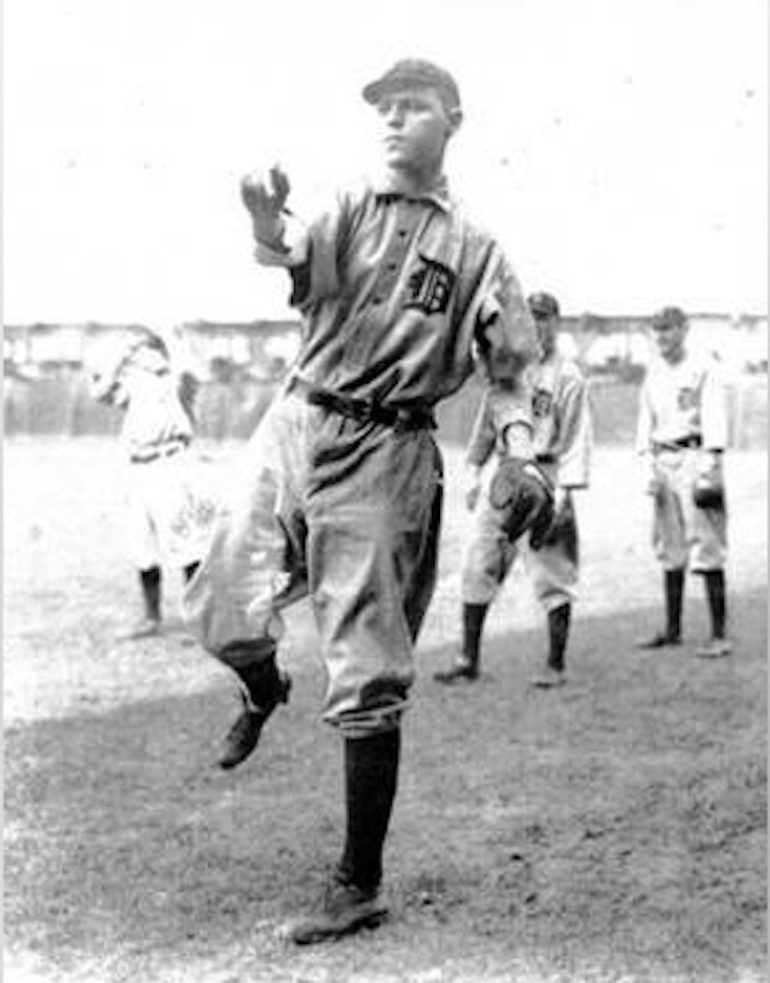
On August 22, 1912, 19-year-old Tigers’ rookie Eddie Onslow started at 1B (batting sixth) for the Tigers (versus the Nationals in Washington D.C).  Onslow, who came into the game hitting .154 on the season (8-for-52 in 14 games) had a heck of a day. He went four-for-five and hit his first (and what would be his only) MLB home run. It came with two out in the in the top of the first inning.  And, of course, given today’s Trivia(l) topic, it was an inside-the-park Grand Slam (to deep CF).  Notably, two of the the players who scored on Onslow’s hit were future Hall of Famers Ty Cobb and Sam Crawford. The game also saw Onslow reach career single-game highs in hits (four) and RBI (four).

Onslow played in four MLB seasons (1912-13, 1918, 1927 … Tigers, Indians, Nationals), hitting .232-1-22 in 64 games.

Primary Resource:  Baseball-Reference.com

Baseball Roundtable – Blogging Baseball Since 2012.

100Baseball Roundtable is on the Feedspot list of the Top 100 Baseball Blogs.  To see the full list, click here.

Baseball Roundtable is also on the Anytime Baseball Supply Top 66 Baseball Sites list.  For the full list, click here

I tweet (on X) baseball @DavidBaseballRT

Follow Baseball Roundtable’s Facebook Page here.  More baseball commentary; blog post notifications.

Member: Society for American Baseball Research (SABR); Negro Leagues Baseball Museum; The Baseball Reliquary. 

P1054

Baseball Roundtable Trivia(l) Tidbit Tuesday … Who Needs A Bat Anyway?

Welcome to another edition Trivia(l) Tidbit Tuesday, a weekly presentation of baseball occurrences that for some reason caught The Roundtable’s eye.  (I’m particularly fond of unexpected performances or statistical coincidences.) These won’t necessarily be momentous occurrences, just events, statistics or coincidences that grabbed my attention. For longer “Tidbits,” I’ll direct you to the Baseball Roundtable blog.  This is one of those Tidbits, although you could easily stop at the end of this page and still have a full story or two.  To check out previous Trivia(l) Tidbit Tuesdays, type Trivia(l) in the search box on the right hand side of the page.

Man on the Run

Rickey Henderson, MLB’s all-time stolen base leader, stole his career-high (single-game) five bases in a game in which he did not record a single at bat.

On July 29, 1989, MLB’s running man – A’s LF Rickey Henderson – became the first and still only (I do love MLB “unicorns”) MLB player to steal five bases in a game in which he did not record a single at bat. The thefts came in an A’s 14-6 loss to the Mariners (in Oakland) and his day went like this:

First Inning – Drew a leadoff walk on a 3-2 pitch from Randy Johnson. While the next batter, 3B Carney Lansford, was at the plate, Henderson stole second and third bases. He then scored as Lansford reached first on an error.

Third Inning – Drew another leadoff walk versus Johnson, again on a 3-2 pitch.  On the second pitch to Lansford, Henderson stole second. On the next pitch, he scored on a Lansford double.

Fifth Inning – Leading off the inning again, Henderson was again walked by Johnson, this time on four pitches. He stole second on the first pitch to Lansford and later scored as 1B Mark McGwire reached on an error.

Sixth Inning – This time, Henderson came to the plate – again against Johnson – with one on and two out.  He walked on another 3-2 pitch. Then, on the first pitch to Lansford, Henderson swiped second as part of a double steal. On the next pitch he scored on a Lansford double.

So, four plate appearances, four walks (no at bats) and Henderson’s only five-steal MLB game.

Henderson, by the way, finished 1989 at .274-12-57, leading MLB with 77 steals and 113 runs scored (tied). He also led the AL in walks with 126. Over his 25-season MLB career (1979-2003b… A’s, Yankees, Blue Jays, Padres, Angels, Mets, Mariners, Red Sox, Dodgers), Henderson went .279-297-1,115, with an MLB-record 1,406 steals and an MLB-record 2,295 runs scored. His 2,190 career walks are second only to Barry Bonds. The ten-time All Star led the league in stolen bases 12 times (seven seasons consecutively … 1980-86). He also stole 100 or more bases in three seasons.
Of course, with Baseball Roundtable, one thing always leads to another.  So, let’s look at a few more “no-at bat” records.

Most Plate Appearances in an MLB Game Without a Single At Bat (Seven)

On May 8, 2016, as the Nationals lost to the Cubs 4-3 in 13 innings in Chicago, Nationals’ Bryce Harper came to the plate seven times and reached base seven times without ever putting the ball in play (thus, recording zero at bats). Those seven plate appearances and seven times on base without an at bat are both MLB single-game records.  Harper drew six walks (three intentional) and was hit by a pitch.

Three players share the record for plate appearances without an at bat in a nine-inning game at six.

  • Cardinals’ 2B (and Hall of Famer) Miller Huggins … June 1, 1910 – In a 10-5 Cardinals’ win over the Phillies in Philadelphia, Huggins came to the plate six times and recorded four walks, two sacrifice bunts, one run scored and two RBI. Huggins played 13 MLB seasons (1904-16 … Reds, Cardinals) and hit .265-9-318, with 948 runs and 324 steals.  He led the NL in walks four times.
  • Braves’ SS Billy Urbanski … June 13, 1934 – Urbanski came to the plate six times and, like Huggins above, drew four walks and laid down a pair of sacrifices. He scored once in the Braves 9-0 win over the Cardinals in St. Louis. Urbanski played in seven MLB seasons (1931-37), all for the Braves. He hit .260-19-207 over 763 games. He drew only 198 career walks and had just that one four-walk game (also just one three-walk contest).
  • Red Sox’ 1B (and Hall of Famer) Jimmie Foxx … June 16, 1938 – As the Red Sox topped the Browns 12-8 in St, Louis, Jimmie Foxx came to the plate six times and walked six times.  He scored two runs in the game. That the Browns wanted nothing to do with Foxx should be no surprise, he was on his way to a .360-50-175 season (and his third MVP Award). Foxx played 20 MLB seasons (1925-42, 1944-45 … Athletics, Red Sox, Cubs, Phillies), hitting .325-534-1,922. The nine-time All Star won three MVP Awards and one Triple Crown and led the league in homers five times, RBI three times and average twice.

Most RBI for a Player in an MLB Game Without Single At Bat (Three)

 Pirates’ RF Clyde Barnhart … September 13, 1923 – As the Pirates topped the Robins in Pittsburgh, Pirates’ RF and cleanup hitter Barnhart drove in half of the Pirates runs without recording an at bat. All three RBI came on sacrifice flies. In four plate appearances he had those three SF and a walk.  That season, Barnhardt hit .324-9-72. He played in nine MLB seasons (1920-28), all for the Pirates, and hit .295-27-436.

Side note: Sacrifice fly rules were changed often over time, During the 1923 season, sacrifice flies and sacrifice hits (bunts) were not separated in MLB stats. So, you do not see Barnhart listed among those sharing the single-game sac fly record (at three).  However, the baseball-reference.com play-by-play indicates that (by current rules) he did record three sac flies on September 13, 1923.

Twins DH (and Hall of Famer) David Ortiz … July 3, 2000 – Ortiz, at DH and in the number-seven spot in the lineup managed to drive in three runs without recording an at bat – against the team he would eventually earn his way into the Hall of Fame with (the Red Sox). It came in a Twins’ 11-8 loss in Minnesota and Ortiz:

  • Drew a bases loaded walk off Ramon Martinez in the first inning;
  • Lofted an RBI sacrifice fly off Martinez in the third;
  • Recorded a second RBI sac fly (off Hipolito Pichardo) in the fourth;
  • Was pinch hit for in the sixth (by Butch Huskey) ending his evening’s work, with three plate appearances, no at bats and three RBI.

Ortiz, of course, went on to a Hall of Fame career (after a being released by the Twins in December 2002 and signing with the Red Sox in January 2003). While he never hit more than 20 home runs in a season as a Twin, the ten-time All Star hit 30 or more long balls in ten of 14 seasons In Boston, with a high of 54 in 2006. He was a ten-time All Star (all with Boston) and hit .286-541-1,768 over 20 MLB seasons (1997-2016).

Going Out In Style

In his final (age-40) MLB season, David Ortiz hit .315-38-127 in 151 games – and led the AL in doubles, slugging percentage and on-base+slugging.


Most Runs Scored by a Player in an MLB Game Without Recording a Plate Appearance (Four)

Six players share the record for more runs scored in a game without a plate appearance at four.

  • Blues RF (and Hall of Famer) Elmer Flick …  July 18,1902 – As the Cleveland Blues topped the Boston Americans 14-4 in Boston, Flick (in RF batting fifth) came to bat five times, walked four times, was hit by a pitch, scored four times and drove in one run. Flick played 13 MLB seasons (1898-1910 … Phillies, Athletics, Blues/Naps), hitting .313-48-76. He led the league in runs once, triples three times, RBI once, steals twice and average once.
  • Giants’ LF Sam Mertes …  August 12, 1903 – Mertes, batting cleanup, drew five walks (and scored four runs) in five plate appearances. – as the Giants topped the Cardinals 14-4 in New York.  Mertes played 10 MLB seasons (1896, 1898-1906 … Phillies, Orphans, White Sox, Giants, Cardinals), hitting .279-40-721 in 1,190 games. In 1903, he led the NL with 104 RBI, while hitting .280, with seven homers.
  • Indians’ CF (and Hall of Famer) Lary Doby … September 19, 1951 – As the Indians routed the Red Sox 15-2 in Boston, Doby (batting third) came to the plate five times, walked five times and scored four runs.  Doby played in 17 MLB seasons (1942-44, 1946-59 … Newark Eagles, Indians, White Sox, Tigers), hitting .288-273-1,099. The nine-time All Star was a Negro National League batting champion, and led the American League in runs once, home runs twice and RBI once.
  • Reds’ 2B (and Hall of Famer) Joe Morgan …  July 27, 1973 – Morgan – batting in the two-hole … came to bat four times, drew four walks and scored four runs, as the Reds bested the Braves 12-2 in Cincinnati.  Morgan played in 22 MLB seasons (1963-84 … Astros, Reds, Giants, Phillies, A’s), hitting .271-268-1,133, with 1,650 runs scored and 689 steals in 2,649 games. He was a two-time MVP, 10-time All Star and five-time Gold Glover. He led the league in walks four times and eight times drew 100+ walks in a season.
  • A’s LF (and Hall of Famer) Rickey Henderson … July 29, 1989 – In the same game in which he stole five bases without an at bat, Henderson drew four walks and scored four runs in four plate appearances.
  • Nationals’ CF Bryce Harper … September 3, 2003 – Harper came to the plate four times in a Nationals’ 15-1 trouncing of the Braves (in Washington D.C.). He walked four times and scored four runs. One of those walks came with the sacks full, giving him an RBI.  Still active, as this is written, Harper is in his 13the MLB seasons (Nationals Phillies). He is an eight-time All Star and two-time MVP.

Coming Soon – This post led me to look at Most Runs Surrendered by a Pitcher in a Game in which he Did Not Record a Single Out (credited with zero innings pitched).

Primary Resource: Baseball-Reference.com

Baseball Roundtable – Blogging Baseball Since 2012.

100Baseball Roundtable is on the Feedspot list of the Top 100 Baseball Blogs.  To see the full list, click here.

Baseball Roundtable is also on the Anytime Baseball Supply Top 66 Baseball Sites list.  For the full list, click here

I tweet (on X) baseball @DavidBaseballRT

Follow Baseball Roundtable’s Facebook Page here.  More baseball commentary; blog post notifications.

Member: Society for American Baseball Research (SABR); Negro Leagues Baseball Museum; The Baseball Reliquary. 

P1053

Trivia(l) Tidbit Tuesday … Oddly Even Contests

Welcome to another edition Trivia(l) Tidbit Tuesday, a weekly presentation of baseball occurrences that for some reason caught The Roundtable’s eye.  (I’m particularly fond of unexpected performances or statistical coincidences.) These won’t necessarily be momentous occurrences, just events, statistics or coincidences that caught my eye.  To see past Trivia(l) Tidbits, just type Trivia(l) into the search box on the lower righthand side of the page.

Like many of these “Tidbits,” this edition provides an example (two, actually) of what you can run across if you spend your times browsing baseball-related websites (like Baseball-Reference.com, Baseball-Almanac.com and National Pastimes.com, to name just a few of my favorites).

This time, we’re looking at oddly even games.  (I’ve actually written about this in the past, but today is the anniversary of one of these contests, so it seem an appropriate time to revisit these statistical coincidences.

An Oddly Even Game

On August 13, 1910, the Pittsburgh Pirates and Brooklyn Superbas (Dodgers) played perhaps the most “even” MLB game ever.  The first game of that day’s twin bill was pretty tight – a 13-inning, 3-2 Pirates’ win.  Game Two put Game One to shame.  It ended after nine frames in an 8-8 tie (called due darkness).  In the game:

  • Each team scored 8 runs;
  • Each team recorded 13 hits in 38 at bats;
  • Each team made two errors;
  • Each team recorded 13 assists and 27 putouts;
  • Each team gave up three walks;
  • Each team suffered one hit batsman;
  • Each team fanned five times;
  • Each team was charged with one passed ball;
  • Each team was awarded five RBI among their eight runs scored.

N0w, what are the “odds” of coming up with another one of those “even-Steven” games?

Ooops! They Did It Again.

On April 15, 1968, The Astros topped the Mets 1-0 in 24 innings.  In that one:

  • Each team had 11 hits in 79 at bats;
  • Each team had ten singles and one double;
  • Each team left 16 men on base;
  • Each squad made on error;
  • Each team threw two wild pitches;
  • Each team turned one double play.
  • Each team used four pinch hitters.
  • Oh, and by the way, the winning tally scored on a groundball error. So, each team scored zero “earned” runs.

Next week, an MLB unicorn – a once in baseball history baserunning feat.

Primary Resources: Baseball-Reference.com; Baseball-Almanac.com


Baseball Roundtable – Blogging Baseball Since 2012.

100Baseball Roundtable is on the Feedspot list of the Top 100 Baseball Blogs.  To see the full list, click here.

Baseball Roundtable is also on the Anytime Baseball Supply Top 66 Baseball Sites list.  For the full list, click here

I tweet (on X) baseball @DavidBaseballRT

Follow Baseball Roundtable’s Facebook Page here.  More baseball commentary; blog post notifications.

Member: Society for American Baseball Research (SABR); Negro Leagues Baseball Museum; The Baseball Reliquary. 

P1052

Trivia(l) Tidbit Tuesday — from CC to Double D … Some Memorable Shutouts

Welcome to another edition Trivia(l) Tidbit Tuesday, a weekly presentation of baseball occurrences that for some reason caught The Roundtable’s eye.  (I’m particularly fond of unexpected performances or statistical coincidences.) These won’t necessarily be momentous occurrences, just events, stats or coincidences that caught my eye. This week we’ll look ats a couple of, so far, once in MLB history accomplishments: One, I think will likely be matched someday (CC Sabathia leading both the AL and NL in shutouts in the same season); and one I think will stand the test of time (Don Drysdale’s six consecutive shutouts, thrown in a 21-day span).  So, let’s get on with it.

Note: To see past editions of Trivial(l) Tidbit Tuesday, just type Trivia(l) in the search box on the right-hand sided of the page.

Two Leagues of His Own

Recently, on August 3, the Cleveland Guardians inducted CC Sabathia into the Guardians Hall of Fame, which makes it appropriate to feature Sabathia in an edition of Trivia(l) Tidbits.  Sabathia achieved a baseball unicorn event in 2008, when he became the first – and still only – pitcher to lead both the American and National League in shutouts in the same season. Given today’s pitcher usage, I am pretty confident he will be sharing that distinction in the near future. (Consider that in the past six completed seasons, it has never taken more than two shutouts to lead either league and, in two of those seasons, one shutout was the maximum in both leagues. With that in mind, a solid pitcher moved to a contender at the trade deadline would seem to have a pretty good shot at joining Sabathia in this unique club.) But enough of that.  More on Sabathia’s season.

Sabathia started the 2008 season with the Indians and went 6-8, 3.83 with three complete game and two shutouts (which eventually tied for the AL lead) before being traded to the Brewers on July 7. He had shutout the A’s on May 14 (in Cleveland) on a five-hitter (two walks, 11 whiffs) in a 2-0 victory.  On June 10, he twirled another five-hit shutout, this time topping the Twins (in Cleveland) 1-0.

At the time of the July 7 trade, the Indians were last in the AL Central Division, while the NL Central Brewers were fighting for a post-season berth. (On July 6, they trailed the league-leading Cubs by 3 ½ games). Long story short, Sabathia carried the Brewers to the post season (albeit as a Wild Card) on the strength of his left arm – going 11-2, 1.65 in 17 starts.  In the process, he led the NL in complete games (7) and shutouts (3) – despite spending about half the season in the AL.  (He tied for the NL lead in shutouts with new Brewers’ teammate Ben Sheets and tied for the AL lead with seven other starters.) His NL shutouts came on: July 23, a three-hitter in a 3-0 win over the Cardinals in St. Louis; August 8 in a 5-0 win over the Nationals in Milwaukee (a five-hitter); and August 31 in a 7-0 win over the Pirates in Pittsburgh (a one-hitter).

Sabathia – A True Gamer

As the 2008 season wound down, with the Brewers still fighting for a post-season berth, C.C. Sabathia took the mound three times on three-days rest over the last nine days of the season. (Thanks to MLB.com writer Anthony Castrovince for the “tip” on this one.)  Over those the games, Sabathia went 2-1, with a 0.83 earned run average. In those nine days, he threw 21 2/3 innings, 335 pitches (221 strikes) – giving up just 15 hits (six runs, but just two earned), while walking four and fanning 21. On the final day of the season, he threw a complete game four-hitter as the Brewers topped the Cubs 3-1.   

Sabathia pitched in 19 MLB seasons (2001-19 … Indians, Brewers and Yankees) going 251-161-3.74.  The six-time All Star won the 2007 AL Cy Young Award, when he went 19-7, 3.21 for the Indians. As a rookie in 2001, he went 17-5, 4.39 for the Indians, finishing second in the Rookie of the Year voting to Ichiro Suzuki, who led the AL in average (.350), hits (242) and steals (56). Sabathia twice led the league in wins (a high of 21 for the Yankees in 2010) – and won 15 or more games in nine seasons.

One Unique Accomplishment That Likely Won’t be matched

Photo: Manny’s Baseball Land via tradingcarddb.com, Public domain, via Wikimedia Commons

While we’re thinking about shutouts, this one record that, given today’s pitcher usage, I don’t expect to ever be matched – most consecutive shutouts thrown (six). It was accomplished by Dodgers’ Hall of Fame righty Don Drysdale between May 14 and June 4, 1968. In that 21-day span, Drysdale tossed six consecutive nine-inning shutouts.  Think about that –  six shutouts in 21 days.

To put that in a bit of perspective:

  • Since 1990, only one pitcher has thrown as many as six shutouts in a season (Cliff Lee, 2017 Phillies);
  • The last time an MLB pitcher logged more than three shoutouts in a full season was 2014 (Hector Alvarez, Marlins).
  • Since 2017, only one MLB pitcher has thrown as many as six complete games (much less six shutouts) in a season (Sandy Alcantara, six in 2022).

Over those six consecutive shutouts, Drysdale held batters to a .145 average (27 hits over 54 innings). He walked nine batters, hit a pair (in true Drysdale form) and fanned 42.

Drysdale pitched in 14 MLB seasons (1956-69),  all with the Dodgers He went 209-166, 2.95 with 167 complete games and 49 shutouts in 518 games (465 starts). He was an All Star in eight seasons, led the NL in wins once (25 in 1963), starts four times, innings pitched twice and strikeouts three times. He won the NL Cy Young Award in 1962 (25-9, 2.83). He pitched in seven World Series games, putting up a 3-3 record and a 2.95 ERA (the same as his career regular-season ERA).

One More Trivia(l) Tidbit

In 1965, when the Dodgers faced the Twins in the World Series, Don Drysdale was the only Dodger with at least 100 at bats and an average of .300 or better. He also was the only Dodger with at least 100 at bats with a .500 or better slugging percentage. Drysdale was seventh on the team in home runs (seven) and tenth in RBI (19).

Primary Resources:  Baseball-Reference.com; Baseball-Almanac.com


Baseball Roundtable – Blogging Baseball Since 2012.

100Baseball Roundtable is on the Feedspot list of the Top 100 Baseball Blogs.  To see the full list, click here.

Baseball Roundtable is also on the Anytime Baseball Supply Top 66 Baseball Sites list.  For the full list, click here

I tweet (on X) baseball @DavidBaseballRT

Follow Baseball Roundtable’s Facebook Page here.  More baseball commentary; blog post notifications.

Member: Society for American Baseball Research (SABR); Negro Leagues Baseball Museum; The Baseball Reliquary. 

P1051


Baseball Roundtable July Wrap Up … A No-Hitter, A Unique Cycle, an Immaculate Inning, a .489 hitter and More

It’s August 1, and that means it’s time for the Baseball Roundtable monthly Wrap Up for July – a look at the stories and statistics that caught The Roundtable’s attention over the past month, as well as the standings, Roundtable Players and Pitchers of the Month, the Trot Index and more.

As usual, there were a few attention-grabbers over the past thirty-one days. We saw:

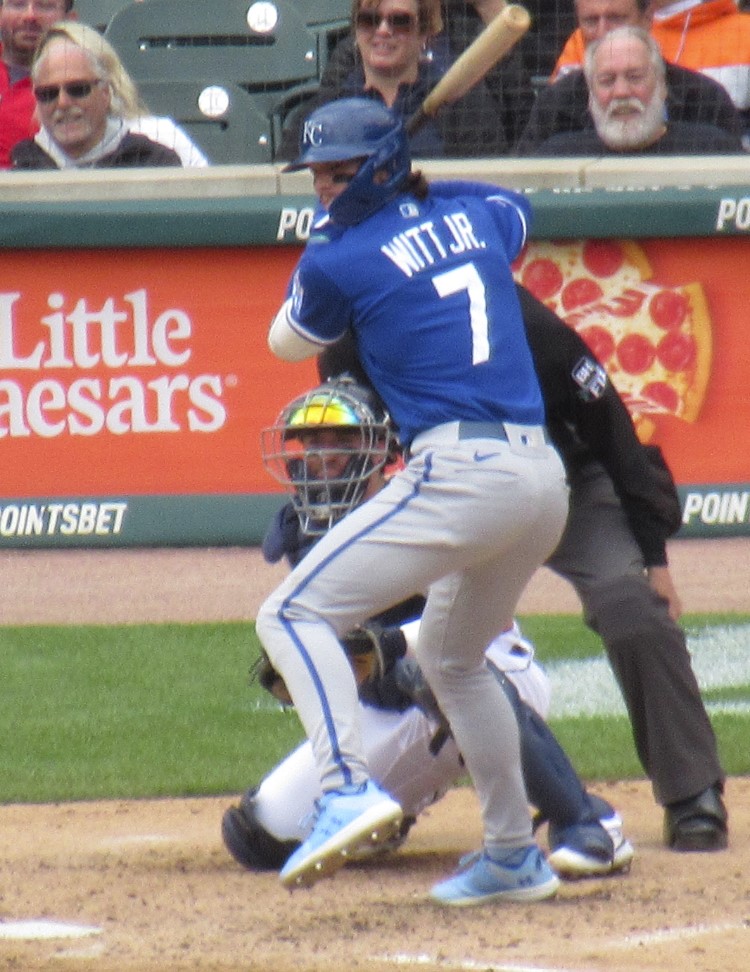
  • The Royals’ SS Bobby Witt, Jr. hit .489 over 23 games and the Reds’ RHP  Hunter Greene put up a 0.33 earned run average over four starts;
  • Rangers’ Nathan Eovaldi throw 39 innings in six starts, without issuing a single walk;
  • Marlins’ Rookie SS Xavier Edwards hit for the cycle in a game which included his very first MLB homer and very first MLB triple;
  • A no-hitter by Padre’s righty Dylan Cease;
  • The first-ever three-homer game by a Yankee rookie (Ben Rice);
  • The Braves’ 1B Matt Olson and C  Travis D’Arnaud going yard back-to-back twice in one game; and
  • Much more.

Read on for these stories and stats – and more (like All Star Game highlights), as well as for the usual Baseball Roundtable Wrap Up  features.

Just a Brief Interruption from the Past

One of July’s highlights was the Braves’ Matt Olson and Travis D’Arnaud hitting back to back homers twice in one game. For those who like to know such things, back on May 2, 2002 – in a Mariners’ 15-4 win over the White Sox in Chicago – Seattle 2B Brett Boone and CF Mike Cameron hit back-to-back dingers twice – in the same inning. It was a ten-run first frame,  and the victims were White Sox’ pitchers Jon Rauch and Jim Parque. 

Now, back to our regular programming.

Baseball Roundtable July Players and Pitchers of the Month

National League

Player of the Month … Brenton Doyle, CF, Rockies

A couple of my Players of the Month for July could also qualify for Surprise of the Month. (Spoiler alert – there is a tie in the AL).  We’ll start with Rockies’ CF Brenton Doyle. Doyle, in just his second MLB season, put up a .333-11-27 line in 24 July games. He led the NL  in July homers, tied for the NL in RBI and scored 15 runs. Why the surprise?  Last season, his first in the majors, Doyle hit just .203-10-48 in 126 games. (He did bring home a Gold Glove). This season, he came into July at .254-7-27 in 79 games.  In July, Doyle had eight multi-hit games and nine multi-RBI contests.

Doyle was a fourth-round draft pick (out of Shepherd University) in 2019. In four minor-league seasons (292 games), he hit .287-55-165.

Honorable Mentions: Diamondback’s 3B  Eugeni0 Suarez’ July number were nearly identical to Doyle’s. Like Doyle, he hit .333 with 27 RBI and 30 hits.   He also had ten homers (to Doyle’s 11) and scored 21 runs to Doyle’s 15.  I gave a paper thin edge to Doyle, probably because of the surprise factor (and his two stolen bases). I also put a couple of shortstops in here. Phillies’ SS Trea Turner had a .292-10-23 month, with 20 runs scored and five steals.  Miami’s 24-year-old rookie SS Xavier Edwards led the NL in July hits (34), while going .395-1-12, with 14 runs scored and nine steals. The 2018 first-round draft choice (Padres) looks like a keeper. In six minor-league seasons, he hit .313-14-172, with 295 runs scored in 461 games. Last season, he hit .295 in 30 games for the Marlins and this season, through July, he is at .379-1-12, with 15 runs scored in 27 games. On July 28, he became just the second Marlin to hit for the cycle. (You’ll find more details on Edwards and his unique cycle in the highlights section.)

Pitcher of the Month – Hunter Greene, RHP, Reds

Photo: Minda Haas Kuhlmann, CC BY 2.0 <https://creativecommons.org/licenses/by/2.0>, via Wikimedia Commons

Okay, I’m a sucker for a sub-200 earned run average.  So, imagine how impressed I am with the Reds’ Hunter Greene and his 0.33 ERA in four July starts. Greene went 2-0 for  the month and gave up just nine hits, one earned run and eight walks, while striking out 29 in 27 innings. He ran his season record to 7-4, 2.97. He held hitters to a minuscule .103 average and put up a 0.63 whip.

Honorable Mentions: How can you not mention Pirates’ phenom righthander Paul Skenes, who not only started the All Star Game as a rookie, but went 2-1, 1.59 in four July starts – fanning 33 and walking just six in 28 1/3 innings. On July 11, he no-hit the Brewers for seven innings, walking one and fanning eleven. His season record at the end of June was 6-1. 1.90. And, remember, he was the number-one pick in the 2023 draft and made it to the majors after just 34 minor-league innings. We’ll also give a nod of appreciation to a couple of veterans. The Braves Chris Sale went 3-0, 2.45  in five July starts, with 37 whifffs in 29 1/3 innings – and the Padres’ Dylan Cease went 4-2, put up a 2.35 ERA, led the NL with 49 July  strikeouts and tossed a no-hitter on July 25.


American League

Player of the Month – Brent Rooker, LF, A’s & Bobby Witt, Jr., SS Royals

The A’s offense exploded in July and Brent Rooker lead the way – going .391-11-30 – third in MLB in average (among those with at least 75 July at bats) and first in RBI and home runs. He also tossed in five steals.  Like Brenton Doyle in the NL, Rooker is a bit of a surprise here. In his fifth MLB season, the 2017 first-rounder (Twins) came into the season with a .230-40-92 line over 218 MLB games. He was, however, a 2023 All Star, hitting .246-30-69 for the A’s in 137 games.  It looks as though he is going to eclipse all those number in 2024.  As of the end of July, his 2024 line was .297-26-77, with 53 runs scored and seven steals.

You can’t ignore Royals’ SS Bobby Witt, Jr., who hit an MLB-highest (among hitters with at least 75 July at bats) .489 for the month, with seven homers, 22 RBI and 26 runs scored. He led MLB in July runs and  hits (44 in 23 games). Witt hit safely in all but one of his July games and ended the month with an active 13-game hitting streak.  His month included 13 multi-hit contests. His July on-base percentage was .520.

Honorable Mention: A’s rookie right fielder Lawrence Butler also had a great month: .363-10-27, with 23 runs scored and four steals.

Pitcher of the Month – Tie: Nathan Eovaldi, RHP, Rangers & Tarik Skubal, LHP, Tigers

Yeah, I copped out again.  Another tie. Nathan Eovaldi picked up four wins (one loss) and put up a 3.23 ERA. He led AL pitchers in starts (6, tied) and innings pitched (39). He also put up a fine 0.79 WHIP, but he gets the nod here on the basis of his 32 strikeouts versus zero – yes zero – walks. It’s those kind of unique ratio that attracts The Roundtable’s attention. Eovaldi’s numbers would have been even better, except for a five-inning, six-run outing  versus the Orioles on July 19.

The Tigers’ Tarik Skubal went 3-0, 2.45 in five July starts, fanning 42 batters (second in the AL) and walking just five in 33 innings.  He showed an ability to pitch out of trouble in a July 22 game against the  division-leading Guardians, when he gave up just one earned run, despite surrendering ten hits and a walk in seven innings. He went at least six innings in all five starts, seven frames in three.  (Okay, those didn’t used to justify bragging rights, but in today’s game they do.)

Honorable Mentions: The Rays’ Taj Bradley gave up just five earned run (six runs total) in five  July starts (31 innings pitched) – going 3-1, 1.45, with 31 strikeouts and eight walks.    He held hitters to a .160 average and put up a 0.81 WHIP. The Twins’ Bailey Ober went 3-1, with a 2.00 ERA  and fanned 29, while walking just four, in 27 innings.

Surprise of the Month – Tyler Phillips, RHP, Phillies

Phillies’ rookie Tyler Phillips was a 16th-round draft pick (out of high school) in 2015 (Rangers). He moved from team to team in the minor leagues over eight seasons (in 2021 alone, he played for the Round Rock Express, Frisco Roughriders, Reading Fightin’ Phils and Jersey Shore Blue Claws) before being called up from Triple-A this July 5. (His minor-league record was 42-43, 4.32 in 149 games/129 starts.) Phillips saw his first MLB game action on July 7, going four innings in relief and giving up three hits and one run, while fanning seven. His next three appearances for the Phillies were starts – and he went 3-0, giving up four runs in 21 innings. In his third MLB start, he threw his first MLB shutout – a four-hitter in a 8-0 win over the Guardians. Philips finished July at 3-0, 1.80 for the Phillies.  A very pleasant surprise.


__________________________________________

THE TROT INDEX … A REGULAR BASEBALL ROUNDTABLE FEATURE

Through July 31,  34.6% of the MLB season’s 122,431  plate appearances ended in a trot (back to the dugout, around the bases, to first base). We’re talking about strikeouts, home runs, walks, hit by pitch and catcher’s interference – all outcomes that are, basically, devoid of action on the base paths or in the field. Here’s the breakout: strikeouts (22.3%); walks (8.2%); home runs (3.0%); HBP (1.1%); catcher’s interference (less than 1%). Strikeouts, by the way, outnumbered base hits 27,274 to 26,705. 

The 34.6% figure is down  from 35.6% through July in 2023. I also looked into full-year Trot Index figures for the years I have been a fan: in 2023; 30.3% in 2010; 29.9% in 2000; 31.7% in 1990; 23.1% in 1980; 27.0% in 1970; 25.1% in 1960; and 22.8% in 1950.

Observations on July Results.

The first thing that struck me was that July was a month of “reckoning.” Looking at the teams that were in first and second place in each of the divisions  at the end of June:

  • Seven of the 12 were under .500 for the month of July (Braves, Phillies, Brewers, Dodgers, Orioles,  Yankees, Mariners);
  • Three of those teams had their division’s worst July W-L record (Brewers, Yankees, Mariners);
  • Of the five teams that were over .500, three were just one game over (Cardinals, Guardians and Twins);
  •  Only the Padres (13-9) and Astros (14-11) were more than one game over .500 from this group.

The surprise team of the month was the Oakland A’s.  They ended June 26 games under .500,  with the worst record in the AL West, second-worst in the AL overall (thanks to the White Sox) and third-worst in all of MLB.  Then, in July, they won the most games of any AL team … 15-9. They did with power. Their earned run average was pretty much middle of the pack at  was 4.18 (fifteenth in MLB and seventh in the AL.) However, the A’s led MLB in July homers (45), were second in runs scored (first in the AL) with 148. They were led by 29-year-old LF Brent Rooker (.391-11-30 in July) and 24-year-old RF Lawrence Butler (.363-10-27). Those two bats accounted for 46.7% of the team’s homers, 39.9% of the RBI, 30.9% of the A’s July base hits  and 31.8% of the runs scored. On the mound, 28-year-old southpaw JP Sear came through with a 4-1. 3.07 record in four stats.  He was the only true starter with an ERA under 4.30. (Hogan Harris  went 1-1, 1.45 in three starts, but only pitched 14 2/3 innings.

——-Team Statistical Leaders for July 2024 ———

RUNS SCORED

National League –Diamondbacks (164); Mets (133); Cardinals (126)

American League – A’s (148); Red Sox (141); Yankees (129)

The fewest runs in July were scored by the White Sox (74). In the National League, it was the Padres at 99.  

AVERAGE

National League – Diamondbacks (.283); Cardinals (.271); Padres (.270)

American League – Red Sox (.283); Royals (.278); A’s (.267)

The lowest team average for July belonged to the White Sox at .212. The lowest in the NL was the Braves (.229).  The bottom five in average were from the AL.

HOME RUNS

National League – Braves (44); Diamondbacks (41);  Rockies (41)

American League – A’s (45); Yankees (41); Red Sox (37)

The Angels had the fewest July homers at 17.  Also under 20 were the White Sox (18) and Nationals (19).

The Diamondbacks led MLB in slugging percentage for July at .499.  The Red Sox led the AL at .496.

TOTAL BASES

National League – Diamondbacks (435); Mets (400); Rockies (383)

American League – Red Sox (440); A’s (400); Yankees (384)

STOLEN BASES

National League – Nationals (38); Reds (33); Marlins (26)

American League – Rays (34); Angels (25); Mariners (25)

The Twins and Rockies stole the fewest sacks in July at seven (in 11 and 16 attempts, respectively).

WALKS DRAWN

National League –   Dodgers (99); Diamondbacks (92); Brewers (92)

American League – Yankees (109); Rays (94); Orioles (89)

The Diamondbacks led MLB in July On-Base Percentage at .353. The Red Sox led the AL at .343.

BATTER’S STRIKEOUTS

National League – Rockies (259); Mets (251); Braves (250)

American League – Red Sox (248); Mariners (244); White Sox (234)

Royals’ batters fanned the fewest times in June (124). The Padres fanned the fewest times in the NL at 150.

Bonus Stats

  • Three teams (Red Sox, Reds, Pirates) recorded zero sacrifice bunts in July. The only teams with more than five were the Diamondbacks (9) and Marlins (9).
  • The Braves recorded five sacrifice bunts in July – after not having in single sacrifice bunt through June.
  • Through July, the Tigers have the fewest sacrifice bunts on the season at three, the Diamondbacks the most at 20.
  • Mariners’ batters were hit by a pitch an MLB-leading 23 times in July. Brewers’ batters suffered the fewest HBP (four).
  • Year-to-date, the Twins have suffered the most hit batsmen (75), the Brewers the fewest (32).
  • The Rockies grounded into an MLB-highest 25 double plays in July. Teams grounding into fewer than ten double plays in the month were the Reds (7), Phillies (9), Dodgers (9) and Cubs (9).

_______________________________________

EARNED RUN AVERAGE

National League –Pirates (3.09); Cubs (3.14); Braves (3.38)

American League – Mariners (3.03); Rays (3.30); Rangers (3.76)

The Nationals had the highest July ERA at 5.72 – also north of 5.00 were the Blue Jays (5.65); Dodgers (5.36); White Sox (5.34); Rockies (5.29), Orioles (5.21); and Phillies (5.25).

STRIKEOUTS

National League – Mets (242); Braves (236); Giants (224)

American League – Astros (246); Yankees (241); Orioles (229)

The Astros averaged an MLB-best 10.06 strikeouts per nine innings in July. The Braves averaged an NL-best 9.5o.  Ten teams average at least nine strikeouts per nine innings for the month.

FEWEST WALKS SURRENDERED

National League – Padres (58); Braves (60); Cardinals (61)

American League – Mariners (56); Twins (58); Rays (60)

The Mariners walked an MLB-lowest 2.36 batters per nine innings in July.  The Blue Jays walked an MLB-worst 4.24 batters per nine frames.  

SAVES

National League – Mets (11); Dodgers (8); three with seven

American League – Astros (9); Rangers (9); Guardians (8); Rays (8);

The Dodgers and Red Sox blew the most saves in July – nine each.  LA was 8-for-17 in save opportunities, Boston 6-for-15.

Walks+ Hits/Innings Pitched (WHIP)

National League –Padres (1.10); Cubs (1.14); Braves (1.15)

American League:  Mariners (1.11); Twins (1.15); Rays (1.17)

Bonus Stats:

  • The Mets gave up an MLB-high 48 home runs in July. The Mariners and Diamondbacks each gave up an MLB-low 19 home runs.
  • The Padres held opponents to an MLB-low .220 average in July. The Rockies’ staff was touched for an MLB-high .291 average.
  • The Braves’ strikeouts-to-walks ratio for July topped MLB at 3.93. The White Sox had MLB’s worst ratio at 1.77.


________________________________________

July 2024 Highlights

Will Smith – Acting Up (and Outa Here)

On July 3, Dodgers’ catcher Will Smith came to the plate five times and had three home runs and two walks – scoring four runs and driving in three – as the Dodgers beat the Brewers 8-5 in Los Angeles.  Smith went yard in the first and third innings off Aaron Civale and in the seventh off Bryan Hudson. They were his 12th, 13th and 14th homers of the season and made him just the fourth Dodger catcher with a three-homer game (Roy Campanella, Mike Piazza, Yasmani Grandal). Side note: Smith also homered in his first at bat the next day, giving him long balls in four straight at bats.

Smith finished July with a .256-15-56 line on the season.

Justin – Man of Steele

On July 5, Cubs’ southpaw Justin Steele pitched his first-ever complete game, as the Cubs beat the Angels 5-1 in Chicago. Steele tossed an efficient 95 pitches (68 strikes) and gave up two hits and two walks, while fanning seven.  The nine-inning outing came in Steele’s fourth MLB season and 76th start.  For those who like to know such things, there were seven MLB complete games in July and there have been 22 complete games this season (13 of them shutouts).  By comparison, in 2010 there were 165 MLB complete games and, in July of that season, there were 27 MLB complete games – nine of them shutouts).

One (or a dozen) for the Record Books

In the fourth-inning of the Twins’ July 6 9-3 home win over the Astros, Minnesota 3B Jose Miranda stroked a single to right-center on an 0-1 pitch from Astros’ starter Hunter Brown.  Just a single, no big deal. Right? Wrong!  It gave Miranda a stretch of 12 base hits in 12 consecutive at bats tying an MLB record: Walt Dropo. 1B, Tigers …  July 14-15, 1952; Pinky Higgins, 3B, Red Sox … June 19-21, 1938; Johnny Kling, C, Chicago Colts … August 24-28, 1902). A few highlights from Miranda’s streak:

  • Miranda is the youngest player to accomplish this record;
  • Miranda’s 12 base hits came off the most different pitchers of any of the streakers (eight different moundsmen)
  • Miranda had the most total bases during his streak (19 – four doubles, one home run, seven singles);
  • Miranda had the most runs scored during his streak (seven);
  • Six of his 12 hits came when he was behind in the count, three on 0-2 pitches.
  • The streak took place over four games over four days.

Yankee Power from an Unexpected Source

From Babe Ruth to Mickey Mantle to Aaron Judge (and others), the Yankees have been known for their power (hence, the Bronx Bombers). On July 6, however, 1B Ben Rice became the first Yankee rookie to hit three homers in a game and he did it in just his 17th MLB game (the fifth-earliest ever to achieve the feat according to Elias Sports Bureau). Batting out of the leadoff sport, Rice hit a solo shot in the first inning, a three-run homer in the fifth and a second three-run blast in the seventh, as the Yankees topped the Red Sox 14-7 in New York.

Rice was a 12th-round pick in the 2021 MLB Draft (out of Dartmouth College, where he hit .242-1-13 in two seasons – 30 games). In 2023, he went .324-20-68 in 73 games at A, High-A and Double-A. In 2004, he was .275-15-36 in 60 games at Double-A and Triple-A, before making his MLB debut on June 18.  Through July, his MLB stat line was .211-7-22 in 35 games for New York.

An Immaculate One Inning Outing

On July 10, in Chicago, the White Sox called on Michael Kopech to come in from the pen in the top of the ninth to save a 3-1 win over the Twins.  He did it in style, throwing 2024’s first Immaculate Inning (nine pitches, three strikeouts).  In order, he fanned Twins’ 3B Brooks Lee, RF Matt Wallner and PH Max Kepler.

Ben Joyce Brings the Heat

On July 12, Angels’ reliever Ben Joyce threw a 104.5 MPH fastball – the fastest pitch of 2024 – while pitching a scoreless seventh frame in a 2-1 Angels win over the Mariners.   (Side note:  The fastest pitch measured since the tracking era began in 2008 was a 105.8 MPH Aroldis Chapman offering in 2010). Joyce’s pitch was fouled off by Angels’ Josh Rojas, who eventually fanned.

Ben Joyce holds the record for the fastest pitch recorded by a college player – a 105.5 MPH fastball while at the University of Tennessee.

As July closed, the 23-year-old rookie righty had a 1-0, 2.01 stat line in 19 2024 appearances, with  19 strikeouts in 22 1/3 innings pitched.

Lucky 13

On July 13, Carlos Santana went deep in the off the Giants’ Taylor Rogers in a Twins’ 4-2 win at Oracle Pak. Not only did his 13th home run come on the 13th day of July, it also gave Santana the distinction of having homered in all 30 active MLB ballparks. In a #InBaseball We Count Everything move, the Elias Sports Bureau reported that only Santana, Manny Machado and Giancarlo Stanton had homered in all 30 current MLB ballparks.  Of course, that will change when the A’s leave Oakland next season.

The Shohei Show – Frosting on the Cake

There’s always seems to be a Shohei Ohtani highlight. This one came in a July 13 Dodgers’ ten-inning 4-2 loss to the Tigers. In the top of the fifth frame, Ohtani broke a 2-2 tie with a solo home run off Keider Montero. It was not only Ohtani’s 29th and league-leading round tripper of the season, but also his 200th MLB homer making him the first Japanese-born player to reach that mark. Ohtani already had the all-time mark for Japanese-born player (Hideki Matsui is second at 175), so this was frosting on the cake.

Rookie Power

Reds’ 23-year-old rookie RF Rece Hinds made his MLB debut on July 8, going two-for-three with a double and a home run in a 6-0 Reds’ win over Colorado.  In his first six MLB games (July 8-13) Hinds hit an even .500 (11-for-22), with five home, three doubles and a triple His nine extra-base hits over his first six games are the most by any player in the Modern Era. Hinds ended July with a .316-5-11 stat line in ten games.

Hinds was signed, as a teenager, out of the second round of the 2019 MLB Draft. In five minor-league seasons, he hit .244-60-202, with 54 steals in 322 games.

All Star Notes

MLB’s 94th MLB All Star Game was played on July 17th and plenty has been written about the American League’s 5-3 win, so I’ll be brief here.  A few highlights for The Roundtable:

  • Red Sox’ outfielder Jarren Duran picked up the Ted Williams All Star Game Most Valuable Player Award after hitting a go-ahead two-run home run in the fifth frame.
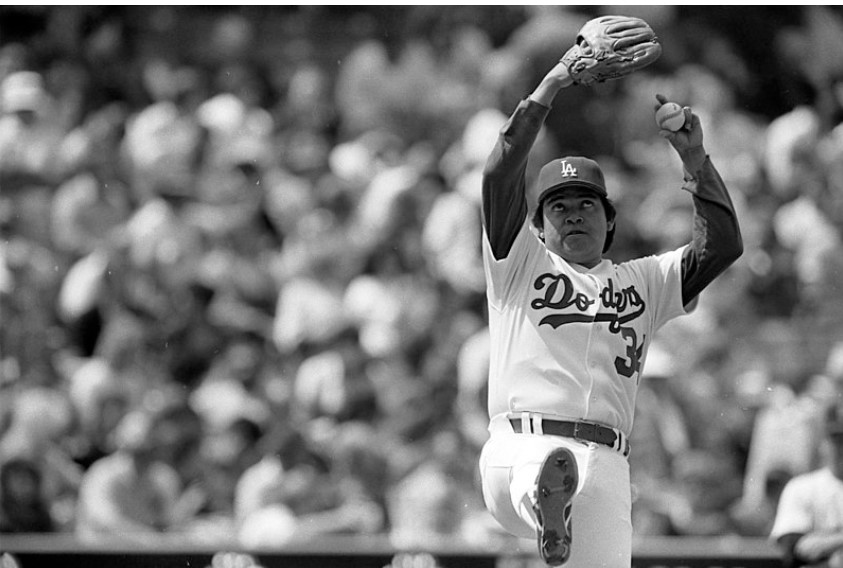
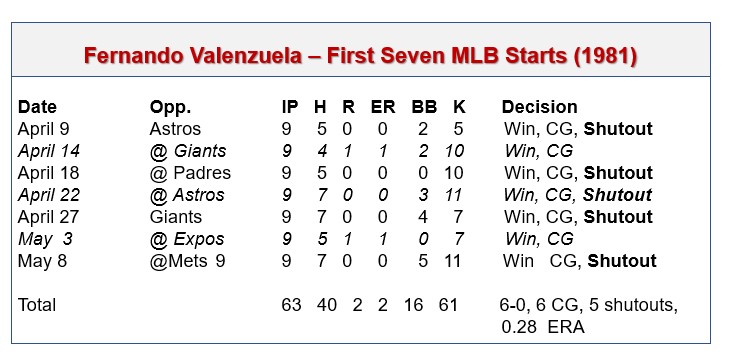
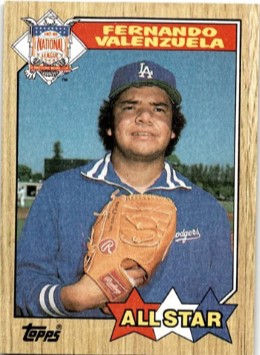
  • Phenom Paul Skenes of the Pirates became the fifth rookie pitcher to start an All-Star game – and pitched a scoreless first inning. Other rookies to start the ASG include: Dodgers’ Hideo Nomo (1995): Dodgers’ Fernando Valenzuela (1981); Tigers’ Mark Fidrych (1976); Senators’ Dave Stenhouse (1962).
  • Shohei Ohtani hit a three-run homer for the National League to become the first player to both notch a pitching victory (2021) and hit a homer in his All-Star game career.
  • The Guardians’ Emmanuel Clase picked up his second ASG save to become just the fifth pitcher to record multiple All Star Game saves. Others in the club Mariano Rivera (four saves), Dennis Eckersley (3), Mel Harder (2), Bruce Sutter (2).
  • The Winning pitcher was the A’s rookie Mason Miller (just the third rookie to notch an ASG win – after Spec Shear in 1947 and Dean Stone in 1954). Miller, who pitched the top of the fifth inning, threw eight (of his 12) pitches over 100 MPH – one at 103.6 MPH – fastest ever recorded at an All-Star contest.

An Early Riser – Then, Ouch!

The Oakland A’s drafted SS Jacob Wilson in the first round (sixth overall) of the 2023 MLB Draft – out of Grand Canyon University, where he hit .412-6-61 in 49 games in his junior (2023) season.  In 2023, the 21-year-old went on to hit .333-1-13 in 26 games at Rookie and High-A ball. In 2024, he worked his way quickly up to Triple-A, with stops at Rookie and Double-A, hitting a combined .438-7-34 in 46 games before being called up to the A’s. He made his MLB debut on July 19, starting at SS and lacing a single on an 0-1 pitch from the Angels’ Griffin Canning in his first MLB plate appearance. He then scored on a Lawrence Butler’s triple, but pulled a hamstring as he rounded third and went on the ten-day IL after his first MLB at bat.

A Bi(cycle) Built for Two

Photo: Flickr user thatlostdog–, CC BY 2.0 <https://creativecommons.org/licenses/by/2.0>, via Wikimedia Commons

On July 21, Astros’ Designated Hitter Yordan Alvarez took the designation “hitter” seriously, hitting for the 2024 season’s second cycle (single, double, triple, homer in the same game).  In his four-for-four game, Alvarez:

  • Singled to RF in the first inning;
  • Hit a solo homer to right in the fourth;
  • Hit an RBI triple to center in the sixth;
  • Doubled to right in the eighth.

Despite Alvarez’ efforts, the Astros lost the contest (versus the Mariners) 6-4.

The season’s previous cycle came on June 30, courtesy of the Rangers’ Wyatt Langford.

Well, That’s One

On Juley 21, Royals’ righty Seth Lugo went the distance, as Kansas City topped the White Sox 4-1 (n KC). Lugo gave up one run on three hits, walking none and fanning six (103 pitches).  It was his first career complete game (nine seasons, 85 starts).  It ran Lugo’s 2024 record to 12-4, 2.38 (his previous high in victories was eight in 2023).

More #InBaseballWeCountEverything or Do We Need a Trot Clock?

On July 21, as the Rays bested the Yankees 6-4 in New York, Rays’ LF Randy Arozarena and CF Jose Siri raised a few hackles with their “slow-motion” long ball celebrations. Do we really count everything in baseball? MLB.com’s Adam Berry reported Siri’s home run trot took 30 seconds (including time to watch the fly ball, flip his bat and round the bases.) Note: Berry reported that Arozarena and Siri each average 29.3 seconds per home run trot – second only to the Braves’ Marcell Ozuna.

Well, the next day, July 22), as the Yankees topped the Rays 9-1, fans saw a mini ‘Battle of the Home Run Trots.” In the fifth inning, Siri took 32.6 seconds to make his way from the batter’s box back to home plate after a long ball. The Yankees’ Juan Soto later took 2024 season’s slowest 37.7 seconds to round the bases after a leadoff seventh-inning homer.

Do we need not just a pitch clock, but also a trot clock? Are we tracking too much?  You can be the judge.

That’s a Nice Round Number

On July 23, Cardinals’ righthander Lance Lynn – in his 13th MLB season (2011-15, 2017-24 … Cardinals, Twins, Yankees, White Sox, Rangers, Dodgers) – came into his start against the Pirates with 1,998 career strikeouts.  In his five-inning scoreless outing, he gave up four hits and three walks, but more important (as a highlight), fanned two batters to reach the career 2.000 mark. Lynn got a no-decision, as the Cardinals triumphed 20-1 in Pittsburgh.

Lynn who started his career with the Cardinals in 2011, remained a Cardinal until 2019 and then returned to the Red Birds this season, At the close of July the 37-year-old had a 6-4, 4.06 record on the season and a career record of 142-99, 3.75. He has won 15 or more games in four seasons and was twice an All Star. His best record was in 2012, when he went 18-7, 3.78 for the Cardinals.

Astros Win True Rubber Game

The Astros came into came into their final game at the Oakland Coliseum (the A’s are moving out of Oakland next season) with a 54-54 lifetime record at the ballpark. They won that July 25 matchup 8-1, behind the pitching of Hunter Brown (six innings of one-run ball), sparked the bats of 2B Jose Altuve (three-for-five, with two runs scored and two RBI), RF Chas McCormick (two-for-four with a home run) and 3B Alex Bregman (two-for-four with two RBI). It gave Houston a final record at the Coliseum of 55-54 and made them the only opposing American league team with an All-Time record above .500 at the ballpark.

Giants’ Rookie Sets Franchise Long Ball Mark

Giants’ rookie Tyler Fitzgerald is having a solid season (.301-9-19 over 47 games as July came to an end). Further, from July 9 through July 23, he homered in five consecutive games played, hitting .571-5-7 in that span – and setting a Giants’ rookie mark for homers in consecutive games played. The power outburst may have been a bit of a surprise, Before starting the long ball streak Fitzgerald had just one home run and six RBI in 34 games this season.  The 26-year-old had, however shown power in the past, with a .292-22-78 record 11 games at Double-A and Triple-A last season – and two homers in ten games after being called up to the Giants last September.

Know Your Place, Tyler

In 2024, Tyler Fitzgerald taken the field at SS, 2B, 1B, CF, LF and P – and served as DH. In his three trips to the mound, he is 0-0, with a 9.00 ERA in three innings.

 Oh, No-No You Don’t

On July 25, Padres’ righthander Dylan Cease tossed the 2024 season’s second no-hitter, as San Diego topped the Nationals 3-0 in Washington D.C.  Dylan walked three and fanned nine in the 114-pitch (71 strikes) outing. It was Cease’s tenth win of the year (versus eight losses) and dropped his earned run average to 3.50.  (The Astros’ Ronel Blanco threw 2024’s first no-no in a 10-0 win over the Blue Jays on April 1.)

After the game the Padres’ Luis Arreaz presented the final-out game ball to Cease.  A fitting tribute. Two seasons ago (Sept. 3, 2022), Cease (then with the White Sox) had a no-hitter going with two-outs in the ninth, cruising with a 13-0 lead over the Twins. Arreaz (then with the Twins) broke up the no-no with a two-out single on a 1-1 pitch. Cease struck out the next Twin (Kyle Garlick) to finish with a one-hit shutout.

 Movin’ On Up

On July 25, as the Rangers bested the White Sox 2-1 in Texas, Max Scherzer got the win, with six strong innings (three hits, one walk and, importantly, nine strikeouts). His final whiff of the game (White Sox’ LF Tommy Pham on a 1-2 pitch with one out in the sixth) gave Scherzer 3,400 career strikeouts.  His fourth strikeout of the game (career number 3,393) Moved him into sole possession of tenth place on the All-Time career whiff list.

Getting That First One Out of the Way Early

On July 25, Phillies rookie righty Tyler Phillips made his third major-league start and just his fourth MLB appearance.  The 2015 16th Round draft choice (Rangers) made it count, tossing a four-hit (one walk/four strikeouts) shutout in win over the Guardians. Phillips threw 105 pitches (71 strikes) in the whitewashing. Phillips made his MLB debut on July 7, called up after going 7-3, 4.89 (with two complete games) in 15 starts at Triple-A. He closed July with a 3-0, 1.80 record for the Phillies.

A New High For Blake

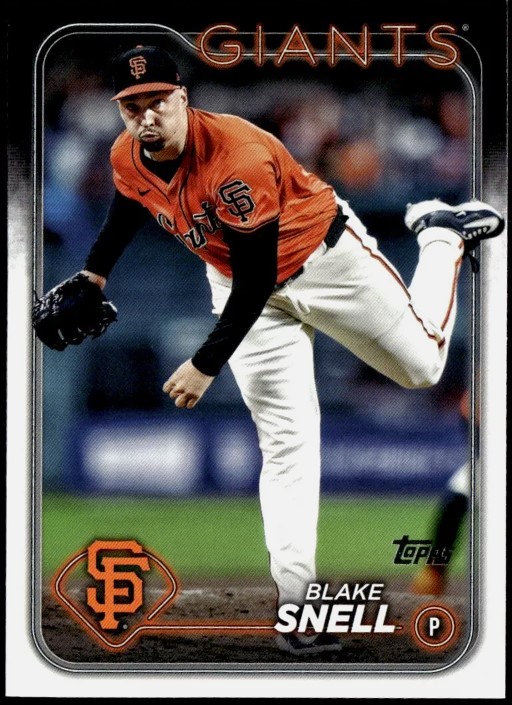
On July 17, two-time Cy Young Award Winner Blake Snell was masterful as his Giants topped the Rockies 4-1 in San Francisco.  Snell fanned a career-high 15 batters in his outing – remarkably in just six innings. (He walked two, gave up two hits and allowed no runs). I’ll do the math.  He faced 22 batters and fanned 15 (68.2 percent). Twelve of the 15 whiffs came on swinging strikes and MLB.com reported that he induced 30 swings add misses, the MLB single-game high this season.  Overall, he threw 103 pitches (66 strikes). Snell’s outing, by the way, got him a no-decision, He left the game with a 1-0, lead, but the Rockies tied it in the top of the seventh, before losing 4-1.

  An Unlikely Cycle

On July 28, Marlins’ rookie shortstop Xavier Edwards came to bat with two outs and no one on in the top of the ninth inning and the Marlins trailing the Brewers 6-2.  Not a momentous at bat, unless you consider that he needed just a single to compete the cycle (single, double, triple, home run in the same game).  Brewers’ pitcher Devin Williams quickly got Edwards down to a 1-2 count and, with just strike left, Edwards hit a groundball to shortstop – and beat it out for an infield single and the second cycle in Marlins’ history. Talk about getting in under the wire, but there’s more.

  • Edwards, batting leadoff, started his cycle with a home run to right (off Tobias Myers) on the first pitch of the game.  It was the first home run in Edwards’ (at that point) 55-game MLB career.
  • Edwards next walked to conclude a ten-pitch plate appearance versus Kyle Tyler in the second.
  • Edwards then hit a double leading off the eighth – on a 1-2 pitch from Jakob Junis.
  • In the seventh, he hit a 2-1 offering from Joel Payamps for a triple – his first-ever MLB triple.
  • Then, of course, there was that ninth-inning, infield single to complete the four-for-four, two-run, one-RBI day.

A Padres’ first-round pick, as a teenager, in the 2018 draft, Edwards was traded to the Rays in December of 2019 and then traded to the Marlins in November of 2022. Edwards hit .313-14-172 over six minor-league seasons.  He got a taste of the majors in 2023, hitting .295-0-3 in 30 games for the Marlins. Edwards came into the 2024 season on the IL and spent some time back a Triple-A. He played his first 2024 MLB game for the Marlins on June 7.  At the end of July, he was hitting .379-1-12, with 15 runs scored and nine steals over 27 games.

Okay, This Deal Just Might Work

Lots has been written about the multitude of trade deadline deals – those that were made and those that weren’t (just ask Twins fans about that).  So, I won’t rehash here. But the results of one of those deals caught my eye. On July 27, the Yankees acquired the versatile Jazz Chisholm, Jr. from the Marlins for three prospects. Coming to the Yankees, Chisholm had made 190 appearances in CF, 167 at second base and 46 at shortstop. On July 28, he started in CF for New York (batting in the five-hole) and went one-for-five with a stolen base. It was the next game that caught my eye.  On July 29, the Yankees put Chisholm at third base, batting sixth.  (The hot corner has been a bit of an offensive desert for New York this season).  It was Chisholm’s first-ever professional appearance at the position.

A new team, a new position – how did the newcomer react to the pressure? In his very first inning at third base, the ball found him. With no outs and a runner on first, Phillies’ SS Trea Turner sent a groundball Chisholm’s way. The result?  A nifty third-to second-to first double play.  (Chisholm picked up another two assists in a flawless day in the field.) The change didn’t bother his offense either. He went two-for-four, with two home runs, two runs scored, three RBI and a walk.  Oh, and he hit that second homer with a new bat. Chisholm reported that with the Yankees up 12-4 and Phillies’ catcher Garrett Stubbs on the mound, he asked Aaron Judge if he could try the big sluggers’ heavier bat against the backstop’s soft tosses. New team, new position, new bat.  Still no problem.

Then, on July 30, to show his first game as a third basemen was no fluke, Chisholm doubled down.  Again, playing flawless defense (four assists, one putout) at the hot corner, Chisholm went three-for-six, with two runs, scored, five RBI and two more home runs, as the Yankees edged the Phillies 7-6 in 12 innings. This outburst, by the way, made Chisholm the first Yankee to homer four times in his first three games in the pinstripes.

100 for Skenese

On July 29, the Pirates’ 22-year-old, 6’6”, 235-pound, righthanded phenom Paul Skenes logged his 13th MLB start (facing the Astros).  While he got a no-decision, he went six innings, giving up two runs (one earned) on three walks and five this.  Notably, he also fanned six batters, giving him 103 on the season. He is just the sixth NL/AL MLB pitcher (post-1900) reach 100 whiffs in 13 or fewer games.  The list:

  • 12-games …Herb Score, Indians – June 9, 1955; Hideo Nomo – June 9, 1995; Kerry Wood, Cubs – June 15, 1998.
  • 13-games… Jose DeLeon, Pirates – September 21, 1983; Masahiro Tanaka, Yankees – June 11, 2014; Paul Skenes, Pirates – July 29, 2024.

Skenese record through July was 6-1. 1.90.  Side note: The Roundtable finds Score’s 12-games to 100 whiffs the most impressive. That season, MLB teams average just 4.4 strikeouts per nine innings. In his first 12 games, Score fanned 101 batters in 86 frames.

Double Your Pleasure

On July 31, as the Braves topped the Brewers 6-2 in Milwaukee, Braves 1B Matt Olson and C Travis d’Arnaud hit back-to-back home runs, not once, but twice. Batting in the four and five spots in the order, the pair hit solo shots in the fourth inning off the Brewers’ Freddy Peralta. (Those homers tied the game at two apiece).  Then, with the Braves up 4-2 in the eighth, they added a second pair of solo home runs off Nick Mears.

–INDIVIDUAL LEADERS FOR July —


BATTING AVERAGE (at least 75 July at bats)

American League:  Bobby Witt, Jr., Royals (.489); Brent Rooker, A’s (.391); Lawrence Butler, A’s (.363)

National League: Xavier Edwards, Marlins (.395); Ketel Marte, Diamondbacks (.357); Juan Yepez, Nationals (.341)

HITS

American League: Bobby Witt, Jr., Royals (44); Rafael Devers, Red Sox (34); Yainer Diaz, Astros (34)

National League: Xavier Edwards, Marlins (34); Ezequiel Tovar, Rockies (31); four with 30

The Rockies’ Brenton Doyle led all MLBers in July extra-base hits with 19 – seven doubles, one triple and eleven home runs.  

HOME RUNS

American League: Brent Rooker, A’s (11); Lawrence Butler, A’s (10); Cal Raleigh, Mariners (9); Anthony Santander, Orioles (9)

National League:  Brenton Doyle, Rockies (11); Trea Turner, Phillies (10); Marcell Ozuna, Braves (10); Eugenio Suarez, Diamondback (10)

The Royals’ Brent Rookie led all players with at least 75 July at bats in slugging percentage at .833. The Rockies’ Brent Doyle led the NL at .800.

RUNS BATTED IN

American League: Brent Rooker, A’s (30); Lawrence Butler, A’s (27); Rafael Devers, Red Sox (24)

National League: Brenton Doyle, Rockies (27); Eugenio Suarez, Diamondbacks (27); Alex Burleson, Cardinals (25)

RUNS SCORED

American League:  Bobby Witt, Jr., Royals (26); Brent Rooker, A’s (24); Lawrence Butler, A’s (23)

National League: Corbion Carroll, Diamondbacks (22); Eugenio Suarez, Diamondbacks (21); Trea Turner, Phillies (20)

DOUBLES

American League: Rafael Devers, Red Sox (10); Jarren Duran, Red Sox (10); Dominic Smith, Red Sox (10); Juan Soto, Yankees (10)

National League: Juan Yepez, Nationals (11); Alex Bohm, Phillies (10); Michael Busch, Cubs (9)

TRIPLES

American League:  Colt Keith, Tigers (3); Daulton Varsho, Blue Jays (3); seven with two

National League: Mike Yastrzemski, Giants (4); Jake McCarthy, Diamondbacks (4); five with two

STOLEN BASES

American League: Luis Robert, Jr., White Sox (12); Zach Neto, Angels (8); Victor Robles, Mariners (8)

National League: Elly De La Cruz, Reds (15); Shohei Ohtani, Dodgers (12); Lane Thomas, Nationals (11)

The Angels’ Zach Neto and Mariners’ Victor Robles stole the most July bases without getting caught (8).

BATTER’S STRIKEOUTS

American League:  Luis Robert, Jr., White Sox (38); Taylor Ward, Angels (34); Ben Rice, Yankees (30)

National League: James Wood, Nationals (37); Brandon Nimmo, Mets (34); five with 33

WALKS

American League:  Aaron Judge, Yankees (23); Isaac Parades, Rays (20); Nolan Schanuel, Angels (18)

National League: Kyle Schwarber, Phillies (19); Matt Chapman, Giants (17); Shohei Ohtani, Dodgers (17)

PITCHING VICTORIES

American League:   Framber Valdez, Astros (4-0); Michael Wacha, Royals (4-0); Nathan Eovaldi, Rangers (4-1); Grayson Rodriguez, Orioles (4-1); JP Sears, A’s (4-1); Hunter Brown, Astros (4-2); Hans Crouse, Angels (4-2); Brady Singer, Royals (4-2)

National League:  Jacob Junis, Brewers (4-0); Aroldis Chapman, Pirates (4-1); Dylan Cease, Padres (4-2)

The Blue Jays’ Chris Bassitt (1-4, 7.01) and Phillies’ Christopher Sanchez (1-4, 6.59) tied for the most July losses.

EARNED RUN AVERAGE (minimum 25 May innings)

American League: Taj Bradley, Rays (1.45); Bryce Miller, Mariners (1.80); Luis Castillo, Mariners (1.99)

National League: Hunter Greene, Reds (0.33); Paul Skenese, Pirates (1,59); Luis Ortiz, Pirates (1.75)

The highest ERA among pitchers with at least 25 July innings or four July starts was 7.71 by the Reds’ Freddy Montas (1-2, 7.71 in four starts, 21 innings.

STRIKEOUTS

American League: Nick Pivetta, Red Sox (44 K/29 IP); Tarik Skubal, Tigers (42 K/ 33 IP); Grayson Rodriguez, Orioles (42 K/34 1/3 IP)

National League: Dylan Cease, Padres (49 K/ 38 1/3 IP); Chris Sale, Braves (37 K/29 1/3 IP); Sean Manaea, Mets (36 K/36 2/3 IP);

The Rangers’ Nathan Eovaldi made six starts in July, pitching 39 innings and striking out 32 batters, while walking none. 

WALKS + HITS/INNINGS PITCHED (at least 25 July innings)

American League: Bailey Ober, Twins (0.74); Tyler Anderson, Angels (0.75); Nathan Eovaldi, Ranges (0.79)

National League: Hunter Greene, Reds (0.63); Paul Skenes, Pirates (0.67); Tyler Phillips, Phillies (0.76)

Among pitches with at least 25 innings, the Reds Hunter Greene held batters to the lowest June average at .103.

SAVES

American League:  Josh Hader, Astros (9); Emmanuel Clase, Guardians (8); Kirby Yates, Rangers (8)

National League:  Kyle Finnegan, Nationals (6); Camilo Doval, Giants (6); Tanner Scott, Marlins (6); Edwin Diaz, Mets (6)

Josh Hader of the Astros saved the most games without a blown save in July (nine).  


If the season ended on July 31, your post-season teams would be:

American League

Guardians, Orioles, Astros       Wild Cards: Yankees, Twins, Royals

National League

Phillies, Dodgers, Brewers       Wild Cards: Braves, Padres, Diamondbacks.

Primary Resources:  Baseball-Reference.com; Baseball-Almanac.com


Baseball Roundtable – Blogging Baseball Since 2012.

100Baseball Roundtable is on the Feedspot list of the Top 100 Baseball Blogs.  To see the full list, click here.

Baseball Roundtable is also on the Anytime Baseball Supply Top 66 Baseball Sites list.  For the full list, click here

I tweet (on X) baseball @DavidBaseballRT

Follow Baseball Roundtable’s Facebook Page here.  More baseball commentary; blog post notifications.

Member: Society for American Baseball Research (SABR); Negro Leagues Baseball Museum; The Baseball Reliquary. 

P1050


Trivia(l) Tidbit Tuesday- The Sign Says “Don’t Walk”

Welcome to another edition Trivia(l) Tidbit Tuesday, a weekly presentation of baseball occurrences that for some reason caught The Roundtable’s eye.  (I’m particularly fond of unexpected performances or statistical coincidences.) These won’t necessarily be momentous occurrences, just events, statistics or coincidences that caught my eye.

Let’s start this one with a Trivia(l) question.

“In 2005, when he pitched 188 1/3 innings for the Twins, how many right-handed hitters did Carlos Silva walk?” The answer is one – the Tigers’ Craig Monroe – and that was Silva’s one intentional walk that season.  It came in the fourth inning of a game in Detroit.  The Twins were trailing 1-0, there were two outs and a runner on second. Monroe, who was hitting in the .290s came up and Silva was ordered to send him to first base, bringing up 2B Omar Infante, who came into the game with a .233 average. Silva fanned infante on five pitches.  So, not a single righty was able to “work” Silva for a walk all season.  Monroe, by the way, drew only 40 walks in 623 plate appearance in 2005.

Silva’s 2005 season saw him produce the lowest single-season walks per nine innings mark by qualifying AL/NL pitcher since the four-ball walk rule was instituted (Four balls became a walk in 1888, prior to that walks were – at varying times – nine, eight, six and five balls.)  Silva walked just nine batters in 188 1/3 innings – a stingy 0.43 walks per nine frames.  Note: Baseball-Reference.com indicates Negro League rankings from 1920-48 are not yet complete.

Silva pitched in nine MLB seasons (2002-20 … Phillies, Twins, Mariners, Cubs), going 70-70, 4.68. While he had a solid 1.7 nine walks per nine innings over his career, 2005 was the only year he led his league in fewest walks per nine. That season, he gave up zero walks in 18 of his 27 starts and one walk in each of the other nine.  He finished at 9-8, 3.44.

As an aside, among the 25 lowest single-season qualifying walk rates, Silva’s is the only one recorded post-1888.  At number 26 is Charles “Babe” Adams’ 1920 season at 0.62 (18 walks in 263 innings).

A perhaps not so Trivia(l) tidbit.  On July 17, 1914 Adams started for the Pirates against future Hall of Famer Rube Marquard (of the Giants).  To that point in the season, Adams had gone 7-9, 1.96 – and had walked only 22 batters in 142 1/3 innings pitched (1.4 walks per nine innings). He would be a lot stingier with the free passes on that day.  Adams, in fact, would set the MLB record for the most innings pitched in a single outing without giving up a walk.  Adams went the distance in a 21-inning, 3-1 Pirates’ loss (the Giants’ Marquard also pitched the full 21 innings). In the 21 frames, Adams gave up just 12 hits – and zero walks – while fanning six. Marquard gave up 15 hits and two walks, while fanning just two. The game was tied at one apiece after 20 innings, but the Giants got to Adams for two in the top of the 21st – on a single by CF Bob Bescher and an inside-the-park homer by 2B Larry Doyle.

Adams pitched in 19 MLB seasons (1906-07, 1909-16, 1918-26).  He pitched for the Pirates in all but the 1906 season (Cardinals). Adams went 194-140, 2.76 over his career  and led the NL in fewest walks per nine innings in four straight seasons (1919-22), finishing the league’s top-three in the category in nine times.

For those who like to know such things, the most consecutive innings pitched without allowing a walk in 84 1/3 by Athletics’ Bill Fisher –  between the first batter of a game on August 3, 1962 and the second batter of the fifth inning of a game on September 30, 1962 (covering 13 starts and one relief appearance). Fisher pitched in nine MLB seasons (1956-64 … White Sox, Tigers, Senators, Athletics, Twins), going 45-58, 4.34 in 281 games (78 starts).

Primary Resources:  Baseball-Reference.com; Baseball-Almanac.com


Baseball Roundtable – Blogging Baseball Since 2012.

100Baseball Roundtable is on the Feedspot list of the Top 100 Baseball Blogs.  To see the full list, click here.

Baseball Roundtable is also on the Anytime Baseball Supply Top 66 Baseball Sites list.  For the full list, click here

I tweet (on X) baseball @DavidBaseballRT

Follow Baseball Roundtable’s Facebook Page here.  More baseball commentary; blog post notifications.

Member: Society for American Baseball Research (SABR); Negro Leagues Baseball Museum; The Baseball Reliquary. 

P1049

Trivia(L) Tidbit Tuesday – Johnny Sain, Putting the Ball In Play

Welcome to another edition Trivia(l) Tidbit Tuesday, a weekly presentation of baseball occurrences that for some reason caught The Roundtable’s eye.  (I’m particularly fond of unexpected performances, statistical coincidences or unusual circumstances.) These won’t necessarily be momentous occurrences, just events, statistics or coincidences that caught my attention.

This week, I was drawn to the career of four-time twenty-game winner, righthander Johnny Sain (of “Spahn and Sain and Pray for Rain” fame). What grabbed my attention was not his pitching, but his ability to put the bat on the ball.  While, in the past, pitchers were often chided for their futility at the plate, Sain was a tough out.

__________________________________

Boston Braves’ pitcher Johnny Sain is the only MLB player in the Modern Era to rack up a season of more than 100 plate appearances without a single strikeout or walk.

____________________________________

Let’s get to the Sain saga.

In 1946, the Boston Braves’ righty was back in baseball after missing three seasons in the military. Sain got right down to business, putting up a 20-14, 2.21 season, with a league-leading 24 complete games in 34 starts. (Sain had made his MLB debut in 1942, primarily as a reliever.) Twenty wins in his first full season as a starter – pretty impressive.  But, again, not what caught The Roundtable’s eye.  That season, Sain came to the plate 104 times and did not strike out or walk once.  He hit .298-0-14 for the campaign – with 28 hits, (25 singles, two doubles, one triple). His 104 plate appearances included ten sacrifice bunts.

Walks aside, Sain also is one of only three players (in MLB’s modern era) to complete a season of 100 or more plate appearances without a single strikeout (the other two did take a few free passes).

Side note: The Roundtable uses the Modern Era since it is more consistent with baseball rules as we know them. For example, Al Spalding of the 1974 Boston Red Stockings holds the MLB record for plate appearances in a zero-whiff season at 365 … but, at that time, batters could call for a pitch in a certain location and the pitchers were expected to comply. It also wasn’t until 1901 in the National League and 1903 in the American League that foul balls counted as strikes.  As far as walks go, in baseball’s earliest days, there simply were no walks. Then, as various times , it took nine, eight, seven and six balls to garner a free pass  – until the current four-ball walk rule was implemented in 1889.  You get the idea.

So, here are your Modern ERA, zero-strikeout season leaders in plate appearances

Third Place … 104 Plate Appearances … Johnny Sain, RHP, Boston Braves

Since Sain prompted this Tidbit, we’ll start here.  As already noted, in 1946, he was a 20-game winner and came to the plate 104 times without striking out. In some ways, he may have done even better the plate in 1947, when he hit .346-0-18 in 118 plate appearances (and had the patience to draw three walks), while going 21-12, 3.52 on the mound. If you look at Sain’s first three MLB seasons (1942, 1946-47, he hit .294 in 252 plate appearances and struck out just twice.  He did not keep up that pace. In 11 MLB seasons (1942, 1946-55 … Braves, Yankees, Athletics) he hit .245-3-101 in 433 games.  Over his career, he struck out a total of 20 times (versus 24 walks) in the regular season, an average of one strikeout every 42.9 plate appearances. He had five seasons with at least 100 plate appearances and three or fewer strikeouts (0,1,2,3,3) On the mound, the three-time All Star went 139-116, 3.49 and four times won 20 or more games in a season (leading the NL with 24 wins in 1948).  He also led the league in complete games twice, saves once and innings pitched once.

Second Place… 108 Plate Appearances … Bill Rariden, C, 1920 Reds

Rariden actually achieved this rare feat in his final MLB season (at age 32). In 39 games, he hit .248-0-10 (five walks). Rariden played in 12 MLB seasons (1909-1920 … Doves/Braves, Federal League Hoosiers, Giants, Reds). He hit .237-7-275 in 982 games. He struck out 256 times in 3,316 place appearances – an average of once every 13 plate appearances (which makes his zero-whiff season a bit of a career outlier).

First Place … 234 Plate Appearances … Lloyd Waner, OF, 1941 Red, Pirates & Braves

Waner, at age 35 and in his 15th MLB season, got into 77 games in 1941, hitting .292-0-11 (drawing 12 walks). The 5’9”, 150-pound Waner played in 18 MLB seasons (1927-42, 1944-45 … Pirates, Braves, Reds, Phillies), hitting .316-27-598, with 1,201 runs scored in 1,993 games.  He averaged jus one whiff per 48.2 plate appearances over his career and had three seasons of 100 or more plate appearances and five or fewer strikeouts (0,5,5). He had nine seasons in which he played in at least 100 games and hit .300 or better. The Hall of Famer led the league in runs scored once (three times stopping 100 runs); hits once (four times topping 200 hits); and triples once.

Joe Sewell – The King of Contact

Joe Sewell is the undisputed “King 0f Contact. In his 14-season MLB career (1920-33 … Indians, Yankees), the 5’6”, 155-pound infielder struck just 114 times in 8,333 plate appearances (1,903 games) – once every 73.1 plate appearances. During the 1920 season, he set two records between the third inning of a game on May 17 and the sixth inning of a September 20 contest. During that span, he logged streaks of 521 plate appearances and 115 games without a strikeout. For his career, the Hall of Famer hit .312-49-1,054, hitting .300 or better in all but four seasons. In 1925, he fanned just four times in 699 plate appearances.


Primary Resource:  Baseball-Reference.com.


Baseball Roundtable – Blogging Baseball Since 2012.

100Baseball Roundtable is on the Feedspot list of the Top 100 Baseball Blogs.  To see the full list, click here.

Baseball Roundtable is also on the Anytime Baseball Supply Top 66 Baseball Sites list.  For the full list, click here

I tweet (on X) baseball @DavidBaseballRT

Follow Baseball Roundtable’s Facebook Page here.  More baseball commentary; blog post notifications.

Member: Society for American Baseball Research (SABR); Negro Leagues Baseball Museum; The Baseball Reliquary. 

P1048

Trivia(l) Tidbit Tuesday … When the Pitchers Ran the Show

Welcome to another edition Trivia(l) Tidbit Tuesday, a weekly presentation of baseball occurrences that for some reason caught The Roundtable’s eye.  (I’m particularly fond of unexpected performances ,statistical coincidences or unusual circumstances.) These won’t necessarily be momentous occurrences, just events, statistics or coincidences that caught my eye.

With the All Star Game tonight, this edition of Trivia(l) Tidbits Tuesday will focus on a time when the pitchers truly dominated the All Star Game.  To view earlier Trivia(l) Tidbit posts, type Trivia(l) in the search box on the  righthand side of the page.

If you look back at the 93 AL/NL All Star matchups, only ten times has the game featured three or fewer combined runs – and just four of those low-scoring affairs have gone extra innings.  What caught the Roundtable’s eye was that three of those ten lowest-scoring All Star Games took place in consecutive seasons (1966-67-68) and two of the four lowest-scoring extra-inning All-Star Games took place in that span.    And, not coincidentally, those three All Star games preceded the lowering of the mound and shrinking of the strike zone going into the 1969 season. (The 1969 All Star Game featured 12 runs (NL 9 – AL 3), 17 hits (three doubles and five home runs.)  Side note:  There were three Negro League All Star games featuring three or fewer runs between 1920 and 1948.

Here are some Trivia(l) Tidbits from the 1966-68 All Star Games:

  • In 1966, the National League prevailed 2-1 in ten innings;
  • In 1967, the National League again won 2-1, this time in fifteen innings;
  • In 1968, the National League won 1-0 in nine frames.

Over those three games (and 34 innings):

  • National League hitters averaged .181;
  • American League hitters averaged .149;
  • National League pitchers put up a 0.53 earned run average;
  • American League pitchers threw to a 1.11 earned run average.

Keep in mind, these were teams whose starting lineups featured the likes of Willie Mays, Hank Aaron, Roberto Clemente, Willie McCovey, Orlando Cepeda, Dick Allen, Al Kaline, Frank Robinson, Rod Carew, Harmon Killebrew and Tony Oliva. Aaron, in fact, played every inning of all three games and went two-for-thirteen, with two singles and a walk.

A few other highlights/lowlights:

  • There were only 12 hits in the ten-inning 1966 game, but (despite the pitchers’ dominance) only 11 strikeouts.
  • Brooks Robinson had three of the total of 12 hits in the 1966 game;
  • Bill Freehan caught all 15 innings for the AL in the 1967 game;
  • All three runs in the 1967 game scored on solo home runs. Tony Perez (off Catfish Hunter); Dick Allen (off Dean Chance) and Brooks Robinson (off Fergie Jenkins);
  • There was not a single earned run nor an RBI in the 1968 game.


1966 All Star Game

The National League triumphed 2-1, with a run in the tenth inning via a single by Tim McCarver, a sacrifice bunt by Ron Hunt and an RBI-single by Maury Wills (off Pete Richert).

  • The game featured just 12 total hits, six by each squad) – ten singles, one triple (Brooks Robinson) and one double (Roberto Clemente);
  • Brooks Robinson had three hits and scored the AL’s only run (on a wild pitch by Sandy Koufax);
  • Some notable 0h-fers included Hank Aaron (0-4), Willie McCovey (0-3, with a walk), Frank Robinson (0-4) and Tony Oliva (0-4).
  • Willie Mays, Roberto Clemente, Hank Aaron, Willie McCovey, Ron Santo, Frank Robinson, Tony Oliva, and Brooks Robinson all played the whole game;
  • AL pitchers were Denny McLain, Jim Kaat, Mel Stottlemyre, Sonny Siebert, Pete Richert,
  • NL Pitchers were Sandy Koufax; Jim Bunning; Juan Marichal; Gaylord Perry.

1967 All Star Game

The National League won 2-1 in a marathon 15 innings, scoring in the top of the fifteenth on a home run by Tony Perez (off Catfish Hunter). There were just 17 hits over the fifteen innings – nine by the NL, eight by the AL).

  • Carl Yastrzemski had three hits for the AL, a double and two singles;
  • Bill Freehan caught the whole 15 innings for the AL. Others who played the entire game were Roberto Clemente, Hank Aaron, Orlando Cepeda, Gene Alley, Brooks Robinson, Tony Oliva, Harmon Killebrew, Tony Conigliaro and Carl Yastrzemski;
  • Notable Oh-fers included: Willie Mays (0-4), Orlando Cepeda (0-6), Rod Carew (0-3), Harmon Killebrew (0-6), Tony Conigliaro (0-6), Bill Freehan (0-5);
  • NL pitchers were Juan Marichal, Fergie Jenkins, Bob Gibson, Chris Short, Mike Cueller, Don Drysdale and Tom Seaver;
  • AL pitchers were Dean Chance, Jim McGlothlin, Gary Peters; Al Downing and Catfish Hunter.

1968 All Star Game

The National League won 1-0, scoring one run in the bottom of the first. Willie Mays opened with a single (off Luis Tiant). Mays moved to second on an errant pick-off attempt, then went to third as Curt Flood walked (on a wild pitch) and scored as Willie McCovey hit into double-play (4-6-3).  And, that was it for the scoring.

  • There were no earned runs in the game;
  • Since the only tally scored on a double play, there were no RBIs awarded in the game;
  • There were just eight hits in the game (five by the NL);
  • There were 20 strikeouts (five by Tom Seaver, who faced eight batters in the seventh and eighth innings);
  • No batter had more than one hit;
  • Notable oh-fers included Rod Carew (0-3) and Willie McCovey (0-4);
  • Roberto Clemente, Hank Aaron and Orlando Cepeda played the whole game, as did Brooks Robinson and Tony Oliva.
  • AL pitchers were Luis Tiant, Blue Moon Odom, Denny McLain, Sam McDowell, Mel Stottlemyre, Tommy John.
  • NL pitchers were Don Drysdale, Juan Marichal, Steve Carlton, Tom Seaver, Ron Reed and Jerry Koosman.

A Two-Fer

Don Drysdale is the only MLB pitcher to start two All Star Games in the same season – with wildly different results.  (There were two All Star Games each year from 1959 through 1962.) On July 7, 1959, Drysdale started for the NL (in Pittsburgh)  and pitched three perfect  innings (four strikeouts) in a 5-4 National League win. Then, on August 3, 1959, he started for the National League in a 5-3 loss in Los Angeles. This time, he gave up three runs on four hits and three walks (five whiffs) in three innings. 

For a whole lot more on All Star Games, click here.

Primary Resource:  Baseball-Reference.com

Baseball Roundtable – Blogging Baseball Since 2012.

100Baseball Roundtable is on the Feedspot list of the Top 100 Baseball Blogs.  To see the full list, click here.

Baseball Roundtable is also on the Anytime Baseball Supply Top 66 Baseball Sites list.  For the full list, click here

I tweet (on X) baseball @DavidBaseballRT

Follow Baseball Roundtable’s Facebook Page here.  More baseball commentary; blog post notifications.

Member: Society for American Baseball Research (SABR); Negro Leagues Baseball Museum; The Baseball Reliquary. 

P1047

Trivia(l) Tidbit Tuesday – The Symmetry of MLB’s Shortest-Ever Game

Welcome to another edition of Baseball Roundtable’s Trivia(l) Tidbit Tuesday, a weekly presentation of baseball occurrences that for some reason caught The Roundtable’s eye.  (I’m particularly fond of unexpected performances or statistical coincidences.) These won’t necessarily be momentous occurrences, just events, statistics or coincidences that caught my interest. To view earlier Trivia(l) Tidbit posts, type Trivia(l) in the search box on the  righthand side of the page.

This week, we’re leading with a bit of statistical coincidence/symmetry related to MLB’s shortest-ever (by time) nine-inning game.  That would be the Giants’ 6-1 win over the Phillies (in New York) on September 28, 1919.  The game took a brief 51 minutes to complete. The statistical coincidence/symmetry?  Since the hometown Giants had the lead and did not have to bat in the bottom of the –ninth, there were 51 outs recorded.  Fifty-one outs in 51 minutes, making it one-out per minute – and making it easy to relate to exactly now fast the contest went.

Jesse Barnes … Photo: Yi Auctions, Public domain, via Wikimedia Commons

Also catching the Roundtable’s eye was the pitching matchup.  It featured the 1919 National League’s winningest and losingest hurlers.  The Giants’ Jesse Barnes came into the game at 24-9, leading the NL in wins and looking for a benchmark 25th win.  The Phillies’ Lee Meadows came into the game at 12-19, leading the NL in losses and looking to avoid a benchmark 20th loss.   (Barnes, of course, prevailed). Surprisingly, Meadows actually came into the game with the lower earned run average: 2.41 to Barnes’ 2.48.

Now, why the quick pace? It was the first game of a doubleheader on each team’s final day of the 1919 season – and neither team was headed for the post-season. The Giants were in second place at 87-53 and the Phillies in last at 47-90.  (Remember when just the league champions qualified for the post-season?)  The players were anxious to get the season over and head for home. Reports from the time indicted the two teams had a sort of gentlemen’s agreement to speed things up and get the season over with.

How fast was the pace?  Well consider, 8 ½ innings in 51 minutes. If each team rushed on and off the field in just 30 seconds between half innings (and it likely took longer), that would mean a playing time of 47 minutes or about Two minutes and 45 seconds each half inning. Taken a step further, 70 batters came to the plate in the game, again given just 30 seconds to change sides between innings, that would mean the average plate appearance lasted just 40.3 seconds. (Again, my 30 seconds between innings may be a bit low, so I consider these numbers at the lower end of the possible pace of the game.)

Sorry guys, but I gotta get my hits.

Despite the shortness of the game, there was time for every member of the Giants’ lineup, including pitcher Jesse Barnes, to collect least one base hit.

A few other facts about the contest:

  • Seven runs were scored;
  • There were 18 hits (13 for the Giants, five for the Phillies);
  • The Giants put runners on base in six of the eight innings in which they batted;
  • There were also three walks and three strikeouts;
  • There was only one double play an it was a time-consuming 6-5-6-3-4;
  • Each team used the minimum nine players.

Efficiency Expert

Giants’ starter used just 64 pitches to notch a complete game on September 28, 1919.  He faced 33 batters – that’s a stingy average of 1.9 pitches per batter. 

The point being that the game was not a low-it, low-run affair, there were plenty of baserunners.  (Side note: According to Baseball-Reference.com, the average time of a nine-inning game in 1919 was one hour-and-36 minutes.)

A Super Maddux?

On August 10, 1944, Braves’ righty Red Barrett shut down the Reds 2-0 on just two hits (no walks/no strikeouts) in Cincinnati.  He used just 58 pitchers to complete the game – the fewest pitches ever in an MLB nine-inning complete game.  

Now, how about the other end of the spectrum?

Longest Nine-Inning Game

The longest nine-inning MLB game on record took four hours-and-45 minutes. It was played August 18, 2006, and was the second game of a Fenway doubleheader. The Yankees topped the Red Sox 14-11.

That game featured:

  • 17 hits by each team;
  • Twelve pitchers (seven Yankees, five Red Sox);
  • Thirty-four players (19 Yankees, 15 Red Sox);
  • Three New York errors;
  • A combined 13 walks and 15 strikeouts.

FREE BASEBALL

Now, let’s look at extra innings.

The longest game (by time) * – May 8, 1984 …

Milwaukee Brewers versus Chicago White Sox

This one gets an asterisk – because it was not a “continuous” contest.

MLB’s longest-ever (time-wise) game started on May 8, 1984 and was played at (old) Comiskey, with the hometown White Sox prevailing 7-6 in 25 innings (tied for the second-most MLB innings) – in a record-long eight hours-an- six minutes of game time.  The game started at 7:30 p.m. and was suspended after 17 innings (at 1:05 a.m.) due to the American League curfew rule then in force.  Play was resume the following day.

Rollie Fingers’ blown save helped send this game into the record books.

There were plenty of chances for this one to end earlier. The game was tied 1-1 going into the top of the ninth, when the Brewers scored twice off-White Sox’ reliever Britt Burns to take the lead.  With a 2-0 lead, the Brewers brought in future Hall of Fame closer Rollie Fingers and the die seemed cast.  Oops! The bottom of the ninth saw the White Sox tie the game with two tallies of their own.

No one scored between the ninth and the seventeenth innings (when the game was suspended). The goose eggs continued when play resumed, going on until the until the top of the 21st, when the Brewers put up a three-spot on a three-run homer off Ron Reed by Ben Oglivie (scoring Cecil Cooper and 1B Ted Simmons) – and the game again appeared to be over.   The White Sox, however, scored three of their own in the bottom of the inning. and the game continued its march toward the record books.

Finally, with one out in the bottom of the 25th White Sox’ RF Harold Baines hit a walk-off home run (making it, of course, the latest walk-off long ball ever) against Chuck Porter (starting his eighth inning of relief) to win it for the ChiSox.  A few tidbits:

  • White Sox’ CF Rudy Law, C Carlton Fisk and 2B Julio Cruz, as well as Milwaukee DH Cecil Cooper each had an MLB record-tying 11 at bats in the game. They had three, one and two hits, respectively.
  • Rudy Law, Carlton Fisk and Harold Baines each had a record-tying 12 plate appearances. Law and Fisk each had one walk, Baines had two free passes.
  • Chicago’s Dave Stegman, who came on as a pinch runner for DH Greg Luzinski in the eighth inning and stayed in to play LF, struck out a game-high five times in eight at bats.
  • The teams used a combined 14 pitchers (six for the Brewers, eight for the White Sox).
  • Two relievers went seven or more innings: losing pitcher Chuck Porter of the Brewers (7 1/3); Juan Agosto of the White Sox (7 innings) – both logged more innings than their team’s starting pitcher.
  • The White used four first basemen: Greg Walker (started); Mike Squires replaced Walker in the top of the ninth; Marc Hill (pinch hit for Squires in the 14th and stayed in at 1B); in the 22nd inning, Tom Paciorek, who had replaced Ron Kittle in LF in the top of the fourth inning, moved to 1B, replacing Hill.

Tom Terrific for the Win(s)

The winning pitcher in the longest-ever MLB game (by time, not innings) was future Hall of Famer Tom Seaver, who pitched the 25th inning for the ChiSox (on May 9). It was Seaver’s only relief appearance of the season (one of just nine in his career) and his only career win in relief (he also had one save and two losses in that role).

Notably, Seaver then started the regularly scheduled May 9 contest and went 8 1/3 innings (three hits, one walk, four earned runs) to pick up a victory as a starter. (White Sox won 5-4).


____________________________


The Longest (by time) Continually  Played Game – May 31, 1964 …

San Francisco Giants versus New York Mets

The San Francisco Giants topped the New York Mets 8-6 in 23 innings on May 31, 1964 – and took seven hours and 23 minutes to do it.  Not only that, it was the second game of a doubleheader. It is the longest National League game (by time), MLB’s second-longest game (by time) and the longest continually played (by time) game. Remember, that Brewers/White Sox 25-inning, eight hours-plus game was suspended after the 17th frame.

Gaylord Perry tossed  ten scoreless innings in relief (seven hits. one walk, nine whiffs).

This one looked to be over early, as the Giants led 2-0 after just three batters had faced starter Bill Wakefield. LF Harvey Kuenn led off with a walk, RF Jesus Alou stroked a run-scoring double and CF Willie Mays hit a run-scoring single. The Mets came back with one-run in the second and  San Francisco added four more runs on six singles in the top of the third to take a 6-1 lead. The Mets plated two runs in the fifth (on a one-out single by RF Joe Christopher, a run-scoring triple by 1B Ed Kranepool and a two-out run-scoring single by 3B Charley Smith). They tied it in the seventh (Giants’ starter Bobby Bolin was still in the game) on a three-run homer by Christopher. That ended the scoring until the top of the 23rd inning, when the Giants launched a two-out rally against Galen Cisco: SS Jim Davenport, triple; 3B Cap Peterson, intentional walk; PH Del Crandall, run scoring double; RF Jesus Alou run-scoring single. Bob Hendley took the mound for the Giants in the bottom of the inning and retired the Mets in order (two strikeouts and a fly ball) to save the game for Gaylord Perry, who had tossed ten scoreless frames in relief.

Some tidbits:

  • Each team used six pitchers in the contest;
  • There were ten pinch hitters and one pinch runner used;
  • Tom Sturdivant and Larry Bearnath of the Mets pitched in both games of the doubleheader – with Bearnath throwing seven scoreless innings in the second game after giving up one run in two innings in Game One.
  • Galen Cisco, who took the loss for the Mets, pitched nine innings in relief (giving up two runs on five hits).
  • Gaylord Perry got the win for the Giants, tossing ten scoreless innings in relief (seven hits, one walk, nine strikeouts). That season Perry started 19 games and relieved in 25.
  • Gil Garrido, Jim Davenport and Willie Mays all spent some time at SS for the Giants during the game.

Quite A List

The list of pinch hitters used by the Giants was pretty impressive: Duke Snider; Willie McCovey; Matty Alou; Del Crandall; Cap Peterson. Mets’ pinch hitters were not as well known: Jesse Gonder; George Altman; Dick Smith; Hawk Taylor; John Stephenson

Primary Resources:  Baseball-Reference.com;  Baseball-Almanac.com; “Nine Innings in 51 Minutes: Major League Baseball’s Fastest Game Ever,” by Dave Caldwell, The Guardian.com, July 4, 2023; “September 28, 1919: Giants and Phillies Record 51 Outs in 51 Minutes, The Fastest Game in Major-League History” , by Larry DeFillipo, Society for American Baseball Research.

Baseball Roundtable – Blogging Baseball Since 2012.

100Baseball Roundtable is on the Feedspot list of the Top 100 Baseball Blogs.  To see the full list, click here.

Baseball Roundtable is also on the Anytime Baseball Supply Top 66 Baseball Sites list.  For the full list, click here

I tweet (on X) baseball @DavidBaseballRT

Follow Baseball Roundtable’s Facebook Page here.  More baseball commentary; blog post notifications.

Member: Society for American Baseball Research (SABR); Negro Leagues Baseball Museum; The Baseball Reliquary. 

P1046

More on Miranda’s 12-hits in 12-at bats Streak … and Those that Came Before Him

In his fourth-inning at bat in yesterday’s (July 6) Twins’ 9-3 home win over the Astros, Minnesota 3B Jose Miranda stroked a single to right-center on an 0-1 pitch from Astros’ starter Hunter Brown.  It gave Miranda a stretch of 12 base hits in 12 consecutives at bats tying an MLB record. (More on the three other batters who share that record later in this post.)  Here’s a few trivia tidbits about Miranda’s streak. (Comparing Miranda’s 12 consecutive at bats with a hit to the other three players who have accomplished this.)

  • Miranda is the youngest player to accomplish this record.
  • Miranda’s 12 base hits came off the most different pitchers of any of the streakers (eight different moundsmen).
  • Miranda had the most extra-base hits during his streak. (Five, possibly tied, more on that later).
  • Miranda had the most total bases during his streak (19 – four doubles, one home run, seven singles).
  • Miranda had the most runs scored during his streak (seven).
  • Miranda played most positions played during his streak (three – 1B, 3B, DH). No other player played more than one position during his 12-hits in 12 at-bats streak.

Here are a few other tidbits about Miranda’s streak.

  • He had six RBI.
  • Six of the 12 hits came when he was behind in the count, three on 0-2 pitches.
  • The streak took place over four games over four days.

Here’s how it went.

July 3 …  Detroit 9 – Twins 2

  • Eighth inning – (Miranda’s last bat of the game.) Single on first pitch from Alex Faedo.

July 4 … Tigers 3 – Twins 12

  • Second Inning – Leadoff double off Kenta Maeda on an 0-2 pitch.
  • Third Inning – Groundball single off Maeda on a 1-2 pitch.
  • Fourth inning – First-pitch two-run double off Maeda.
  • Sixth inning – Single off Joey Wentz on an 0-1 pitch.
  • Seventh Inning – RBI double off Shelby Miller on an 0-2 pitch.

July 5 …  Astros 13 -Twins 12

  • Second inning – Leadoff double off Shawn Dubin on a 1-0 pitch.
  • Third inning – Solo home run off Dubin on a 3-1 pitch.
  • Fifth inning – RBI-double off Bryan King on a 1-0 pitch.
  • Seventh inning – Single off Bryan Abreu on a 1-1 pitch.

July 6 – Astros 3 – Twins 9

  • First inning – Hit by an 0-2 pitch from Hunter Brown. (HBP does not count as an at bat.)
  • Second Inning – First-pitch RBI-single off Brown
  • Fourth inning – Single on an 0-1 pitch from Brown.

Miranda signed with the Twins as a teenager (second round of the 2016 MLB draft) out of Puerto Rico.  He made his MLB debut May 2, 2022. (He hit .344-30-94 in 127 games at Double-A and Triple-A in 2021.)  In 2022, he hit .268-15-66 in 125 games for the Twins. His 2023 season was cut short by shoulder surgery and he started the 2024 season at Triple-A, but was called back up to the Twins in early April. At the end of play on July 6, he was hitting .328-9-43 on the season.

How about those other three players with 12 hits in 12 consecutive at bats?

Walt Dropo. 1B, Tigers …  July 14-15, 1952

  • Streak was over three games over two days. (Remember double headers?)
  • Streak included two extra-base hits (one double, one triple).
  • Streak included two runs scored and eight RBI. Those eight RBI are the most among the 12-hits in 12-at bats streakers.
  • Dropo had hits off five pitchers.

Dropo started the 1952 season (his fourth in the majors) with the Red Sox and was traded to the Tigers in early June. In the season of his streak, he hit .276-29-97 in 152 games.  Dropo enjoyed a 13-season MLB career (1949-61, Red Sox, Tigers, White Sox, Reds, Orioles). His final stat line was .270-152-704 in 1,288 games. His best season (and his only All-Star campaign) was 1950, when he hit .322, with 34 homers and a league-leading 144 RBI for the Red Sox. (He was named AL Rookie of the Year.) That season, as a rookie, he notched his career highs in hits (180); home runs; RBI; average; triples (9); runs scored (101): and total bases (an AL-leading 326).

Pinky Higgins, 3B, Red sox …  – June 19-21, 1938

  • Streak was over four games over three days (two doubleheaders).
  • Two extra base hits (both doubles).
  • Four runs scored.
  • Four RBI.
  • Hits off four different pitchers.
  • His streak included two walks (not counted as at bats).

Higgins had his streak in his seventh MLB season.  He played in the majors for 14 seasons (1930, 1933-44, 1946… Athletics, Red Sox, Tigers, ). His final stat line was .292-140-1,075 in 1,802 games. In the year of his streak, he hit .303-5-106 in 139 games. He was a three-time All Star, hit over .300 in four seasons and drove in 100+ runs in two.

Johnny Kling, C, Chicago Colts … August 24-28, 1902

  • Streak was over three games and five days.
  • No more than five extra-base hits, three runs or four RBI. (Box scores from those games show 13 hits, I am still working to determine if the hit that was not part of the streak was an extra-base hit or produced any scoring.)
  • The twelve hits came off three pitchers. (It was a different game then).

Kling played in 13 MLB seasons (1900-1908, 1910-13 … Chicago Orphans/Colts/Cubs, Braves, Reds).  He hit .272-20-514 in 1,261 games. In the year of his streak, Kling hit .289-0-59 and stole 25 bases.

Primary Resources:  Baseball-Reference.com; Baseball-Almanac.com

Baseball Roundtable – Blogging Baseball Since 2012.

100Baseball Roundtable is on the Feedspot list of the Top 100 Baseball Blogs.  To see the full list, click here.

Baseball Roundtable is also on the Anytime Baseball Supply Top 66 Baseball Sites list.  For the full list, click here

I tweet (on X) baseball @DavidBaseballRT

Follow Baseball Roundtable’s Facebook Page here.  More baseball commentary; blog post notifications.

Member: Society for American Baseball Research (SABR); Negro Leagues Baseball Museum; The Baseball Reliquary. 

P1045