Trivia(l) Tidbit Tuesday – Eight Is Enough, RBI That Is!

Time for another edition of Trivia(l) Tidbit Tuesday. I hope you are enjoying weekly presentation of baseball occurrences that for some reason caught The Roundtable’s eye.  (I’m particularly fond of unexpected performances or statistical coincidences.) These won’t necessarily be momentous occurrences, just events, statistics or coincidences that grabbed my attention. To see past Trivia(l) Tidbits, type Trivia(l) into the search box on the right hand side of the page.

This week’s Trivia(l) Tidbit was inspired by Shohei Ohtani’s recent (September 19) ten-RBI game – which made him one of just 16 Modern Era (post-1900) players with a double-digit RBI contest, as well as one of just 17 Modern Era players with multiple games of eight or more RBI (why I picked eight as the magic number will become clear later). Note:  All the records in this post refer to the Modern Era.

I’ll Take a Dozen, Please

When you look at the Modern Era MLB-record 12-RBI games, you find just two – and both are Cardinals.

Jim Bottomley, 1B, Cardinals … September 16, 1924 … Cardinals 17-Dodgers 3 (in Brooklyn)

Photo: The New York Times, Public domain, via Wikimedia Commons

Bottomley, appropriately batting cleanup, enjoyed a six-for-six day, with a double, two home runs, three runs scored and, of course, those 12 RBI.  That season, Bottomley went .316-14-111 – notching the first of six consecutive seasons of 100+ RBI. A Hall of Famer, Bottomley played in 16 MLB seasons (1922-37…  Cardinals, Reds Browns). He led the NL in hits once, doubles twice, triples once, home runs once, RBI twice and total bases twice.  He was the 1928 NL MVP (Cardinals), when he hit .325-31-136, leading the NL in homers, RBI and triples (20).

Mark Whiten, CF, Cardinals … September 7, 1993 …. Cardinal 15-Reds 2 (in Cincinnati)

Whiten, hitting in the six -hole, went four-for-five with an MLB record-tying four home runs in the game. Whiten got off to a good start with a Grand Slam in the first inning.  After popping out in the third, he hit a three-run home run in the sixth, another three-run shot in the seventh and a two-run homer in the ninth. It was one of just two multi-homer games for Whiten in 1993 and one of just five in his career.  That season, Whiten hit .253-25-99. Whiten played in 11 MLB seasons (1990-2000 … Blue Jays, Indians, Cardinals, Red Sox, Phillies, Braves, Mariners, Yankees). His career stat line was .259-105- 423 in 939 games.  His 99 RBI in 1993 were a career high (his only season above 71), as were his 25 home runs. He had just two seasons of 20 or more homers.

Eleven is Heaven

When I moved on to 11-RBI games.  Two more players joined the list.

Phil Weintraub, 1B, Giants … April 30, 1944 … Giants 26-Dodgers 8 (in Brooklyn)

Weintraub, playing 1B and batting fifth, enjoyed a four-for-five day, just missing the cycle, with two doubles, a triple and a home run – to go along with, two walks, 11 RBI and five runs scored.

Phil Weintraub – at 36-years/201-days of age is the oldest player to record at least eight RBI in an MLB game.

That season, Weintraub hit .316-13-77 – notching career highs in  games played (104), home runs, RBI, hits (114) and runs scored (55). Weintraub played in seven MLB seasons (1933-35, 1937-38, 1944-45 … Giants, Reds, Phillies), hitting .295-32-207 in 444 games.

Tony Lazzeri, 2B, Yankees … May 24, 1936 …. Yankees 25-Atheltics 2 (in Philadelphia)

Lazzeri produced an 11-RBI game (four-for-five, with three homers, a triple, a walk and four runs scored batting out of the eight-hole in a Yankee lineup (remember pitchers batted back then) that included Joe DiMaggio, Lou Gehrig and Bill Dickey. That season, Lazzeri hit .287-14-109.

Tony Lazzeri holds the Yankee franchise record for RBI in a game.

Lazzeri was a solid RBI man for some powerful Yankee teams. He played for the Yankees from 1926-1937 and then for the Cubs, Dodgers and Giants in 1938-39. The Hall of Famer’s final stat line was .292-178-1,194. He had seven seasons of 100+ RBI and two of 100+ runs. He was a steady – if not spectacular – source of Yankee power, hitting double figures in home runs in seven seasons (reaching high of 18 in four campaigns). He hit .300 or better five times.

Shaking the Magic Eight Ball

Okay, now we’ll do a little skipping ahead.  When I dropped down to ten-RBI games – another dozen players joined the list – but still no player’s name appears more than once. Dropping to games of nine or more RBI brings us to 43 players – but still no repeats.

Ah, eight (or more)-RBI seems to be the magic number.  Common enough to give us a pretty good list, but rare enough to make looking at players with multiple eight-RBI games both manageable and significant.  There have been 163 player games of eight or more RBI in the Modern Era – and, here we find 17 players with multiple such games including three with three such contests.

A few bonus tidbits:

  • 91 of the 163 player games of eight or more RBI were recorded by a visiting player;
  • Of the 163 eight-RBI games, the player with the eight runs plated played for the losing squad just five times;
  • By position, eight RBI-or more games were accomplished by a player at 1B 34 times; RF 31 times; LF 22 times; 3B 21 times; C 14 times; SS ten times; 2B nine times; DH seven times and pitcher once.

Tony Cloninger of the Braves is the only pitcher to record a game of eight or more RBI, with nine RBI in a July 3, 1966, 17-3 Braves’ win over the Giants.  In that contest, he became the first National Leaguer (any position) to hit two Grand Slams in a game. He also pitched a seven-hit complete game.

Three Is (pretty darn good) Company

Here’s a look at the three Modern-Era players with three games with eight of more RBI.

Lou Gehrig, 1B, Yankees:

  • May 22, 1930 – eight RBI in a Yankees’ 20-13 win over the Athletics in Philadelphia;
  • July 31, 1930 – eight RBI in a Yankees’ 14-13 win at Boston;
  • September 9, 1932 – eight RBI in a Yankees’ 14-13 loss at Detroit.

Lou Gehrig (Yankees); Jason Bay (Pirates); Mike Epstein (Senators); Shohei Ohtani (Angels); and Lee Thomas (Angels) share the MLB Modern Era record for RBI in a loss.

Finding Gehrig on this list is no surprise, the Hall of Famer played in 17 MLB seasons (1923-39), all for the Yankees. His career stat line was .340-493-1,995. He led the AL in RBI five times and had 13 seasons of 100+ runs driven in (seven of 150 or more). A two-time MVP and seven-time All Star, Gehrig also led the AL in runs scored four times; hits once; doubles twice; total bases four times; and batting average once

Jimmie Foxx, 1B, Athletics and Red Sox:

  • July 10, 1932 – nine RBI in an 18-inning Athletics’ 18-17 win over the Indians in Cleveland;
  • August 14, 1933 – eight RBI in a 11-5 Athletics’ win over the Indians in Cleveland;
  • September 7, 1938 – eight RBI in a 11-4, five-inning Red Sox win over the Yankees (in Boston).

Jimmie Foxx holds the record for the shortest (five innings) and longest (18 innings) games in which which a player drove in at least eight runs.

Hall of Famer Jimmie Foxx played in 20 MLB seasons (1925-42, 1944-45 … Athletics, Red Sox, Cubs, Phillies). He was a nine-time All Star and three-time MVP.  His career stat line was .325-534-1,922.  Foxx led his league in home runs four times (topping 40 five times); RBI twice (topping 100 13 times); average two times; and total bases three times.

Dave Kingman, RF/LF/DH, Mets, Cubs, A’s:

  •  June 4, 1976 – eight RBI for the Mets in an 11-0 win over the Dodgers in Los Angeles;
  • May 14, 1978 – eight RBI for the Cubs in a 15-inning 10-0 win over the Dodgers in Los Angeles;
  • April 16, 1984 – eight RBI in an A’s 9-6 win over the Mariners in Seattle.

Dave Kingman is the only player to have a game of eight of more RBI for three different teams.

The free-swinging Kingman played in 16 MLB seasons (1971-86 … Giants, Mets, Padres, Angels, Yankees, Cubs, A’s). He hit .236-442-1,210 in 1,941 games. The three-time All Star twice led the league in home runs, seven times hitting 30 or more in a season.

Step Aside, I Got This

On September 2, 1996, Red Sox’ LF Mike Greenwell (batting eighth) set the record for the most runs driven in by a player in a game in which that player drove in all his teams runs. Greenwell drove in nine tallies in the Red Sox’ 9-8, ten-inning win over the Mariners in Seattle.

Here’s a list of the other MLB players with multiple games of eight or more RBI (each has two).

Jason Bay, Pirates – eight RBI in games on September 19, 2003 and July 2, 2004.

Mookie Betts, Red Sox – eight RBI in games on August 14, 2016 and July 2, 2017

Nelson Cruz, Rangers – eight RBI in games on July 22, 2011 and May 25, 2012.

Joe DiMaggio, Yankees – eight RBI in games on August 28, 1939 and August 13, 1940.

Nomar Garciaparra, Red Sox – ten RBI on May 10, 1999 and eight RBI on July 23, 2002.

Yasmani Grandal, White Sox/Dodgers – eight RBI for the Dodgers on May 7, 2015 eight RBI for the White Sox on August 27, 2021.

The youngest player with a game of eight or more RBI in a game is the Giants’ Travis Jackson (19 years-275 days).  The ribbies came in a Giants’ 14-4 win over the Reds (in Cincinnati) on August 4, 1923.  It was Travis’ first full MLB season (he played in three games for the Giants in 1922) and his 60th MLB game.

Gil Hodges, Dodgers – eight RBI on June 12, 1949 and nine RBI on August 31, 1950.

Jim Northrup, Tigers – eight RBI on June 24, 1968 and eight RBI on July 11, 1973.

Shohei Ohtani, Angels/Dodgers – eight RBI for the Angels on June 21, 22 and ten RBI for the Dodgers on September 19, 2024.

George Selkirk, Athletics – eight RBI on August 10, 1935 and eight RBI August 12, 1938.

Jim Spencer, White Sox – eight RBI on May 14, 1977 and eight RBI on July 2, 1977

Jim Spencer and Lou Gehrig, are the only MLB players with two games of eight or more RBI in one season.

Primary Resource: Baseball-Reference.com


Baseball Roundtable – Blogging Baseball Since 2012.

100Baseball Roundtable is on the Feedspot list of the Top 100 Baseball Blogs.  To see the full list, click here.

Baseball Roundtable is also on the Anytime Baseball Supply Top 66 Baseball Sites list.  For the full list, click here

I tweet (on X) baseball @DavidBaseballRT

Follow Baseball Roundtable’s Facebook Page here.  More baseball commentary; blog post notifications.

Member: Society for American Baseball Research (SABR); Negro Leagues Baseball Museum; The Baseball Reliquary. 

P1061

Ohtani’s 50-50 … and a Look Back at the First 40-40, 30-30 and 20-20 Seasons

Photo: All-Pro Reels from District of Columbia, USA, CC BY-SA 2.0 <https://creativecommons.org/licenses/by-sa/2.0>, via Wikimedia Commons

Two days ago (September 19), Dodgers’ DH Shohei Ohtani established himself as an MLB “unicorn” or perhaps simply as “The GOAT.” In a Dodgers’ 20-4 win over the Marlins, Ohtani became the first player in MLB history to collect 50 or more home runs and 50 or more stolen bases in a single season.  And, he did it in grand fashion. In the game,  he went six-for-six – with three home runs (49, 50, 51 on the season), two doubles, and a single.  He also scored four times, drove in ten runs and stole two bases (50 and 51 on the season).

What kind of day was that?

  • His six hits tied for the second-most ever in a nine-inning game;
  • His five extra-base hits tied for the most in a game of any length;
  • His ten RBI tied for the fifth-most in a nine-inning game; and
  • His 17 total bases tie for the 17th most in a nine-inning game.
OptaSTATS made an even stronger case, noting that since 1920 (when RBI became an official stat), Ohtani is the only player whose career has included all of these: a ten- (or more) RBI game; a six- (or more) hit game; a five- (or more) extra-base hit game; a three- (or more) home run game; and a multiple stolen base game. And, he did it all in one game!

And, let’s not forget, this is a player who, in 2022, went 15-9, 2.33 on the mound and fanned 219 batters in 166 innings. (That season, he went .273-34-95 at the plate, with 11 steals.)

But enough of Ohtani, there will be plenty more to write about him as his career goes on.  Let’s look at the first MLB 40-40, 30-30 and 20-20 seasons.

First 40-40 Season … Joe Cansec0, 1988 A’s.

In 1988, A’s 23-year-old RF Jose Canseco notched MLB’s first 40-40 season – going .307-42-124, with 120 runs and 40 stolen bases. He led the AL in home runs and RBI and earned the AL MVP Award. That season, Canseco set what would prove to be his career highs in runs; hits (187); RBI; steals; walks (78); average (.307); and total bases (347).

Conseco would be the only 40-40 player until 1996, when Barry Bonds joined ”the club.” Alex Rodriguez joined in 1998, Alfonso Soriano in 2006 and Ronald Acuna, Jr. in 2023.

To date, only six players have recorded a 40-40 season (including Ohtani this year) and no player has logged more than one 40-40 campaign.

In his 1988 40-40 season Canseco had two multi-home run games and three multi-stolen base games. Canseco’s power numbers may have been dimmed a bit by the Oakland Coliseum (not considered a hitters’ park). Canseco hit .313-16-59, with 19 steals in 79 home games and .301-26-65, with 21 steals on the road.

Over his career, Canseco had three 40+ home run seasons, but just the one 40-stolen base campaign. Canseco played in 17 MLB seasons (1985-2001 … A’s, Rangers, Red Sox, Blue Jays, Rays, Yankees, White Sox). He was a six-time All Star, twice led the league in home runs (hitting 30 or more eight times) and led the league in RBI once (driving in 100+ in six seasons).   His career stat line is .266-462-1,407, with 1,186 runs scored and 200 steals. He was the AL Rookie of the Year in 1986, when he hit .240-33-117.

First 30-30 Season … Ken Williams, Browns, 1922

Photo: Bain News Service, publisher, Public domain, via Wikimedia Commons

Browns’ outfielder Ken Williams was a MLB “unicorn” for more than three decades – from 1922 to 1956, he was the only player in MLB history to record a 30-home run/30-steal campaign. In 1922, Williams hit .332-39-155, with 37 steals and 128 runs scored for the Browns. The next player to run and hit his way into the 30-30 Club was William Mays in 1956.

In 1922, Williams set his career highs for runs; hits (198); home runs; RBI (155); steals; and total bases (367).  He led the AL in homers, RBI and total bases.

Unlike Canseco (above,  Williams had reasons to like “home cooking.” Sportsman’s Park in St. Louis was known as a hitters’ park (particularly for lefties – Williams hit from the port side). In his 30-30 season, Williams hit .373-32-102, with 18 steals at home and .290-7-56, with 18 steals on the road.  For his career, Williams hit .340 with 138 home runs in 589 games Sportsman’s Park and .304, with 58 long balls in 809 games at other MLB ballparks.

Williams played 14 MLB seasons (1915-16, 1918-29 … Reds, Browns, Red Sox), hitting .319-196-916, with 860 runs scored and 154 stolen bases. He had just one 30+-homer season and just one 30+-steal season. He hit .300 or better in ten seasons, drove in 100+ runs in four seasons and scored 100+ runs in three.

Ken Williams Tidbits 

In his 1922 30-30 season, Ken Williams became the first American Leaguer to hit three home runs in a game (April 22) and the first Modern Era player to hit 20 or more home runs in a season and have fewer strikeouts than homers. (37 homes/31 strikeouts). 

________________________________________________

To date, there have been 72 30-30 seasons (this includes the 40-40 and 50-50 campaigns), recorded by 47 different players.  Eleven of those seasons belong to the Bonds family (Bobby Bonds – six and Barry Bonds – five) … first- and second-most seasons of at least 30 homers and 30 steals.  This  season three players have already eclipsed the 30-30 mark: Ohtani;  the Guardians’ Jose Ramirez; and the Royals’ Bobby  Witt, Jr. The most players to reach the30-30 mark in any season is four (2023, 2011,1997,1996,1987.)   

__________________________________________


First 20-20 Season*

Okay, this one needs an asterisk.  Stolen bases first began being tracked in 1886. Prior to that season, there were four player seasons of twenty or more home runs (all in 1884): Cap Anson; Abner Dalrymple; Fred Pfeffer; and Ed Williamson.  All four of these players notched 20+ stolen base seasons once tracking began, so it is likely one of them may have turned in the first 20-20 season.  So, in this case we are looking at the first recorded 20-20 season.

Sam Thompson, Phillies, 1889

Photo: Tomlinson, Public domain, via Wikimedia Common

In 1899, Phillies’ RF Sam Thompson delivered the first recorded 20-20 season – going .296-20-111, with 116 runs scored and 24 steals. His 20 home runs led the NL.  It would be ten years before MLB’s next 20-20 season and from 1889 through 1950 there would be only nine player seasons of at least 20 home runs and at least 20 steals in MLB – five in the National League, two in the American League and two in the Negro National League.

Hall of Famer Thompson played in 15 MLB seasons (1885-1898 … Detroit Wolverines, Philadelphia Phillies, Detroit Tigers).  He hit .331-126-1,308, with 1,261 runs scored and 232 steals. Thompson won one batting title, led the league in RBI three times (eight seasons of at least 100 RBI), led the league in hits three times (three seasons of 200+ hits); doubles twice; triples once and total bases twice. He had just one season of 20 home runs, but seven seasons of 20 or more steals.


Primary Resource: Baseball-Reference.com


Baseball Roundtable – Blogging Baseball Since 2012.

100Baseball Roundtable is on the Feedspot list of the Top 100 Baseball Blogs.  To see the full list, click here.

Baseball Roundtable is also on the Anytime Baseball Supply Top 66 Baseball Sites list.  For the full list, click here

I tweet (on X) baseball @DavidBaseballRT

Follow Baseball Roundtable’s Facebook Page here.  More baseball commentary; blog post notifications.

Member: Society for American Baseball Research (SABR); Negro Leagues Baseball Museum; The Baseball Reliquary. 

P1060


Baseball Roundtable Trivia(l) Tidbit Tuesday … A Travelin’ Man, a Suitcase Saga and a Quartet of “Aces”

Welcome to another edition Trivia(l) Tidbit Tuesday, a weekly presentation of baseball occurrences that for some reason caught The Roundtable’s eye.  (I’m particularly fond of unexpected performances or statistical coincidences.) These won’t necessarily be momentous occurrences, just events, statistics or coincidences that grabbed my attention. This week, we are looking at a trio of  players who were really on the move – one homered for teams in all of MLB’s divisions in a single season; one who  took the hill for five MLB teams in one campaign; and one (whose exploits have bee n most often chronicled) hit safely against two future Hall of Famers for two teams in two different cities in a single day.  There will also, as is often the case, be a mid-course diversion – the exploration of a unique link between Randy Johnson, Greg Maddux, Max Scherzer and Clayton Kershaw.  To see previous Tidbits, type Trivia(l) in the search box on the right hand side of this page.

A Travelin’ Man

On this date (September 17) in 1977, Dave Kingman started his first game in a Yankee uniform (at DH, batting sixth).  In the top of the third inning, in his second at bat as a Yankee, Kingman smacked a two-run home run to deep LF – which became an immediate Trivia(l) Tidbit.  You see, by this point in the 1977 season, Kingman had homered nine times as a New York Met; 11 times as a San Diego Padre; and twice as a California Angel.  Adding the Yankee long ball meant that, in the 1977 season, Kingman had homered for teams in each of MLB’s divisions (at the time, there were just four Divisions) for the Mets in the NL East; the Padres in the NL West; the Angels in the AL West; and the Yankees in the AL East. Kingman ended the season at .221-26-78.

Kingman played in 16 MLB seasons (1971-86 … Giants, Mets, Padres, Angels, Yankees, Cubs, A’s).  He hit .236-442-1,210 in 1,941 games. The three-time All Star had seven seasons of 30 or more home runs and twice lead his league in roundtrippers.  His best season was with the Cubs in 1979, when he hit .288, led the NL with 48 home runs and drove in 115.

Getting back to the 1977 season, here is chronical of Kingman’s travels.

In 1977, Kingman:

  • began the season with the Mets;
  • was traded to the Padres (for LHP Paul Siebert and INF/OF Bobby Valentine) on June 15;
  • was selected (off waivers) by the Angels on September 6;
  • was traded by the Angels (for RHP Randy Stein and cash) on September 15;
  • was granted free agency November 2; and
  • signed with the Cubs on November 30.

Bonus Tidbit – I Digress

Here’s one I came across that is of little consequence, but which I did find interesting. As September opened in 2007, Los Angeles’ fans were looking forward toward a September 7 matchup featuring Dodgers’ 42-year-old RHP Greg Maddux (with 354 wins and four Cy Young Awards under his belt) and Arizona’s 44-year-old southpaw Randy Johnson (with 294 wins and five CYA on his resume). It did not happen. Johnson was scratched due to a sore shoulder and Dodgers’ manager Joe Torre shifted his rotation – reportedly to put a left-hander on the mound against the Diamondbacks.

What attracted The Roundtable’s attention was the two rookie pitchers who replaced Johnson and Maddux: 23-year-old RHP Max Scherzer for the Diamondbacks and 20-year-old LHP Clayton Kershaw for the Dodgers. It was Scherzer’s thirteenth MLB appearance (third start) and Kershaw’s eighteenth (all starts). Scherzer was 0-2, 2.65 and Kershaw was 3-5, 4.50. As I write this, Scherzer and Kershaw have combined for 428 wins and six Cy Young Awards – and both stand a good chance of Joining Johnson and Maddux in the Hall of Fame.

For those who like to know such things:  In that September 7, 2007 game, Scherzer lasted five innings, giving up five hits and three runs, walking one and fanning 11; while Kershaw went four frames giving up three runs on six hits and one walk, while fanning four.  Neither got a decision as the Dodgers prevailed 5-3,

Back to Our Original Topic – A Suitcase Saga

In 2018, 32-year-old right-hander Oliver Drake set a major-league mark by playing for five MLB teams in a single season.

Drake began the season with the Brewers (where he finished the previous campaign).  After going 1-0, 6.39 in eleven appearances, he was designated for assignment on May 2 and, on May 5, purchased from the Brewers by the Indians.

He was with the Tribe until the final week in May – going 0-0, with a 12.46 ERA in just four appearances – before again being designated for assignment.

May 31, he was selected off waivers by the Angels. Sixteen days (and an 0-1, 10.13 record) later, he was again designated for assignment.  He went unclaimed and reported to the Angels’ Salt Lake City Triple-A affiliate – where he was pretty much lights out.  That earned him a trip back to Anaheim, where he added four more appearances, with an 0-0, 3.00 record – and was again designated for assignment.

He was picked up (off waivers) by the Blue Jays on July 26 and was there for just two appearances (giving up three runs in 1 2/3 innings) before again being designated for assignment.

On August 3, he was selected off waivers by the Twins – his fifth MLB team of the season – where he found a bit more success and stability. Drake finished the season with Minnesota, getting in 19 games and posting a 2.21 earned run average and fanning 22 batters in in 20 1/3 innings pitched. What did that get him?  In the off-season, he was again designated for assignment.

Drake finished the 2018 season with an 1-1 record, a 5.29 ERA and 51 strikeouts in 47 2/3 innings.  Drake pitched in six MLB seasons (2015-20 … Orioles, Brewers, Indians, Twins, Angels, Blue Jays, Rays). Over those six campaigns, he went 10-10, 4.27, with five saves in 196 appearances.

Need Someone to Face a Hall of Famer – Hold My Suitcase

On August 4, 1982, outfielder Joel Youngblood made MLB history by becoming the only player to collect a base hit for two different major league teams in two different cities – on the same day. This is a story often told, but what piqued my interest is that those hits came off two future Hall of Famers – Steve Carlton and Fergie Jenkins.

Youngblood started the day with the Mets, playing an afternoon game against the Cubs at Wrigley Field. Youngblood opened the game in center field, batting third in the order.  After striking out in the first inning, Youngblood drove in two runs with a single off Fergie Jenkins in the top of the third – breaking a 1-1 tie. (The Mets would sine 7-4.)

Youngblood was then replaced in centerfield by Mookie Wilson in the bottom of the fourth – told by Mets’ manager George Bamberger that he had been traded to the Expos (for a player to be named later), who were scheduled to play in Philadelphia that night.

Youngblood immediately set out to join his new team – catching a 6:05 flight to Philadelphia – eventually arriving at Veterans Stadium with the game in progress. To his surprise, there was an Expos uniform, with his name already sewn on the back, waiting for him.  And, the Expos wasted no time getting their newest player into the game. Manager Jim Fanning sent Youngblood into right field and the number-two spot in the batting order (replacing Jerry White) in the sixth inning. In the top of the seventh, Youngblood singled off Steve Carlton, in his first Expos’ at bat.

Two hits, for two different teams, two different cities, against tow future Hall of Famers in one day – an historic accomplishment.

Youngblood, by the way, was a true utility player, manning every position except pitcher over his 14-season MLB career (right field – 455 games; left field – 237; third base – 218; second base – 173; center field 107; first base – 7; shortstop – 3; catcher – 1). In 1,408 games, he hit .265, with 80 home runs, 422 RBI and 60 stolen bases.  He made one All Star team (in an injury-plagued and strike-shortened 1981 season, when he hit .350 in 43 games for the Mets).  His best season was 1983, when he hit .292, with 17 homers and 53 RBI in 124 games (at four positions) for the San Francisco Giants.

Primary Resources: Baseball-Reference.com;  Baseball-Almanac.com; “D-backs’ Johnson Scratched From Start,” Washington Post, September 7, 2008.

Baseball Roundtable – Blogging Baseball Since 2012.

100Baseball Roundtable is on the Feedspot list of the Top 100 Baseball Blogs.  To see the full list, click here.

Baseball Roundtable is also on the Anytime Baseball Supply Top 66 Baseball Sites list.  For the full list, click here

I tweet (on X) baseball @DavidBaseballRT

Follow Baseball Roundtable’s Facebook Page here.  More baseball commentary; blog post notifications.

Member: Society for American Baseball Research (SABR); Negro Leagues Baseball Museum; The Baseball Reliquary. 

P1058


Trivia(l) Tidbit Tuesday – Let Those Hurlers Hit

Time for another edition of Trivia(l) Tidbit Tuesday. I hope you are enjoying weekly presentation of baseball occurrences that for some reason caught The Roundtable’s eye.  (I’m particularly fond of unexpected performances or statistical coincidences.) These won’t necessarily be momentous occurrences, just events, statistics or coincidences that grabbed my attention. For longer “Tidbits,” I’ll direct you to the Baseball Roundtable blog. This one will be presented in its entirety here.  (Still trying to find out exactly why Facebook won’t allow a link to the blog in my FB posts.)

No being a big fan of the Designated Hitter, I was drawn to this tidbit – which I believe is one of those one-of-a-kind MLB “unicorns” I especially like. (I am still researching this, but I have yet to find another such instance.)

On September 12, 1969, The Mets swept a doubleheader in Pittsburgh – winning both games by a 1-0 score.  The trivia(l) bit of trivia that attracted me was that The Mets’ starting pitcher drove in the only run in each game.

Game One was started by Jerry Koosman, who threw a three-hit (three walks/four strikeouts) shutout. In the fifth inning, Koosman came to the plate against Pirates’ starter Bob Moose, with runners on first and third and one out, and punched an RBI single to right for the game’s only run. Notably, it was Koosman’s only RBI of the season (he hit 0.48 on the season, with just four singles in 84 at bats). Koosman’s win that day was his fourteenth of a season in which he would go 17-9, 2.28, with 16 complete games and six shutouts.  Koosman, by the way, was a lifetime (19 seasons … 1967-85 … Mets, Twins, White Sox, Phillies) .119 hitter. On the mound, he was 232-209, 3.36.

Game Two saw Don Cardwell starting for the Mets against the Pirates’ Dock Ellis. Cardwell got the win, pitching eight innings (four hits, no runs, one walk three strikeouts) – which brought his record to 7-9, 2.93 on the season.  He drove in the game’s only tally in the top of the second. A doubling Bud Harrelson was on second base with two outs and Cardwell singled to center off Ellis to bring Harrelson home. Cardwell was a better hitter than Koosman. In 1969, he went .170-1-5.  For his career (14 seasons … 1957-70 … Phillies, Cubs, Pirates, Mets, Braves), he was .135-15-53. Cardwell finished 1960 at 8-10, 3.01 with four complete games.

I Digress

Now, events in MLB yesterday, led me to another Tidbit. I know at times this post may be a bit like watching a series of unrelated slides. (Younger readers may not remember slides, but they were pretty popular. You also may not remember Pete Runnels, but he was pretty popular as well.)

Anyway, yesterday, as the Red Sox topped the Orioles 12-3 (in Boston), Boston’s RF Rob Refsnyder and DH Tyler O’Neill (hitting in the three- and four-holes) hit back-to-back homers in the third and eighth innings. Two players going deep back-to-back in the same games – not a Roundtable unicorn.  But what does qualify as a Roundtable unicorn was the day that the Mariners’ Brett Boone and Mike Cameron hit back-to-back home runs in the same inning.

On May 2, 2002, 2B Boone and CF Cameron were batting in the two- and three-holes in the Mariners’ lineup, as they faced off against the White Sox in Chicago. After Mariners’ RF Ichiro Suzuki was hit by a pitch (on the first pitch) to open the game, Boone took the very next pitch from White Sox’ starter Jon Rauch to deep RF for a two-run home run.  It took four pitches, but Cameron followed up with a solo home run.  Six runs and two outs later, Boone came up again and delivered another two-run home run (this time off Jim Parque) and Cameron followed with a solo shot to center.  Back-to-back twice in the same inning – an unexpected MLB first and still only.  Cameron, by the way, went on to hit an MLB single-game, record- tying four home runs in the contest – won by the Mariners 15-4.

Now back to our originally schedule programming – pitchers-hitting tidbits.  Here are three that are well known, but deserve another mention here:

  • On June 23, 1971, Rick Wise became the first – and still only – pitcher to hit two home runs in a game in which he also pitched a no-hitter. Wise walked one and fanned three in the no-no – and homered in the fifth (a two-run shot off Ross Grimsley) and eighth (a solo homer off Clay Carroll) driving in three of the Phillies’ four runs. Wise pitched in 18 MLB seasons (1964, 1966-82 … Phillies, Cardinals, Red Sox, Indians, Padres), going 188-181. 3.69. He won 15 or more games in six campaigns. As a hitter, he went .195-15-66 in 668 at bats).
  • On May 8, 1968, the A’s Jim “Catfish” Hunter pitched a perfect game – beating the Twins 4-0 in Oakland. He also became the first, and still only, pitcher, to collect three hits in a game in which he pitched a “perfecto.” Like Wise (above), Hunter drove in three of the A’s four runs. Hunter doubled in the third (off Dave Boswell); flied out in the fifth (Boswell); broke up a scoreless tie with an RBI bunt single (Boswell) in the seventh; and hit a two-run single in the eighth.  Hall of Famer Hunter went 224-166, 3.26 in 15 MLB seasons (1965-79 … A’s, Yankees). He was a eight-time All Star and won 20 or more games in five consecutive seasons (1971-75). As a hitter, he went .226-6-51 in 658 at bats.  Note: Originally, had this date as May 6, a reader (Kenneth J.)  caught the faux pax. Thanks for the fine  catch and Mea Culpa! 
  • Finally, one I really like (and have written about perhaps too often). The first National League player (any position) to hit two Grand Slam home runs in a game was Braves’ pitcher Tony Cloninger. On July 3, 1966, Cloninger went three-for-nine with two Grand Slams and nine RBI as the Braves beat the Giants 17-3 in San Francisco. That season, Cloninger went .234-5-23 at the plate (111 at bats) and 13-11, 4.12 on the mound.  For more on Cloninger’s unique career – he went from an MLB pitcher to an All-World  slow-pitch softball third baseman, click here.

Primary Resource:  Baseball-Reference.com

Baseball Roundtable – Blogging Baseball Since 2012.

100Baseball Roundtable is on the Feedspot list of the Top 100 Baseball Blogs.  To see the full list, click here.

Baseball Roundtable is also on the Anytime Baseball Supply Top 66 Baseball Sites list.  For the full list, click here

I tweet (on X) baseball @DavidBaseballRT

Follow Baseball Roundtable’s Facebook Page here.  More baseball commentary; blog post notifications.

Member: Society for American Baseball Research (SABR); Negro Leagues Baseball Museum; The Baseball Reliquary. 

P1057


Trivia(l) Tidbit Tuesday – Moved to Wednesday this Week – The Unique Tie Between Jim Gentile and Chuck Estrada

Trivia(l) Tidbit Tuesday was moved down the lineup to Wednesday this week due to the combined impact of the Labor Day Weekend, the publication of the lengthy Baseball Roundtable August Wrap Up and my ongoing recovery from COVID. I hope readers are enjoying this  weekly presentation of baseball occurrences that for some reason caught The Roundtable’s eye.  (I’m particularly fond of unexpected performances or statistical coincidences.) These won’t necessarily be momentous occurrences, just events, statistics or coincidences that grabbed my attention. For longer “Tidbits,”   To take a look at previous Trivia(l) Tidbits, just type Trivia(l) into the search box on  the right hand side of the page.

Yesterday, The Brewers Willy Adames celebrated his 29th birthday by hitting his 29th homer of the season. It was also his lucky 13th three-run home of the season – tying him with Ken Griffey, Jr. for the most three-run blasts in a single season.  Well, that got me thinking about Grand Slam home runs (can’t explain why, that’s just how my mind travels).

My first trivial thought went to in 1987, when Yankee 1B Don Mattingly set the single-season record for Grand Slams (since tied) at six. The Tidbit?  Despite a 14-season career that included 163 bases-loaded plate appearances, Mattingly did not hit another Grand Slam before or after those record-setting six.

Still, that did not seem “out there” enough for this feature.  So, I was drawn to 1961, when – with Yankee sluggers Mickey Mantle and Roger Maris dominating headlines in their chase of Babe Ruth’s record 60 home runs in a season – Jim Gentile of the Orioles quietly put up quite a season of his own. Gentile hit .302, with 46 home runs and a league-topping 141 RBI.  He also tied the MLB record and set a new AL mark (both since broken) for Grand Slams in a season with five bases-loaded long balls.

The Trivia(l) Tidbit? Orioles’ right-handed starter Chuck Estrada was the sole beneficiary of Gentile’s 1961 offensive outburst – every one of Gentile’s record-tying five four-run blasts was hit in a game started by Estrada. Further, Gentile hit only one other Grand Slam in his career (June 26, 1960) and – you guessed it – the starting and winning pitcher in that contest was Chuck Estrada.

For those of you who like a little more – Don’t baseball fans always want that next fact or stat? – here’s some background. Gentile was in the majors with the Dodgers (1957-58), Orioles (1960-63), A’s (1964-65), Astros (1965-66) and Indians (1966). In nine MLB campaigns, he was an All Star in three seasons (1960-61-62) and 1961 was his best year. His career stat line was .260-179-549.

Estrada’s best season was his rookie year (1960) with the Orioles, when the 22-year-old led the AL with 18 wins (11 losses and a 3.58 ERA). He finished second in the AL rookie of the Year balloting to his Orioles’ teammate, shortstop Ron Hansen, who hit .255, with 22 home runs and 86 RBI.  Estrada was an All Star in just one season – his rookie campaign – in a career that saw him win 50 and lose 44, with a 4.04 ERA. He pitched for the Orioles (1960-64), Cubs (1966) and Mets (1967).

Primary Resource: Baseball-Reference.com.


Baseball Roundtable – Blogging Baseball Since 2012.

100Baseball Roundtable is on the Feedspot list of the Top 100 Baseball Blogs.  To see the full list, click here.

Baseball Roundtable is also on the Anytime Baseball Supply Top 66 Baseball Sites list.  For the full list, click here

I tweet (on X) baseball @DavidBaseballRT

Follow Baseball Roundtable’s Facebook Page here.  More baseball commentary; blog post notifications.

Member: Society for American Baseball Research (SABR); Negro Leagues Baseball Museum; The Baseball Reliquary. 

P1056


Baseball Roundtable August 2024 Wrap Up – a No-Hitter … a 40-40 season … Triples for the Jackson Three … and More

It’s September 2, and that means it’s time (actually, it’s one day past time) for the Baseball Roundtable monthly Wrap Up for August – a look at the stories and statistics that caught The Roundtable’s attention over the past month, as well as the standings, Roundtable Players and Pitchers of the Month and more. I apologize for being a day late – the Labor Day Holiday and the fact that my wife and I are dealing with COVID, slowed me down a bit. (We tested positive two days after attending a large outdoor Minnesota event – Minnesotans will know of what I write.)  So, this Wrap Up may be a bit briefer than some in the past (but I am sure many of you will applaud that.)

As usual, there were a few attention-grabbers over the past month. We saw:

  • a no-hitter (Blake Snell) and a no-hitter lost with two-out in the ninth (Framber Valdez);
  • the end of a 21-game losing streak;
  • Aaron Judge’s 300th home run;
  • Shohei Ohtani reaching 40-40 (in a hurry);
  • Gerrit Cole’s 150th win;
  • a player (Danny Jansen) playing for two MLB teams in the same game; and
  • much more.

Let’s start with Baseball Roundtables’ Players and Pitchers of the Month.  You’ll find some new names here.

BASEBALL ROUNDTABLE PLAYERS AND PITCHRS OF THE MONTH

NATIONAL LEAGUE

Player of the Month – William Contreras, C, Brewers

William Contreras had a solid August at the plate, while playing the game’s most demanding position. He put up a .294 average and his 31 hits were twelfth in the NL; his 23 RBI seventh; his nine home runs fifth; and his 22 runs scored fourth. He also had eight doubles and a triple and his .648 slugging percentage for August was second among National Leaguers with at least 50 August at bats. Contreras also drew 17 walks (tied for second in the NL) and his on-base percentage of .398 was sixth in the league among hitters with at least 50 August at bats.  Admittedly, there were some gaudier numbers in the NL in August (see the Honorable Mentions), but Contreras’ overall productivity, his demanding and commanding position on the field and what he meant to the Brewers Brewers got him my nod. (I expect some pushback on this one.)

William Contreras had nine multi-hit games in August.


Honorable Mentions: Lots to choose from here. Mets’ SS Francisco Lindor went .325-6-16 for the month, and his 39 hits tied for the MLB lead. Diamondbacks’ DH Joc Pederson hit .294-6-16 for the month – add in his 17 walks (tied for second in the NL) and he put up a .467 on-base percentage, tops for National Leaguers with at least 50 August at bats. Pirates’ SS Oneil Cruz tied for the August lead in average at .389 with 37 hits and ten steals. (He was hurt by the fact that he had just 12 runs and 14 RBI.) The Diamondbacks’ CF Corbin Carroll gets a mention for scoring an MLB-tops 30 August runs on just 28 hits (.280 average) and eleven walks. In addition, his eleven August homers were second only to Shohei Ohtani (12) in the NL and his 24 RBI tied for fourth in the league. Side note: Ohtani had 12 homers, 22 RBI and 15 steals, but I just couldn’t get past his .235 August average and .286 on-base percentage.

Pitcher of the Month – Tie: Zach Wheeler, RHP, Phillies & Blake Snell, LHP, Padres

Blake Snell, went just 2-0 in six August starts, but he led MLB in strikeouts with 53 (in 38 2/3 innings), had the second-lowest ERA among NL pitchers with at least 25 August innings (1.64), put up a 0.83 WHIP (lowest among NL pitchers with at least 20 August innings) and held hitters to a .125 average (lowest among NL pitchers with at least 25 August innings).  Snell’s month also included a no-hitter (a 3-0 win versus the Reds on August 2). Without the no-no, Zach Wheeler probably would have stood alone in this recognition. With the no-hitter, Snell earned the tie.

Photo: Zach McHoul, CC BY-SA 4.0 <https://creativecommons.org/licenses/by-sa/4.0>, via Wikimedia Commons

Zach Wheeler, went 3-1, 1.62 in six August starts. His 1.62 ERA was the lowest among NL pitchers with at least 25 August innings. He finished second to Blake Snell in the NL in strikeouts with 44 (in 39 innings) – and walked only five. He went at least six innings in each of his six starts and never gave up more than two earned runs in a contest. His only August loss came to the rival Braves (August 20), when he gave up two earned runs over six innings (six hits, no walks, eight strikeouts). He came back to beat the Braves on August 31, with seven (four-hit, zero-walk, seven-strikeout) shutout innings.

Honorable Mentions: Chris Sale, LHP, Braves is (like Snell) another veteran lefty. He went 2-0, 2.05 for the Braves in five August starts and finished third in the NL in whiffs (42 in 30 2/3 innings). He walked just six batters. David Peterson, LHP, Mets was a workhorse, (38 2/3 innings in six starts) and going 3-0, with a 1.86 ERA.

AMERICAN LEAGUE

Player of the Month – Aaron Judge, CF, Yankees

Photo: Keith Allison from Hanover, MD, USA, CC BY-SA 2.0 <https://creativecommons.org/licenses/by-sa/2.0>, via Wikimedia Commons

What can you say about Aaron Judge? He’s a hitting machine. His 12 August home runs tied for the MLB tops, and his 25 walks led MLB.  He put up a .389 average, a .530 on-base percentage and .856 slugging percentage – all MLB highs for players with at least 75 August at bats (a tie for average with the Pirates; Oneil Cruz. Judge also scored 21 runs and stole a couple of bases.  His 24 RBI tied for second in the AL. This was a no brainer.

__________________________

Aaron Judge reached base via a hit or walk in 22 of 26 August games played.

_________________________

Honorable Mentions: Heir-loom players. Toronto 1B Vlad Guerrero, Jr. hit .375 (tying for the MLB lead in August hits with 39). He had six home runs and 17 RBI in August. Royals’ SS Bobby Witt, Jr. came in at .312-10-20, with a league-leading 25 runs scored.   There’s also Astros’ LF Yordan Alvarez – .382-8-16.  And, I like Guardians’ 3B Jose Ramirez (.279-6-17), particularly for his league-topping 14 steals.

Pitcher of the Month – Bowden Francis, RHP, Blue Jays

If he hadn’t grabbed this recognition, Bowden Francis would probably have been the Roundtable’s Surprise of the Month.   He went 4-1, 1.05, with 39 strikeouts (just four walks) in 34 1/3 innings.  (Only the Blue Jays’ Jose Berrios had more August wins.) Bowden had the lowest ERA, lowest WHIP (0.41) and lowest average against (0.89) among pitchers with at least 25 August innings. He appeared in six August games (five starts) and, in his last four starts, went at least seven innings in each outing (giving up just two earned runs in 29 innings).

Honorable Mentions: Spencer Arrighetti of the Astros went 3-2, 1.95 in five August starts –  tied for the AL lead in August strikeouts with 47 (in 32 1/3 innings), while walking just ten – and put up a 0.90 WHIP and .168 average against.  In another month, he might have been more than an Honorable Mention, but Bowden Francis had a notably lower ERA, WHIP and average against, plus one more win. Another Astros’ southpaw, Framber Valdez, went 3-1, 1.59, with 38 strikeouts in 34 innings, a 0.65 WHIP and .118 average against. The Blue Jays’ Jose Berrios deserves mention for his MLB-leading five August wins (5-1, 2.50 in six starts), as does Seattle’s Bryan Woo, who led MLB with 40 1/3 August innings, going 2-1, 2.23, with 34 strikeouts and just three walks.

Surprise of the Month

Osvaldo Bido RHP, A’s

Photo: Minda Haas Kuhlmann, CC BY 2.0 <https://creativecommons.org/licenses/by/2.0>, via Wikimedia Commons

Osvaldo Bido, signed with the Pirates as an International Free Agent in 2017.  He made his MLB debut with the Pirates in 2023 – and went 2-5, 5.86 in 16 games (nine starts). That November, he was non-tendered by the Pirates and signed as a free agent with Oakland (who optioned him to Triple-A). The A’s brought him up to start one game of a doubleheader on May 8. He lasted just 2 2/3 innings, giving up four runs.  Then, it was back to Triple-A. He returned to the A’s, in a relief role, in late June and after a several positive performances earned a starting shot on July 23. Bido entered August with a 2-2, 5.00 record on the season.  In August, he was a superb surprise – 3-1, 1.55 in five starts – walking nine and fanning 28 in 29 innings and holding batters to a .143 average.

In seven minor-league seasons, Bido was 31-45. 4.37.

Honorable Mentions: A’s outfielder JJ Bleday is in his third MLB seasons. He hit .167-5-16 in 65 games for the Marlins in 2022 and .195-10-27 for the A’s in 2023.  This season, he was at .238-13-37 in 108 games for the A’s coming into August. This past month, however, he went .289-7-17 and had a hit in all but seven of 25 games – including a five-for-five game (with two doubles and a home run) against the Reds on August 29.  Not a total surprise (he was a first-round draft pick out of Vanderbilt University) by the Marlins in 2019), but enough of one to make it here.

Guardians 23-year-old rookie OF/1B Jhonkensey Noel came into August with a .254-6-12 stat line over his first 24 MLB games. He then went .262-7-14 in 22 August contests.  Now, you gotta love that name -and at 6’3”, he has a great nickname “Big Christmas.”  (Okay, it’s not in ‘Big Papi’ status, but I like it.) He’s a bit of a surprise for The Roundtable, because in 2022, he hit .229 at three minor-league levels and he followed that up with .220 at Triple-A in 2023. (He did however, hit a combined 59 home runs over those two campaigns.) Noel seemed to put it all together this season and was hitting .295-18-59 in 65 games at Triple-A when he was called up in late June.  Noel was signed by the Indians as an international free agent in 2018.


One thing that jumped out at me in looking at August results is that the Astros (The AL’s winningest team in August) put up a 2.51 earned run average – the only team under 3.00. The Astros won the most games in the AL, despite scoring the seventh-fewest runs.  The starters were led by Hunter Brown (2-0, 1.45); Framber Valdez (3-1, 1.59) and Spencer Arrighetti (3-2, 1.95). In the pen, Josh Hader, Shawn Dubin, Bryan King and Kaleb Ort combined for 35 appearances (38 1/3 innings) and a 0.70 earned run average. Hader was key at  3-1, 0.68, eight saves an 0.68 ERA.  The offense was led by LF Yordan Alvarez (.383-8-16) and C Yainer Diaz (.304-6-15).

Looking at the two NL teams that won 19 games this past month, the Brewers got 26 of 28 starts out of a five-man rotations of Frankie Montas, Aaron Civale, Tobias Myers, Freddy Peralta and Colin Rae. Those five went a combined 11-5. Devin Williams saved eight games in nine opportunities, with a 2.53 ERA and 19 strikeouts in 10 2/3 innings.  On offense, the Brew Crew was  led by a William and a Willy.  SS Willy Adames went .288-10-24 (leading the team in home runs and RBI).  Catcher William Contreras went .295-9-23 (finishing second on the team in both categ0ries).  The other 19-win squad, the Dodgers, took a more balanced approach to victory.  They scored the NL’s fifth-most runs and  and gave up the third-fewest. As you might expect, DH Shohei Ohtani led the offense with 12 homers, 22 RBI, 24 runs scored and fifteen steals – despite a .235 average and .286 OBP. Still, there was balance here.  The Dodgers had eight players with ten or more August RBI and seven with ten or more runs scored. Mike Kopech (2-0, 0.68, three saves in 13 games); Evan Phillips (1-0, 0.73, three saves in 14 games); and Alex Vesia (1-1, 1-1, 1.00 in 10 games) were bullpen stalwarts.  More balance? Five pitchers recorded saves for LA in August – and 14 recorded wins.  Jack Flaherty led all starters with a 3-1, 3.49 record.

——Team Statistical Leaders for August 2024 ———-

RUNS SCORED

National League –Diamondbacks (171); Brewer (156); Cubs (155)

American League – Royals (149); Red Sox (134); Twins (133)

The fewest runs in August were scored by the White Sox (79). In the National League, it was the Giants at 102.  Others under 100 were the Rays (92) and Angels (94).

AVERAGE

National League – Diamondbacks (.272); Padres (.269); Phillies (.265)

American League – Royals (.268); Astros (.260); Blue Jays (.253); Yankees (.253)

The lowest team average for August belonged to the Mariners at .207. The lowest in the NL was the Giants (.225).  The eight of the bottom ten teams in average were from the AL.

HOME RUNS

National League – Diamondbacks (49); Braves (46); Reds (40); Dodgers (40)

American League – Yankees (45); Royals (41); Red Sox (40)

The White Sox had the fewest August homers at 16.  N0 other team was under 24.

The Diamondbacks led MLB in slugging percentage for August at .487.  The Royals led the AL at .460.

TOTAL BASES

National League – Diamondbacks (451); Braves (436); Dodgers (424)

American League –Royals (454); Blue Jays (428); Red Sox (417)

STOLEN BASES

National League – Nationals (38); Marlins (38); Cubs (36)

American League – Rays (38); Guardians (37); Red Sox (25)

The Braves stole the fewest sacks in August at six (in 7 attempts).

WALKS DRAWN

National League –   Brewers (118); Diamondbacks (110); Braves (94)

American League – Yankees (111); Mariners (105); Guardians (93)

The Diamondbacks led MLB in August On-Base Percentage at .356. The Yankees led the AL at .337.

BATTER’S STRIKEOUTS

National League – Rockies (282); Braves (279); Giants (271)

American League – Red Sox (274); Rays (270); Mariners (266)

Padres’ batters fanned the fewest times in August (163). The Yankees fanned the fewest times in the AL at 208.

 Bonus Stats

  • Through August, the Tigers have the fewest sacrifice bunts on the season at three, the Diamondbacks the most at 27.
  • Mariners’ batters were hit by a pitch an MLB-leading 28 times in August. White Sox’ batters suffered the fewest HBP (4).
  • Year-to-date, the Mariners have suffered the most hit batsmen (94), the White Sox the fewest (37).
  • The highest August batting average on balls put in play went to the Pirates at .332. The lowest? The Guardians at .253.
  • The Brewers led MLB in August triples with 10. The Yankees and Mariners legged out zero triples in August.

_______________________________________

EARNED RUN AVERAGE

National League – Brewers (3.25); Giants (3.58); Dodgers (3.62)

American League – Astros (2.51); Tigers (3.06); Blue Jays (3.31)

The Pirates and Marlins had the highest August ERAs at 5.57 – also north of 5.00 were the Rockies (5.52); Reds (5.41); and White Sox (5.40).

STRIKEOUTS

National League – Braves (313); Giants (273); Padres (272)

American League – Astros (291); Twins (248); Mariners (243)

The Braves averaged an MLB-best 10.88 strikeouts per nine innings in August. The Astros averaged an AL-best 10.45.  Six teams averaged at least nine strikeouts per nine innings for the month.

FEWEST WALKS SURRENDERED

National League – Phillies (68); Dodgers (69); Cubs (71)

American League – Mariners (54); Twins (72); Blue Jays (72)

The Mariners walked an MLB-lowest 2.12 batters per nine innings in August.  The White Sox walked an MLB-worst 4.68 batters per nine frames.  

SAVES

National League – Dodgers (12); Brewers (10); four with nine

American League – Yankees (9); A’s (9); Blue Jays (9); Astros (9); Tigers (9)

The Red Sox blew the most saves in August – converting just seven of 15 opportunities.

Walks+ Hits/Innings Pitched (WHIP)

National League – Brewers (1.14); Dodgers (1.17); Giants (1.18)

American League:  Astros (1.01); Blue Jays (1.04); Tigers (1.05)

Bonus Stats:

  • The Reds gave up an MLB-high 54 home runs in August. The Yankees gave up an MLB-low 21 home runs.
  • The Astros held opponents to an MLB-low .185 average in August. The White Sox’’ staff was touched for an MLB-high .283 average.
  • The Mariners’ strikeouts-to-walks ratio for August topped MLB at 4.50. The White Sox had MLB’s worst ratio at 1.84.
  • The Dodgers led MLB with 19 wild pitches in August. The Blue Jays had the fewest (2).

—-AUGUST HIGHIGHTS —–

Blake’s No-No

On August 2, the Giants’ Blake Snell no-hit the Reds 3-0 in Cincinnati. Snell threw 114 pitches (78 strikes) in the gem, walking three and fanning 11. Notably, it was the first complete game in Snell’s nine-season (2016-2024) MLB career – and came in his 202nd MLB start.

A Homer Happy Holliday

On August 4, the Orioles’ 20-year-old rookie 2B Jackson Holliday went 2-for-4, with a home run and an RBI, as the O’s won 9-5 in Cleveland.  On August 6, Holliday went one-for-two with another home run and RBI in a 5-2 loss in Toronto.. On August 7, Holliday went one-for-four with a home run and two RBI in a 7-3 win in Toronto.   This power outburst made Holliday the youngest AL player ever to homer in three consecutive games, as well as on of (sweet) sixteen players to achieve the feat before their 21st birthday.

Some Highlights are Lowlights

On August 6, the White Sox topped the A’s 5-1 in Oakland – and there must have been a collective sigh of relief. The win stopped their longest-ever losing streak at 21 games (giving them a share of the American League record for consecutive losses). During the streak the white Sox:

  • Were outscored 136-50;
  • Gave up ten or more runs five times;
  • Scored two or fewer runs 11 times;
  • Lost ten at home and 11 on the road;
  • Lost five one-run games;
  • Lost by five or more runs eight times;
  • Had 13 different pitchers take losses

So-o-o-o Close

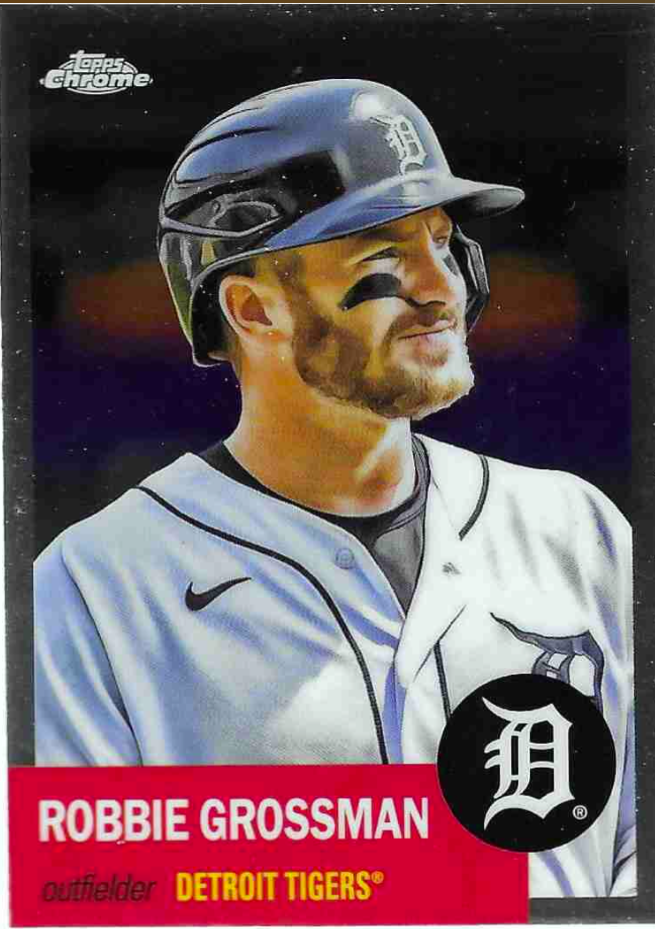
On August 6, Astros’ southpaw Framber Valdez (in his first start of the month) headed into the ninth innings with a 4-2 lead over the hometown Rangers. There was plenty of anticipation. Valdez hadn’t given up a hit, had fanned five and walked only one.  He was on the cusp of a no-hitter. Then things got a little “iffy.”  He walked Rangers’ DH Robbie Grossman on six pitches to start then ninth. Then a sigh of relief as 1B Ezequiel Duran hit into a 5-4-3 double play on his first pitch from Valdez.  One out away from a no-no. Oops! Hold your breath, LF Josh Smith walked on six pitches.  Then, on the very next pitch, Rangers’ SS Corey Seager drove a ball to deep right-center for a two-run home run. Goodbye no-hitter, goodbye shutout and, with Josh Hader heading in to relieve Valdez (after 107 pitches), goodbye complete game.  (Valdez did get the victory.)

Side note: In his final start of the month (August 30 versus the Royals in Houston), Valdez again flirted with a no-hitter. After seven innings, he had not given up a hit and was holding onto a 1-0 lead.  He had thrown 98 pitches, but had gone through a tough 25-pitch seventh frame – groundout, hit by pitch, strikeout, wild pitch, walk, strikeout. Astros’ manager Joe Espada pulled Valdez to start the eighth with the no-no still intact. (Can you imagine taking the ball from Bob Gibson or Jack Morris in that situation?).  The Astros ended up winning 3-2 and the Royals picked up two hits.

Déjà vu

On August 25, 2016, Corey Seager – who broke up Framber Valdez’ no-hit bid with two out in the ninth on August 6 – came to the plate in the bottom of the ninth with two out, no one on base, Seager’s Dodgers trailing the Giants 4-0 and Giants’ pitcher Matt Moore one out away from a no-hitter. Seager looped a 1-1 pitch into short RF for a single and Santiago Casilla came on to relieve Moore (who had thrown 133 pitches). Casilla got Justin Turner for the final out.  I note this here, because when Seager broke up Framber Valdez’ August 6 no-hit bid, it made Seager the only player to break up multiple MLB no-hitters with two outs in the ninth inning.   

From Both Sides Now

On August 13, in an Orioles 9-3 loss to the Nationals (in Baltimore), Orioles’ RF Anthony Santander hit his 36th home run of the season – the most ever by an Orioles’ switch hitter (breaking Ken Singleton’s record set in 1979). As August closed out, Santander had a stat line of .238-39-88.

Rolling a 300 … You Be the Judge

On August 14, the Yankees Aaron Judge hit his 43rd homer of the 2024 season – which also happened to be his 300th career MLB long ball. It came in his 955th career game, the fewest games every played to reach 300, as well as in his 3,431st at bat – a record for the fewest at bats to reach 300 dingers.  The players now in second place? Ralph Kiner and Babe Ruth. Not bad company. Judge’s three-run shot came in the eighth inning of a Yankees’ 10-2 win over the White Sox in Chicago.  At the end of August Judge had a .330-51-124 stat line and was leading MLB in home runs, RBI (123), walks (111), on-base percentage (.463), slugging percentage (.721), total bases (343) and intentional walks (17).  A little balance? He also led the AL in grounding into double plays (20).

A Solid Cycle

On August 15, as the Phillies trounced the Nationals 13-3 (in Philadelphia, Phillies’ rookie Weston Wilson became the second MLB rookie to hit for the cycle this season.  (The other was Wyatt Langford on June 30.) Wilson’s cycle was especially sweet, since Wilson had clearly paid his due before getting to the show.  Wilson also hit a home run in his very first MLB at bat on August 9, 2023 – after seven seasons and 2,836 minor-league plate appearances, Now, he has a cycle to his credit and it too was a bit historic, marking the first time two MLB rookies have hit for the cycle in the same season.

Your Hit Parade, Featuring the Jackson Three

MLB fans were seeing triple (or is it triples) on August 16 as:

  • Brewers’ 20-year-old rookie LF Jackson Chourio tripled in the first inning of a Brew Crew 5-3 win over the Guardians;
  • Orioles’ 20-year-old rookie 2B Jackson Holliday tripled in the third inning of an Orioles’ 12-10 loss to the Red Sox.
  • Padres’ 21-year-old rookie CF Jackson Merrill tripled in the sixth inning of a 7-3 loss to the Padres.

Speed Kills

There is no doubt that Bobby Witt, Jr. is one of MLB’s brightest young stars. At the end of August, he was hitting .341-29-96.  On August 20th, however, he was overmatched by Angels’ 23-year-old right-handed reliever Ben Joyce. Joyce faced Witt Jr. with two outs in the bottom, of the ninth (and the Angels up 9-5. He struck out Witt on three swinging strikes at speeds of 104.8 mph, 104.5 mph and 103.2 mph. (Was that last one a changeup?)  It was only the second three-pitch strikeout with all pitches at 103 mph or better this season.  The first was also by Joyce.  (Thanks to MLB.com’s Sarah Langs and Jason Bernard or this tidbit.)

 Three-Peat … Of Sorts

On August 21, as the Mets beat the Orioles 4-3 in New York, Mets’ SS Francisco Lindor hit his 25th homer of the 2024 season. Just two days earlier, in another Mets’ 4-3 win over Baltimore, Lindor had collected his 25th stolen base of the season.  The highlight’s significance?  Lindor became just the first shortstop in MLB history with three 25-25 (HR/SB) seasons.  Lindor previously reached the 25/25 mark with the Mets in 2023 and with the Indians in 2018. A total of 11 shortstops belong to the 25-25 club. Those with two such seasons include Bobby Witt, Jr. (2023-24 Royals); Trea Turner (2021 Dodgers/Nationals, 2023 Phillies); Jimmy Rollins (2006-07, Phillies; and Hanley Ramirez (2007-08, Marlins).  Lindor ended August .269-28-79, with 25 steals on the season.

More Shutouts

In August, Luis Severino of the Yankees and Blake Snell of the Giants each pitched a shutout (Snell’s was a no-hitter).  This brought 2024’s total number of one-pitcher shutouts to 15, just four short of 2023 total. But don’t get too excited. As recently as 2000, there were 72 one-pitcher shutouts and, in 1968 (The Year of the Pitcher, there were 279 (Don Drysdale threw five shutouts in the month of May alone – and a sixth consecutive whitewashing in his first June start).  My, how times have changed.    

 150 for Gerrit Cole

Photo: All-Pro Reels from District of Columbia, USA, CC BY-SA 2.0 <https://creativecommons.org/licenses/by-sa/2.0>, via Wikimedia Commons

On August 22, Yankees’ righty Gerrit Cole picked up his fifth win of the 2024 season, giving up just one hit over six innings (five walks/two whiffs), as New York topped Cleveland 6-0. It was the 150th win of Cole’s ten-season MLB career (2013-2024 … Pirates, Astros, Yankees). The six-time All Star’s best season was 2019 (Astros), when he went 20-5, leading the AL in ERA (2.50) and strikeouts (326). Cole closed August with a 5-3, 3.86 on the season and a career mark of 150-78, 3.19. In an interesting (to The Roundtable) twist, Cole gave up a single on the second pitch of the game (to Guardian’s LF Steven Kwan), which proved to be the only hit Yankee pitching would allow.  Back to #InBaseballWeCountEverything, the Elias Sports Bureau indicated it was the first time the Yankees ever allowed a hit to a game’s first batter and none thereafter.

They Call Him the Streak

On August 23, the Braves Raisel Iglesias came into a game against the Nationals in the ninth frame, with the score knotted at two. He put down the Nat’s in order in the ninth. Then, he hit Nationals’ CF Jacob Young with his first pitch of the tenth, before retiring the side on a pop out and a double play.  The Braves scored the bottom of the tenth to give Iglesias the win. So, why is that a highlight?  Well, that hit batter was the first batter to reach base against Iglesias since July 27 – in between he retired a sting of 38 consecutive batters over the course of 12 appearances.  At the close of August, Iglesias was 4-1, 2.34, with 28 saves on the season. For those who like to know such things, the record for most consecutive batters retired is 46, by the Giants’ Yusmeiro Petit in 2014. Interestingly, when Petit’s streak ended in the third inning of a game on August 28, it came on a double (on an 0-1 pitch) to Rockies’ pitcher Jordan Lyles – a career .112 hitter.

Forty-Forty Vision

On August 23, Dodgers’ DH Shohei Ohtani continued his march into MLB lore.  He came to the plate against the Rays’ Colin Poche in the bottom of the ninth with two outs, the game tied at three and the bases loaded. He rapped Poche’s first offering to deep right-center for a dramatic walk-off Grand Slam. It was Ohtani’s 40th homer of the 2024 season and, with his 40 stolen bases, made him just the sixth member of MLB’s 40-40 Club. (Side note: He stole his 40th bag of the season in the second inning of the August 23 game.) To add a little frosting to the cake, he also accomplished the “40-40” in his 126th game of the season, making him the quickest to reach double forty (by 21 games).

The six members of the 40-40 Clubs are Jose Canseco (1988 – 42HR/40SB); Barry Bonds (1996 – 42HR/40SB); Alex Rodriguez (1998 – 42HR/46SB); Alfonso Soriano (2006 – 46HR/41SB); Ronald Acuna Jr. (2023 – 41HR/73SB); Shohei Ohtani (2024- 42HR/42SB … and counting).

More #InBaseballWeCountEverything

On August 27th, with the Braves’ visiting the Twins in Minnesota, the starting pitchers were Spencer Schwellenbach (Braves) and Simeon Woods Richardson (Twins). Elias Sports Bureau reported that it was the longest ever MLB last name starting pitcher matchup (a combined 28 letters in the two hurlers’ last names).  The Braves, by the way, won the game 8-6 and neither Schwellenbach nor Woods Richardson made it out of the fifth inning.  They did, however, make a little “name-game” history.

Tea for Two 

On August 26, as the Red Sox and Blue Jays faced off in Boston, a bit of history – two months in the making – was written into the record books.  It all reverted ack to June 26, when Danny Jansen started at catcher for the Blue Jays in a game suspended (due to rain) in the top of the second inning with Jansen at the plate with an 0-1 count.  Now, on July 27, Jansen was traded from Toronto to Boston. So, as the June 26 game was resumed (on August 26) the Blue Jays sent Daulton Varsho up to pinch hit for Jansen (who was no longer on the team). Who was behind the plate for the Red Sox, catching for a plate appearance that he began as a batter? Yep, Danny Jansen.  So, Jansen became the first player to play for two teams in the same game.  The Jays, by the way, won the contest 4-1.

The Butler Did It

On August 29, as the A’s lost to the Reds 10-9 in Cincinatti, A’s leadoff hitter and RF 24-year-old Lawrence Butler went three-for four – with three home runs and four RBI.  It was Butler’s second three-homer game of the season, making him the second A’s player and 25th player overall to have two three-dinger contests in a season.  Butler finished August at .257-20-53 on the season. For those who like to know such things, Sammy Sosa holds the mark for the most three-homer games in a season at three (2001). Mookie Betts, Sammy Sosa and Johnny Mize share the career record for three-homer games at six.

More #InBaseballWeCount Everything

On August 29, Rangers’ shortstop Corey Seager now in his tenth MLB season, slugged his 200th career round tripper, as Texas topped the White Sox 2-1 in Chicago. The long ball made Seager the first left-handed hitting shortstop to reach 200 home runs. Seager finished August .275-30-74 on the season. 2024 is his third 30-homer season in a row (33 in both 2022 and 2023).

Skubal-Dooby Doo

On August 31, as the Tigers edged the Red Sox 2-1 in Detroit, Tigers’ starter Tarik Skubal had a red-letter day.  First, he got the win (his MLB-leading 16th  victory of the season). Second, he pitched into the eighth inning for the first time in his MLB career (five seasons/99 starts). Third, his seventh strikeout of the game (Red Sox RF Tyler O’Neill to close out the sixth inning) made him the first MLB pitcher to reach 200 strikeouts this season (he would get one more strikeout in the game). Skubal ended August with a 16-4, 2.51 record on the season.

–INDIVIDUAL LEADERS FOR AUGUST —

BATTING AVERAGE (at least 75 August at bats)

American League:  Aaron Judge, Yankees (.389); Yordan Alvarez, Astros (.382); Vlad Guerrero, Jr., Blue Jays (.375)

National League: Oneil Cruz, Pirates (.389); Luis Garcia, Nationals (.341); Alex Call, Nationals (.33)

The lowest August average among players with at least 75 at bats in the month belonged to the Angels’ Logan O’Hoppe at .099 (9-for917.)

HITS

American League: Vlad Guerrero, Jr., Blue Jays (39); Aaron Judge, Yankees (35); Bobby Witt, Jr., Royals (35)

National League: Francisco Lindor, Mets (39); Marcel Ozuna, Braves (37); Oneil Cruz, Pirates (37)

The Royals’ Bobby Witt, Jr.  led all MLBers in August extra-base hits with 20 – nine doubles, one triple and ten home runs.  

HOME RUNS

American League: Aaron Judge, Yankees (12); Corey Seager, Rangers (11); Juan Soto, Yankees (10); Bobby Witt, Jr., Royals (10)

National League:  Shohei Ohtani, Angles (12); Corbin Carroll, Diamondbacks (11); Willy Adames, Brewers (10); Jake Burger, Marlins (10)

The Yankees’ Aaron Judge led all players with at least 75 August at bats in slugging percentage at .856. The Diamondbacks’ Corbin Carroll led the NL at .700.

RUNS BATTED IN

American League: Vinnie Pasquantino, Royals (25); Aaron Judge, Yankees (24); Josh Naylor, Guardians (24); Corey Seager, Rangers (24)

National League: Matt Olson, Braves (27); Jake McCarthy, Diamondbacks (26); Manny Machado, Padres (25)

RUNS SCORED

American League:  Bobby Witt, Jr., Royals (25); Aaron Judge, Yankees (21); Jose Ramirez, Guardians (21)

National League: Corbin Carroll, Diamondbacks (30); Shohei Ohtani, Dodgers (24); Willy Adames, Brewers (24)

DOUBLES

American League: Jarren Duran, Red Sox (11); Vlad Guerrero, Jr., Blue Jays (11); Salvador Perez, Royals (9); Bobby Witt, Jr., Royals (9)

National League: Bryce Harper, Phillies (11); Matt Olson, Braves (10); six with nine

TRIPLES

American League:  Parker Meadows, Tigers (4); Joey Loperfido, Blue Jays (3); five with two

National League: Corbin Carroll, Diamondbacks (4); Jackson Merrill, Padres (3); Seiya Suzuki, Cubs (3)

STOLEN BASES

American League: Jose Ramirez, Guardians (14); Jose Caballero, Rays (9); Jarren Duran, Red Sox (9); Andres Gimenez, Guardians (9)

National League: Shohei Ohtani, Dodgers (15); Xavier Edwards, Marlins (13); Oneil Cruz, Pirates (10); Nico Hoerner, Cubs (10)

The Dodgers’ Shohei Ohtani stole the most August bases without getting caught (15).

BATTER’S STRIKEOUTS

American League:  Logan O’Hoppe, Angels (44): Colton Cowser, Orioles (43): Christopher Morel, Rays (34); Zack Gelof, A’s (34)

National League: Pete Alonso, Mets (42); Kyle Schwarber, Phillies (41); Ezequiel Tovar, Rockies (38)

WALKS

American League:  Aaron Judge, Yankees (25); Juan Soto, Yankees (20); Steve Kwan, Guardians (167

National League: Michael Toglia, Rockies (21); Joc Pederson, Diamondbacks (17); Spencer Steer, Reds (17); William Contreras, Brewers (17)

PITCHING VICTORIES

American League:   Jose Berrios, Blue Jays (5-1); Bowden Francis, Blue Jays (4-1); Tarik Skubal, Tigers (4-1)

National League:  14 with three

EARNED RUN AVERAGE (minimum 25 August innings)

American League: Bowden Francis, Blue Jays (1.05); Hunter Brown, Astros (1.45): Osvaldo Bido, A’s (1.55)

National League: Zach Wheeler, Phillies (1.62) Blake Snell, Giants (1.64); David Peterson, Mets (1.86)

The highest ERA among pitchers with at least 25 August innings or four August starts was 10.80 by the Marlins’ Roddery Munoz (0-2, 10.80 in five starts – 20 earned runs 16 2/3 innings.)

STRIKEOUTS

American League: Spencer Arrighetti, Astros (47K/ 32 1/3 IP); Tarik Skubal, Tigers (47K/ 38 1/3 IP); Yusei Kikuchi, Astros (47K/ 35 IP)

National League: Blake Snell, Giants (53K/ 38 1/3 IP); Zack Wheeler, Phillies (44K/ 39 IP); Chris Sale, Braves (42K/ 30 2/3 IP); Spencer Schwellenbach, Braves (42K/ 29 1/3 IP)

WALKS + HITS/INNINGS PITCHED (at least 25 August innings)

American League: Bowden Francis, Blue Jays (0.41); Framber Valdez, Astros (0.65); Bryan Woo, Mariners (0.68)

National League: Blake Snell, Giants (0.83);  Zach Wheeler, Phillies (0.85); Logan Webb, Giants (0.87)

Among pitches with at least 25 August innings, the Blue Jays Bowden Francis held batters to the lowest August average at .089.

SAVES

American League:  Chad Green, Blue Jays (8); Josh Hader, Astros (8); Mason Miller, A’s (9)

National League:  Ryan Helsley, Cardinals (9); Devin Williams, Brewers (8); Justin Martinez, Diamondbacks (7)

Chad Green of the Blue Jays and Mason Miller of the A’s saved the most games without a blown save in August (eight each).  

 Primary Resource: Baseball-Reference.com


Baseball Roundtable – Blogging Baseball Since 2012.

100Baseball Roundtable is on the Feedspot list of the Top 100 Baseball Blogs.  To see the full list, click here.

Baseball Roundtable is also on the Anytime Baseball Supply Top 66 Baseball Sites list.  For the full list, click here

I tweet (on X) baseball @DavidBaseballRT

Follow Baseball Roundtable’s Facebook Page here.  More baseball commentary; blog post notifications.

Member: Society for American Baseball Research (SABR); Negro Leagues Baseball Museum; The Baseball Reliquary. 

P1055


Baseball Roundtable Trivia(l) Tidbit Tuesday … Taking a “Run” at the Record Books

Welcome to another edition Trivia(l) Tidbit Tuesday, a weekly presentation of baseball occurrences that for some reason caught The Roundtable’s eye.  (I’m particularly fond of unexpected performances or statistical coincidences.) These won’t necessarily be momentous occurrences, just events, statistics or coincidences that grabbed my attention. This week, we’ll be looking at players whose only career MLB home  run was an inside-the-park Grand Slam.  For previous Trivia(l) Tidbits, just type Trivia(l) in search box on the right hand side of the page.

Pete Milne – He’ll Do in a Pinch

On April 27, 1949, New York Giants’ outfielder Pete Milne, playing in just his 17th MLB game, was called on to pinch hit for pitcher Andy Hansen in the bottom of the seventh inning – with the Giants trailing the rival Dodgers 8-7, the bases loaded and two out.  He delivered an inside-the-park Grand Slam to deep LF, for what would be his only career home run. Milne accomplished what The Roundtable likes to call an MLB one-of-a-kind unicorn.  He is the only MLB player, whose only career home run was a pinch-hit, inside-the park Grand Slam. (Yes, in baseball we count everything.) Milne played in three seasons for the Giants (1948-50), getting into 47 games and hitting .233-1-9.  For my Minnesota readers, Milne played in two seasons for the Minneapolis Millers (1950-51), hitting .304-12-95 in 185 games.

I did find three other players whose only career MLB home run was an inside-the-park Grand Slam (although not in a pinch-hitting role) … and there was an interesting (to me) coincidence along the way.

Lee Gooch & Cy Falkenberg – A Coincidental Crossing

On June 17, 1917, Lee Gooch started in right field (batting seventh) for the Athletics (versus the Indians) in Cleveland.  It was just his eighth career MLB game. Gooch came to the plate in the top of the fourth inning, with the Athletics up 1-0, the bases loaded and one out. Gooch delivered an inside-the-park Grand Slam – which would prove to be his only career MLB home run.  (Thanks in part to Gooch’s Grand Slam, the Athletics won 9-5 that day.) Gooch played in just two MLB seasons (1915, 1917 … Indians, Athletics), hitting .295-1-8 in 19 games.

Coincidentally, starting on the mound for the Athletics was Cy Falkenberg (in his last MLB season), who had hit an inside-the-park Grand Slam (which proved to be his only MLB career home run) eleven seasons earlier.

On July 18, 1906, Cy Falkenberg – pitching for the Nationals – started on the mound against the Chicago White Sox (in Washington D.C.) In the bottom of the sixth, with the game tied at two apiece, Falkenberg came to the plate with the bases loaded. He blooped a ball to right field that took a strange hop, eluding the right fielder.  It ended up as Falkenberg’s only career home run – an inside the park Grand Slam. Falkenberg, by the way, pitched a complete game 6-3 win that day.

Falkenberg played in 12 MLB seasons (1903, 1905-1911, 1913-15, 1917 … Pirates, Nationals, Naps, Athletics and Federal League Indianapolis Hoosiers, Newark Pepper and Brooklyn Tip-Tops). He went 130-123, 3.35 on the mound and .152-1-47 at the plate.

Eddie Onslow—A Rookie Run

On August 22, 1912, 19-year-old Tigers’ rookie Eddie Onslow started at 1B (batting sixth) for the Tigers (versus the Nationals in Washington D.C).  Onslow, who came into the game hitting .154 on the season (8-for-52 in 14 games) had a heck of a day. He went four-for-five and hit his first (and what would be his only) MLB home run. It came with two out in the in the top of the first inning.  And, of course, given today’s Trivia(l) topic, it was an inside-the-park Grand Slam (to deep CF).  Notably, two of the the players who scored on Onslow’s hit were future Hall of Famers Ty Cobb and Sam Crawford. The game also saw Onslow reach career single-game highs in hits (four) and RBI (four).

Onslow played in four MLB seasons (1912-13, 1918, 1927 … Tigers, Indians, Nationals), hitting .232-1-22 in 64 games.

Primary Resource:  Baseball-Reference.com

Baseball Roundtable – Blogging Baseball Since 2012.

100Baseball Roundtable is on the Feedspot list of the Top 100 Baseball Blogs.  To see the full list, click here.

Baseball Roundtable is also on the Anytime Baseball Supply Top 66 Baseball Sites list.  For the full list, click here

I tweet (on X) baseball @DavidBaseballRT

Follow Baseball Roundtable’s Facebook Page here.  More baseball commentary; blog post notifications.

Member: Society for American Baseball Research (SABR); Negro Leagues Baseball Museum; The Baseball Reliquary. 

P1054

Baseball Roundtable Trivia(l) Tidbit Tuesday … Who Needs A Bat Anyway?

Welcome to another edition Trivia(l) Tidbit Tuesday, a weekly presentation of baseball occurrences that for some reason caught The Roundtable’s eye.  (I’m particularly fond of unexpected performances or statistical coincidences.) These won’t necessarily be momentous occurrences, just events, statistics or coincidences that grabbed my attention. For longer “Tidbits,” I’ll direct you to the Baseball Roundtable blog.  This is one of those Tidbits, although you could easily stop at the end of this page and still have a full story or two.  To check out previous Trivia(l) Tidbit Tuesdays, type Trivia(l) in the search box on the right hand side of the page.

Man on the Run

Rickey Henderson, MLB’s all-time stolen base leader, stole his career-high (single-game) five bases in a game in which he did not record a single at bat.

On July 29, 1989, MLB’s running man – A’s LF Rickey Henderson – became the first and still only (I do love MLB “unicorns”) MLB player to steal five bases in a game in which he did not record a single at bat. The thefts came in an A’s 14-6 loss to the Mariners (in Oakland) and his day went like this:

First Inning – Drew a leadoff walk on a 3-2 pitch from Randy Johnson. While the next batter, 3B Carney Lansford, was at the plate, Henderson stole second and third bases. He then scored as Lansford reached first on an error.

Third Inning – Drew another leadoff walk versus Johnson, again on a 3-2 pitch.  On the second pitch to Lansford, Henderson stole second. On the next pitch, he scored on a Lansford double.

Fifth Inning – Leading off the inning again, Henderson was again walked by Johnson, this time on four pitches. He stole second on the first pitch to Lansford and later scored as 1B Mark McGwire reached on an error.

Sixth Inning – This time, Henderson came to the plate – again against Johnson – with one on and two out.  He walked on another 3-2 pitch. Then, on the first pitch to Lansford, Henderson swiped second as part of a double steal. On the next pitch he scored on a Lansford double.

So, four plate appearances, four walks (no at bats) and Henderson’s only five-steal MLB game.

Henderson, by the way, finished 1989 at .274-12-57, leading MLB with 77 steals and 113 runs scored (tied). He also led the AL in walks with 126. Over his 25-season MLB career (1979-2003b… A’s, Yankees, Blue Jays, Padres, Angels, Mets, Mariners, Red Sox, Dodgers), Henderson went .279-297-1,115, with an MLB-record 1,406 steals and an MLB-record 2,295 runs scored. His 2,190 career walks are second only to Barry Bonds. The ten-time All Star led the league in stolen bases 12 times (seven seasons consecutively … 1980-86). He also stole 100 or more bases in three seasons.

Of course, with Baseball Roundtable, one thing always leads to another.  So, let’s look at a few more “no-at bat” records.

Most Plate Appearances in an MLB Game Without a Single At Bat (Seven)

On May 8, 2016, as the Nationals lost to the Cubs 4-3 in 13 innings in Chicago, Nationals’ Bryce Harper came to the plate seven times and reached base seven times without ever putting the ball in play (thus, recording zero at bats). Those seven plate appearances and seven times on base without an at bat are both MLB single-game records.  Harper drew six walks (three intentional) and was hit by a pitch.

Three players share the record for plate appearances without an at bat in a nine-inning game at six.

  • Cardinals’ 2B (and Hall of Famer) Miller Huggins … June 1, 1910 – In a 10-5 Cardinals’ win over the Phillies in Philadelphia, Huggins came to the plate six times and recorded four walks, two sacrifice bunts, one run scored and two RBI. Huggins played 13 MLB seasons (1904-16 … Reds, Cardinals) and hit .265-9-318, with 948 runs and 324 steals.  He led the NL in walks four times.
  • Braves’ SS Billy Urbanski … June 13, 1934 – Urbanski came to the plate six times and, like Huggins above, drew four walks and laid down a pair of sacrifices. He scored once in the Braves 9-0 win over the Cardinals in St. Louis. Urbanski played in seven MLB seasons (1931-37), all for the Braves. He hit .260-19-207 over 763 games. He drew only 198 career walks and had just that one four-walk game (also just one three-walk contest).
  • Red Sox’ 1B (and Hall of Famer) Jimmie Foxx … June 16, 1938 – As the Red Sox topped the Browns 12-8 in St, Louis, Jimmie Foxx came to the plate six times and walked six times.  He scored two runs in the game. That the Browns wanted nothing to do with Foxx should be no surprise, he was on his way to a .360-50-175 season (and his third MVP Award). Foxx played 20 MLB seasons (1925-42, 1944-45 … Athletics, Red Sox, Cubs, Phillies), hitting .325-534-1,922. The nine-time All Star won three MVP Awards and one Triple Crown and led the league in homers five times, RBI three times and average twice.

Most RBI for a Player in an MLB Game Without Single At Bat (Three)

 Pirates’ RF Clyde Barnhart … September 13, 1923 – As the Pirates topped the Robins in Pittsburgh, Pirates’ RF and cleanup hitter Barnhart drove in half of the Pirates runs without recording an at bat. All three RBI came on sacrifice flies. In four plate appearances he had those three SF and a walk.  That season, Barnhardt hit .324-9-72. He played in nine MLB seasons (1920-28), all for the Pirates, and hit .295-27-436.

Side note: Sacrifice fly rules were changed often over time, During the 1923 season, sacrifice flies and sacrifice hits (bunts) were not separated in MLB stats. So, you do not see Barnhart listed among those sharing the single-game sac fly record (at three).  However, the baseball-reference.com play-by-play indicates that (by current rules) he did record three sac flies on September 13, 1923.

Twins DH (and Hall of Famer) David Ortiz … July 3, 2000 – Ortiz, at DH and in the number-seven spot in the lineup managed to drive in three runs without recording an at bat – against the team he would eventually earn his way into the Hall of Fame with (the Red Sox). It came in a Twins’ 11-8 loss in Minnesota and Ortiz:

  • Drew a bases loaded walk off Ramon Martinez in the first inning;
  • Lofted an RBI sacrifice fly off Martinez in the third;
  • Recorded a second RBI sac fly (off Hipolito Pichardo) in the fourth;
  • Was pinch hit for in the sixth (by Butch Huskey) ending his evening’s work, with three plate appearances, no at bats and three RBI.

Ortiz, of course, went on to a Hall of Fame career (after a being released by the Twins in December 2002 and signing with the Red Sox in January 2003). While he never hit more than 20 home runs in a season as a Twin, the ten-time All Star hit 30 or more long balls in ten of 14 seasons In Boston, with a high of 54 in 2006. He was a ten-time All Star (all with Boston) and hit .286-541-1,768 over 20 MLB seasons (1997-2016).

Going Out In Style

In his final (age-40) MLB season, David Ortiz hit .315-38-127 in 151 games – and led the AL in doubles, slugging percentage and on-base+slugging.


Most Runs Scored by a Player in an MLB Game Without Recording a Plate Appearance (Four)

Six players share the record for more runs scored in a game without a plate appearance at four.

  • Blues RF (and Hall of Famer) Elmer Flick …  July 18,1902 – As the Cleveland Blues topped the Boston Americans 14-4 in Boston, Flick (in RF batting fifth) came to bat five times, walked four times, was hit by a pitch, scored four times and drove in one run. Flick played 13 MLB seasons (1898-1910 … Phillies, Athletics, Blues/Naps), hitting .313-48-76. He led the league in runs once, triples three times, RBI once, steals twice and average once.
  • Giants’ LF Sam Mertes …  August 12, 1903 – Mertes, batting cleanup, drew five walks (and scored four runs) in five plate appearances. – as the Giants topped the Cardinals 14-4 in New York.  Mertes played 10 MLB seasons (1896, 1898-1906 … Phillies, Orphans, White Sox, Giants, Cardinals), hitting .279-40-721 in 1,190 games. In 1903, he led the NL with 104 RBI, while hitting .280, with seven homers.
  • Indians’ CF (and Hall of Famer) Lary Doby … September 19, 1951 – As the Indians routed the Red Sox 15-2 in Boston, Doby (batting third) came to the plate five times, walked five times and scored four runs.  Doby played in 17 MLB seasons (1942-44, 1946-59 … Newark Eagles, Indians, White Sox, Tigers), hitting .288-273-1,099. The nine-time All Star was a Negro National League batting champion, and led the American League in runs once, home runs twice and RBI once.
  • Reds’ 2B (and Hall of Famer) Joe Morgan …  July 27, 1973 – Morgan – batting in the two-hole … came to bat four times, drew four walks and scored four runs, as the Reds bested the Braves 12-2 in Cincinnati.  Morgan played in 22 MLB seasons (1963-84 … Astros, Reds, Giants, Phillies, A’s), hitting .271-268-1,133, with 1,650 runs scored and 689 steals in 2,649 games. He was a two-time MVP, 10-time All Star and five-time Gold Glover. He led the league in walks four times and eight times drew 100+ walks in a season.
  • A’s LF (and Hall of Famer) Rickey Henderson … July 29, 1989 – In the same game in which he stole five bases without an at bat, Henderson drew four walks and scored four runs in four plate appearances.
  • Nationals’ CF Bryce Harper … September 3, 2003 – Harper came to the plate four times in a Nationals’ 15-1 trouncing of the Braves (in Washington D.C.). He walked four times and scored four runs. One of those walks came with the sacks full, giving him an RBI.  Still active, as this is written, Harper is in his 13the MLB seasons (Nationals Phillies). He is an eight-time All Star and two-time MVP.

Coming Soon – This post led me to look at Most Runs Surrendered by a Pitcher in a Game in which he Did Not Record a Single Out (credited with zero innings pitched).

Primary Resource: Baseball-Reference.com

Baseball Roundtable – Blogging Baseball Since 2012.

100Baseball Roundtable is on the Feedspot list of the Top 100 Baseball Blogs.  To see the full list, click here.

Baseball Roundtable is also on the Anytime Baseball Supply Top 66 Baseball Sites list.  For the full list, click here

I tweet (on X) baseball @DavidBaseballRT

Follow Baseball Roundtable’s Facebook Page here.  More baseball commentary; blog post notifications.

Member: Society for American Baseball Research (SABR); Negro Leagues Baseball Museum; The Baseball Reliquary. 

P1053

Trivia(l) Tidbit Tuesday … Oddly Even Contests

Welcome to another edition Trivia(l) Tidbit Tuesday, a weekly presentation of baseball occurrences that for some reason caught The Roundtable’s eye.  (I’m particularly fond of unexpected performances or statistical coincidences.) These won’t necessarily be momentous occurrences, just events, statistics or coincidences that caught my eye.  To see past Trivia(l) Tidbits, just type Trivia(l) into the search box on the lower righthand side of the page.

Like many of these “Tidbits,” this edition provides an example (two, actually) of what you can run across if you spend your times browsing baseball-related websites (like Baseball-Reference.com, Baseball-Almanac.com and National Pastimes.com, to name just a few of my favorites).

This time, we’re looking at oddly even games.  (I’ve actually written about this in the past, but today is the anniversary of one of these contests, so it seem an appropriate time to revisit these statistical coincidences.

An Oddly Even Game

On August 13, 1910, the Pittsburgh Pirates and Brooklyn Superbas (Dodgers) played perhaps the most “even” MLB game ever.  The first game of that day’s twin bill was pretty tight – a 13-inning, 3-2 Pirates’ win.  Game Two put Game One to shame.  It ended after nine frames in an 8-8 tie (called due darkness).  In the game:

  • Each team scored 8 runs;
  • Each team recorded 13 hits in 38 at bats;
  • Each team made two errors;
  • Each team recorded 13 assists and 27 putouts;
  • Each team gave up three walks;
  • Each team suffered one hit batsman;
  • Each team fanned five times;
  • Each team was charged with one passed ball;
  • Each team was awarded five RBI among their eight runs scored.

N0w, what are the “odds” of coming up with another one of those “even-Steven” games?

Ooops! They Did It Again.

On April 15, 1968, The Astros topped the Mets 1-0 in 24 innings.  In that one:

  • Each team had 11 hits in 79 at bats;
  • Each team had ten singles and one double;
  • Each team left 16 men on base;
  • Each squad made on error;
  • Each team threw two wild pitches;
  • Each team turned one double play.
  • Each team used four pinch hitters.
  • Oh, and by the way, the winning tally scored on a groundball error. So, each team scored zero “earned” runs.

Next week, an MLB unicorn – a once in baseball history baserunning feat.

Primary Resources: Baseball-Reference.com; Baseball-Almanac.com


Baseball Roundtable – Blogging Baseball Since 2012.

100Baseball Roundtable is on the Feedspot list of the Top 100 Baseball Blogs.  To see the full list, click here.

Baseball Roundtable is also on the Anytime Baseball Supply Top 66 Baseball Sites list.  For the full list, click here

I tweet (on X) baseball @DavidBaseballRT

Follow Baseball Roundtable’s Facebook Page here.  More baseball commentary; blog post notifications.

Member: Society for American Baseball Research (SABR); Negro Leagues Baseball Museum; The Baseball Reliquary. 

P1052

Trivia(l) Tidbit Tuesday — from CC to Double D … Some Memorable Shutouts

Welcome to another edition Trivia(l) Tidbit Tuesday, a weekly presentation of baseball occurrences that for some reason caught The Roundtable’s eye.  (I’m particularly fond of unexpected performances or statistical coincidences.) These won’t necessarily be momentous occurrences, just events, stats or coincidences that caught my eye. This week we’ll look ats a couple of, so far, once in MLB history accomplishments: One, I think will likely be matched someday (CC Sabathia leading both the AL and NL in shutouts in the same season); and one I think will stand the test of time (Don Drysdale’s six consecutive shutouts, thrown in a 21-day span).  So, let’s get on with it.

Note: To see past editions of Trivial(l) Tidbit Tuesday, just type Trivia(l) in the search box on the right-hand sided of the page.

Two Leagues of His Own

Recently, on August 3, the Cleveland Guardians inducted CC Sabathia into the Guardians Hall of Fame, which makes it appropriate to feature Sabathia in an edition of Trivia(l) Tidbits.  Sabathia achieved a baseball unicorn event in 2008, when he became the first – and still only – pitcher to lead both the American and National League in shutouts in the same season. Given today’s pitcher usage, I am pretty confident he will be sharing that distinction in the near future. (Consider that in the past six completed seasons, it has never taken more than two shutouts to lead either league and, in two of those seasons, one shutout was the maximum in both leagues. With that in mind, a solid pitcher moved to a contender at the trade deadline would seem to have a pretty good shot at joining Sabathia in this unique club.) But enough of that.  More on Sabathia’s season.

Sabathia started the 2008 season with the Indians and went 6-8, 3.83 with three complete game and two shutouts (which eventually tied for the AL lead) before being traded to the Brewers on July 7. He had shutout the A’s on May 14 (in Cleveland) on a five-hitter (two walks, 11 whiffs) in a 2-0 victory.  On June 10, he twirled another five-hit shutout, this time topping the Twins (in Cleveland) 1-0.

At the time of the July 7 trade, the Indians were last in the AL Central Division, while the NL Central Brewers were fighting for a post-season berth. (On July 6, they trailed the league-leading Cubs by 3 ½ games). Long story short, Sabathia carried the Brewers to the post season (albeit as a Wild Card) on the strength of his left arm – going 11-2, 1.65 in 17 starts.  In the process, he led the NL in complete games (7) and shutouts (3) – despite spending about half the season in the AL.  (He tied for the NL lead in shutouts with new Brewers’ teammate Ben Sheets and tied for the AL lead with seven other starters.) His NL shutouts came on: July 23, a three-hitter in a 3-0 win over the Cardinals in St. Louis; August 8 in a 5-0 win over the Nationals in Milwaukee (a five-hitter); and August 31 in a 7-0 win over the Pirates in Pittsburgh (a one-hitter).

Sabathia – A True Gamer

As the 2008 season wound down, with the Brewers still fighting for a post-season berth, C.C. Sabathia took the mound three times on three-days rest over the last nine days of the season. (Thanks to MLB.com writer Anthony Castrovince for the “tip” on this one.)  Over those the games, Sabathia went 2-1, with a 0.83 earned run average. In those nine days, he threw 21 2/3 innings, 335 pitches (221 strikes) – giving up just 15 hits (six runs, but just two earned), while walking four and fanning 21. On the final day of the season, he threw a complete game four-hitter as the Brewers topped the Cubs 3-1.   

Sabathia pitched in 19 MLB seasons (2001-19 … Indians, Brewers and Yankees) going 251-161-3.74.  The six-time All Star won the 2007 AL Cy Young Award, when he went 19-7, 3.21 for the Indians. As a rookie in 2001, he went 17-5, 4.39 for the Indians, finishing second in the Rookie of the Year voting to Ichiro Suzuki, who led the AL in average (.350), hits (242) and steals (56). Sabathia twice led the league in wins (a high of 21 for the Yankees in 2010) – and won 15 or more games in nine seasons.

One Unique Accomplishment That Likely Won’t be matched

Photo: Manny’s Baseball Land via tradingcarddb.com, Public domain, via Wikimedia Commons

While we’re thinking about shutouts, this one record that, given today’s pitcher usage, I don’t expect to ever be matched – most consecutive shutouts thrown (six). It was accomplished by Dodgers’ Hall of Fame righty Don Drysdale between May 14 and June 4, 1968. In that 21-day span, Drysdale tossed six consecutive nine-inning shutouts.  Think about that –  six shutouts in 21 days.

To put that in a bit of perspective:

  • Since 1990, only one pitcher has thrown as many as six shutouts in a season (Cliff Lee, 2017 Phillies);
  • The last time an MLB pitcher logged more than three shoutouts in a full season was 2014 (Hector Alvarez, Marlins).
  • Since 2017, only one MLB pitcher has thrown as many as six complete games (much less six shutouts) in a season (Sandy Alcantara, six in 2022).

Over those six consecutive shutouts, Drysdale held batters to a .145 average (27 hits over 54 innings). He walked nine batters, hit a pair (in true Drysdale form) and fanned 42.

Drysdale pitched in 14 MLB seasons (1956-69),  all with the Dodgers He went 209-166, 2.95 with 167 complete games and 49 shutouts in 518 games (465 starts). He was an All Star in eight seasons, led the NL in wins once (25 in 1963), starts four times, innings pitched twice and strikeouts three times. He won the NL Cy Young Award in 1962 (25-9, 2.83). He pitched in seven World Series games, putting up a 3-3 record and a 2.95 ERA (the same as his career regular-season ERA).

One More Trivia(l) Tidbit

In 1965, when the Dodgers faced the Twins in the World Series, Don Drysdale was the only Dodger with at least 100 at bats and an average of .300 or better. He also was the only Dodger with at least 100 at bats with a .500 or better slugging percentage. Drysdale was seventh on the team in home runs (seven) and tenth in RBI (19).

Primary Resources:  Baseball-Reference.com; Baseball-Almanac.com


Baseball Roundtable – Blogging Baseball Since 2012.

100Baseball Roundtable is on the Feedspot list of the Top 100 Baseball Blogs.  To see the full list, click here.

Baseball Roundtable is also on the Anytime Baseball Supply Top 66 Baseball Sites list.  For the full list, click here

I tweet (on X) baseball @DavidBaseballRT

Follow Baseball Roundtable’s Facebook Page here.  More baseball commentary; blog post notifications.

Member: Society for American Baseball Research (SABR); Negro Leagues Baseball Museum; The Baseball Reliquary. 

P1051