Melky Did the Right Thing

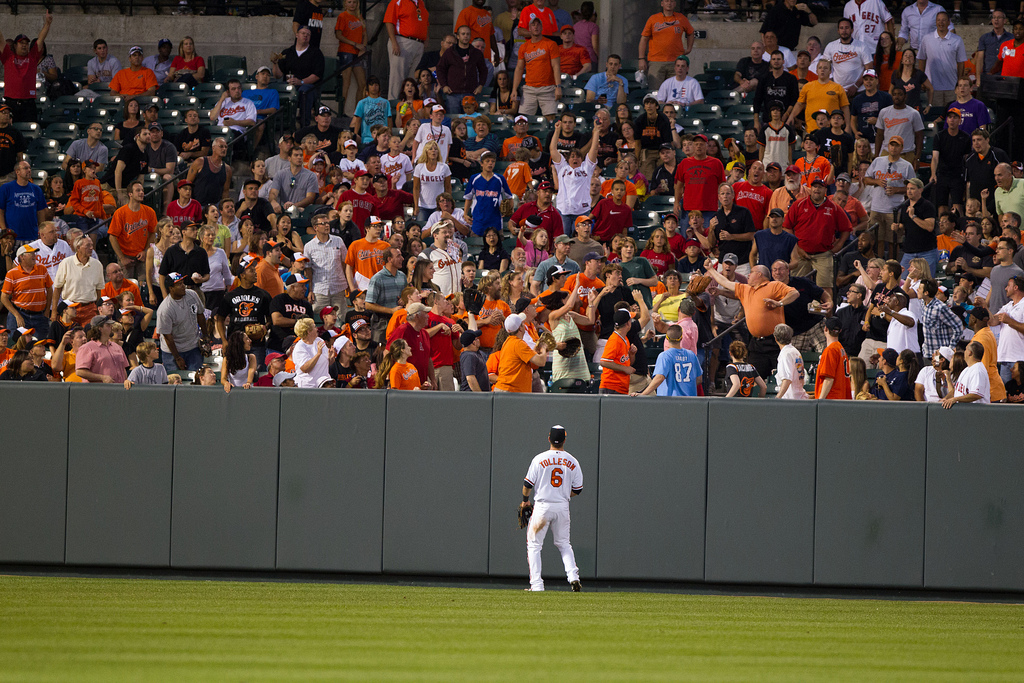
Melky Cabrera did the right thing yesterday – pulling out of the NL batting race.  (See BBRT’s September 20 post for more on this issue.)  It was an honorable course of action and a giant (no pun intended) step toward vindication.   Now, it’s up to MLB and commissioner Bud Selig.  While Cabrera requested disqualification from the batting title (due to his 50-game PED suspension), making it happen took Selig’s one-season-only (2012) rules change to disqualify players who “served a drug suspension for violating the Joint Drug Program” from the individual batting, slugging and on-bases percentages championships. BBRT says “Thanks, Melky, for stepping up to the plate on this one” … and urges MLB to make the rules change a permanent one, providing baseball another asset in its efforts to remove PEDs from the game.


Home Team Out of the Race – Still Plenty to Watch

Even if your favorite team is out of the race, there is still a lot to keep you interested as the 2012 MLB season winds down.  Here are just a few things that BBRT will be watching for outside of the Division and Wild Card races and post-season competition.  (Stats includes games through September 19.)

Will the Pirates’ Andrew McCutchen save MLB the embarrassment of having the Giants’ Melky Cabrera – serving a 50-game suspension for testing positive for testosterone – win the batting title?

The suspended Cabrera is one plate appearance short of the 502 needed to qualify for the batting title.  MLB rules say a player short of the plate-appearance requirement can still win the batting crown if you add the necessary plate appearances as outs (in this case, just one) and their average would still lead the league.  The addition would leave Cabrera’s average at .346.  McCutchen is hitting .340.  BBRT says, “Go Andy, go!”


BBRT likes this M. Cabrera.

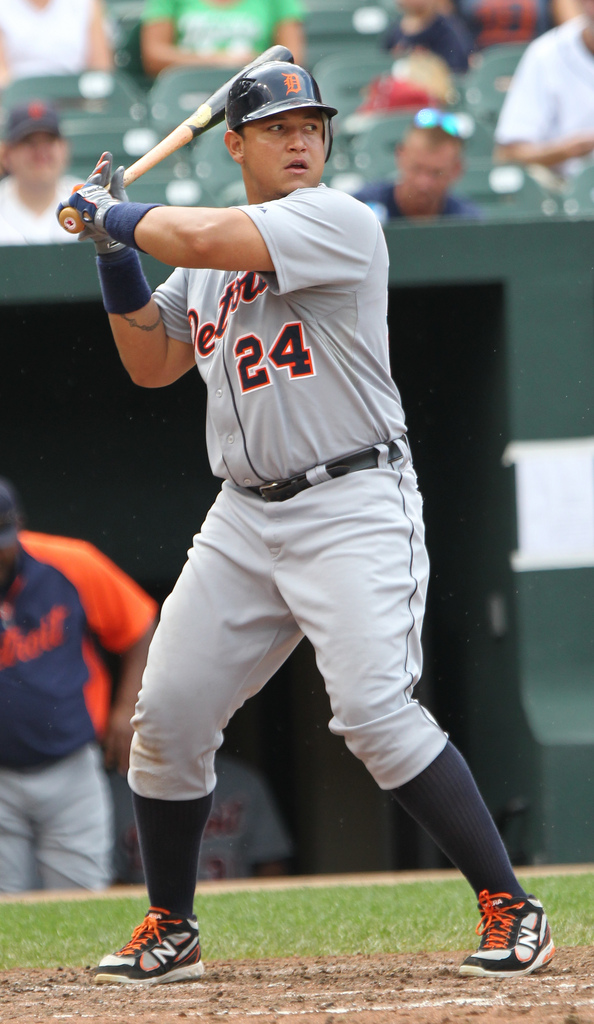
Can the good Cabrera – Miguel – become the 16th player and first since 1967 to win the Triple Crown? 

Currently, Cabrera leads the AL in average at .333; RBI at 130; and trails Josh Hamilton in home runs 42 to 41.  BBRT is rooting for this Cabrera.

Who will win theAL batting crown? 

The top contenders seem to be:

– The Tigers’ Miguel Cabrera at .333 (shooting for the triple crown);

– The Angels’ Mike Trout at .327 (working to become just the sixth rookie batting champ and only the third since 1900);

– The Twins’ Joe Mauer at .324 (who would become the only catcher to win four batting titles – he’s already the only catcher with three);

– The Yankees’ Derek Jeter at .322 (looking to add a batting title to his Hall of Fame career.)

Can surprising knuckleballer R.A. Dickey of the Mets become only the second pitcher in MLB history to win a Cy Young Award with a last place team?

Dickey currently sits at 18-6, 2.67 with five complete games, three shutouts and 205 Ks for the 66-82 Mets (just one game out of the NL East basement).  First, of course, Dickey has to keep winning while the Mets lose their way to the bottom of the standings.  Then, Dickey has to beat out another surprising hurler, the National’s Gio Gonzalez, 19-8, 2.95, with two complete games, one shutout and 196 Ks.  Coming into this season, these two Cy Young candidates had a combined record of 82-87 (Dickey … 41-50 over nine seasons; Gonzalez … 41-37 over four seasons.)

The only Cy Young Award winner ever on a last place team?  Steve Carlton in 1972. Carlton went 27-10, 1.97, with 30 complete games, eight shutouts and 310 Ks for the 59-91 Phillies.

Will the Pirates break their 19-year under-.500 streak?

The last time the Pirates finished above .500 was in 1992, when they won the NL East with a 96-66 record (their third straight NL East title).  This year, the Pirates were 16 games over .500 on July 28.  Since that time, they have fallen to 74-74.  BBRT is hoping the Pirates break their streak of futility.

Will Chipper Jones finish with a flourish?

In his last season, the future Hall of Famer is likely to see post-season action with the Braves (who appear headed for a Wild Card slot).  BBRT looks forward to watching Chipper close out the season – and then seeing some post-season Chipper.  The forty-year-old Jones is having a solid final season:  .297, 14 HRs, 60 RBI in 102 games.

Will Detroit’s Max Scherzer and Justin Verlander become the first two pitchers from the same team to finish 1 & 2 in strikeouts (in their league) since the Cubs’ Kerry Wood and Mark Prior in 2003?  (The last time it was done in the AL was by the Angels Nolan Ryan and Frank Tanana in 1976).’

Currently, Scherzer leads the AL in Ks with 224, with Verlander second at 223.   Next is Seattle’s Felix Hernandez at 207.

How many pitchers will achieve 20 wins this season?

Four hurlers seem to have a good shot at the 20-win club.  Gio Gonzalez of the Nationals (currently at 19); R.A. Dickey of the Mets (18); David Price of the Rays (18); and Jered Weaver of the Angels (18).  It will be the first 20-win season for any of this quartet who make it.

Will the Nationals activate Strasburg for the playoffs?

Big question.  BBRT would, but that’s kind of “old school.”

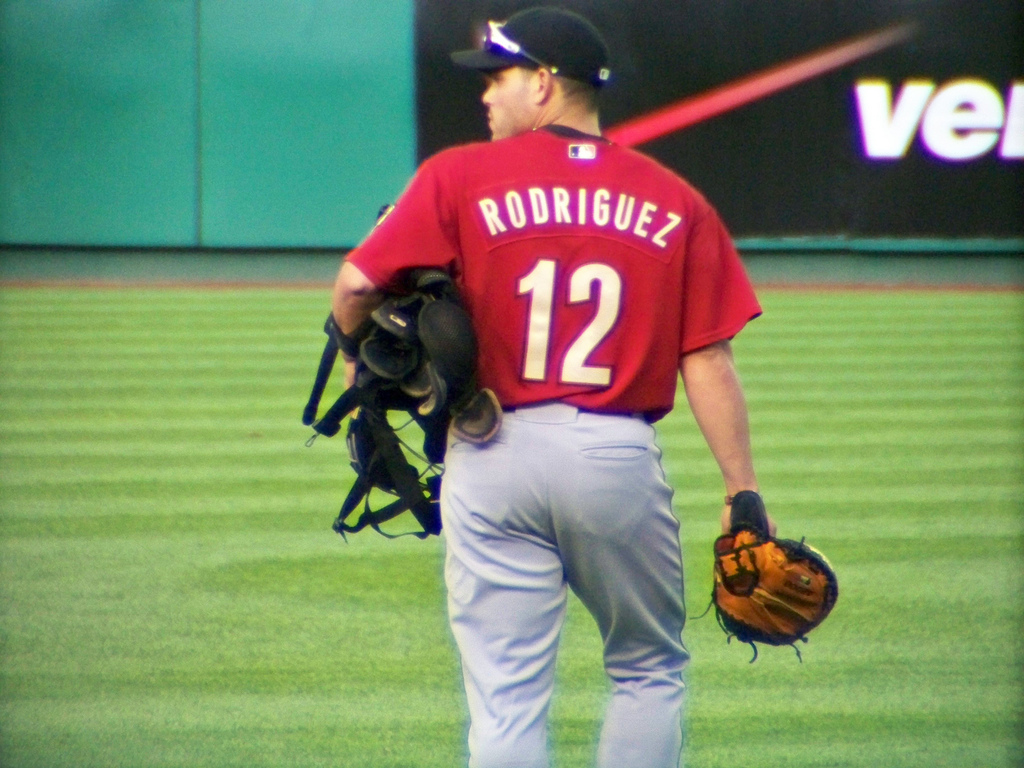
Will Roger Clemens take the mound for the Astros before season end?

BBRT hopes not.  But, it might sell some tickets.  And,so it delays his Hall of Fame eligibility for five years?  There are probably bigger concerns in that area.


BBRT loves this gentleman slugger.

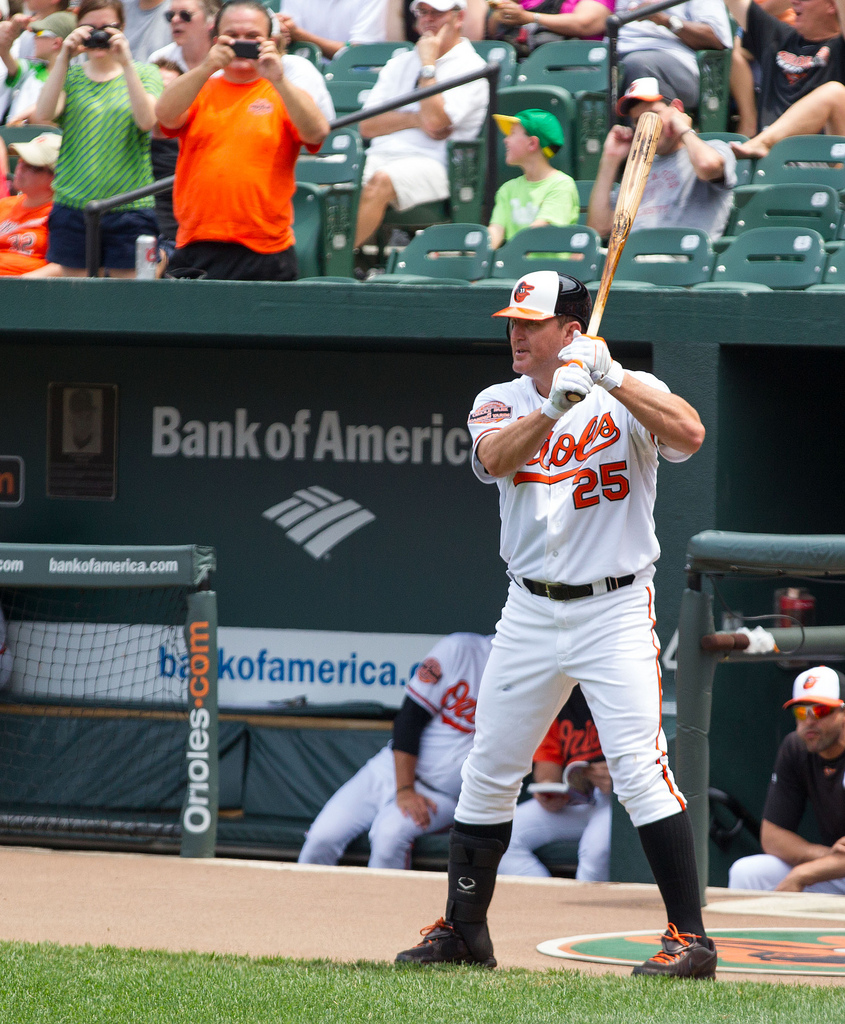
Will the Orioles get Jim Thome back in the line-up?

BBRT hopes this gentleman gets a chance to help the Orioles and add to his 611 career home runs.

A Look at What’s Left – The Remaining Schedule and the Playoff Races

As always, baseball heats up as the season winds down.

Well, BBRT was wrong about the new Wild Card system.  Back on March 18th, BBRT ranted about the new system (fearing it would open the door to an NHL- or NFL-style postseason, where it’s harder to miss the playoffs than to get in.  BBRT, being old school, still would prefer two leagues of two divisions each (one league with two eight-team divisions and one with two seven-team divisions – or an eight- and seven-team division in each league), with only division champs making the playoffs.  However, the new system does have its merits.

First, and most important, it does make the division championship more important.  Finishing first means you can avoid that one-game, winner-take-all Wild Card playoff.  That may, in fact, have spurred this year’s very active market as the trade deadline approached.

Second, it has kept things more interesting for more teams and fans.  At the close of Saturday, September 15’s games, eightALteams and eight NL team were within 3 ½  games of a playoff spot (this includes division leaders).

Of course, the AL didn’t need the Wild Card race to spice things up.  There are close and intense races for first place in all three divisions.  Over in the NL, however, the division leaders had more breathing room, and the Wild Card race was drawing more attention.

Let’s take a look at what lies ahead on the schedule for the division contenders (as of Monday, September 17, a.m.).

AL East

Looks like the Al East is going down to the wire, with the Yankees heading into the final 16 contests with a one-game lead over the upstart Orioles and Tampa Bay a very long shot at five games out.

The Yankees have nine games at home and seven away left on the schedule – facing the  Blue Jays (66-79) seven times.  They also face the Twins (60-87) and Red Sox (66-81), both well under .500.  Their most challenging series is a three-gamer at home against the surprising Oakland As – 84-62 and still in the AL West hunt.

The Orioles have a slightly tougher schedule, primarily due to the home / road split – seven games at home and nine on the road.  The Orioles get the under-.500 Mariners (70-77), Blue Jays and Red Sox until the final three games of the season – a potentially tough three-game set in Tampa Bay (78-68).

The Rays, five out in the East Division race and four behind in the Wild Card competition, face a tougher slate of games.  They do have 10 at home and six on the road – with six against the disintegrating Red Sox.  But they also have four games against the White Sox (79-66 and fighting for the Central Division lead) in Chicago, and that final three-game set against the Orioles (82-64) at home.

From here, it looks like a combination of schedule and pennant race experience will keep the Yankees on top of the AL East, with Baltimore capturing a Wild Card spot.  The Angels will pressure the Orioles, but have a much tougher schedule.

AL Central

Who would have thought that the White Sox would have the grit to hold on in the AL Central?  A couple of pick-ups along the way (particularly the experienced Youkilis), Chris Sale’s prime-time performance and a surprising season from A.J,. Pierzynski have them heading into the final stretch two games up on the preseason favorite Tigers.

The remaining schedule, however, clearly favors the Tigers.  They’ve got today’s critical make-up game at Chicago followed by a ten-game home stand.  Then they finish up with six on the road – but those road games are against the Twins and Royals – both well under .500 and with little to play for.  In fact, 13 of the Tigers last 17 games area against the Twins and Royals.  They also have three against the Oakland As (84-62, with plenty to play for).

The White Sox, on the other hand, have a tough schedule ahead with eight at home and nine away.  Those home games are no “walk in the Park,” with four against Tampa Bay (78-68) and today’s critical make-up game against the Tigers. On the road, they face off for three against the Angels (80-67.)  They also have six games against the Indians (61-86) and three against the Royals (66-80).

From here, it looks like the Tigers prevail, with the White Sox just missing a Wild Card spot.

AL West

The AL West is finishing up in a real shootout, with the top three teams – Rangers, As and Angels facing each other multiple times.

The Rangers, currently holding a three-game lead, have seven home and nine away games left – with 13 of those against the second-place As (four in Texas, three at Oakland) and third-place Angels (three home and three away).  They also have a breather with three at Seattle.  Clearly, the Rangers control their own destiny.

The A’s have a very challenging schedule.  On Tuesday, they start a stretch of 10 consecutive road games facing, in order: Detroit (77-68 in a Central Division fight with the White Sox);  the Yankees (83-63 and battling for the AL East); and West Division-leading Texas (87-59).  They finish up with six at home (three each against Seattle and Texas), but they may have faded from the race before then.

The Angels, have nine left at home and six on the road – and may be helped by their six tilts against the Mariners (70-77), three each at home and away.  They also face the Rangers for six critical games (split evenly at home and away) and the White Sox for three at home.

Overall, the Angels have the easier schedule, but it’s not that much easier and not likely to be enough to overcome a 7 1/2 game deficit to the Rangers or even their 2 1/2 game Wild Card deficit to the Orioles ((all those Rangers games may do them in) – unless the Angels can win at least five of six against Texas.  BBRT looks for the Rangers to hold on to first and the Angels to fall just short of Baltimore for a Wild Card spot.

NL East

Back in March, BBRT predicted the Nationals would contend for a Wild Card spot.  However, the Nat’s current 5 ½-game lead over Atlanta was not expected.  Ultimately, the East will place two teams in the playoffs.

The Nationals have 10 home and six road contests left – all of them against teams fighting for a Wild Card spot, but none against division leaders or the East’s second-place Braves.

Washington has three against the Dodgers (76-70); four against the Brewers (74-72); three against the Cardinals (76-71); and six against the Phillies (73-74).  Even without Strasburg, BBRT sees the Nats holding on and make the playoffs.

The Braves have an easier schedule going forward, although road games outnumber home games nine to six.  The opponents, however, are not as tough as those who will face off against the Nationals.  The Braves have six against the East Division’s last-place Marlins (65-82); three against the second-to-last Mets  (66-80); and three each against the Wild Card-chasing Phillies (73-74 and coming on) and Pirates (73-72, but fading in the second half).

The Phillies, who (it appears) made their move too late, have six games left at home and nine on the road – with six games (three home and three away) against the Division-leading (89-57) Nationals and three (at home) against the second-place Braves (84-63).  They also have three each against the well under-.500 Mets and Marlins (65-82).  Not a bad schedule, but the Phillies have just run out of time.

BBRT see the Nationals taking the East Division (easy call) and the Braves retaining their comfortable hold on a Wild Card spot – so Chipper Jones, appropriately, will bow out in the post season.

NL Central

Cincinnati is coasting with an 11-game lead, with the Central Division’s Pittsburgh, Saint Louis and Milwaukee all in the Wild Card hunt.

The Reds have six home and nine road games left and, while they hold their Central lead, they will also have a lot to say about the Wild Card race.  The Reds have three games each against the Central Division’s Wild Card hopefuls the 77-70 Cardinals (at St. Louis); the 73-72 Pirates (at Pittsburgh); and the 74-72 Brewers (in Cincinnati). They also have a three-game set at home against the 76-71 Dodgers and three contests against the 58-88 Cubs.

The Cardinals have a pretty balanced schedule of nine home and six away games left – three each at home against a pair of division leaders (Nationals and Reds) and six against lowly Houston (48-99) and the Cubs.  It looks like a good schedule for securing the final Wild Card spot, but they may a challenge from the Dodgers.

The Pirates, fading over the course of the second half, have nine home and eight away games left.  Fortunately for the Pirates, the road games are against the Cubs (one), the Astros (3) and the Mets (four).  They key series may be the September 18-20, three game set against the Brewers, also working to finish above .500 and, perhaps, sneak into the Wild Card. Pittsburgh finishes at home with six tough games against the Reds and Braves.  BBRT sees the Pirates falling short of the Wild Card, but hanging on to break their 19-year under-.500 streak.

The Brewers go on the road for ten games (September 18-27), facing two Division leaders (Nationals, four games, and Reds, three games), as well as the Pirates (struggling, but with something to play for.)  They finish with six at home against the Astros and Padres (71-76), but it may be too late by then.  BBRT sees the Brewers sitting out the playoffs.

NL West

Despite Melky Cabrera’s suspension, the Giants – with a 7 ½ game lead over the Dodgers – seem destined to hang on to the Division lead.  The question seems to be will it be the Dodgers or the Cardinals in the second Wild Card spot.

The Giants are about to begin a nice ten-game home stand, facing 58-87 Colorado (4 games); San Diego (3 games); and 72-74 Arizona (3 games).  Then they go on the road to San Diego and Los Angeles (76-71).  BBRT see the Giants staying atop the Division.

The Dodgers go on the road for nine games, including six against the first place Nationals and Reds and three against the Padres.  They close out at home with three against the Rockies and the final three against arch-rival Giants.  Tough call, given the Dodgers recent moves to strengthen their line-up and the Cardinals easier schedule.  So BBRT sees the Dodgers and Cards tying for the final Wild Card spot and the one-game playoff depending on which team has the best starter available.

So, here is the BBRT call:

AL: 

Division winners:   Yankees, Rangers, Tigers

Wild Cards:  Orioles, A’s

NL

Division Winners:  Nationals, Giants, Reds

Wild Card:  Braves, Cardinals/Dodgers (tie)

Watch BBRT for a look at the individual performances we’ll be watching as the season heats up and winds down

.

Profar Joins the First At-Bat Home Run Club

Home runs look different, depending on your perspective.

On Sunday (September 23, 2012), Texas Rangers 19-year-old rookie Jurickson Profar became the 113th player, just the third teenager and the first Texas Ranger to homer in his first major league at bat. (This feat is much more common, by the way, than homering in your last at bat, done only 44 times.) Profar considered a top prospect hit .281 with 14 home runs,  62 RBI and 16 stolen bases in 126 games for the Double-A Frisco Roughriders before being called up.

So, did Profar ride into the spotlight with some of the games great long ball threats? Not so much.  How many of the game’s current top 50 career home run leaders (400 or more homers each) homered in their first MLB at-bat?  Zero.  The career home run leader among players homering in their first trip to the plate is Gary Gaetti with 360.  And, in fact, 23 of the 113 members of this club current stand at 1 career homer  – although a handful are still active and likely to add to their totals.

A few other first-at-bat homer factoids:

–  Twenty-eight rookies got off to the fastest start possible, homering on the first pitch they saw – most recently Starling Marte of the Pirates, July 26 of this season.

–  Four accomplished the ultimate first at-bat, starting their careers with a Grand Slam: Bill Duggelby (Phillies, 1898); Jeremy Hermida (Marlins, 2005); Kevin Kouzmanoff (Indians, 2006)l and Daniel Nava (Red Sox 2010).

– Two players combined “fast and ultimate” hitting Grand Slams on the first pitch they ever saw (Kouzmanoff and Nava.)

– Two had to work really hard, notching and inside-the-park home run on their first at bat:  Luke Stuart (Cardinals, 1921) and Johnnie Lemaster (Giants, 1975).

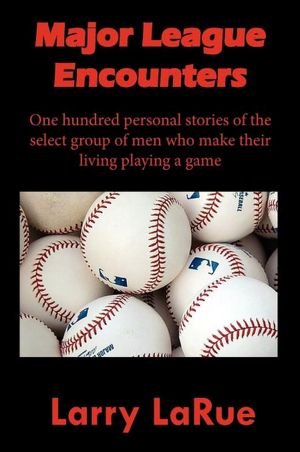
Major League Encounters – 100 Very Personal Stories that Get to the “Heart” of our National Pastime

Major League Encounters gets to the heart of the national pastime, and those privileged to play it at its highest level.

Major League Encounters

By Larry LaRue

Reader Publishing Group 2012


$11.95 print – eBook $3.99

Amazon.com

Barnesandnoble.com

Baseball Hall of Famer Bill Mazeroski earned his way into the HOF more with his glove than his bat – he was known as a second baseman who could capture a moving baseball and skillfully turn it into a double play.  In long-time sportswriter (more than three decades) Larry LaRue’s first book –  Major League Encounters – LaRue proves he can capture a moving baseball story and skillfully turn a phrase as he tells it.

In 100 real vignettes over 255 pages, LaRue gives readers a behind-the-scenes look at what drives the men – and boys – who earn the rare opportunity to play the game at its highest level.  Readers get the benefit not only of LaRue’s sportswriter’s access, but of his knowledge of the game, powers of observation, interview skills and way with words.

The stories range from heart-warming to heart-breaking and from comic, to tragic, to dramatic.   They are stories of weakness and stories of courage – of success, failure and perseverance – of veterans who enjoyed long careers and players with shorter, less-stellar stats sheets.   Most of all they are very personal stories, glimpses into the heart of the game and those who play it.  

You’ll read about:

–  The forces that drove Jim Abbot, who won 87 games and threw a no-hitter, despite being born with no right hand;

– The trials of Ken Caminiti, the 1996 NL MVP, who LaRue writes “kept his demons close and hid them well,” and who died at age 41 from “acute intoxication due to the combined effects of cocaine and opiates;”

– The passion for the game that drove utility man Rich Amaral, who LaRue tells readers “kept chasing baseball long after it stopped chasing him;”

– Hall of Famer hurler Bert Blyleven’s legendary sense of humor and skill at applying a devastating hot foot (when he was with the Angels, the team had a fire extinguisher in the dugout labeled “In case of Blyleven – Pull;”

Cal Ripken, Jr.’s love of the game “Every day, it’s like being a little kid again;”

– Pitcher Freddie Garcia, who had a “capacity for fun that might have killed a lesser man.”

In terms of reading enjoyment, not only are the stories compelling, LaRue has a way with words that gets right to the point and pulls you into (and through) each story.  Consider these opening lines:

The Barry Bonds’ story begins “Follow Barry Bonds for a few days and the three words most used to describe him – by friends, teammates and coaches – were ‘That’s just Barry.’  Occasionally, they were meant to be complementary.”

Then there are the opening lines for power hitting first baseman and 1995 AL MVP Mo Vaughn, “Mo Vaughn read newspapers, which never made him doubt his talent.  Occasionally, it made him wish he was illiterate.”

LaRue’s insight into two-time AL batting champion Edgar Martinez begins with “The first time the Seattle Mariners offered him a contract, Edgar Martinez turned them down because he had everything he wanted – a factory job and a new Toyota.”

Or Reggie Jackson:  “There were four or five Reggie Jacksons and I got to meet all of them in the year we were together with the California Angels.”

Depicting current Seattle Mariners pitcher Tom Wilhelmsen, who made it to the majors in 2011 at age 27, LaRue begins: “At 19, Tom Wilhelmsen faced a life-changing decision – continue his career as a highly rated minor league prospect or keep smoking dope.  For Wilhelmsen the choice was clear.  He walked away from baseball, became a bartender and traveled the world, smoking as he went.”

If you’re a baseball fan, this is a great book to keep on your bed stand, carry aboard an airplane, take to the beach, enjoy at a coffee shop or even read between innings at a ball game (when you put your scorecard down.)  The only problem is you’ll start out planning to pass the time by reading just a few stories and find yourself committing to “just one more” again and again.

Are all 100 stories absolute gems?  No, but LaRue’s batting average is well north of .900 – and that makes Major League Encounters highly entertaining, a hit with BBRT and recommended reading for the avid and casual fan.


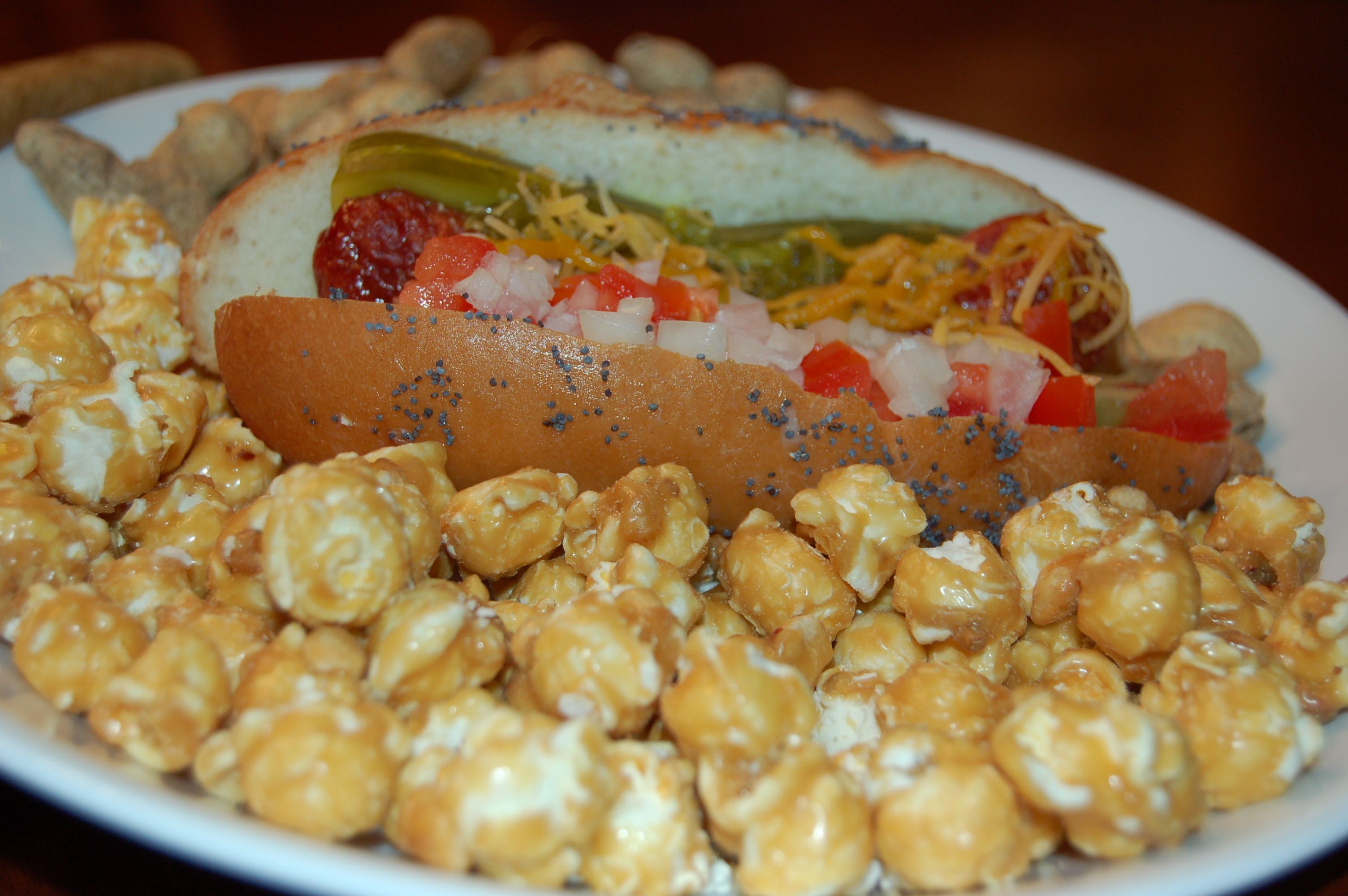
Tokyo Dawgs – Spicy Version of Their Chicago Cousin

Chicago Dogs are a Windy City tradition and favorite of sports fans – particularly baseball fans. With their sweet relish, pickle spears, peppers, tomato, onion, mustard and (the key ingredient) celery salt, they go great with a cold beer and home team rally.

Baseball, of course, is now a mainstay of Japanese life and culture and – in honor of Japan’s players, fans and teams – BBRT would like to share our recipe for “Tokyo Dawgs,” a unique spin-off of the Chicago favorite. Here’s what you’ll need for a respectable batch of these delightful game-time treats. (I’ll note where the Tokyo Dawg, departs from its Chicago cousin.)

Ingredients:

– 4 hot dog buns – Preferably, bakery poppy seed buns, but you can make it work with traditional hot dog buns

– 4 all-beef hot dogs – BBRT prefers quarter-pound, skin-on franks; they have that nice “pop” when you bite into them.

– 4 spicy dill pickles spears – A change from the Chicago Dog regular dill spears; BBRT leans toward Gedney® Zingers.

– 8 ripe tomato wedges

– 1 finely chopped small white onion

– 8 sport peppers

– Yellow mustard

– Wasabi sauce – This replaces the sweet green relish in the Chicago Dog, adding the green color and more “bite.” BBRT suggests Kikkoman® or Silver Spring®.

– Celery salt

– Shredded Cheddar Cheese – Optional add-on.

– Cracker Jack –  (A Tokyo Dawg add-on, not in the Chicago Dog recipe.

 So how to you prepare these puppies?

Directions

  1.  Heat hot dogs in boiling water for 5 minutes; then transfer to the poppy seed buns. (Note:  If you can’t find poppy seed buns, you can make them.  See the end of the recipe.)
  2.  Place a spicy dill pickle spear on one side of each hot dog, balanced by a pair of tomato wedges on the other side.
  3. Sprinkle chopped onion (to your taste) over the hot dog – between the pickle and tomato wedges.
  4. Squeeze/squirt/spread yellow mustard over each hot dog … then do the same with the Wasabi sauce.  (The amount and pattern should reflect your personal taste.)
  5. Top each hot dog with a pair of sport peppers.
  6. Sprinkle with celery salt.
  7. I like to add a bit of shredded cheddar, but that’s just a cheese-lovers option.
  8. Serve with Cracker Jack – The caramel corn sweetness is a nice compliment to the “heat” of the spicy pickles, peppers and Wasabi.

Note:  If you can’t find poppy seed buns, try this.

– Use good bakery hot dog buns.

– Brush the outsides of the buns with melted butter (1/2  teaspoon per bun) and sprinkle lightly (1/4 to 1/2 teaspoon per bun) with poppy seeds.

– Bake inside-down for 4-5 minutes at 350 degrees – be careful not to over bake.

The hot and spicy Tokyo Dawg – great with a cold beer and a ball game.

Two Homers in One Inning – Thoughts and Trivia

Adrian Beltre, long under-appreciated, has joined the “two-homers-in-one-inning” club.

On August 22, 2012, Adrian Beltre hit two home runs in the fourth inning of the Texas Rangers’ 12-3 victory over the Baltimore Orioles – becoming the 57th major leaguer to hit two dingers in one frame.

For BBRT, the feat brings to light how underappreciated Beltre has been for much of his career.  In his 15 seasons, Beltre has topped 20 home runs in a season ten times (only eight other third basemen can make that claim) and now has 332 home runs, 1,064 runs and 1,186 RBI to go with a .278 career batting average.  He’s also reached double digits in stolen bases six times and been awarded three gold gloves (though he deserved more.)  In 2004, he recorded an NL-leading 48 home runs, along with 121 RBI, 104 runs and a .334 batting average.

Despite these achievements, Beltre – who made it to the majors with the Dodgers in 1998 at age 19 – was not selected to his first All-Star team until 2010 (at age 31).  He repeated as an All Star in 2011 and 2012. Still only age 33, Beltre has a chance to put up career numbers that will place him among the games elite thirdsackers – and he is finally receiving appropriate recognition for his solid career.

So, there is my rave on Adrian Beltre, now a bit of two-home-run inning trivia, and then a list of the players who have gone yard twice in an inning.

Most notable on the list is the Cardinals’ Fernando Tatis who, on April 23, 1999, not only hit two homers in an inning – but hit two grand slams in one inning.  It was the 11-run third inning of the Cardinals 12-5 win over the Dodgers in LA.  Equally surprising to BBRT is the fact that Dodgers starter Chan Ho Park was on the mound for both grand slams (the second finally drove Park from the game).  Park’s inning went like this:  single – hit batsman – single – home run – ground out, first base to pitcher – home run – walk – walk – fielder’s choice – error by first baseman – single – fly out to right field – home run – relieved by Carlos Perez, who got the final out of the inning on a foul pop up.

On May, 2002, Brett Boone and Mike Cameron became the only two team mates to hit two home runs in one inning – and they did it in the same inning (a ten-run first in a 15-4 win over the White Sox) and they did it back-to-back.

Only three players have achieved two home runs an inning twice in their careers:  the Pirates’ Jeff King (April 8, 1995 and April, 30, 1996); the Giants’ Willie McCovey (April 12, 1973 and June 27, 1977); and the Expos’ Andre Dawson (June 30, 1978 and Sept. 24, 1985).

Also of note are the Indians’ Carlos Baerga (August 8, 1993), theCubs’ Mark Bellhorn (August 29, 2002) and the Angles Kendrys Morales (July 30, 2012) the only three players to homer from both sides of the plate in the same inning.  Finally, the Braves’ (Boston) Bobby Lowe (May 30, 1894) and Mariners’ Mike Cameron (May 2, 2002) each achieved a two-homer inning in the midst of a record  four-homer game.  Just 16 players, Lowe was the first, have hit four home runs in a single game.

Here is your two-homer inning list:

2012, August 22 … Adrian Beltre, Rangers

2012, July 30 … Kendry Morales, Angels

2011, Sept. 18 … Pablo Sandoval, Giants

2010, Sept. 23 … Juan Aribe, Giants

2009, August 23 … Michael Cuddyer, Twins

2008, August 12 … David Ortiz, Red Sox

2008, June 21 … Jim Edmonds, Cubs

2007, Sept. 5 … Alex Rodriguez, Yankees

2007, August 12 …  Magglio Ordonez

2007, May 7 … Benji Molina, Giants

2006, July 22 … Julio Lugo, Rays

2004, June 19 … Juan Rivera, Expos

2003, August 20 … Reggie Sanders, Pirates

2002, August 29 … Mark Bellhorn, Cubs

2002, August 9 … Aaron Boone, Reds

2002, July 26 … Carl Everett, Rangers

2002, July 23 … Nomar Garciaparra, Red Sox

2002, June 11 … Jared Sandberg, Rays

2002, May 2 … Mike Cameron, Mariners

2002, May 2 … Brett Boone, Mariners

2000, August 22 … Eric Karros, Dodgers

1999, April 23 … Fernando Tatis, Cardinals

1997, July 13 … Gary Sheffield, Marlins

1997, May 7 … Mike Lansing, Expos

1996, May 16 … Sammy Sosa, Cubs

1996, April 30 … Jeff King, Pirates

1996, Sept. 22 … Mark McGwire, As

1996, May 17 … Dave Nilsson, Brewers

1995, April 8 … Jeff King, Pirates

1994, June 24 … Jeff Bagwell, Astros

1993, Oct. 3 … Joe Carter, Blue Jays

1993, April 8 … Carlos Baerga, Indians

1990, August 27 … Ellis Burks, Red Sox

1989, July 27 … Dale Murphy, Braves

1985, Sept. 24 … Andre Dawson, Expos

1985, June 11 … Von Hayes, Phillies

1980, May 13 … Ray Knight, Reds

1978, July 30 …Andre Dawson, Expos

1977, June 30 … Cliff Johnson, Yankees

1977, June 27 … Willie McCovey, Giants

1974, April 29 … Lee May, Astros

1973, July 6 … John Boccabella, Expos

1973, April 12 … Willie McCovey, Giants

1966, April 30 … Rick Reichardt, Angels

1962, May 23 … Joe Pepitone, Yankees

1959, Sept. 4 … Jim Lemon, Senators

1955, April 17 … Al Kaline Tigers

1949, July 31 … Sid Gordon, Giants

1949, June 2 … Andy Seminick, Phillies

1936, June 24 … Joe DiMaggio, Yankees

1935, August 24 … Hank Leiber, Giants

1928, June 16 … Bill Regan, Red Sox

1925, July 1 … Hack Wilson, Giants

1922, August 7 … Kenny Williams, Browns

1894, June 6 … Jake Stenzel, Pirates

1894, June 30 … Bobby Lowe, Braves

1880, June 10 … Charly Jones, Braves

Triple Play Tidbits

The Minnesota Twins are the only team to turn two triple plays in one game – in the fourth and eighth innings of a July 17, 1990 loss (1-0) to the Boston Red Sox.

Yesterday (August 21, 2012), the Oakland As turned a triple play (third to second to first/Josh Donaldson to Adam Rosales to Chris Carter) in a 4-1 victory over the Minnesota Twins at Oakland.  It was the Athletics’ first triple play since May 29, 2000, and the third triple play in MLB this season.  The Dodgers turned one against the Padres on April 15 andTorontofollowed suit againstKansas Cityon April 20.  Here are a few triple play tidbits, you might find interesting.

– There have been a total of 690 triple plays in baseball history (1876-2012).

– Hall of Famer Brooks Robinson holds the record for hitting into the most triple plays (4) in his career.

–  NY Mets catcher Joe Pignatano holds the distinction of being the only player to end his career by hitting into a triple play in is last MLB at bat – September 30, 1962 against the Cubs.  (Note:  In his one-game/three-at-bat career, Ron Wright of the Seattle Mariners came close.  Wright stuck out looking in in his first at bat, hit into a triple play in his second, and hit into a double play in his third (and final major league) trip to the plate. You can see BBRT’s post of  April 28, 2012, for more details on Wright’s brief career.)

– The Minnesota Twins are the only team to turn 2 triple plays in one game – a 1-0 loss to the Red Sox on July 17, 1990.  Both triple plays were of the “natural” around-the-horn variety:  Gary Gaetti (3b) to Al Newman (2B) to Kent Hrbek (1b).

– The longest scorebook entry for a triple play goes to the Philadelphia Athletics.  In the seventh inning of a May 16, 1913, game against Cleveland they notched a triple play scored (putouts in red):  6-2-5-1-54-5-6-5-7 – one of only five MLB instances when the final put out of a triple play was recorded by an outfielder.

– There have been 15 unassisted triple plays in MLB history; 8 by shortstops; 5 by second basemen; 2 by first basemen

– The most likely position player to start a triple play is the shortstop (shortstops have started 149 of the 690 MLB triple plays), followed by:  third base (142); second base (135); first base (87); pitcher (74); catcher (33); center field (27); right field (22); left field (21).


Bill Veeck – A Champion of Life … and a Great Read

Bill Veeck:  Baseball’s Greatest Maverick

By Paul Dickson

Walker & Company, 2012

$28.00


Where to start?  Where to end? What to include?

There is so much to like about Bill Veeck:  Baseball’s Greatest Maverick – and to like about Bill Veeck himself – that it’s difficult to write a review.   The best place to start is to say that I‘ve probably never had as much fun reading a book.  Nor have I ever interrupted my reading so many times to regale my family with passages and anecdotes.  If you haven’t picked this book up yet, the time is now.  If you are a baseball fan, a humanitarian, a history buff, someone who enjoys a good story, you’ll have a hard time putting it down.

If I had to describe Bill Veeck in  a single sentence (a truly impossible task), I would say he was an individual who lived life – every minute – to the fullest, and brought those whose lives he touched along for the ride.  That spirit pervades this book.  Bill Veeck – in his lifetime, a four-time major league team owner – ignores adversity, tweaks the baseball establishment, champions social justice and brings his version of “play” and “fair play” to life and to the ball park.

While he is often remembered for celebrating the fiftieth anniversary of the American League by bringing three-foot-seven-inch, 65-pound Eddie Gaedel to the plate for his St. Louis Browns or for the near-disastrous Disco Demolition night when he owned the White Sox, Bill Veeck’s legacy runs much deeper.  As you will learn on the pages of Dickson’s book, much of what you see as part of today’s game: promotional give-aways; scoreboards that celebrate home runs and victories by the home team; names on the backs of uniforms; expanded concessions; and even quality rest rooms can be traced by to the innovation and initiative of Bill Veeck.  Further, Veeck bullt teams that  captured two league championships and one World Series crown.  And along the way, he earned the love and respect of players and fans and, he would proudly point out, the animosity of fellow owners and baseball’s top administrators.

To Bill Veeck, life was meant to be both fun and fair – for everyone.  He was a man of privilege, who turned away from privilege – except when it meant he could avoid wearing a tie in places or circumstances that seemed to demand that formality.  In 1943, considering military service in World War II, Veeck (given his economic status and celebrity) was offered the opportunity of  an officer’s commission in the Army or Navy (and most likely a safe promotional assignment). Veeck’s sense of fair play instead led him to enlist as a private in the Marine Corps – a decision which would eventually cost him much of his right leg.

It was that same sense of fair play that made him a champion of civil rights and a force in the integration of baseball.  Dickson, in fact, devotes a chapter to Veeck’s plan to purchase the Philadelphia Phillies before the 1943 season, hold a mock all-white spring training and then show up on opening day with an all-Black or primarily Black team. (Veeck was convinced baseball could not turn away Black players while Black soldiers were fighting for the country in World War II.) Before Veeck could complete his purchase, however, word of the plan got out and the Phillies were taken over by the National League and an alternative buyer was sought. (In 1947, Veeck, then owner of the Cleveland Indians, signed Lary Doby as the American League’s first Black player.)

Ultimately, Bill Veeck was an innovator and promoter – a true impresario; a baseball man who knew how to build a winning team; a humanitarian; a social activist; and perhaps the most passionate fan and friend of baseball ever.

Now, I could relate story after story from the pages of Dickson’s book, but it would be more fun if you read it yourself.  So, here are just a few previews of what you’ll find on the book’s pages:

Bill Veeck hiring a young concessionaire named Jack Ruby (yes, the same Jack Ruby who later gunned down Lee Harvey Oswald in Dallas).

 Veeck talking baseball and art with Salvidor Dali.

 Veeck tricking Harry Carey into leading the fans in “Take Me Out To The Ballgame” and justifying it by telling Carey he was perfect for the role because his voice was so bad, the fans would be more than willing to sing along.  ”Hell, if you had a good voice, you’d intimidate them and nobody would join in.”

Veeck’s testifying in support of Curt Flood (and against Major League Baseball) in Flood’s historic 1970 challenge to baseball’s reserve clause.

The multiple times Veeck had vendors serve “drinks on the house” to fans in the stands.

Veeck’s loyalty to Satchel Paige, a loyalty that translated into making Paige MLB’s oldest-ever rookie – and, later, multiple major league opportunities for the Negro League legend.

 Vick’s penchant for joining the fans for a beer in the bleachers, shirtless and in shorts with his wooden leg on display – consistent with his commitment to the everyday fan and his comment that:  “I have discovered in twenty years of moving around a ball park, that the knowledge of the game is usually in inverse proportion to the price of the seats.”

Veeck’s voracious appetite for reading – 3-5 books each week.

Veeck overcoming adversity on the field, in the boardrooms of baseball and in the operating room.  (Veeck once described himself as “whole” – defining whole as having “a lung and an eighth, a leg and a quarter, 40 percent of my hearing and one legal eye.”

After Veeck’s death, Dickson reports, Chicago Magazine writer William Brashler had this to say “Somehow, we will have to muddle through Opening Day without him.  And we will have to adjust to a few sad facts:  the gross national consumption of beer has diminished, some say measurably.  Every day now, one good book goes unread.  And marches against handguns and for peace and civil rights have one fewer peg-leg pounding the pavement.”

Bill Veeck was more than a baseball man.  He was, as the last line on his Baseball Hall of Fame Plaque reads “A CHAMPION OF THE LITTLE GUY.”  I’d take it a step further, Bill Veeck was a champion of life.  As a result, this is more than a baseball book.  It’s a book about life – and about living it to the fullest.

I began this review wondering how to start and how to end.  Well, I finally came up with an ending.   All of us have at some time played that parlor game in which you answer the question, “If you could invite five people – past or present – to dinner, whom would you choose?”  I can’t imagine anyone who reads this book leaving Bill Veeck off their guest list.  Take the time to read a truly interesting and entertaining book about a truly interesting, entertaining and impactful fellow.

Chipper Jones Continues Flair For the Dramatic

Chipper Jones has a flair for the dramatic – commemorates his own bobble head night with two home runs.

Last night (August 16, 2012), Chipper Jones – in his farewell season – again showed the keen sense of timing that has part of his Hall of Fame career.   In front of 33,157 fans, gathered for Chipper Jones Bobble Head Night, he became the thirty-eighth major leaguer to have a multi-homer game after reaching age 40, going two-for-four with three RBIs and collecting his 2,700 career hit, 466th homer and 1,614 RBI.  It was, appropriately, also Jones’ 40th career multi-home game.

After the game, Braves manager Freddie Gonzalez indicated Jones’ historic performance should not come as a surprise because Jones has the ability to “raise his game” when the situation arises.  In post-game interviews, Jones said he was especially motivated by his personal bobble head night, wanting to “make a splash and bring people to their feet.”  That he did, indeed.

(For more on Jones’ farewell season, see the BBRT posts of March 25 and April 25.)

Other “forty-plus” players to recently join the multi-homer-game club are Jim Thome and Jason Giambi, who accomplished the feat in 2011.  Thome, in fact, had two two-homer games last season, while Giambi joined an even more exclusive club – on May 19, 2011, he became only the fourth player past the age of forty to hit three home runs in a single game.  Giambi joined Babe Ruth (May 25, 1935); Stan Musial (July 8, 1962); and Reggie Jackson (September 18, 1986) in this more exclusive fraternity.  Jones has a long way to match the king of the 40-year-old multi-homer club.  Hank Sauer – who hit a total of 288 home runs (1941-59) – had eight multi-homer games after passing the forty mark.

Meanwhile, Chipper Jones marches on to a stellar final season, hitting .315 with 12 homers and 53 RBI (in 76 games) for a Braves team that is twenty games over .500, trails NL East leader Washington by just four games and sits atop the NL wild card race.