Two Homers in One Inning – Thoughts and Trivia

Adrian Beltre, long under-appreciated, has joined the “two-homers-in-one-inning” club.

On August 22, 2012, Adrian Beltre hit two home runs in the fourth inning of the Texas Rangers’ 12-3 victory over the Baltimore Orioles – becoming the 57th major leaguer to hit two dingers in one frame.

For BBRT, the feat brings to light how underappreciated Beltre has been for much of his career.  In his 15 seasons, Beltre has topped 20 home runs in a season ten times (only eight other third basemen can make that claim) and now has 332 home runs, 1,064 runs and 1,186 RBI to go with a .278 career batting average.  He’s also reached double digits in stolen bases six times and been awarded three gold gloves (though he deserved more.)  In 2004, he recorded an NL-leading 48 home runs, along with 121 RBI, 104 runs and a .334 batting average.

Despite these achievements, Beltre – who made it to the majors with the Dodgers in 1998 at age 19 – was not selected to his first All-Star team until 2010 (at age 31).  He repeated as an All Star in 2011 and 2012. Still only age 33, Beltre has a chance to put up career numbers that will place him among the games elite thirdsackers – and he is finally receiving appropriate recognition for his solid career.

So, there is my rave on Adrian Beltre, now a bit of two-home-run inning trivia, and then a list of the players who have gone yard twice in an inning.

Most notable on the list is the Cardinals’ Fernando Tatis who, on April 23, 1999, not only hit two homers in an inning – but hit two grand slams in one inning.  It was the 11-run third inning of the Cardinals 12-5 win over the Dodgers in LA.  Equally surprising to BBRT is the fact that Dodgers starter Chan Ho Park was on the mound for both grand slams (the second finally drove Park from the game).  Park’s inning went like this:  single – hit batsman – single – home run – ground out, first base to pitcher – home run – walk – walk – fielder’s choice – error by first baseman – single – fly out to right field – home run – relieved by Carlos Perez, who got the final out of the inning on a foul pop up.

On May, 2002, Brett Boone and Mike Cameron became the only two team mates to hit two home runs in one inning – and they did it in the same inning (a ten-run first in a 15-4 win over the White Sox) and they did it back-to-back.

Only three players have achieved two home runs an inning twice in their careers:  the Pirates’ Jeff King (April 8, 1995 and April, 30, 1996); the Giants’ Willie McCovey (April 12, 1973 and June 27, 1977); and the Expos’ Andre Dawson (June 30, 1978 and Sept. 24, 1985).

Also of note are the Indians’ Carlos Baerga (August 8, 1993), theCubs’ Mark Bellhorn (August 29, 2002) and the Angles Kendrys Morales (July 30, 2012) the only three players to homer from both sides of the plate in the same inning.  Finally, the Braves’ (Boston) Bobby Lowe (May 30, 1894) and Mariners’ Mike Cameron (May 2, 2002) each achieved a two-homer inning in the midst of a record  four-homer game.  Just 16 players, Lowe was the first, have hit four home runs in a single game.

Here is your two-homer inning list:

2012, August 22 … Adrian Beltre, Rangers

2012, July 30 … Kendry Morales, Angels

2011, Sept. 18 … Pablo Sandoval, Giants

2010, Sept. 23 … Juan Aribe, Giants

2009, August 23 … Michael Cuddyer, Twins

2008, August 12 … David Ortiz, Red Sox

2008, June 21 … Jim Edmonds, Cubs

2007, Sept. 5 … Alex Rodriguez, Yankees

2007, August 12 …  Magglio Ordonez

2007, May 7 … Benji Molina, Giants

2006, July 22 … Julio Lugo, Rays

2004, June 19 … Juan Rivera, Expos

2003, August 20 … Reggie Sanders, Pirates

2002, August 29 … Mark Bellhorn, Cubs

2002, August 9 … Aaron Boone, Reds

2002, July 26 … Carl Everett, Rangers

2002, July 23 … Nomar Garciaparra, Red Sox

2002, June 11 … Jared Sandberg, Rays

2002, May 2 … Mike Cameron, Mariners

2002, May 2 … Brett Boone, Mariners

2000, August 22 … Eric Karros, Dodgers

1999, April 23 … Fernando Tatis, Cardinals

1997, July 13 … Gary Sheffield, Marlins

1997, May 7 … Mike Lansing, Expos

1996, May 16 … Sammy Sosa, Cubs

1996, April 30 … Jeff King, Pirates

1996, Sept. 22 … Mark McGwire, As

1996, May 17 … Dave Nilsson, Brewers

1995, April 8 … Jeff King, Pirates

1994, June 24 … Jeff Bagwell, Astros

1993, Oct. 3 … Joe Carter, Blue Jays

1993, April 8 … Carlos Baerga, Indians

1990, August 27 … Ellis Burks, Red Sox

1989, July 27 … Dale Murphy, Braves

1985, Sept. 24 … Andre Dawson, Expos

1985, June 11 … Von Hayes, Phillies

1980, May 13 … Ray Knight, Reds

1978, July 30 …Andre Dawson, Expos

1977, June 30 … Cliff Johnson, Yankees

1977, June 27 … Willie McCovey, Giants

1974, April 29 … Lee May, Astros

1973, July 6 … John Boccabella, Expos

1973, April 12 … Willie McCovey, Giants

1966, April 30 … Rick Reichardt, Angels

1962, May 23 … Joe Pepitone, Yankees

1959, Sept. 4 … Jim Lemon, Senators

1955, April 17 … Al Kaline Tigers

1949, July 31 … Sid Gordon, Giants

1949, June 2 … Andy Seminick, Phillies

1936, June 24 … Joe DiMaggio, Yankees

1935, August 24 … Hank Leiber, Giants

1928, June 16 … Bill Regan, Red Sox

1925, July 1 … Hack Wilson, Giants

1922, August 7 … Kenny Williams, Browns

1894, June 6 … Jake Stenzel, Pirates

1894, June 30 … Bobby Lowe, Braves

1880, June 10 … Charly Jones, Braves
Triple Play Tidbits

The Minnesota Twins are the only team to turn two triple plays in one game – in the fourth and eighth innings of a July 17, 1990 loss (1-0) to the Boston Red Sox.

Yesterday (August 21, 2012), the Oakland As turned a triple play (third to second to first/Josh Donaldson to Adam Rosales to Chris Carter) in a 4-1 victory over the Minnesota Twins at Oakland.  It was the Athletics’ first triple play since May 29, 2000, and the third triple play in MLB this season.  The Dodgers turned one against the Padres on April 15 andTorontofollowed suit againstKansas Cityon April 20.  Here are a few triple play tidbits, you might find interesting.

– There have been a total of 690 triple plays in baseball history (1876-2012).

– Hall of Famer Brooks Robinson holds the record for hitting into the most triple plays (4) in his career.

–  NY Mets catcher Joe Pignatano holds the distinction of being the only player to end his career by hitting into a triple play in is last MLB at bat – September 30, 1962 against the Cubs.  (Note:  In his one-game/three-at-bat career, Ron Wright of the Seattle Mariners came close.  Wright stuck out looking in in his first at bat, hit into a triple play in his second, and hit into a double play in his third (and final major league) trip to the plate. You can see BBRT’s post of  April 28, 2012, for more details on Wright’s brief career.)

– The Minnesota Twins are the only team to turn 2 triple plays in one game – a 1-0 loss to the Red Sox on July 17, 1990.  Both triple plays were of the “natural” around-the-horn variety:  Gary Gaetti (3b) to Al Newman (2B) to Kent Hrbek (1b).

– The longest scorebook entry for a triple play goes to the Philadelphia Athletics.  In the seventh inning of a May 16, 1913, game against Cleveland they notched a triple play scored (putouts in red):  6-2-5-1-54-5-6-5-7 – one of only five MLB instances when the final put out of a triple play was recorded by an outfielder.

– There have been 15 unassisted triple plays in MLB history; 8 by shortstops; 5 by second basemen; 2 by first basemen

– The most likely position player to start a triple play is the shortstop (shortstops have started 149 of the 690 MLB triple plays), followed by:  third base (142); second base (135); first base (87); pitcher (74); catcher (33); center field (27); right field (22); left field (21).


Bill Veeck – A Champion of Life … and a Great Read

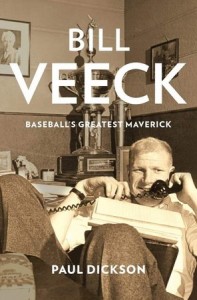
Bill Veeck:  Baseball’s Greatest Maverick

By Paul Dickson

Walker & Company, 2012

$28.00


Where to start?  Where to end? What to include?

There is so much to like about Bill Veeck:  Baseball’s Greatest Maverick – and to like about Bill Veeck himself – that it’s difficult to write a review.   The best place to start is to say that I‘ve probably never had as much fun reading a book.  Nor have I ever interrupted my reading so many times to regale my family with passages and anecdotes.  If you haven’t picked this book up yet, the time is now.  If you are a baseball fan, a humanitarian, a history buff, someone who enjoys a good story, you’ll have a hard time putting it down.

If I had to describe Bill Veeck in  a single sentence (a truly impossible task), I would say he was an individual who lived life – every minute – to the fullest, and brought those whose lives he touched along for the ride.  That spirit pervades this book.  Bill Veeck – in his lifetime, a four-time major league team owner – ignores adversity, tweaks the baseball establishment, champions social justice and brings his version of “play” and “fair play” to life and to the ball park.

While he is often remembered for celebrating the fiftieth anniversary of the American League by bringing three-foot-seven-inch, 65-pound Eddie Gaedel to the plate for his St. Louis Browns or for the near-disastrous Disco Demolition night when he owned the White Sox, Bill Veeck’s legacy runs much deeper.  As you will learn on the pages of Dickson’s book, much of what you see as part of today’s game: promotional give-aways; scoreboards that celebrate home runs and victories by the home team; names on the backs of uniforms; expanded concessions; and even quality rest rooms can be traced by to the innovation and initiative of Bill Veeck.  Further, Veeck bullt teams that  captured two league championships and one World Series crown.  And along the way, he earned the love and respect of players and fans and, he would proudly point out, the animosity of fellow owners and baseball’s top administrators.

To Bill Veeck, life was meant to be both fun and fair – for everyone.  He was a man of privilege, who turned away from privilege – except when it meant he could avoid wearing a tie in places or circumstances that seemed to demand that formality.  In 1943, considering military service in World War II, Veeck (given his economic status and celebrity) was offered the opportunity of  an officer’s commission in the Army or Navy (and most likely a safe promotional assignment). Veeck’s sense of fair play instead led him to enlist as a private in the Marine Corps – a decision which would eventually cost him much of his right leg.

It was that same sense of fair play that made him a champion of civil rights and a force in the integration of baseball.  Dickson, in fact, devotes a chapter to Veeck’s plan to purchase the Philadelphia Phillies before the 1943 season, hold a mock all-white spring training and then show up on opening day with an all-Black or primarily Black team. (Veeck was convinced baseball could not turn away Black players while Black soldiers were fighting for the country in World War II.) Before Veeck could complete his purchase, however, word of the plan got out and the Phillies were taken over by the National League and an alternative buyer was sought. (In 1947, Veeck, then owner of the Cleveland Indians, signed Lary Doby as the American League’s first Black player.)

Ultimately, Bill Veeck was an innovator and promoter – a true impresario; a baseball man who knew how to build a winning team; a humanitarian; a social activist; and perhaps the most passionate fan and friend of baseball ever.

Now, I could relate story after story from the pages of Dickson’s book, but it would be more fun if you read it yourself.  So, here are just a few previews of what you’ll find on the book’s pages:

Bill Veeck hiring a young concessionaire named Jack Ruby (yes, the same Jack Ruby who later gunned down Lee Harvey Oswald in Dallas).

 Veeck talking baseball and art with Salvidor Dali.

 Veeck tricking Harry Carey into leading the fans in “Take Me Out To The Ballgame” and justifying it by telling Carey he was perfect for the role because his voice was so bad, the fans would be more than willing to sing along.  ”Hell, if you had a good voice, you’d intimidate them and nobody would join in.”

Veeck’s testifying in support of Curt Flood (and against Major League Baseball) in Flood’s historic 1970 challenge to baseball’s reserve clause.

The multiple times Veeck had vendors serve “drinks on the house” to fans in the stands.

Veeck’s loyalty to Satchel Paige, a loyalty that translated into making Paige MLB’s oldest-ever rookie – and, later, multiple major league opportunities for the Negro League legend.

 Vick’s penchant for joining the fans for a beer in the bleachers, shirtless and in shorts with his wooden leg on display – consistent with his commitment to the everyday fan and his comment that:  “I have discovered in twenty years of moving around a ball park, that the knowledge of the game is usually in inverse proportion to the price of the seats.”

Veeck’s voracious appetite for reading – 3-5 books each week.

Veeck overcoming adversity on the field, in the boardrooms of baseball and in the operating room.  (Veeck once described himself as “whole” – defining whole as having “a lung and an eighth, a leg and a quarter, 40 percent of my hearing and one legal eye.”

After Veeck’s death, Dickson reports, Chicago Magazine writer William Brashler had this to say “Somehow, we will have to muddle through Opening Day without him.  And we will have to adjust to a few sad facts:  the gross national consumption of beer has diminished, some say measurably.  Every day now, one good book goes unread.  And marches against handguns and for peace and civil rights have one fewer peg-leg pounding the pavement.”

Bill Veeck was more than a baseball man.  He was, as the last line on his Baseball Hall of Fame Plaque reads “A CHAMPION OF THE LITTLE GUY.”  I’d take it a step further, Bill Veeck was a champion of life.  As a result, this is more than a baseball book.  It’s a book about life – and about living it to the fullest.

I began this review wondering how to start and how to end.  Well, I finally came up with an ending.   All of us have at some time played that parlor game in which you answer the question, “If you could invite five people – past or present – to dinner, whom would you choose?”  I can’t imagine anyone who reads this book leaving Bill Veeck off their guest list.  Take the time to read a truly interesting and entertaining book about a truly interesting, entertaining and impactful fellow.

Chipper Jones Continues Flair For the Dramatic

Chipper Jones has a flair for the dramatic – commemorates his own bobble head night with two home runs.

Last night (August 16, 2012), Chipper Jones – in his farewell season – again showed the keen sense of timing that has part of his Hall of Fame career.   In front of 33,157 fans, gathered for Chipper Jones Bobble Head Night, he became the thirty-eighth major leaguer to have a multi-homer game after reaching age 40, going two-for-four with three RBIs and collecting his 2,700 career hit, 466th homer and 1,614 RBI.  It was, appropriately, also Jones’ 40th career multi-home game.

After the game, Braves manager Freddie Gonzalez indicated Jones’ historic performance should not come as a surprise because Jones has the ability to “raise his game” when the situation arises.  In post-game interviews, Jones said he was especially motivated by his personal bobble head night, wanting to “make a splash and bring people to their feet.”  That he did, indeed.

(For more on Jones’ farewell season, see the BBRT posts of March 25 and April 25.)

Other “forty-plus” players to recently join the multi-homer-game club are Jim Thome and Jason Giambi, who accomplished the feat in 2011.  Thome, in fact, had two two-homer games last season, while Giambi joined an even more exclusive club – on May 19, 2011, he became only the fourth player past the age of forty to hit three home runs in a single game.  Giambi joined Babe Ruth (May 25, 1935); Stan Musial (July 8, 1962); and Reggie Jackson (September 18, 1986) in this more exclusive fraternity.  Jones has a long way to match the king of the 40-year-old multi-homer club.  Hank Sauer – who hit a total of 288 home runs (1941-59) – had eight multi-homer games after passing the forty mark.

Meanwhile, Chipper Jones marches on to a stellar final season, hitting .315 with 12 homers and 53 RBI (in 76 games) for a Braves team that is twenty games over .500, trails NL East leader Washington by just four games and sits atop the NL wild card race.

Perfection – Competitive Pressure Never Hurts

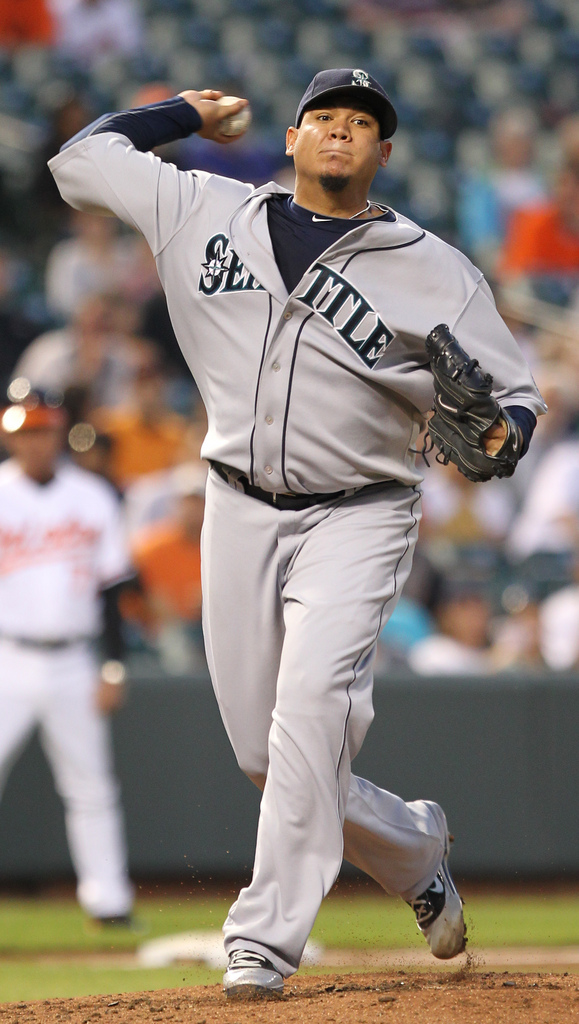
“King” Felix Hernandez last night tossed MLB’s third 2012 perfect game.

Here we go again … for the record-setting third time this season, we’re talking about a perfect game.  Last night, King Felix (Hernandez) threw a “perfecto” (break out the cigars and champagne once more) against the Tampa Bay Rays in a 1-0 win in Seattle.  Hernandez threw 113 pitches in his 12-strikeout performance – becoming the third major leaguer to toss a perfect game in 2012.  Hernandez was preceded in perfection on April 21 by the White Sox Phil Humber, who achieved perfection versus Seattle (at Seattle) 4-0 and the Giants’ Matt Cain, who threw his perfect nine innings in a 10-0 win over Houston at San Francisco.  Notably, these events make Seattle the first team to be on both the winning and losing sides of a perfect game in the same season and Matt Cain the winner in the most lopsided perfect game ever.

So, what’s it take to reach perfection (again, accomplished only 23 times in MLB history)?  From BBRT’s perspective great stuff, a bit of luck and plenty of pressure (not just the pressure that comes near the end of the performance, but pressure from the opposing hurler along the way.)  The fact is, the most common score of a perfect game is 1-0 (seven perfect outings have ended in that score) – and 1-0 and 2-0 contests make up nearly half the perfect outings (11 of the 23).  Here is the tally:  1-0 (seven perfect games); 4-0 (five); 2-0 (four); 3, 5 and 6-0 (two each); 10-0 (once).  Clearly, a close game can help keep the pitcher hurling toward perfect sharp.

For more on perfect games and no-hitters, see the posts of April 21, May 3, June 9, June 14 and July 15.  Wow, with all these post on mound gems, it does seem like the year of the pitcher doesn’t it?

The Brotherhood of Excellence – MLB’s Best Siblings

There are few perfect shapes … and this is one of them.

On Friday August 3, Justin and B.J. Upton became only the sixth pair of brothers in major league history to each achieve 100 home runs.  Justin reached the century mark with a solo shot in the second inning of Arizona’s 4-2 win at Philadelphia (his ninth round-tripper of the season).  B.J.’s 100th was also a solo homer, in the fourth inning of Tampa Bay’s 2-0 home victory over Baltimore.  Notably, it was the only time in MB history when two brothers hit a “milestone” home run on the same day.  And, in fact, on July 20th the Upton brothers each hit their 99th home run – Justin’s a two-run shot in the third inning of an Arizona 13-8 home win over Houston and B.J. with a solo homer in the sixth inning of a 4-3 win over Seattle.  Overall, the Upton’s have homered on the same day 13 times in their major league careers.

Other pairs of siblings who have reached the 100 homer mark include:  Joe and Vince DiMaggio (361 and 125 homers, respectively); Roberto (210) and Sandy (112) Alomar, Jr.; Ken (282) and Clete (162) Boyer; Brett (252) and Aaron (126) Boone; and Bob (156) and Emil “Irish” (106) Meusel.

The Uptons – at 200 combined home runs – have a ways to go to catch the sibling leaders:  Hank (755) and Tommie (13) Aaron at 768.

BBRT would like to use the Upton’s feat to comment on my picks for MLB’s best brother combinations ever.

1.  Paul and Lloyd Waner

This pair of outfielders spent 14 years of their careers as teammates on the Pittsburgh Pirates.  In 1927, the 21-year-old Lloyd averaged .355, with 223 hits and a league-leading 133 runs scored – only to be outdistanced by his 24-year-old brother Paul, who lead the league in batting average (.380), hits (237) and RBI (131).

In a 20-year career, Paul made the all-star team 4 times (the first all-star game came seven years after Paul made the major leagues), won three batting titles, lead the league in runs twice, hits twice, and RBI once.  His career line:  .333 average, 3,157 hits, 113 homers, 1,309 RBI and 1,627 runs.

In his 18-year major league run, Lloyd was a one-time all-star, led the league in hits once and runs once.  His final line: .316 average, 2,459 hits, 27 homers, 598 RBI and 1,201 runs.

Both Paul and Lloyd are members of the Baseball Hall of Fame.  (Paul elected in 1952, Lloyd by the Veterans Committee in 1967.)

2.  Gaylord and Jim Perry

These two pitching brothers – who combined for 529 victories, three Cy Young Awards and eight all-star selections – finish a close second to the Waners on the BBRT brothers list.  Consider 1970, when Gaylord led the NL in wins for the Giants, going 23-13 with a 3.20 ERA, while Jim led the AL in wins for the Twins, with a 24-12 record and a 3.04 ERA.

Gaylord, elected to the Hall of Fame in 1991, finished his career at 314-265, 3.11 – with two Cy Young Awards, and five all-star selections.  He was a five-time 20-game winner and topped the NL in wins three times.

Jim notched a 215-174 record, a 3.45 ERA, three all-star selections and one Cy Young Award.  He led the AL in victories twice.

 3.  Joe, Dom and Vince DiMaggio

Very close race for the third spot, but the DiMaggio’s get the edge since Joe and Dom lost three prime seasons each to World War II (deflating their career numbers).  Let’s look at these brother outfielders in order of prominence.

Joe – 13 major league seasons and 13 all-star selections (kinda tells the story).  The Yankee Clipper also won three Most Valuable Player Awards, two batting titles, one home run title and led the AL in RBI twice.  Joe ended up with a career .325 average, 2,214 hits, 361 home runs, 1,537 RBI and 1,390 runs.

Dom – played in the outfield for the Yankees’ top rival Boston Red Sox (and in the shadow of Brother Joe).  Dom held up his end of the brother tandem, with seven all-star selections in 11 big league seasons.   He twice led the league in runs scored, once in stolen bases.  Finished with a .298 average, 1,680 hits, 87 homers, 618 RBI, 1,046 runs.

Vince – the least stellar of the DiMaggio brothers, like Dom, Vince played for the Red Sox.  Only a .249 career hitter, Vince was known for his defensive excellence in the outfield.  He was a two-time all-star and finished with a .249 average, 125 homers, 584 RBI and 491 runs.

4.  Joe and Phil Niekro

These pitching brothers won 539 games in a combined 46 major league seasons.   In 1970, Joe and Phil tied for the NL lead in wins – Joe going 21-11 with a 3.00 ERA for the Astros and Phil going 21-20 (he also led the league in losses) with a 3.39 ERA for the Braves.

In a 24-year ML career, Phil won 318 games, while losing 274, with a 3.78 ERA.  He was a five-time all-star, two-time 20-game winner, led his league in ERA once and won five Gold Glove Awards.  Elected to the Hall of Fame in 1997, Phil also led the NL in games started, complete games, innings pitched and games lost four times each. In 1982, at age 43, he led the NL in winning percentage with a 17-4 (.810) record.

Joe finished his 22-year ML career with a 221-204 record and a 3.59 ERA.  He was a one-time all-star and two-time twenty-game winner.

5.  Sandy, Jr. and Roberto Alomar – Pedro and Ramon Martinez (tie)

The fifth and final spot on BBRT’s list of the major league’s best brother combinations proved the hardest to determine.  The candidates were:  Felipe, Matty and Jesus Alou; Dizzy and Daffy Dean; Pedro and Ramon Martinez; and Sandy, Jr. and Roberto Alomar.  A good case could be made for all four sets of brothers.  Here’s the evidence in support of Roberto and Sandy, Jr. Alomar and Pedro and Ramon Martinez – who tied for this final sport.

The Alomar Brothers

In Roberto’s 17-year career at second base, he earned 12 all-star selections, led the league in runs scored once, and captured ten gold Gloves.  Elected to the Hall of Fame in 2011, Roberto put up solid numbers to earn this spot:  a .300 average; 2,724 hits; 210 home runs; 1,134 RBI; 1,508 runs; and 474 stolen bases.

Sandy Jr.  enjoyed a 20-year ML career at the tough catcher position.  While his numbers were not as flashy as Roberto’s, Sandy was a Rookie of the Year, a six-time all-star and one-time Gold Glover.  His final numbers – .273 average; 1,236 hits; 112 home runs; 588 RBI; and 520 runs scored.

The Martinez Brothers

Pedro, the younger of the brothers, provides the sparkle in this pairing of hurlers, who won a combined 354 games and both had a career winning percentages north of .600.  Pedro notched 219 wins versus only 100 losses (.687 pct.) with a career 2.93 ERA.  The younger Martinez was an 8-time all-star, won three Cy Young Awards, was a two-time 20-game winner and lead his league in ERA five times, winning percentage three times, strikeouts three times and wins once.  In 1999, with Boston, he went 23-4 with a 2.07 ERA and 313 strikeouts.

Ramon had a 14-year ML career in which he went 135-88 (.605 winning percentage) with a 3.67 ERA.  He was a one-time all-star and one-time 20-game winner.  His best year was 1990, when he went 20-6, 2.92 for the Dodgers, with a league-leading 12 complete games – finishing second in the Cy Young voting to the Pirates’ Doug Drabek (22-6, 2.76).

All BBRT can say about all these siblings is “Oh brother, could they play the game.”  Drop in a comment, if you have additional brother combinations that you’d put up for consideration in the top five.

Doumit Homers from Both Sides – A Look at the Record Book

Ryan Doumit, on July 22, became the third Minnesota Twin to homer from both sides of the plate in one game – following in the footsteps of Roy Smalley (1986) and Chili Davis (1992).   He also became the fourth switch hitter to go deep from both sides of the plate this season (Mark Teixeira, Nick Swisher, Yasmani Grandal).  Doumit’s offensive accomplishment underscores the value the off-season pickup (signed to a two-year, $7 million extension recently) brings to the Twins.  He’s currently hitting .290 (third on the team), with ten homers (fourth on the Twins) and 46 RBI (second) and has played catcher, first base, outfield and designated hitter.  (A key factor here is Doumit’s ability to provide valuable “breathers” for Twins stars Joe Mauer and Justin Morneau.)

Doumit’s display of power from both sides of the plate prompted BBRT to take a look at the record book (when it comes to going yard from the both batter’s boxes in the same contest).  Turns out it’s not as rare as you might think.

It’s been accomplished   271 times (162 in the American League, 109 in the National League).

Mark Teixeira has homered from both sides of the plate in a record 13 games – contributing to a Yankee tradition.

Mark Teixeira holds the record for most times homering from both sides of the plate in the same game at 13, as well as the American League record of 11.  (He accomplished the feat eight times with the Yankees and three times with the Rangers in theALand twice with the NL Braves.)  Ken Caminiti holds the National League record at 10 – 7 times with the Padres, three with the Astros.

The Yankees hold the MLB franchise record  (and, of course, the AL record) for most times having a player homer from both sides of the plate in a game with 49 (30%) of the AL’s 162 occurrences.  The list of Yankees who have accomplished the feat is long and impressive:  Mickey Mantle; Tom Tresh; Roy White; Roy Smalley, Jr.; Bernie Williams; Ruben Sierra; Jorge Posada; Tony Clark; Melky Cabrera; Nick Swisher; and Mark Teixeira.

– Surprisingly, the NL franchise record holder is not an old, established franchise like the Yankees, but the much younger New York Mets – with 20 of the NL’s 109 occurrences.  The roster of Mets who have homered from both side of the plate in the same contest includes:   Lee Mazilli; Howard Johnson; Bobby Bonilla; Todd Hundley; Carl Everett; Tony Clark; Jose Reyes; and Carlos Beltran.

– A final tidbit, no pair of hitters has had more ambidextrous home run games while teammates than Mark Teixeira and Nick Swisher who, as Yankees since 2009, have accomplished the feat a combined 11 times (eight for Teixeira and three for Swisher.) Swisher by the way trails only Teixeira on the MLB total list – with 11 right-/left-handed homer games.  Also at 11 you’ll find Chili Davis and Eddie Murray

Cards Explode for 12 Runs in Lucky Seventh … Prompting a Look at the One-Inning Records

On June 21, 2012, the Saint Louis Cardinals pushed across 12 runs in the bottom of the seventh inning as they trounced the Chicago Cubs in St. Louis.  The final one-inning totals for the Cardinals – 12 runs on 10 hits (seven doubles, one triple, two singles) and three walks.  Interestingly, at least to BBRT, the seventh was the only inning in which the Cardinals (who have struggled offensively lately) scored.  The game was a 12-0 Saint Louis win) and the only inning in which the Redbirds notched more than one hit.  Now the Cards did tie an MLB record with seven doubles in one inning – but when it came to hits and runs they felt short of the single inning – or even the seventh inning – record.  The Cardinals also fell short of the most lopsided shutout win ever – a Providence Grays 28-0 victory over the Philadelphia Phillies on August 21, 1883.

Note:  Since 1900, there have been five shutout victories when the winning team scored twenty or more runs – most recently the Indians 22-0 win over the Yankees on August 31, 2004.  BBRT is still searching to see if 12-0 is the most lopsided score in which all of a game’s runs were scored in a single half inning. 

Now back to the Cards’ seventh inning.  Turns out both the AL and NL records for runs scored in an inning took place in the seventh inning of those games – and in both cases, Detroit was the victim.

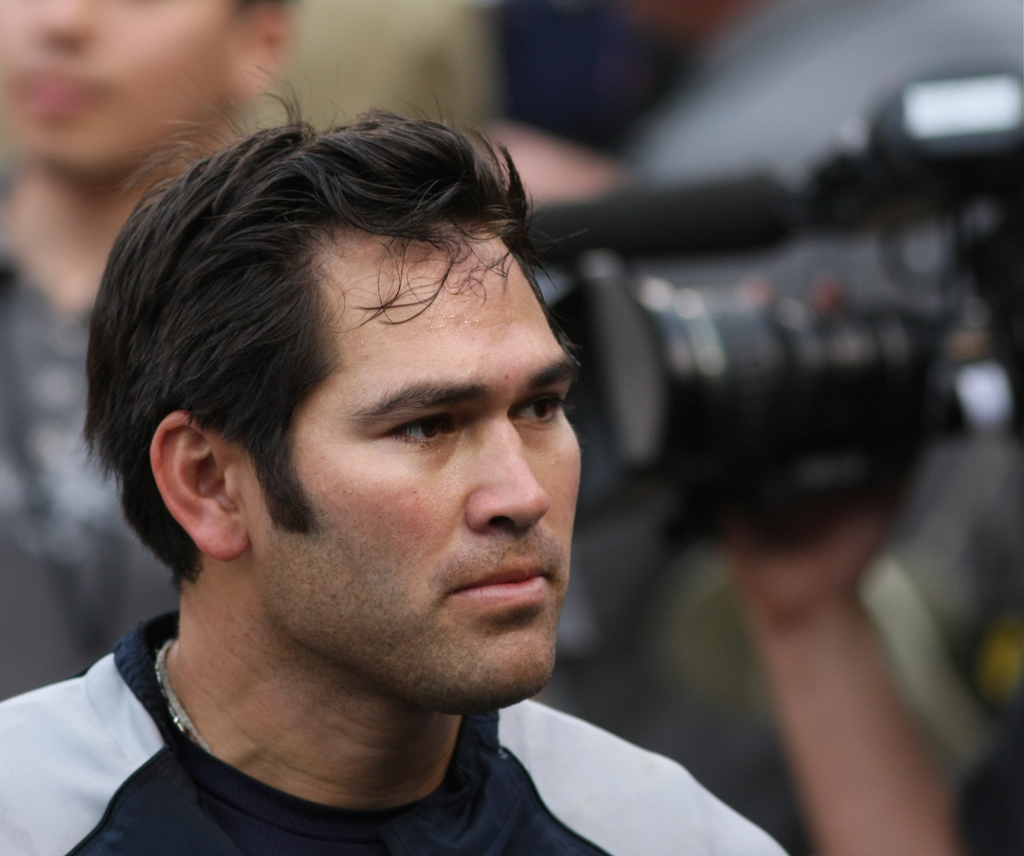
While with the Red Sox, Johnny Damon become one of only five major leaguers to notch three hits in one inning.

In the NL, the Chicago White Stockings (later to become the Cubs) scored an NL and MLB record 18 runs in the seventh inning of a 26-6 home win over the Detroit Wolverines.  In the inning, they tallied another MLB record 18 hits (10 singles, six doubles, one triple and one home run – amazingly, no walks).  Further, three Chicago batters (Tommy Burns, Fred Pfeffer, and Ned Williamson) each had three hits in the inning.  How significant is that?  In baseball history, three hits in an inning has been accomplished only five times (the last by Johnny Damon on June 27, 2003, in the first inning of a 25-8 Boston Red Sox win over the Florida Marlins, when the Sox scored 14 first-inning runs, including a MLB-record 10 runs before the first out.)

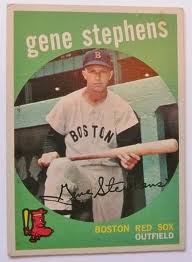
Gene Stephens, another three-hit inning performer for the BoSox.

In the AL, the one-inning scoring record was set in the seventh inning (lucky number seven for both leagues) of a June 18, 1953, 23-3 victory for the Boston Red Sox over the Detroit Tigers.  In their big inning, the Red Sox logged 14 hits (11 singles, 2 doubles and 1 home run) and six walks.  In this game, Boston leftfielder Gene Stephens notched three hits in the inning – his only hits in the game (3 for 6 with a walk.)

Hope you enjoyed this look back at MLB’s biggest innings.

Saint Paul Saints – Veeck’s right, fun IS good!

Moving – in less than 24 hours – from the Minnesota Twins Champions Club at Target Field in Minneapolis(see the July 19 post) to “infield reserved” behind home plate as the American Association (independent league) Saint Paul Saints take on the Grand Prairie Airhogs at Midway Stadium is a quantum leap.  That’s the journey BBRT chose to make – leaving Target Field at about 11 p.m. on July 17th and entering Midway Stadium at about 12:30 p.m. on July 18th.

From a fan perspective, both experiences have a lot to offer.  This post will focus on the Saint Paul’s Saints – for more on the BBRT’s time in the Twins Championship Club, again, see the previous post.

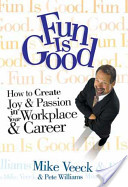
One of the Saints’ primary owners –  Mike Veeck (part owner of a half dozen teams) –  is all about baseball, business and FUN– and attending a Saints game is ample proof of the Veeck family’s belief that baseball and fun make for good business.

What it’s all about!

Note: Mike’s grandfather Bill Veeck, Sr., was President of the Chicago Cubs and his father Bill Veeck gained fame as one of baseball’s great “mavericks” as owner of the Cleveland Indians, St. Louis Browns and Chicago White Sox (twice). To learn more about the Veeck family approach to the game Google (darn, I vowed never to use that verb) Lary Doby, Eddie Gaedel or Disco Demolition and to understand Mike Veeck’s approach to life and business read his book “Fun is Good.”

On July 18th, the fun began as I crossed the packed parking lot, where – as is always the case before Saints games – the tailgating was in full swing more than an hour before game time. It wasn’t a parking lot, it was a partying lot.  Cold beer, grilled burgers and brats, lawn games, loud music and an array of baseball apparel are the order of the day.  To add to the fun on this day, free hot dogs were being handed out to any and all comers.

Once in the park, the fun really began (after I picked up my free score card, of course).

No between innings lulls – not Lardashian and Hamphries at right center.

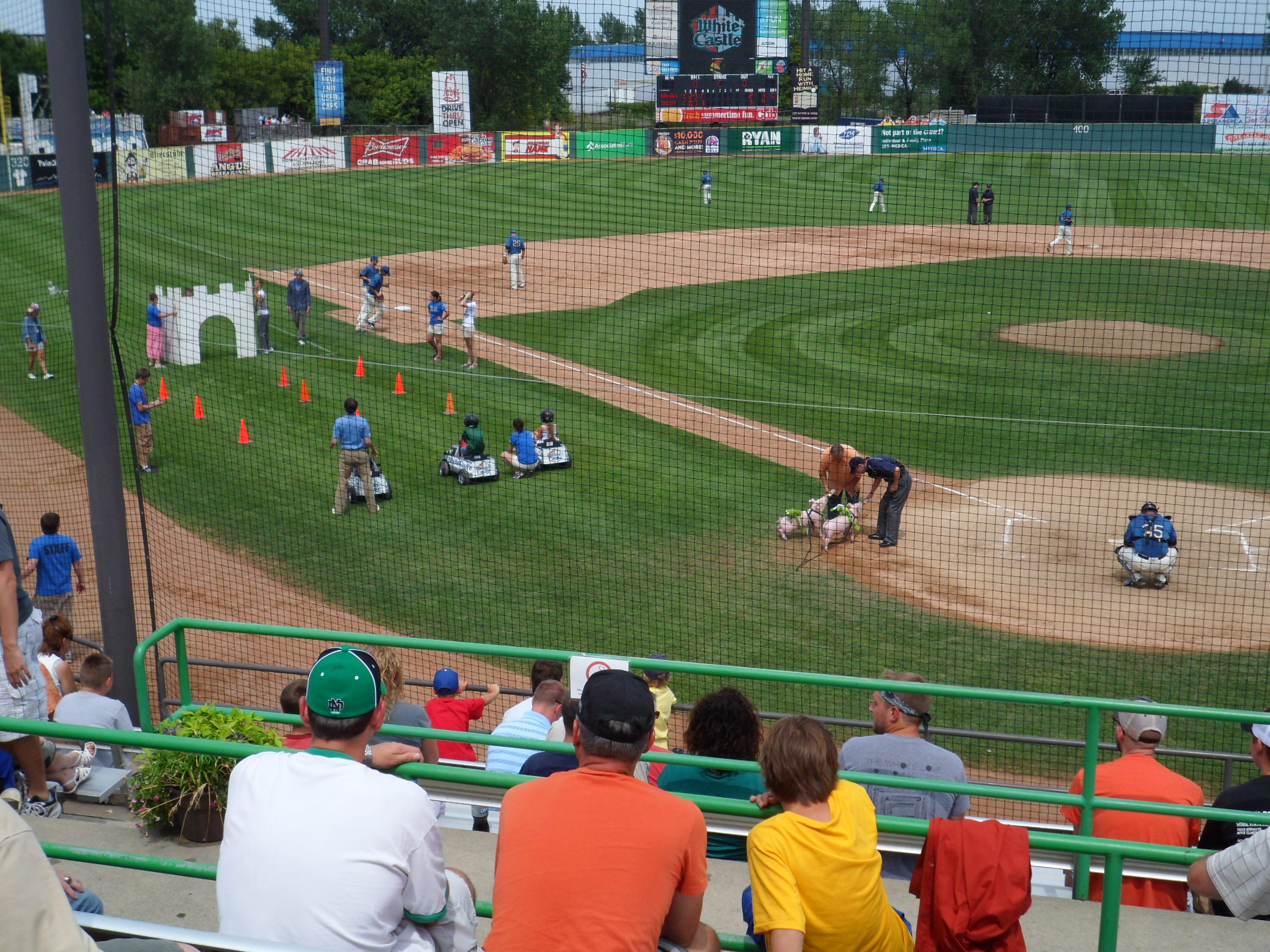
In the stands, fan interacted with the over-sized pink pig mascot Mudonna (who does a great bump-and-grind), as well as with a host of “ushertainers” like Gert the Flirt, Mr. Vegas and the Nerd.  We also witnessed the twenty-year Saints’ tradition of baseballs delivered to home plate by pigs (piglets at this time of year, but guaranteed to play a “larger” role over the course of the season).  This year the umpires accepted horsehides from a pair of pig mascots named Kim Lardashian and Kris Hamphries.  (Past Saints pigs have included such “celebrities” as Hammy Davis Junior, Kevin Bacon and the often maligned Bud Squealig.  A few years ago I suggested Amy Swinehouse, but never made the cut.)  There were also between-inning events ranging from a Piano Race to a Pizza Eating Contest to a players “Booty Call” where fans had to identify a player from a photo of his (uniformed) booty displayed on the centerfield scoreboard video screen.  In short, in addition to the action on the field, there was a lot going on off the field – no between inning lulls (which is true of most minor league experiences, even more true of independent league operations and a hallmark of Mike Veeck’s approach to the game-day experience.)

Another note:  A Saints game at Midway Stadium may be the only place where knowing the Wayne Newton recorded Danka Schoen can win you a prize or where a ballplayer sliding into home can win White Castle hamburgers (“sliders”) for the entire crowd.)

If fun is good – so is food – and there is plenty inside the ball park for those who didn’t fill up in the parking lot.  There are all the traditional items – hot dogs, brats, peanuts, cracker jacks, cold beer, ice cream – as well as such offerings as walleye sandwiches, gyros (my choice this day), chicken kabobs and more.  And, it’s major league quality at minor league prices. And what tastes better than a cold beer and a bratwurst – in the sun – at the ball park.

The fans at Midway Stadium (and most minor league parks) are a real family.  It’s like the pub on cheers.  In Midway “everybody knows your name” – the beer vendors call out to their customers by name and preference”  “Hey Marty, ready for another Pale Bud?”  And, if you a new, you’ll soon find yourselves surrounded by friends ready to talk baseball – or, I’ve observed at Saints games, politics.

What you won’t see here are ties or the wave – both banned.  BBRT:  The wave should be banned everywhere.

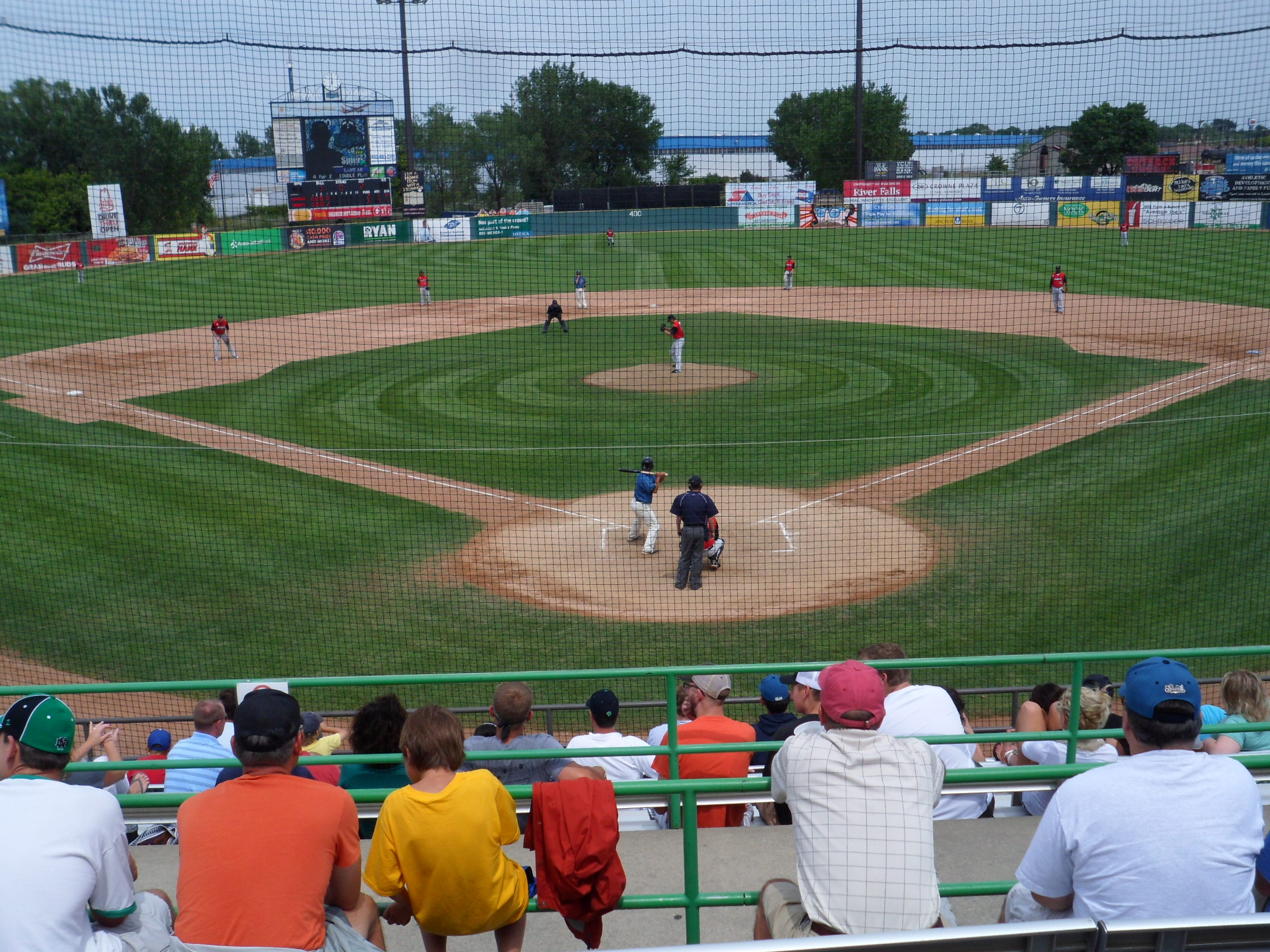
Then there’s the game itself.  For Wednesday’s game, the morning started out overcast, but the sun (apparently the weatherman agreed that fun is good and fun in the sun even better) came out at game time.  Then, as if on cue, it began to cloud up again as we moved close to the final inning of the 2 hour and 21 minute contest.

Good seats – at a great price.

For my $13 I got a great seat, right behind home plate about 15 rows back.  There are, however, really no bad seats in a park that holds about 10,000 (there were 6,034 on this Wednesday afternoon.)    We were treated to a pretty good ball game (the independent American Association is most often compared to “A” ball.) It included a couple of well-turned double plays, two nice diving catches, a nifty pick-off, and a power display by the home team (3 doubles, a triple and a home run among 13 hits for the Saints, while the Airhogs had only 5 singles and a double.)

The Airhogs took a 2-lead in the top of the second inning, which went walk, walk, pick-off of the runner at second, single, run-scoring sacrifice fly, run-scoring single, strikeout. It was a little like watching the White Sox of the late 1950s – a power-short team that worked to manufacture runs and victories (In 1959, the White Sox won the AL Pennant despite finishing last in the league in homers, sixth [out of eight teams] in batting average and seventh in slugging percentage – but third in On Base Percentage and first, by a wide margin, in stolen bases.)

The Saints took another route to home plate, turning two doubles, two singles and a triple into 3 runs in the fourth; adding a solo homer by clean-up hitter Ole Sheldon in the fifth; and then using a single, well-executed sacrifice bunt and a another single for a run in the eighth (an inning that ended on a 8-2-4 play as the hitter tried to advance on the play at the plate).  All in all, a satisfying 5-2 Saints win, with plenty of interesting baseball.

Ronnie Morales and his submarine delivery …

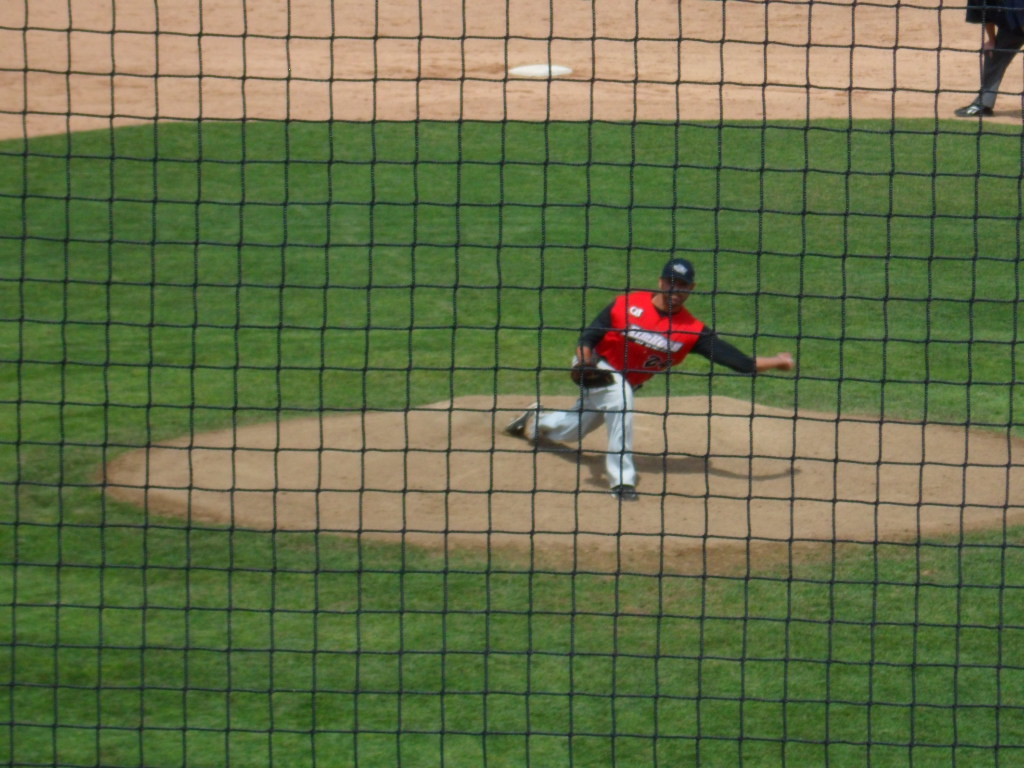
One highlight for BBRT was the opportunity to view, from my behind-home plate vantage point, the “submariner” pitching style of Airhogs’ reliever Ronnie Morales.  I’m dating my self here, but it reminded me of the Kansas City Royals 1980s closer Dan Quisenberry.

So that was my game day experience at Midway Stadium – BBRT, by the way, strongly supports a new Saints ball park in downtown Saint Paul, but that’s for another post.  I’d like muse a bit more on what you might see at an independent league game,

BBRT has written in earlier posts about how minor league baseball (particularly AAA) often offers the opportunity to see former and future major leaguers on their way up or down – or between ups and downs.  While that opportunity may not arise as often in independent league baseball, the Saints are proof you can still see players from, or destined for, the big leagues at these contests.  Over the years, the Saints roster has boasted such former major leaguers as:

Jack Morris …  who went 5-1, 2.61 for the Saints in 1996, at age 41 – following a major league career that included 254 wins, 5 All Star selections and an World Series MVP award.

Darryl Strawberry … the troubled outfielder who joined the Saints after a major league suspension (a former NL Rookie of Year and 8-time All Star with 297 major league homers).  Strawberry, rebuilding his image and career, played 29 games as a Saint, hitting .429 with 18 homers and 39 RBI.  One July 4, 1996, George Steinbrenner celebrated his 66th birthday by bringing Strawberry back to the Yankees for the 1996 pennant-winning stretch drive.   “The Straw” went on to play for Yankees until 1999 (on pennant winners in 1996, 98 and 99) and finished his career with 335 homers, 1,000 RBI and 221 stolen bases.

J.D. Drew … the Florida State college star drafted second overall by the Phillies in 1997 came to the Saints after contentious negotiating between the Phillies and J.D.’s agent Scott Boras (enough said). Boras uncovered a loophole in MLB’s draft rules that enabled Drew to sign with the Saints and be available for future drafts.  Drew played 44 games with the 1997 Saints, hitting .341 with 18 homers.  He was drafted fifth by the Cardinals in 1998 and went on to a 14-year MLB career (retiring quietly before the 2012 season) with a .278 average and 242 home runs.

Ray Ordonez … the slick-fielding 22-year-old Cuban signed with the Saints in 1993, hitting .286 and dazzling in the field.  In October of that year, he translated his opportunity with Saint Paul into a contract with the NY Mets organization, eventually going on to a nine-year major league career highlighted by three Gold Gloves.

Those are the Saints’ “big league” highlights, but they have featured other players with major league pedigrees including (but no limited to):  Leon“Bull” Durham; Matt Nokes; and Minnie Minoso.

While you are likely to see some former and future major leaguers in minor league and  independent league ball parks, you are also likely to see some promotions that will never make their way to the majors (and you are most likely to see these promotions in a Veeck-directed operation.)  Here are just a few examples (my favorites) from the Saints to give you a flavor of what you might be missing if you limit yourself to the major leagues.

I talked in my previous post about the Twins Championship club’s valet parking.  Well, Saint Paul’s Saints have featured “Ballet Parking” – where patrons’ cars were parked by ballerinas, complete with toes-hoes and tutus – not coming to a major league park near you soon.

The Saints have also feature hair cuts above the dugout; in-park therapeutic massage by a Catholic nun (Sister Rosalind); Mime-O-Vision (with a group of mimes acting out the instant replays; a free car wash for the dirtiest car in the lot (watch for your vehicle on the scoreboard screen); and a host of unique give-aways skewering such individuals as Mike Vick; Representative Andy Weiner; Randy Moss; and Senator Larry Craig.  (Look these up, we’re working to be PC here.)  My personal favorite was the 2002 give-away mocking major league baseball’s labor strife with a seat cushion featuring the face of MLB Commissioner Bud Selig on one side and Players Union Executive Donald Fehr on the other. You could voice your views by sitting on one face or the other – or maybe flipping the cushion between innings.

BBRT’s point is once again:  Baseball is like life – only better – no matter what ball park you are in.  So, go to a game – any game, anywhere – and, in the spirit of the Veeck baseball family, have fun!  See you at the ball park.

In the Twins Champions Club – Fans are treated like champions

If you look in the dictionary under “Minnesota Nice,” you should see a picture of the Champions Club staff.   The staff is not only attentive, but makes you feel like they are happy not just to serve you, but to see you at the ball park.

If, as BBRT’s banner maintains, “Baseball is like life – only better,” then the Minnesota Twins Champions Club must be “like heaven – only better.”

On July 17, as the Twins faced off against the Baltimore Orioles, I was privileged (along with my daughter Élan, son-in-law Amir and good friend Jon) to be seated (and there is a lot more to this story than good seats) in the Twins much-praised (justifiably) Champions Club section.  The tickets were, on many levels, out of my league – they were a much appreciated retirement gift.

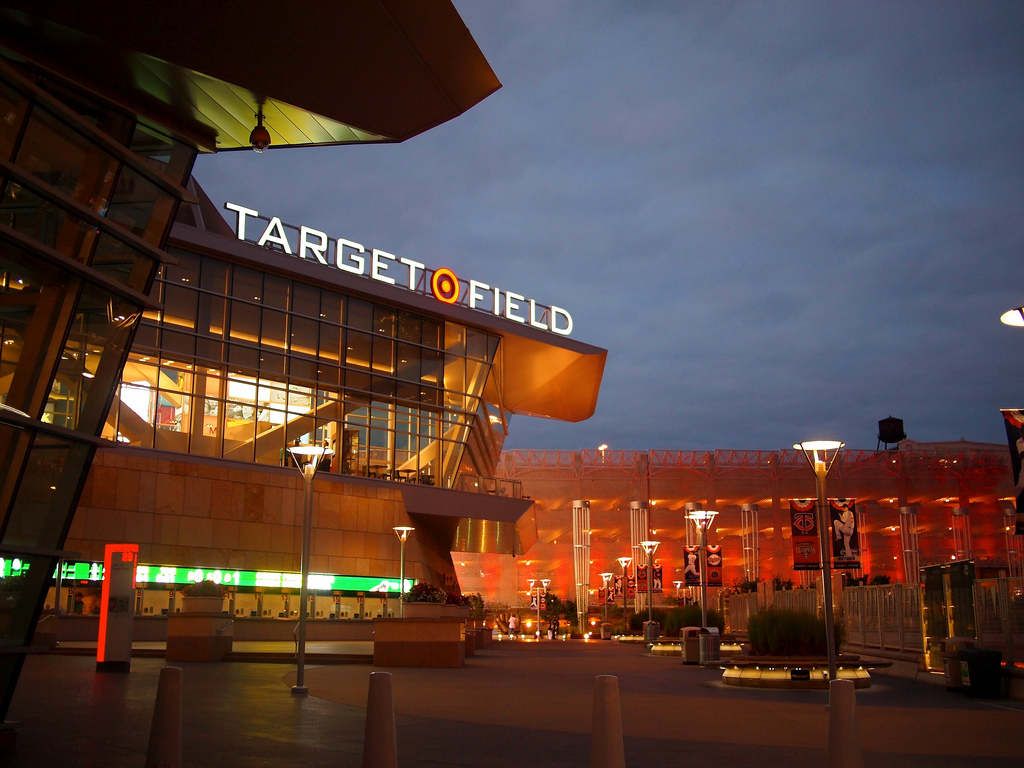
It all starts with your arrival at Target Field (I’d suggest 60-90 minutes before game time). You drive through the Champions Club lot, right up to the ball park, where a friendly valet takes your keys and parks your car.   You literally exit your vehicle about 20 steps from the entrance to Target Field and the valet parking comes with the ticket.  Our little group recognized immediately that we were marking new territory when it comes to baseball watching.  Amir could have spent considerable time ogling the cars (pretty much every car maker’s top of the line) as they pulled up.  Our Subaru Outback was a bit overmatched.

Once inside, we were greeted by a literal “host” of staff, given a Champions Club wristband and directed to the very comfortable entry room bar, where you could pick up a complimentary program and scorecard, check out significant Twins memorabilia (like the 1987 and 1991 World Series Champions trophies) and, if so inclined, order a beverage in a very relaxed atmosphere.

Our group headed through the entry bar into the spacious main dining room / bar.   The atmosphere was perfect – not too elegant (Victorian) and not too trendy (Mad Men).  Instead, it had a clean, classic feel – from the long bar, to the dining tables to the fireplace.  Even the strategically placed big screen TVs – carrying the pregame festivities and later the game – seemed to fit right in.

Once seated, a friendly waitperson brought us ice water and took our “adult beverage” orders.  The Champions Club offers a truly fully stocked bar.  We opted for the tap beers and house wines – which – like the valet parking – were complimentary.  Malbec for me, Pinot Grigio for Élan and Amir and Grain Belt for Jon.

Ball park fare? Artisan cheeses in the Champions Club.

Then, it was time to try the buffet – which also came with the price of the ticket (Are you seeing a trend here?).  We started at the Artisan Cheese and Meat table (with various crackers and flat breads), moved on to the salads (prepared or made to order on the spot) and then to the main course(s).


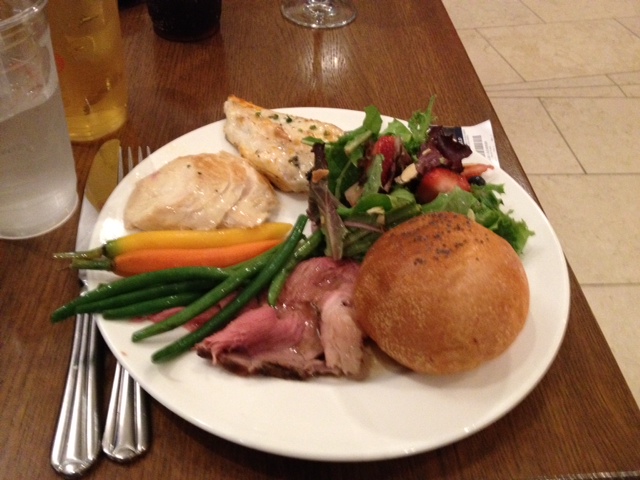
Jon Miller shared a photo of his pre-game dinner. Diverse and delicious.

There was, literally, an offering for every taste:  roast round of beef, walleye, Chicken Marsala, braised short ribs, sausages with grilled onions and peppers, as well as a host of sides from perfectly done vegetables to a multi-cheese pasta dish.  (I know I’m missing some items, but the point is that it was large, diverse and delicious.)  When we got back to the table, our waitperson quickly checked on our beverages – another round ensued and we added (among us) gourmet coffee and diet sodas.   As game time approached, our waitperson switched our beverages to plastic glasses, so that we would take them to our seats (also letting us know there would be in-seat service and complimentary beverages during the next phase of our Champions Club experience.)

One beautiful ball park.

That next phase began (after Amir polished off his chocolate ice cream sundae) as we headed to our seats, just 11 rows behind home plate.  Absolutely great seats in a great ball park. (I recently took in three Twins games in the often-praised PNC Park in Pittsburgh.  And, while PNC is a beautiful park with its view of the Allegheny River, the Roberto Clemente Bridge and downtown Pittsburgh, I give the edge to Target Field with its combination of textures – expanses of limestone, glass and “ball park green.”)

But I digress.  To get to our seats, we had to make our way past the complimentary (the trend continues) snack items:  peanuts, Cracker Jack, pop corn, assorted candies, nachos, hot dogs.  Our initial bounty?  Malted Milk Balls, Reese’s Pieces and pop corn.  Once in our seats, another attentive waitperson checked to see if we needed any additional beverages and reminded us that the dining room continued to serve until the eighth inning.  (Jon and I put down a couple of brats with onions and peppers in the seventh.)  Throughout the game, we saw fellow Champions Club-bers heading back into the dining / bar area to replenish.

In Champions Club Seats, you are on top of the action.

As I said, the seats were great. They were comfortable, wide and well-padded – a plus after the buffet and snack bar – and, just as important, close to the action.  You felt as if you could pick the umpire’s pocket.

To cap off a great evening the Twins won 6-4 in an exciting contest.  The Orioles took the lead 1-0 in the first; the Twins tied it 1-1 in the fourth; Baltimore scored three in the top of the fifth; the Twins came back with three in the bottom of the inning; and the Twins took the lead for good with two runs in the seventh.   A fun and exciting win.  Still, while the execution by the staff in the Champions Club was spot-on perfect, the game did have its flaws – as in two errors, one wild pitch and 15 walks.  When it was over, I had one ugly score card. I did notice that no one else in the Champions Club section was keeping score (and was a bit dismayed).  As a point of comparison, however, the very next afternoon I attended a Saint Paul Saints (independent minor league) game, sitting behind home plate and again saw no one dutifully scoring the game.  Has “keeping the book” become a lost, archaic art?  Has it gone the way of cursive?  If so, “Curses,” I say.

After 3:43 of big league bliss (lots of walks makes a long game), it was sadly time to leave the Champions Club.  Back to the valet parking area and, unfortunately, reality.  The rating?  Too bad we can only give it five stars – the Champions Club is a “Grand Slam.”  And, here’s the key – the people.  If you look in the dictionary under “Minnesota Nice,” you should see a picture of the Champions Club Staff.  In every interaction – from valet parking to entering the ball park to dinner (food service and wait-staff) to ushers and seat-side service – the staff was not only attentive, but made you feel like they were happy not just to serve you, but to see you at the ball park.  In the Champions Club, the fans are treated like champions.

My recommendation?  If you ever get the chance, take in a game in the Champions Club.  My commitment, if I ever get the chance to do it again – I’ll be there.  In the meantime, remember:  Baseball’s like life – only better – no matter what seats you have.  See you at the ball park.