Ten BBRT “Hits” from the 2012 MLB Season

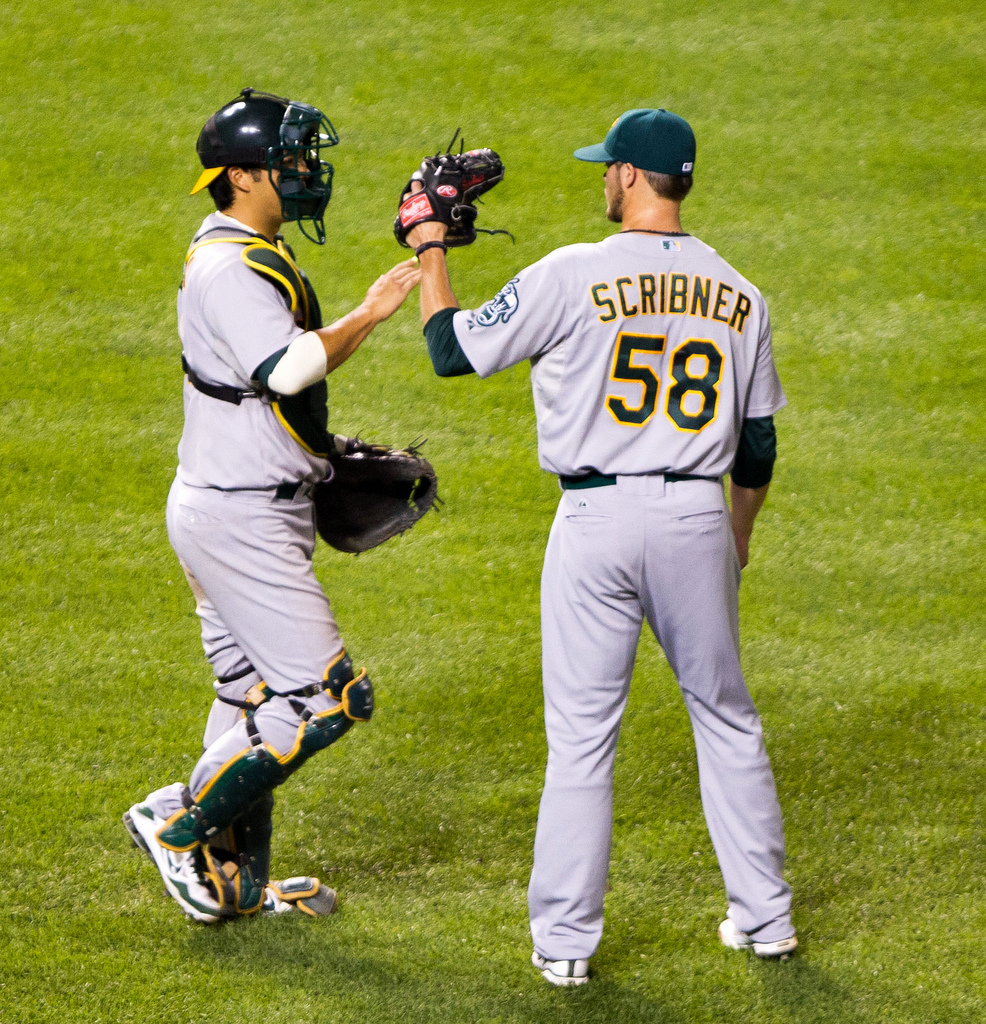
Evan Scribner was the winning pitcher in the A’s storybook finish – and AL West Title.

2012 was a remarkable season – and BBRT expects even more excitement in the post season.  Most readers may be too young to remember “Your Hit Parade,: an early TV show that featured the Top Ten music hits and a few “extras.”  Here are ten “hits” and a few extras that grabbed BBRT’s attention during the 2012 MLB regular season.

1.  The no-name, low-payroll Oakland A’s AL Western Division Championship.

The Oakland A’s started the 2012 season with the lowest payroll in the AL and second-lowest payroll in all of baseball ($55.3 million, with only the Padres lower), and with most analysts predicting a last-place finish in the AL West.   Yet, this no-name bunch – 13 games out of first on June 30 – completed a remarkable comeback with a dramatic final weekend sweep (and comeback from a 5-1 deficit in game 162) of the heavily favored Texas Rangers to grab the AL West title with a 94-68 record.  The heroes in that final contest included such “name” players as Evan Scribner, Derek Norris, Brandon Moss and Coco Crisp.

How improbable was this division championship? The A’s had no 100-RBI men; no .300 hitters; only one player with 30 or more homers (Josh Reddick, 32);  no-pitcher with more than 13 victories; only one pitcher with 30+ starts (Tommy Milone, 31); and no pitcher with 200 innings pitched. They had 54 wins from rookie pitchers, and started a rookie hurler in each of the last 14 games of the season.

Here is the list of A’s with at least 100 games played in 2012:  Brandon Moss, Coco Crisp; Josh Reddick; Chris Pennington; Yoenis Cespedes; Seth Smith; Jemile Weeks.

Oh, and by the way, the A’s had sole possession of first place on only one day all season – the day that counted.

For BBRT, the A’s story was number-one on the 2012 Hit Parade.

2.  Miguel Cabrera’s Triple Crown

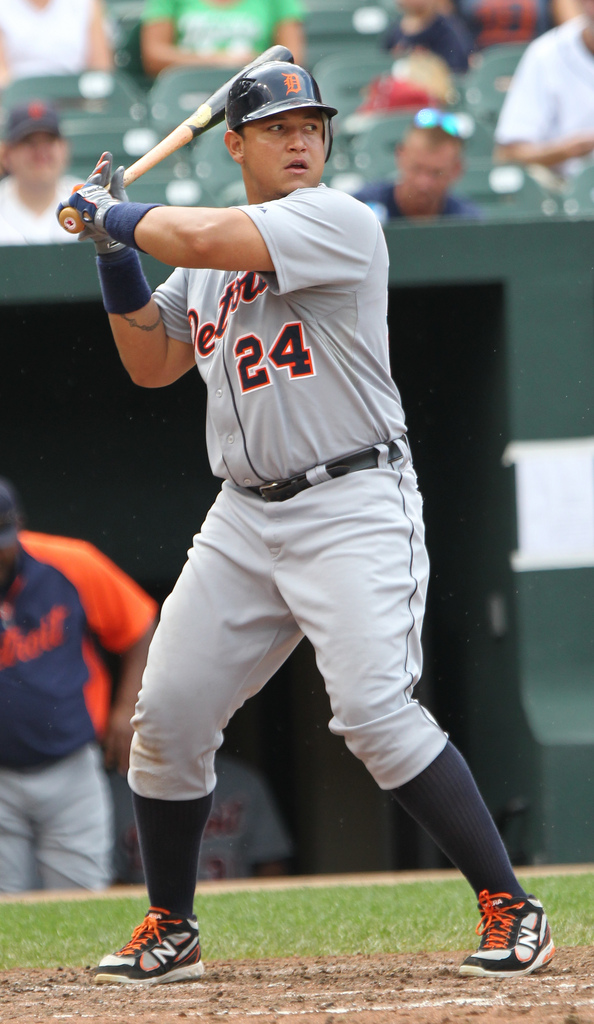
Not accomplished since 1967 (the Red Sox Carl Yastrzemski), Cabrera’s Triple Crown included a .330 average, 44 homers and 139 RBI – a performance that led his Tigers to the AL Central crown.  His key challenges came from Josh Hamilton in home runs (who suffered a late season power slump) and a final rush from Curtis Granderson that brought him within one round tripper of Cabrera.  Cabrera also pushed aside batting average challenges from Joe Mauer and Mike Trout, with Miggy turning in a clutch four-hit performance in the Tigers’ October 1 Division Championship-clinching game.

3.  Mike Trout’s spectacular rookie season.

All the pre-season hype focused on Washington National’s phenom Bryce Harper.  Then on April 27th, the California Angels made a move that changed the playing field – calling up Mike Trout, a 20-year-old who was hitting a blistering .403, with one HR,  13 RBI and six stolen bases at Salt Lake City.  Despite missing a month of the MLB season, Trout, at 21, became the first rookie and youngest member of the 30-40 club (30 homers and 40 stolen bases), finishing with a line of .326; 30 HRs; 49 SBs; 129 runs; 83 RBI; and a good shot at a Gold Glove.  And, again, despite his late April call up, was only one stolen base from joining the elite 30-50 club, which includes only Eric Davis and Barry Bonds.  It was a marvel to witness – and think about how much more baseball Trout (and fans) have to look forward to in the seasons ahead.

Hit Parade Extra – Precognition or Coincidence?  We’ll take coincidence.  BBRT’s March 29th blog may have foreshadowed the current Cabrera versus Trout MVP discussions.  The blog was title “Triple Crown = MVP?  Not Always!” Visit that blog for more detail, but three players have been denied the MVP after winning the Triple Crown, one of them twice:  Lou Gehrig, in 1934, actually led both leagues in the Triple Crown categories and finished a distant fifth in MVP voting, while Ted Williams won the Triple Crown in 1942 and 1947 without being recognized as MVP and Chuck Klein had that distinction in 1933. For 2012, BBRT’s vote goes to Cabrera, since Trout’s solid season and strong supporting cast still could not bring the Angels a playoff spot. 

4.  Baltimore Orioles make playoffs for the first time since 1997.

Like the Oakland A’s, the Orioles came into the season as Division “also-rans.”  Yet they stayed in the hunt with the powerful Yankees until the final weekend – and earned a Wild Card spot.  Like the A’s, we are not looking at a group of established names.  The O’s did show power, with five 20+-HR players, led by Chris Davis (33) and Adam Jones (30).  However, they had no 100-RBI players (although Davis, Jones and Matt Wieters all topped 80) or .300 hitters.  The Orioles starters were led in wins by Wei-Yen Chen, the only hurler with more than 20 starts (12-11, 4.02) – but did benefit from Jim Johnson’s 51 saves.  Still, the Orioles played gritty, were fun to watch, and did bring home 93 wins.

5.  The Washington Nationals NL East Crown.

The Nationals are considered another surprise team in the playoffs by many (BBRT was among those predicting a playoff spot), but more surprising may be that they led the NL in wins (98) and how they did it –with the NL’s lowest ERA (3.33), even after shutting down Stephen Strasburg.  Staff leaders were Strasburg (15-8, 3.16) and Gio Gonzalez (21-8, 2.89), while seven pitchers logged saves, led by Tyler Clippard (32) and Henry Rodriguez (9).  A real interest grabber was what would happen once Strasburg left the rotation.  John Lannan filled in admirably.

Hit Parade Extra – What difference relief pitchers make.  The New York Mets led all of MLB in quality starts in 2012 (101) and yet finished with only 74 wins against 88 losses.  BBRT watched the self-destruction closely.

6. The Pittsburgh Pirates fall from grace.

BBRT predicted in March that the Pittsburgh Pirates would end 19-years of futility (under-.500 finishes) this season.  That looked like a pretty good bet on August 8, when the Pirates were 16 games over .500 at 63-47, just 2 ½ games behind the division-leading Reds.  In fact, just over a week later, the team sent out play-off ticket ordering instructions.  Well, from August 8 on, BBRT watched in dismay as the March prediction and the Pirate’s season went into free fall.  They played 20-games under .500 the rest of the way, finishing at 79-83 for their 20th consecutive losing season.  Ironically, the clinching 82nd loss came at home on Sunday, September 30 – the Pirates’ official Fan Appreciation Day.

7. Chipper Jones’ Final Season.

BBRT watched with interest (and respect) as the forty-year-old Chipper Jones went .287, 14 HR, 62 RBI in his final season, helping the Braves to a post-season slot.  The future Hall of Famer, always a pressure player, hit a single (as a pinch-hitter) in his final regular season at-bat.  Post-season to follow and BBRT hopes to see more of Chipper.

8.  Kris Medlen’s remarkable comeback.

Kris Medlen is a remarkable “find” for the Braves – a solid prospect lost for all of 2011 as he recovered from Tommy John surgery.  After the Braves moved him into the rotation on July 31 (after 38 relief appearances), he made 12 starts and went 9-0 with a 0.97 ERA.  For the year, he’s 10-1, 1.57.  But here’s what has grabbed BBRT’s attention.  Since 2010, the Braves have won 23 consecutive games started by Medlen, breaking a record shared by Hall of Famers Carl Hubbell and Whitey Ford.  As BBRT writes this post, Medlen is preparing to face the Cardinals in a Wild Card play-off game.

9. Melky Cabrera suspension and right decision.

BBRT was glad to see Melky Cabrera, baseball and the Giants do the right thing after Cabrera’s PED-related suspension, with Melky opting out of the batting race (see blog post of Sept. 22) and the Giants deciding not to activate him for the post season.   Notably, Melky’s “resignation” – with a .346 average – opened the door for the Giants’ Buster Posey (.336) to become only the fourth catcher to win a batting title.

10. Seven no-hitters and three perfect games.

Seems like BBRT has been posting about no-hitters and perfect games all season.  You can check them all out in posts of Sept. 29, August 16, July 12, June 14, June 9 and April 21.  Lots of no-hitter trivia and tidbits there.

 Hit Parade Extra – A Few Honorable Mentions:  Jamie Moyer becoming the oldest pitcher to win a major league game; the collapse of the Red Sox; the inability of the West Coast Dodgers and Angels to make the playoffs despite some aggressive signings and trades; R.A. Dickey’s remarkable season; the impact of the new Wild Card system; Yu Darvish; and my fantasy team – the KL Mundies – taking first place with 7200 total points, only 15 ahead of second place.

Any highlights to add – use the comments section, BBRT would love to hear your views on the 2012 season. 

Homer Bailey Tosses 7th 2012 No-Hitter … and other tidbits

Homer Bailey – ironic name for a hurler who tosses a no-hitter.

On Friday September 28, Homer Bailey (Homer, ironic name for a MLB pitcher, don’t you think?) of the Reds no-hit the Pittsburgh Pirates – MLB’s record-tying seventh no-hitter of the 2012 season Major League hurlers also notched seven no-hitters each in 1990 and 1991.  The Reds topped the Pirates 1-0, further strengthening BBRT’s belief that no-hitters and perfect games are most often borne of stiff competition.  (See BBRT post of August 16).

Of MLB’s 279 no-hitters to date, 1-0 represents the most common score of this uncommon accomplishment.  Forty-four no-hitters have featured only a single run, including the April 23, 1963 game, in which Houston’s Ken Johnson no-hit the Reds and lost 1-0.  Johnson’s game was one of only two no-hitter losses, the other a 2-1 defeat suffered by the Orioles on April 30, 1967 – when Steve Barber and Stu Miller combined to no-hit the Tigers.\

Here are a few additional no-hitter tidbits you might find of interest.

On September 9, 1965, Sandy Koufax tossed a perfect game against the Cubs, winning 1-0 in LA.  The win brought Koufax’ record to 22-7.  His mound opponent –  Bob Hendley (2-3) – deserved better, giving up only one unearned run on one hit.  The Dodgers, in fact, has only two base runners in the game.  The combined total of hits (1) and base runners (2) remains the lowest total for an MLB game.

On April 30 and May 1, 1969, the Houston Astros were in Cincinnati for a two-game series against the Reds – with both games producing no-hitters.  On April 30, the Reds’ Jim Maloney no-hit the Astros 10-0.  On May 1, the Astros’ Don Wilson returned the favor, setting down the Reds without a safety in a 4-0 win.  This is the only time an entire, multi-game series was comprised of no-hitters.

On May 3, 2011, the Twins’ Francisco Liriano no-hit the White Sox 1-0 – still the only complete game of his career.  Liriano’s ERA going into the contest was 9.13.

On June 25, 2010, Edwin Jackson of the Diamondbacks no-hit Tampa Bay (a 1-0 win), while walking eight and hitting one batter.  His 149 pitches thrown are the most ever in a no-no.  (A.J. Burnet holds the record for walks in a no-hitter, nine in a 3-0 Marlins win over the Padres on May 12, 2001).

The most lopsided no-hitter took place on August 4, 1884, when Pud Galvin of the NL Buffalo Bisons enjoyed an 18-0 win over the Detroit Wolverines.

For more no-hitter and perfect game factoids, see BBRT’s posts of August 16, July 12, June 14, June 9 and April 21.


Latino All Stars – and the First and Last Hispanic All-Star Game

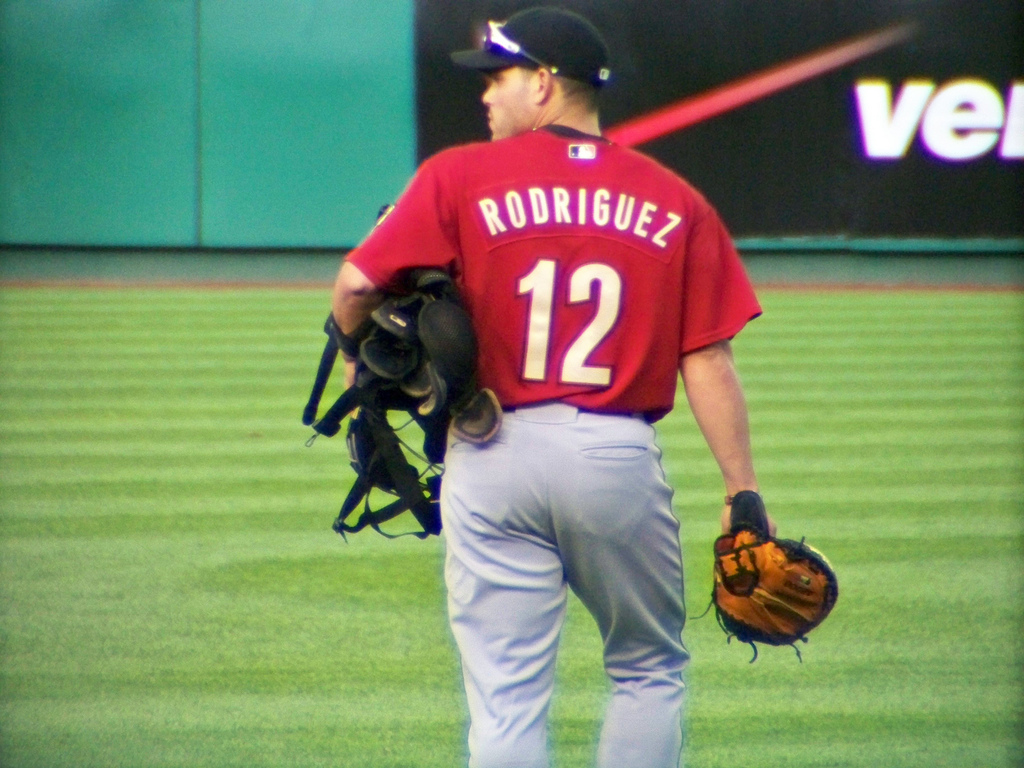
Ivan Rodriguez would captain BBRT All-Latino, All-Star Team … and pretty much everyone else’s as well.

Last week, MLB released its 2012 All-Time Latino All-Star Team, based on a survey of baseball experts. In this post, BBRT will take a look at those selections – and how Ted Williams managed to be chosen as an All-Time Latino All-Star.  BBRT will also compare the 2012 selections with the results of a 2005 fan vote that produced a “Latino Legends” team.  But first, BBRT would like to take you on a nostalgia trip, back to the first (and only) Hispanic All-Star Game.  For trivia buffs, here’s one to ponder over an Irish brew.  Who was the winning pitcher in the only MLB Hispanic All-Star Game?  The answer:  Virgin Island-native Alvin O’Neal McBean.

The game was played at New York City’s Polo Grounds on October 12, 1963 – and was also the last game ever played at the Polo Grounds (the Mets moved to Shea the next season.)  It drew a rather meager crowd of 14,235 to see such Hispanic stars as Juan Marichal, Roberto Clemente, Louis Aparicio, Tony Oliva, Minnie Minoso, Felipe Alou, Orlando Cepeda and Vic Power.  In pre-game ceremonies, Vic Power was honored as the number-one Latino player; Juan Marichal as the top Latino pitcher; and Orlando Cepeda as the most popular Latino player.  Here’s the box score for the contest, won the by National Leaguers by a 5-2 score.


AL       000  000   0002      2   7   2

NL       100   301   00x      5   9   2

BF=Baseball Hall of Fame member


AL                                                       AB       H         R          RBI

L. Aparicio  SS                                   4          0          0          0

V. Power  1B                                       3          0          0          0

J. Becquer 1B                                     1          0          0          0

T. Oliva  RF                                         5          0          2          1

H. Lopez  LF                                       2          0          1          0

M. Minoso LF                                     2           0           0         0

J. Azcue  C                                          4          0          0          0

R. Majias  CF                                      3          0          1          0

F. Mantilla  3B                                    4          0          0          0

Z. Versalles  2B                                  4          1          1          0

P. Ramos P                                          2          0          1          0

D. Segui P                                            2          1          1          0


NL

L. Cardenas SS-2B                              4          0          0          0

F. Alou LF                                            4          0          1          1

O. Cepeda  1B                                   3          1          1          0

R. Amaro  1B                                       1          0          0          0

T. Gonzalez  CF                                   3          2          2          0

R. Clemente  RF                               2          0          0          0

A. McBean  P                                      1          0          1          1

J. Pignatano  C                                    1          0          0          0

E. Bauta  P                                           0          0          0          0

J. Javier  2B                                         2          1          2          1

C. Fernandez  3B                                 2          0          0          0

C. Baragan C                                       3          0          0          0

J. Marichal  P                                    1          0          0          0

M. Mota  RF                                        2          0          2          2


2B – Oliva; 3B – McBean; SB – Taylor, Javiar, Aparicio

Pitching

 AL                                           IP         H         R          ER       BB       SO

P. Ramos (L)                            5          6          4          4          1          4

D. Segui                                    3          3          1          1          1           1

NL

J. Marichal                             4          2          0          0          0          6

A.  McBean (W)                       4          3          0          0          2          4

E.  Bauta                                   1          2          2          2          1          0

Now, let’s look at recent all-Latino teams – comparing the expert-selected All-Time Latino All-Star team of 2012, with the 2005 Latino Legends team selected by the fans.

BF=Hall of Fame member

2012                                             2005

Catcher                        Ivan Rodriguez                         Ivan Rodriguez

First Base                     Albert Pujols                            Albert Pujols

Second Base                Roberto Alomar                  Rod Carew

Third Base                    Alex Rodriguez                       Edgar Martinez

Shortstop                     Louis Aparicio                      Alex Rodriguez

Outfield                        Roberto Clemente              Roberto Clemente

Outfield                        Ted Williams                       Manny Ramirez

Outfield                        Reggie Jackson                  Vlad Guerrero

RH Pitcher                   Juan Marichal                     Juan Marichal

Pedro Martinez

LH Pitcher                    Fernando Valenzuela             Fernando Valenzuela

Closer                          Mariano Rivera                         Mariano Rivera

Manager                       Felipe Alou

You can form your own opinions – and even put together your own all-Latino team.  Here, for what they are worth, are BBRT’s comments.  (Stats as of September 26, 2012.)

Catcher Ivan Rodriguez is a clear choice and was the backstop on both the 2005 and 2012 teams.  Hard to argue with 13 Gold Gloves,  14 All-Star selections, a league MVP Award, 2,844 hits, a .296 career average, 311 home runs and more than 1,300 runs scored and RBI.

First BaseAlbert Pujols again makes both lists and the stats tell the story.  In just his twelfth big league season, Pujols already has more 2,200 hits, a career .325 average, 475 home runs, 1,400+ RBI,  a Rookie of the Year Award, three MVP Awards and nine All-Star Selections.  Orlando Cepeda and Rafael Palmeiro are the closest competitors and Pujols will clearly surpass their career accomplishments before he is through (you can easily argue he is already there.)

Second Base – Wow, two Hall of Famers here – Roberto Alomar and Rod Carew.  A tough one.  Carew clearly leads the “Awards Race” – Rookie of the Year, an MVP Award, seven batting titles, 18 All-Star selections in 19 seasons.  Still, BBRT goes with Roberto Alomar.  While Carew leads Alomar in hits (3,053 to 2,724) and career average (.328 to .300), Alomar (a 12-time All Star) leads Rapid Rodney in runs scored (1,508 to 1,424), RBI (1,134 to 1,015), home runs (210 to 92) and stolen bases (474 to 353).  The clincher, however, comes not at the plate or on the base paths – Alomar leads in Gold Gloves 10 to 0.

Third Base – Interesting results here.  You have Alex Rodriguez (who made one of the Latino All-Star lists as a shortstop and one as a third baseman) and Edgar Martinez (who made one list as a DH and one as a third baseman).  BBRT is taking the easy way out and going with A-Rod at the hot corner (and, as you will see later) Martinez at DH.  As BBRT completes this post, Rodriguez is a 14-time All Star, three-time MVP, five-time league home run leader and one-time batting champion.  If that’s not enough, he’s already tallied 2,854 hits, 647 home runs, 1,949 RBI, 1,893 runs, 318 stolen bases and a .300 career average.  For the future, Adrian Beltre may push his way into consideration with his combination of oak and leather.

Shortstop – Placing A-Rod at third base on BBRT’s all-Latino team paves the way for BBRT’s shortstop pick – Louis Aparacio.  Although not blessed with a powerful bat (.262 career average with 83 home runs), Aparicio led the AL in stolen basis nine times (and totaled 506 stolen bases), scored 1,335 runs, earned 10 All-Star selections and captured nine Gold Gloves.  Fortunately, I could place A-Rod at third and give this slick-fielding speedster his due.

Outfield – Got to start with Roberto Clemente: 12-time All Star; 12-time Gold Glover;  four-time batting champ and one-time NL MVP; who collected 3,000 hits, 240 home runs, 1,416 runs scored and 1,305 RBI.

Next is the less obvious pick – Ted Williams.  How does Ted make the all-Latino list? Very simply, his mother was Mexican.  Williams needs no justification, but here a partial list:  17 All-Star selections; six batting titles; two MVP Awards; four home run titles;  two Triple Crowns; a .344 career average;  521 home runs; 1,798 runs scored; and 1,839 RBI.  No doubt, Teddy Ballgame is in.

BBRT’s final choice in the outfield reflects a combination of  logic and sentiment.  First, BBRT eliminated controversial choices, particularly any possible PED issues.  BBRT also considered attitude and how the player contributed to the reputation of the game.  That led to agreement with the fans’ 2005 choice Vlad Guerrero – nine-time All Star, League MVP, 449 home runs, 1,496 RBI, 1,328 runs scored, 181 stolen bases.   There were plenty of choices here, all falling behind for one reason or another – Manny (just being Manny) Ramirez; Juan Gonzalez; Reggie (Mr. October) Jackson; Sammy Sosa; and Minnie Minoso, to name just a few.  BBRT also had a soft spot for Tony Oliva – an 8-time All-Star and three-time batting champ (his home run, runs scored and RBI total just didn’t match up with Vlad).

DH – No contest, Edgar Martinez takes this one.  He’s a seven-time All-Star, two-time batting champ, who retired with 2,247 hits, a .312 average, 309 home runs, 1,219 runs scored and 1,261 RBI – most accumulated at DH.

Right-Handed Starter – Tough contest, and while the experts (and perhaps the popular vote) goes for Juan Marichal, BBRT is selecting Pedro Martinez.  Here’s the case: While Marichal leads Martinez in wins 243 to 219, Martinez holds the edge in winning percentage .687 to .631.  Then there is earned run average – Marichal holds a slight edge 2.89 to 2.93, but measured against their peers, Martinez led his league in ERA five times to just once for Marichal. Marichal did have six twenty-win seasons to just two for Martinez, but Pedro captured three Cy Young Awards to one for Juan. Marichal also hold a big lead in complete games 244 to 46, but led the league in complete games twice to Martinez’ once.   Martinez enjoys a big league in strikeouts 3,154 to 2,303, leading his league three times to none for Marichal.  Tough to compare pitchers from different eras, but for BBRT – when compared to his peers – Martinez was more dominant than Marichal.  So, Pedro gets a VERY SLIGHT edge.

Left-Handed Starter – For lefties, Fernando-mania reigns … although the statistics are far less gaudy than for our Latino lefties.   This six-time all-star rang up a 173-153 career record with one Cy Young Award; a 3.54 ERA; one-time league leadership in wins; three-time leadership in complete games; one-time leadership in shutouts; and  2,074 strikeouts (one strikeout crown) – to go along with a personality that brought new life to and spurred greater Latino interest in West Coast baseball.

Closer – All you need to say is Mariano Rivera and “case closed.”  Rivera racked up a  major league record 608 saves to go with a 76-58 record and 2.21 ERA, leading the AL in saves 3 times and earning 12 All-Star selections.  As a closer, he was as close to a sure thing as you can get.

BBRT welcomes your comments on these choices, or other nominees to rank among the greatest Latino players of all time.

Melky Did the Right Thing

Melky Cabrera did the right thing yesterday – pulling out of the NL batting race.  (See BBRT’s September 20 post for more on this issue.)  It was an honorable course of action and a giant (no pun intended) step toward vindication.   Now, it’s up to MLB and commissioner Bud Selig.  While Cabrera requested disqualification from the batting title (due to his 50-game PED suspension), making it happen took Selig’s one-season-only (2012) rules change to disqualify players who “served a drug suspension for violating the Joint Drug Program” from the individual batting, slugging and on-bases percentages championships. BBRT says “Thanks, Melky, for stepping up to the plate on this one” … and urges MLB to make the rules change a permanent one, providing baseball another asset in its efforts to remove PEDs from the game.


Home Team Out of the Race – Still Plenty to Watch

Even if your favorite team is out of the race, there is still a lot to keep you interested as the 2012 MLB season winds down.  Here are just a few things that BBRT will be watching for outside of the Division and Wild Card races and post-season competition.  (Stats includes games through September 19.)

Will the Pirates’ Andrew McCutchen save MLB the embarrassment of having the Giants’ Melky Cabrera – serving a 50-game suspension for testing positive for testosterone – win the batting title?

The suspended Cabrera is one plate appearance short of the 502 needed to qualify for the batting title.  MLB rules say a player short of the plate-appearance requirement can still win the batting crown if you add the necessary plate appearances as outs (in this case, just one) and their average would still lead the league.  The addition would leave Cabrera’s average at .346.  McCutchen is hitting .340.  BBRT says, “Go Andy, go!”


BBRT likes this M. Cabrera.

Can the good Cabrera – Miguel – become the 16th player and first since 1967 to win the Triple Crown? 

Currently, Cabrera leads the AL in average at .333; RBI at 130; and trails Josh Hamilton in home runs 42 to 41.  BBRT is rooting for this Cabrera.

Who will win theAL batting crown? 

The top contenders seem to be:

– The Tigers’ Miguel Cabrera at .333 (shooting for the triple crown);

– The Angels’ Mike Trout at .327 (working to become just the sixth rookie batting champ and only the third since 1900);

– The Twins’ Joe Mauer at .324 (who would become the only catcher to win four batting titles – he’s already the only catcher with three);

– The Yankees’ Derek Jeter at .322 (looking to add a batting title to his Hall of Fame career.)

Can surprising knuckleballer R.A. Dickey of the Mets become only the second pitcher in MLB history to win a Cy Young Award with a last place team?

Dickey currently sits at 18-6, 2.67 with five complete games, three shutouts and 205 Ks for the 66-82 Mets (just one game out of the NL East basement).  First, of course, Dickey has to keep winning while the Mets lose their way to the bottom of the standings.  Then, Dickey has to beat out another surprising hurler, the National’s Gio Gonzalez, 19-8, 2.95, with two complete games, one shutout and 196 Ks.  Coming into this season, these two Cy Young candidates had a combined record of 82-87 (Dickey … 41-50 over nine seasons; Gonzalez … 41-37 over four seasons.)

The only Cy Young Award winner ever on a last place team?  Steve Carlton in 1972. Carlton went 27-10, 1.97, with 30 complete games, eight shutouts and 310 Ks for the 59-91 Phillies.

Will the Pirates break their 19-year under-.500 streak?

The last time the Pirates finished above .500 was in 1992, when they won the NL East with a 96-66 record (their third straight NL East title).  This year, the Pirates were 16 games over .500 on July 28.  Since that time, they have fallen to 74-74.  BBRT is hoping the Pirates break their streak of futility.

Will Chipper Jones finish with a flourish?

In his last season, the future Hall of Famer is likely to see post-season action with the Braves (who appear headed for a Wild Card slot).  BBRT looks forward to watching Chipper close out the season – and then seeing some post-season Chipper.  The forty-year-old Jones is having a solid final season:  .297, 14 HRs, 60 RBI in 102 games.

Will Detroit’s Max Scherzer and Justin Verlander become the first two pitchers from the same team to finish 1 & 2 in strikeouts (in their league) since the Cubs’ Kerry Wood and Mark Prior in 2003?  (The last time it was done in the AL was by the Angels Nolan Ryan and Frank Tanana in 1976).’

Currently, Scherzer leads the AL in Ks with 224, with Verlander second at 223.   Next is Seattle’s Felix Hernandez at 207.

How many pitchers will achieve 20 wins this season?

Four hurlers seem to have a good shot at the 20-win club.  Gio Gonzalez of the Nationals (currently at 19); R.A. Dickey of the Mets (18); David Price of the Rays (18); and Jered Weaver of the Angels (18).  It will be the first 20-win season for any of this quartet who make it.

Will the Nationals activate Strasburg for the playoffs?

Big question.  BBRT would, but that’s kind of “old school.”

Will Roger Clemens take the mound for the Astros before season end?

BBRT hopes not.  But, it might sell some tickets.  And,so it delays his Hall of Fame eligibility for five years?  There are probably bigger concerns in that area.


BBRT loves this gentleman slugger.

Will the Orioles get Jim Thome back in the line-up?

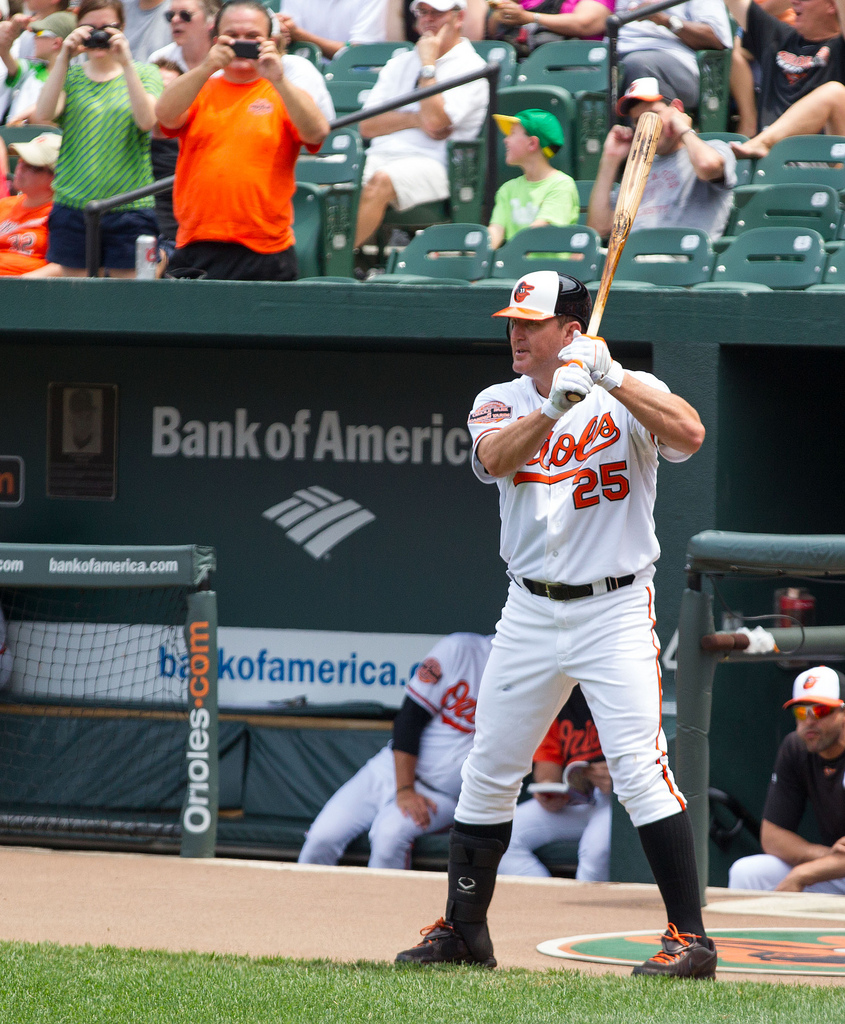
BBRT hopes this gentleman gets a chance to help the Orioles and add to his 611 career home runs.

A Look at What’s Left – The Remaining Schedule and the Playoff Races

As always, baseball heats up as the season winds down.

Well, BBRT was wrong about the new Wild Card system.  Back on March 18th, BBRT ranted about the new system (fearing it would open the door to an NHL- or NFL-style postseason, where it’s harder to miss the playoffs than to get in.  BBRT, being old school, still would prefer two leagues of two divisions each (one league with two eight-team divisions and one with two seven-team divisions – or an eight- and seven-team division in each league), with only division champs making the playoffs.  However, the new system does have its merits.

First, and most important, it does make the division championship more important.  Finishing first means you can avoid that one-game, winner-take-all Wild Card playoff.  That may, in fact, have spurred this year’s very active market as the trade deadline approached.

Second, it has kept things more interesting for more teams and fans.  At the close of Saturday, September 15’s games, eightALteams and eight NL team were within 3 ½  games of a playoff spot (this includes division leaders).

Of course, the AL didn’t need the Wild Card race to spice things up.  There are close and intense races for first place in all three divisions.  Over in the NL, however, the division leaders had more breathing room, and the Wild Card race was drawing more attention.

Let’s take a look at what lies ahead on the schedule for the division contenders (as of Monday, September 17, a.m.).

AL East

Looks like the Al East is going down to the wire, with the Yankees heading into the final 16 contests with a one-game lead over the upstart Orioles and Tampa Bay a very long shot at five games out.

The Yankees have nine games at home and seven away left on the schedule – facing the  Blue Jays (66-79) seven times.  They also face the Twins (60-87) and Red Sox (66-81), both well under .500.  Their most challenging series is a three-gamer at home against the surprising Oakland As – 84-62 and still in the AL West hunt.

The Orioles have a slightly tougher schedule, primarily due to the home / road split – seven games at home and nine on the road.  The Orioles get the under-.500 Mariners (70-77), Blue Jays and Red Sox until the final three games of the season – a potentially tough three-game set in Tampa Bay (78-68).

The Rays, five out in the East Division race and four behind in the Wild Card competition, face a tougher slate of games.  They do have 10 at home and six on the road – with six against the disintegrating Red Sox.  But they also have four games against the White Sox (79-66 and fighting for the Central Division lead) in Chicago, and that final three-game set against the Orioles (82-64) at home.

From here, it looks like a combination of schedule and pennant race experience will keep the Yankees on top of the AL East, with Baltimore capturing a Wild Card spot.  The Angels will pressure the Orioles, but have a much tougher schedule.

AL Central

Who would have thought that the White Sox would have the grit to hold on in the AL Central?  A couple of pick-ups along the way (particularly the experienced Youkilis), Chris Sale’s prime-time performance and a surprising season from A.J,. Pierzynski have them heading into the final stretch two games up on the preseason favorite Tigers.

The remaining schedule, however, clearly favors the Tigers.  They’ve got today’s critical make-up game at Chicago followed by a ten-game home stand.  Then they finish up with six on the road – but those road games are against the Twins and Royals – both well under .500 and with little to play for.  In fact, 13 of the Tigers last 17 games area against the Twins and Royals.  They also have three against the Oakland As (84-62, with plenty to play for).

The White Sox, on the other hand, have a tough schedule ahead with eight at home and nine away.  Those home games are no “walk in the Park,” with four against Tampa Bay (78-68) and today’s critical make-up game against the Tigers. On the road, they face off for three against the Angels (80-67.)  They also have six games against the Indians (61-86) and three against the Royals (66-80).

From here, it looks like the Tigers prevail, with the White Sox just missing a Wild Card spot.

AL West

The AL West is finishing up in a real shootout, with the top three teams – Rangers, As and Angels facing each other multiple times.

The Rangers, currently holding a three-game lead, have seven home and nine away games left – with 13 of those against the second-place As (four in Texas, three at Oakland) and third-place Angels (three home and three away).  They also have a breather with three at Seattle.  Clearly, the Rangers control their own destiny.

The A’s have a very challenging schedule.  On Tuesday, they start a stretch of 10 consecutive road games facing, in order: Detroit (77-68 in a Central Division fight with the White Sox);  the Yankees (83-63 and battling for the AL East); and West Division-leading Texas (87-59).  They finish up with six at home (three each against Seattle and Texas), but they may have faded from the race before then.

The Angels, have nine left at home and six on the road – and may be helped by their six tilts against the Mariners (70-77), three each at home and away.  They also face the Rangers for six critical games (split evenly at home and away) and the White Sox for three at home.

Overall, the Angels have the easier schedule, but it’s not that much easier and not likely to be enough to overcome a 7 1/2 game deficit to the Rangers or even their 2 1/2 game Wild Card deficit to the Orioles ((all those Rangers games may do them in) – unless the Angels can win at least five of six against Texas.  BBRT looks for the Rangers to hold on to first and the Angels to fall just short of Baltimore for a Wild Card spot.

NL East

Back in March, BBRT predicted the Nationals would contend for a Wild Card spot.  However, the Nat’s current 5 ½-game lead over Atlanta was not expected.  Ultimately, the East will place two teams in the playoffs.

The Nationals have 10 home and six road contests left – all of them against teams fighting for a Wild Card spot, but none against division leaders or the East’s second-place Braves.

Washington has three against the Dodgers (76-70); four against the Brewers (74-72); three against the Cardinals (76-71); and six against the Phillies (73-74).  Even without Strasburg, BBRT sees the Nats holding on and make the playoffs.

The Braves have an easier schedule going forward, although road games outnumber home games nine to six.  The opponents, however, are not as tough as those who will face off against the Nationals.  The Braves have six against the East Division’s last-place Marlins (65-82); three against the second-to-last Mets  (66-80); and three each against the Wild Card-chasing Phillies (73-74 and coming on) and Pirates (73-72, but fading in the second half).

The Phillies, who (it appears) made their move too late, have six games left at home and nine on the road – with six games (three home and three away) against the Division-leading (89-57) Nationals and three (at home) against the second-place Braves (84-63).  They also have three each against the well under-.500 Mets and Marlins (65-82).  Not a bad schedule, but the Phillies have just run out of time.

BBRT see the Nationals taking the East Division (easy call) and the Braves retaining their comfortable hold on a Wild Card spot – so Chipper Jones, appropriately, will bow out in the post season.

NL Central

Cincinnati is coasting with an 11-game lead, with the Central Division’s Pittsburgh, Saint Louis and Milwaukee all in the Wild Card hunt.

The Reds have six home and nine road games left and, while they hold their Central lead, they will also have a lot to say about the Wild Card race.  The Reds have three games each against the Central Division’s Wild Card hopefuls the 77-70 Cardinals (at St. Louis); the 73-72 Pirates (at Pittsburgh); and the 74-72 Brewers (in Cincinnati). They also have a three-game set at home against the 76-71 Dodgers and three contests against the 58-88 Cubs.

The Cardinals have a pretty balanced schedule of nine home and six away games left – three each at home against a pair of division leaders (Nationals and Reds) and six against lowly Houston (48-99) and the Cubs.  It looks like a good schedule for securing the final Wild Card spot, but they may a challenge from the Dodgers.

The Pirates, fading over the course of the second half, have nine home and eight away games left.  Fortunately for the Pirates, the road games are against the Cubs (one), the Astros (3) and the Mets (four).  They key series may be the September 18-20, three game set against the Brewers, also working to finish above .500 and, perhaps, sneak into the Wild Card. Pittsburgh finishes at home with six tough games against the Reds and Braves.  BBRT sees the Pirates falling short of the Wild Card, but hanging on to break their 19-year under-.500 streak.

The Brewers go on the road for ten games (September 18-27), facing two Division leaders (Nationals, four games, and Reds, three games), as well as the Pirates (struggling, but with something to play for.)  They finish with six at home against the Astros and Padres (71-76), but it may be too late by then.  BBRT sees the Brewers sitting out the playoffs.

NL West

Despite Melky Cabrera’s suspension, the Giants – with a 7 ½ game lead over the Dodgers – seem destined to hang on to the Division lead.  The question seems to be will it be the Dodgers or the Cardinals in the second Wild Card spot.

The Giants are about to begin a nice ten-game home stand, facing 58-87 Colorado (4 games); San Diego (3 games); and 72-74 Arizona (3 games).  Then they go on the road to San Diego and Los Angeles (76-71).  BBRT see the Giants staying atop the Division.

The Dodgers go on the road for nine games, including six against the first place Nationals and Reds and three against the Padres.  They close out at home with three against the Rockies and the final three against arch-rival Giants.  Tough call, given the Dodgers recent moves to strengthen their line-up and the Cardinals easier schedule.  So BBRT sees the Dodgers and Cards tying for the final Wild Card spot and the one-game playoff depending on which team has the best starter available.

So, here is the BBRT call:

AL: 

Division winners:   Yankees, Rangers, Tigers

Wild Cards:  Orioles, A’s

NL

Division Winners:  Nationals, Giants, Reds

Wild Card:  Braves, Cardinals/Dodgers (tie)

Watch BBRT for a look at the individual performances we’ll be watching as the season heats up and winds down

.

Profar Joins the First At-Bat Home Run Club

Home runs look different, depending on your perspective.

On Sunday (September 23, 2012), Texas Rangers 19-year-old rookie Jurickson Profar became the 113th player, just the third teenager and the first Texas Ranger to homer in his first major league at bat. (This feat is much more common, by the way, than homering in your last at bat, done only 44 times.) Profar considered a top prospect hit .281 with 14 home runs,  62 RBI and 16 stolen bases in 126 games for the Double-A Frisco Roughriders before being called up.

So, did Profar ride into the spotlight with some of the games great long ball threats? Not so much.  How many of the game’s current top 50 career home run leaders (400 or more homers each) homered in their first MLB at-bat?  Zero.  The career home run leader among players homering in their first trip to the plate is Gary Gaetti with 360.  And, in fact, 23 of the 113 members of this club current stand at 1 career homer  – although a handful are still active and likely to add to their totals.

A few other first-at-bat homer factoids:

–  Twenty-eight rookies got off to the fastest start possible, homering on the first pitch they saw – most recently Starling Marte of the Pirates, July 26 of this season.

–  Four accomplished the ultimate first at-bat, starting their careers with a Grand Slam: Bill Duggelby (Phillies, 1898); Jeremy Hermida (Marlins, 2005); Kevin Kouzmanoff (Indians, 2006)l and Daniel Nava (Red Sox 2010).

– Two players combined “fast and ultimate” hitting Grand Slams on the first pitch they ever saw (Kouzmanoff and Nava.)

– Two had to work really hard, notching and inside-the-park home run on their first at bat:  Luke Stuart (Cardinals, 1921) and Johnnie Lemaster (Giants, 1975).

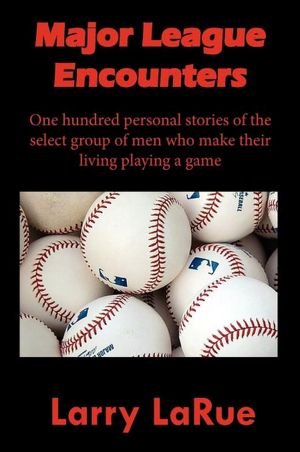
Major League Encounters – 100 Very Personal Stories that Get to the “Heart” of our National Pastime

Major League Encounters gets to the heart of the national pastime, and those privileged to play it at its highest level.

Major League Encounters

By Larry LaRue

Reader Publishing Group 2012


$11.95 print – eBook $3.99

Amazon.com

Barnesandnoble.com

Baseball Hall of Famer Bill Mazeroski earned his way into the HOF more with his glove than his bat – he was known as a second baseman who could capture a moving baseball and skillfully turn it into a double play.  In long-time sportswriter (more than three decades) Larry LaRue’s first book –  Major League Encounters – LaRue proves he can capture a moving baseball story and skillfully turn a phrase as he tells it.

In 100 real vignettes over 255 pages, LaRue gives readers a behind-the-scenes look at what drives the men – and boys – who earn the rare opportunity to play the game at its highest level.  Readers get the benefit not only of LaRue’s sportswriter’s access, but of his knowledge of the game, powers of observation, interview skills and way with words.

The stories range from heart-warming to heart-breaking and from comic, to tragic, to dramatic.   They are stories of weakness and stories of courage – of success, failure and perseverance – of veterans who enjoyed long careers and players with shorter, less-stellar stats sheets.   Most of all they are very personal stories, glimpses into the heart of the game and those who play it.  

You’ll read about:

–  The forces that drove Jim Abbot, who won 87 games and threw a no-hitter, despite being born with no right hand;

– The trials of Ken Caminiti, the 1996 NL MVP, who LaRue writes “kept his demons close and hid them well,” and who died at age 41 from “acute intoxication due to the combined effects of cocaine and opiates;”

– The passion for the game that drove utility man Rich Amaral, who LaRue tells readers “kept chasing baseball long after it stopped chasing him;”

– Hall of Famer hurler Bert Blyleven’s legendary sense of humor and skill at applying a devastating hot foot (when he was with the Angels, the team had a fire extinguisher in the dugout labeled “In case of Blyleven – Pull;”

Cal Ripken, Jr.’s love of the game “Every day, it’s like being a little kid again;”

– Pitcher Freddie Garcia, who had a “capacity for fun that might have killed a lesser man.”

In terms of reading enjoyment, not only are the stories compelling, LaRue has a way with words that gets right to the point and pulls you into (and through) each story.  Consider these opening lines:

The Barry Bonds’ story begins “Follow Barry Bonds for a few days and the three words most used to describe him – by friends, teammates and coaches – were ‘That’s just Barry.’  Occasionally, they were meant to be complementary.”

Then there are the opening lines for power hitting first baseman and 1995 AL MVP Mo Vaughn, “Mo Vaughn read newspapers, which never made him doubt his talent.  Occasionally, it made him wish he was illiterate.”

LaRue’s insight into two-time AL batting champion Edgar Martinez begins with “The first time the Seattle Mariners offered him a contract, Edgar Martinez turned them down because he had everything he wanted – a factory job and a new Toyota.”

Or Reggie Jackson:  “There were four or five Reggie Jacksons and I got to meet all of them in the year we were together with the California Angels.”

Depicting current Seattle Mariners pitcher Tom Wilhelmsen, who made it to the majors in 2011 at age 27, LaRue begins: “At 19, Tom Wilhelmsen faced a life-changing decision – continue his career as a highly rated minor league prospect or keep smoking dope.  For Wilhelmsen the choice was clear.  He walked away from baseball, became a bartender and traveled the world, smoking as he went.”

If you’re a baseball fan, this is a great book to keep on your bed stand, carry aboard an airplane, take to the beach, enjoy at a coffee shop or even read between innings at a ball game (when you put your scorecard down.)  The only problem is you’ll start out planning to pass the time by reading just a few stories and find yourself committing to “just one more” again and again.

Are all 100 stories absolute gems?  No, but LaRue’s batting average is well north of .900 – and that makes Major League Encounters highly entertaining, a hit with BBRT and recommended reading for the avid and casual fan.


Tokyo Dawgs – Spicy Version of Their Chicago Cousin

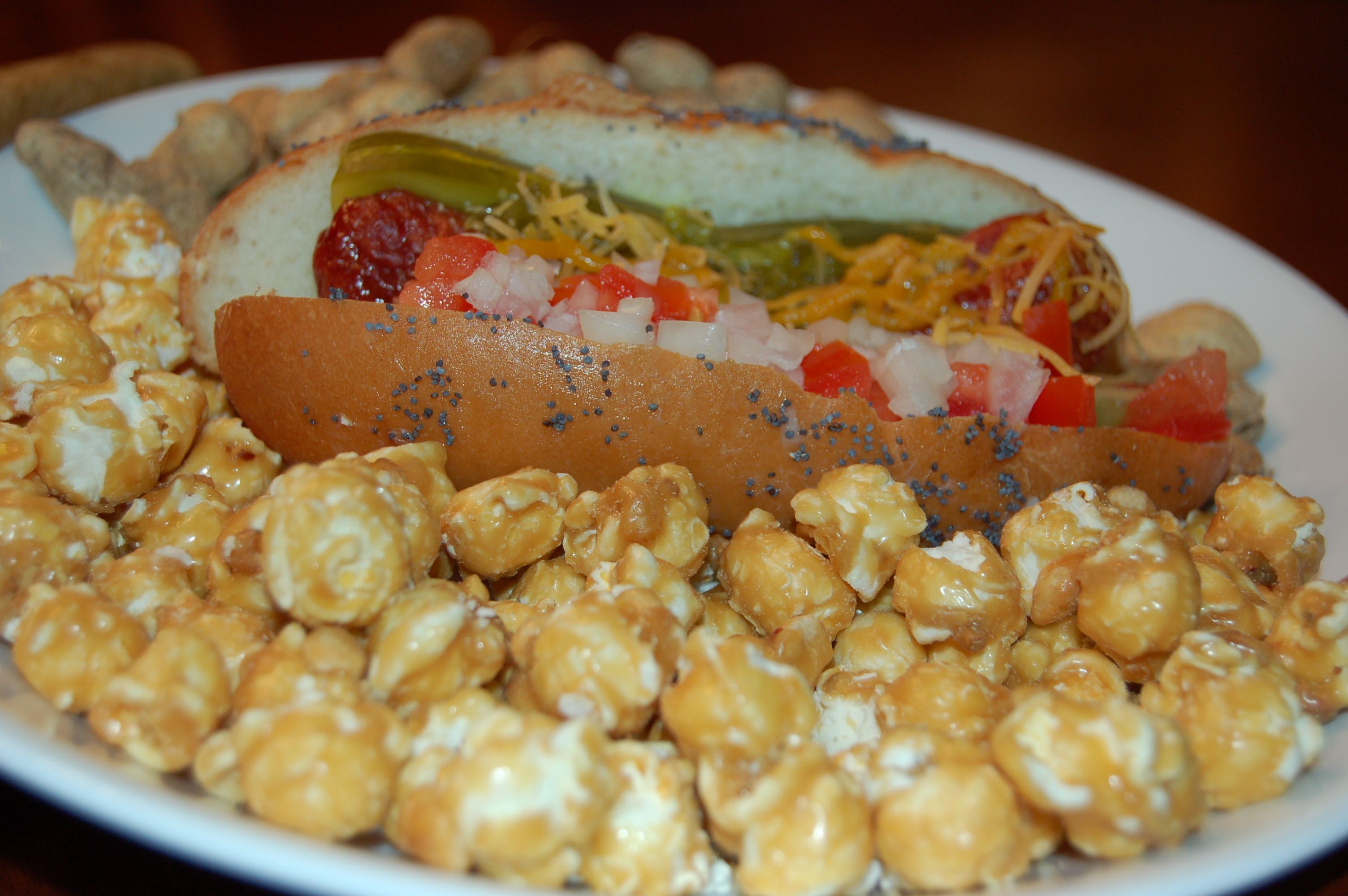
Chicago Dogs are a Windy City tradition and favorite of sports fans – particularly baseball fans. With their sweet relish, pickle spears, peppers, tomato, onion, mustard and (the key ingredient) celery salt, they go great with a cold beer and home team rally.

Baseball, of course, is now a mainstay of Japanese life and culture and – in honor of Japan’s players, fans and teams – BBRT would like to share our recipe for “Tokyo Dawgs,” a unique spin-off of the Chicago favorite. Here’s what you’ll need for a respectable batch of these delightful game-time treats. (I’ll note where the Tokyo Dawg, departs from its Chicago cousin.)

Ingredients:

– 4 hot dog buns – Preferably, bakery poppy seed buns, but you can make it work with traditional hot dog buns

– 4 all-beef hot dogs – BBRT prefers quarter-pound, skin-on franks; they have that nice “pop” when you bite into them.

– 4 spicy dill pickles spears – A change from the Chicago Dog regular dill spears; BBRT leans toward Gedney® Zingers.

– 8 ripe tomato wedges

– 1 finely chopped small white onion

– 8 sport peppers

– Yellow mustard

– Wasabi sauce – This replaces the sweet green relish in the Chicago Dog, adding the green color and more “bite.” BBRT suggests Kikkoman® or Silver Spring®.

– Celery salt

– Shredded Cheddar Cheese – Optional add-on.

– Cracker Jack –  (A Tokyo Dawg add-on, not in the Chicago Dog recipe.

 So how to you prepare these puppies?

Directions

  1.  Heat hot dogs in boiling water for 5 minutes; then transfer to the poppy seed buns. (Note:  If you can’t find poppy seed buns, you can make them.  See the end of the recipe.)
  2.  Place a spicy dill pickle spear on one side of each hot dog, balanced by a pair of tomato wedges on the other side.
  3. Sprinkle chopped onion (to your taste) over the hot dog – between the pickle and tomato wedges.
  4. Squeeze/squirt/spread yellow mustard over each hot dog … then do the same with the Wasabi sauce.  (The amount and pattern should reflect your personal taste.)
  5. Top each hot dog with a pair of sport peppers.
  6. Sprinkle with celery salt.
  7. I like to add a bit of shredded cheddar, but that’s just a cheese-lovers option.
  8. Serve with Cracker Jack – The caramel corn sweetness is a nice compliment to the “heat” of the spicy pickles, peppers and Wasabi.

Note:  If you can’t find poppy seed buns, try this.

– Use good bakery hot dog buns.

– Brush the outsides of the buns with melted butter (1/2  teaspoon per bun) and sprinkle lightly (1/4 to 1/2 teaspoon per bun) with poppy seeds.

– Bake inside-down for 4-5 minutes at 350 degrees – be careful not to over bake.

The hot and spicy Tokyo Dawg – great with a cold beer and a ball game.

Two Homers in One Inning – Thoughts and Trivia

Adrian Beltre, long under-appreciated, has joined the “two-homers-in-one-inning” club.

On August 22, 2012, Adrian Beltre hit two home runs in the fourth inning of the Texas Rangers’ 12-3 victory over the Baltimore Orioles – becoming the 57th major leaguer to hit two dingers in one frame.

For BBRT, the feat brings to light how underappreciated Beltre has been for much of his career.  In his 15 seasons, Beltre has topped 20 home runs in a season ten times (only eight other third basemen can make that claim) and now has 332 home runs, 1,064 runs and 1,186 RBI to go with a .278 career batting average.  He’s also reached double digits in stolen bases six times and been awarded three gold gloves (though he deserved more.)  In 2004, he recorded an NL-leading 48 home runs, along with 121 RBI, 104 runs and a .334 batting average.

Despite these achievements, Beltre – who made it to the majors with the Dodgers in 1998 at age 19 – was not selected to his first All-Star team until 2010 (at age 31).  He repeated as an All Star in 2011 and 2012. Still only age 33, Beltre has a chance to put up career numbers that will place him among the games elite thirdsackers – and he is finally receiving appropriate recognition for his solid career.

So, there is my rave on Adrian Beltre, now a bit of two-home-run inning trivia, and then a list of the players who have gone yard twice in an inning.

Most notable on the list is the Cardinals’ Fernando Tatis who, on April 23, 1999, not only hit two homers in an inning – but hit two grand slams in one inning.  It was the 11-run third inning of the Cardinals 12-5 win over the Dodgers in LA.  Equally surprising to BBRT is the fact that Dodgers starter Chan Ho Park was on the mound for both grand slams (the second finally drove Park from the game).  Park’s inning went like this:  single – hit batsman – single – home run – ground out, first base to pitcher – home run – walk – walk – fielder’s choice – error by first baseman – single – fly out to right field – home run – relieved by Carlos Perez, who got the final out of the inning on a foul pop up.

On May, 2002, Brett Boone and Mike Cameron became the only two team mates to hit two home runs in one inning – and they did it in the same inning (a ten-run first in a 15-4 win over the White Sox) and they did it back-to-back.

Only three players have achieved two home runs an inning twice in their careers:  the Pirates’ Jeff King (April 8, 1995 and April, 30, 1996); the Giants’ Willie McCovey (April 12, 1973 and June 27, 1977); and the Expos’ Andre Dawson (June 30, 1978 and Sept. 24, 1985).

Also of note are the Indians’ Carlos Baerga (August 8, 1993), theCubs’ Mark Bellhorn (August 29, 2002) and the Angles Kendrys Morales (July 30, 2012) the only three players to homer from both sides of the plate in the same inning.  Finally, the Braves’ (Boston) Bobby Lowe (May 30, 1894) and Mariners’ Mike Cameron (May 2, 2002) each achieved a two-homer inning in the midst of a record  four-homer game.  Just 16 players, Lowe was the first, have hit four home runs in a single game.

Here is your two-homer inning list:

2012, August 22 … Adrian Beltre, Rangers

2012, July 30 … Kendry Morales, Angels

2011, Sept. 18 … Pablo Sandoval, Giants

2010, Sept. 23 … Juan Aribe, Giants

2009, August 23 … Michael Cuddyer, Twins

2008, August 12 … David Ortiz, Red Sox

2008, June 21 … Jim Edmonds, Cubs

2007, Sept. 5 … Alex Rodriguez, Yankees

2007, August 12 …  Magglio Ordonez

2007, May 7 … Benji Molina, Giants

2006, July 22 … Julio Lugo, Rays

2004, June 19 … Juan Rivera, Expos

2003, August 20 … Reggie Sanders, Pirates

2002, August 29 … Mark Bellhorn, Cubs

2002, August 9 … Aaron Boone, Reds

2002, July 26 … Carl Everett, Rangers

2002, July 23 … Nomar Garciaparra, Red Sox

2002, June 11 … Jared Sandberg, Rays

2002, May 2 … Mike Cameron, Mariners

2002, May 2 … Brett Boone, Mariners

2000, August 22 … Eric Karros, Dodgers

1999, April 23 … Fernando Tatis, Cardinals

1997, July 13 … Gary Sheffield, Marlins

1997, May 7 … Mike Lansing, Expos

1996, May 16 … Sammy Sosa, Cubs

1996, April 30 … Jeff King, Pirates

1996, Sept. 22 … Mark McGwire, As

1996, May 17 … Dave Nilsson, Brewers

1995, April 8 … Jeff King, Pirates

1994, June 24 … Jeff Bagwell, Astros

1993, Oct. 3 … Joe Carter, Blue Jays

1993, April 8 … Carlos Baerga, Indians

1990, August 27 … Ellis Burks, Red Sox

1989, July 27 … Dale Murphy, Braves

1985, Sept. 24 … Andre Dawson, Expos

1985, June 11 … Von Hayes, Phillies

1980, May 13 … Ray Knight, Reds

1978, July 30 …Andre Dawson, Expos

1977, June 30 … Cliff Johnson, Yankees

1977, June 27 … Willie McCovey, Giants

1974, April 29 … Lee May, Astros

1973, July 6 … John Boccabella, Expos

1973, April 12 … Willie McCovey, Giants

1966, April 30 … Rick Reichardt, Angels

1962, May 23 … Joe Pepitone, Yankees

1959, Sept. 4 … Jim Lemon, Senators

1955, April 17 … Al Kaline Tigers

1949, July 31 … Sid Gordon, Giants

1949, June 2 … Andy Seminick, Phillies

1936, June 24 … Joe DiMaggio, Yankees

1935, August 24 … Hank Leiber, Giants

1928, June 16 … Bill Regan, Red Sox

1925, July 1 … Hack Wilson, Giants

1922, August 7 … Kenny Williams, Browns

1894, June 6 … Jake Stenzel, Pirates

1894, June 30 … Bobby Lowe, Braves

1880, June 10 … Charly Jones, Braves