A Big Day For Little League – and the Cannon Street YMCA All Stars

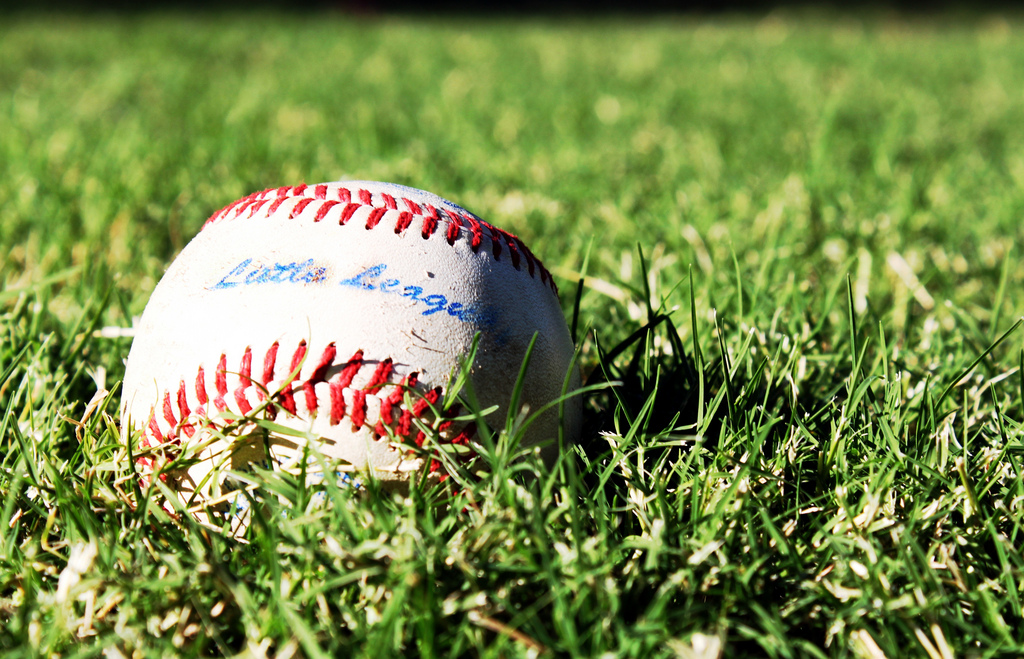
Little LeagueOn this day (August 16) in 2002, a group of Little Leaguers – all pushing 60-years-old – was honored at the Little League World Series.  They were a group that, as 11- and 12-year-olds, made the trip to Williamsport as a team, but never had the opportunity to play a game.  Still, this team – the 1955 Cannon Street YMCA All Stars (Charleston, South Carolina) – has been recognized for its contributions racial understanding and equality on and off the field.


Jackie Robinson may have broken Major League Baseball’s “color line” in 1947, but in 1955, there was still plenty of controversy surrounding integration – as evidenced by the events surrounding the 1955 Little League World Series.

In the summer of 1955, there were more than 62 chartered Little League programs in South Carolina.  All but one of those leagues – the Cannon Street YMCA Little League in Charleston – was made up entirely of white players.  As the season progressed, the Cannon Street League played its full schedule and then selected a team to represent the league in the tournament leading up to the Little League World Series.

You can learn more about  their season ...

You can learn more about their season …

Cannon Street’s All Star squad advanced in the tournament without losing a game – not because they overpowered the opposition, but because all of the teams representing South Carolina’s “white” Little League simply refused to play them.  Cannon Street won their city and state championship tournaments by forfeit.  Then, when championship teams from the seven other Southern Region states refused to play the Cannon Street team, Little League declared the squad the regional champion as well.  (The “white” leagues eventually went so far as to leave Little League and form a new association, Dixie Baseball for Boys.)

Little League, to its credit, held firm to its non-discrimination policy, rejected the South Carolina affiliate’s request for an all-white tournament and ruled that if a team refused to play against a duly franchised Little League, that team would not be allowed to participate in the Little League tournament. That left only one team standing in North Carolina – the Cannon Street squad. The next step should have been competing in the Little League Series – but here’s where rules overruled common sense.  Little League officials also held firm on a rule prohibiting teams from playing for the World Series title after advancing by forfeits.

The organization did, however, invite the Cannon Street team to Williamsport as guests.  The story has it that the team made the 750-mile trip to Williamsport in an old school bus that broke down a few times and even caught fire along the way.  Once in Williamsport, the team stayed in the dorms with other teams and took part in the festivities surrounding the World Series (even on-field warm-ups) – but were not allowed to play a game.

Notably, after their on-field warm-ups, the crowd in the stands (estimated at about 5,000) began a stadium-rattling chant of “Let them play! Let them play!”  (A shining moment for a crowd of Little League families.)  Clearly, the team may have not won a game in Williamsport, but they won quite a few hearts.  And, over the years, members of the team lived their lives and told their story with dignity – opening quite a few eyes (and hearts) as well.

Forty-seven-years later, members of that team were honored at the opening ceremonies of the 2002 Little League World Series.  At that ceremony, Little League president and CEO Stephen Keener told the crowd and the team,  “There is no way to right the wrong perpetrated on the boys of the Cannon Street YMCA Little League team, just as there is no way to right the wrongs perpetrated throughout history on people because of their skin color.  Little League will be honored to have the Cannon Street team with us as our special guests.”  A big day for Little League.

And there have been other accolades.

In 2006, the team was inducted into the Charleston Baseball Hall of Fame and, in 2012, the city of Charleston unveiled an historical marker honoring the players for their accomplishments and contributions on and off the field

Earlier this year, U.S. Senator Tim Scott (R-SC), read the following tribute into the Congressional Record:

In the heart of Charleston, SC, lies Cannon Street; it’s a modest street spanning just a few city blocks. However, within its history lies the story of what Dr. Creighton Hale, the former CEO of little league baseball, called “the most significant amateur team in baseball history.”

In 1955, the area surrounding this street was one of economic blight and social unease. In an effort to keep kids out of trouble and teach skills that only team sports can provide, the local YMCA organized four little league teams for the neighborhood kids. The Cannon Street YMCA All-Stars consisted of seventeen players: John Bailey, Charles Bradley, Vermont Brown, William Godfrey, Vernon Grey, Allen Jackson, Carl Johnson, John Mack, Leroy Major, David Middleton, Arthur Peoples, John Rivers, Norman Robinson, Maurice Singleton, Leroy Carter, George Gregory, and Augustus Holt. They were coached and founded by: Lee J. Bennett, Walter Burke, Rufus Dilligard, A.O. Graham, Robert Morrison, R.H. Penn, and Benjamin Singleton. The team would advance to the Charleston City Little League playoff games, but would never be given the opportunity to earn a spot in the Little League World Series. It was not because they were unworthy players or because they could not afford to go. The color of their skin stifled the dreams of these twelve-year-old boys.

The Charleston playoff games were boycotted in 1955 to preserve racial segregation. Because teams again refused to play against them, the Cannon Street All-Stars advanced past the state and regional playoffs. The National Little League invited the All-Stars to the Little League World Series as special guests; they could not compete for the title because technically they hadn’t played their way to the championships. They returned to Charleston, dismayed and disappointed.

As children, they embodied the very characteristics that organized sports aim to impart–teamwork, courage and respect. As adults they have worked in productive and valuable careers such as architecture, law enforcement and education. As they have grown older, they are now volunteers in their communities–giving back, yet again. While they never had the opportunity to compete, their story has demonstrated where we have come from as a nation.

Last month members of my staff had the opportunity to meet several of the original Cannon Street Little Leaguers who traveled to Washington, DC to be recognized at Nationals Stadium before the Nationals-Phillies game. Their story remains powerful more than 65 years later, and I know my staff will never forget having the opportunity to meet them.

Today, the neighborhood that encompasses Cannon Street has developed into an integral part of the Charleston education and science community. It is home to a number of colleges and universities and a world-class research hospital. The boys of the Cannon Street Little League Team are men who through their careers and service to the community have become assets to their neighborhoods. In spite of the adversity they encountered and the challenges they confronted, these young people illustrated to the world the absurdity of segregation and the hatred inherent in racism.

In the 55 years since they were excluded from competing to earn a spot at the Little League World Series in their own right, America has matured. I would like to believe that a handful of twelve-year-olds contributed to our maturity.

It is with great admiration that I share their story and my respect for these men with you, my colleagues.

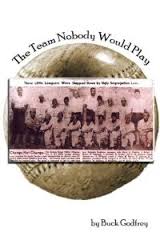
You can learn more about the Cannon Street YMCA All Stars in William Godfrey’s book, “The Team Nobody Would Play,” in the film “The Cannon Street Boys,” in Margo Theis Raven’s children’s book “Let Them Play” and in Carole Boston Weatherford children’s book “Champions on the Bench.”

Pete Rose – MLB’s Last Player-Manager

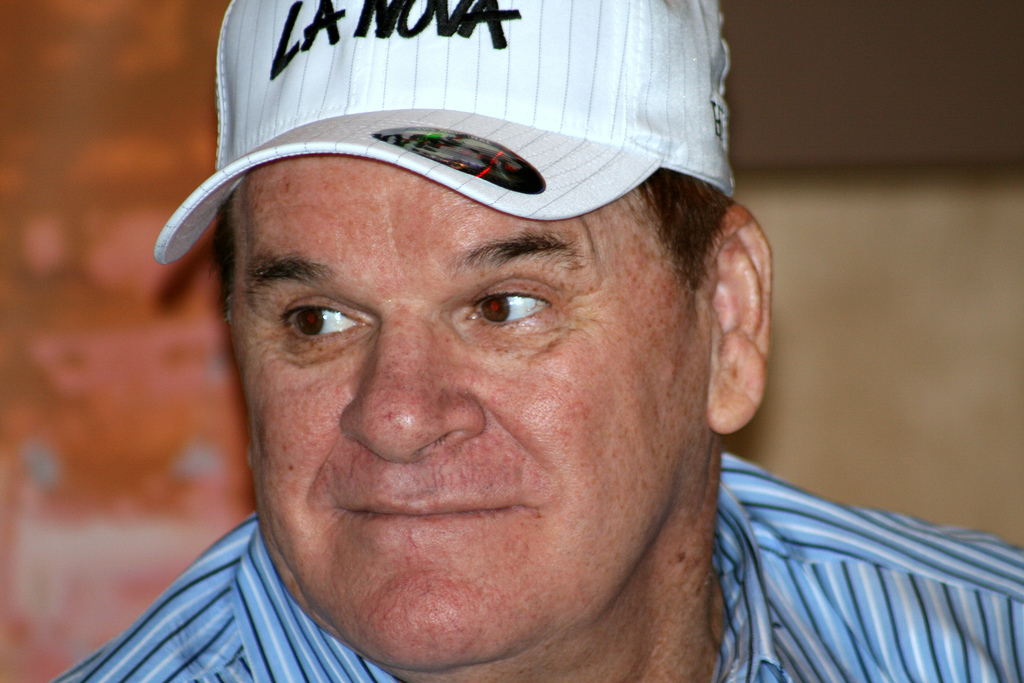
Pete Rose ... Time to give "Charlie Hustle" a Hall pass?  That's above BBRT's pay grade.

Pete Rose … Time to give “Charlie Hustle” a Hall pass? That’s above BBRT’s pay grade.

On this date (August 14) in 1984, Pete Rose was traded from the Montreal Expos to the Cincinnati Reds.  Rose, at the time, was hitting .259, with two homers and 23 RBI (in 95 games).  More important, the 43-year-old Rose had collected 4,069 base hits, just 122 shy of Ty Cobb’s recognized MLB record of 4,191.  The trade had other implications.  The Reds put Rose in place as player-manager, making him MLB’s last player-manager (to date).  The trade (back to his original team) seem to revitalize Rose, who hit .365 for the Reds, while playing in 26 of the team’s last 41 games. (As a manager, he led the team to 19 wins and 22 losses.)

On September 11, 1985, managing and playing first base for the Reds, Rose broke Ty Cobb’s all-time hits record with his 4,192nd safety. (Note:  There is some dispute over when Rose actually broke the record.  MLB.com lists Cobb’s hit total as 4,191, while independent research indicates two of his hits were double-counted – and baseballreference.com lists Cobb’s total at 4,189. Rose collected his 4,190th hit in a September 8, 1985, game.)

Rose collected his 4,256th and final hit off the Padre’s Goose Gossage on August 17, 1986. He managed the Reds from August 15, 1984 to August 24, 1989, posting a 426–388 record and four second-place finishes in the NL West.

Side note:  BBRT finds it a bit ironic, given his permanent placement on MLB’s ineligible list (related to gambling allegations) and subsequent tax-related charges, that Rose was traded from Montreal to Cincinnati for infielder Tom “Lawless.”

While Rose remains on MLB’s ineligible list, the record books still reflects “Charlie Hustle’s” remarkable 24-year-career – in which he set MLB records for (among other stats) games played, at bats and hits; had a record (shared) ten 200-hit seasons; was Rookie of the Year; won three batting titles and one MVP Award; earned two Gold Gloves; and made seventeen All Star appearances, playing at five different positions.

Disco Demolition Night – Great New Video on Baseball’s Wildest Promotion

Great new YouTube video on the Chicago White Sox’ Disco Demolition night – the brainchild of Mike Veeck (of baseball’s maverick Veeck family). The event – intended to put Disco in its place – was held on July 12, 1979, at Chicago’s Comiskey Park. Basically, a crate filled to with disco records (ah, the days of vinyl) was to be blown up on the field between games of a twi-night doubleheader (remember scheduled doubleheaders?) between the White Sox and the Tigers. The result was far from what the White Sox expected – ending with records flying everywhere, fans storming the field, the riot police being called in to restore order and the White Sox forfeiting game-two of the twin bill.

The very entertaining video tells the full story.  Just click the link below.

http://www.youtube.com/watch?v=GDaCimYs6N8&feature=youtu.be

Beating Injuries and the Odds – Albers and Ziegler, a Lot in Common

My Minnesota Twins (BBRT hails from Minnesota) are currently excited about 27-year-old rookie lefthander Andrew Albers, who has started his major league career with 17 1/3 scoreless innings pitched (two starts, two wins, one complete game shutout, six hits, one walk, four strikeouts).   Albers, in fact, might have two complete game whitewashes to his credit, except Twins skipper Ron Gardenhire thought he was tiring and pulled him from his last start with one down and two runners on (single, walk) in the ninth.

Gardenhire didn’t prove to be much of a prognosticator before Albers took the mound yesterday for his second start, noting that “If he goes out and tries to duplicate what he did before, he’ll get in trouble.”  Albers not only duplicated his first start, he took it to the next level, in a 102-pitch, 3-0 win over the Indians.

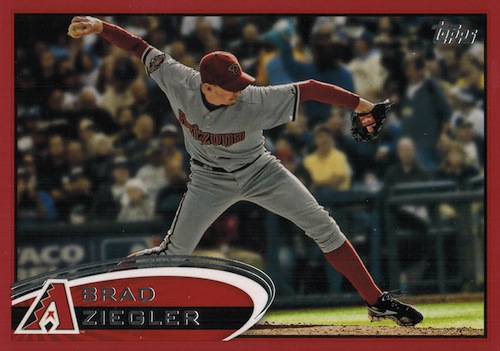
The publicity surrounding Albers’ start got BBRT to thinking about the MLB record holder for scoreless innings at the start of a career – current Diamondbacks’ reliever Brad Ziegler, who came up with the A’s in 2008 and pitched 39 major league innings before being touched for a run.  Albers and Zeigler, it turns out, have a lot in common – including college stardom, significant injuries, being released by the MLB team that originally signed them, stints in independent league ball, making the best of second chances and PERSEVERANCE.  Note:  It’s stories like these that help fuel BBRT’s love of the game.

Albers, who was a standout hurler at the University of Kentucky, was drafted in the tenth round (Padres) of the 2008 draft, and made five appearances in the 2008 Arizona Rookie League.  He injured his pitching elbow during 2009 Spring Training and missed the entire season (and was released by the Padres) after Tommy John surgery.  In 2010, Albers pitched (and pitched well … 3-0, 17 saves, 1.40 ERA) for the Québec Capitales of the independent Can-Am Association.  After a 2011 tryout, the Twins signed Albers to a minor league contract.  He went on to put up a 24-10 record, with a 2.91 ERA over the past three minor league seasons, 11-5 with a 2.86 ERA in 22 Triple A starts this year.


Brad Ziegler, despite two skull fractures, he is giving HITTERS headaches.

Brad Ziegler, despite two skull fractures, he is giving HITTERS headaches.

Ziegler, like Albers, was a standout pitcher in college, setting Southwest Missouri State (now Missouri State) records for starts, wins and strikeouts.  He was drafted by the Phillies in the 20th round of the 2003 MLB draft.  Ziegler, however, threw only six minor-league innings, before being sidelined by shoulder tendinitis.  Like Albers, Zeigler was released by his first MLB organization (just before the start of the 2004 season) and ended up pitching in the independent leagues (Schaumburg Flyers of the Northern League) – where his performance (four starts, three wins, 1.50 ERA) earned him a spot in the Oakland A’s organization.  (Oakland had originally drafted Zeigler in 2002, but he elected to return for his senior year at MSU.)

Zeigler pitched well at Oakland’s Modest0 (High A) club in 2004, going 9-2, 3.90, as Modesto made the playoffs. Then, while pitching in the playoffs, injury struck again – in the form of a line drive that fractured Ziegler’s skull.  Zeigler, however, recovered and pushed.   From 2005 until his call up in 2008, he moved steadily up the A’s minor league ladder.

It was during this time, actually in 2007, that the A’s asked Ziegler to try more of a sidearm approach – and Ziegler went 12-3, 2.41 as a reliever (Double A and Triple A) in 2007.   He continued to refine his new delivery in 2008 and was 2-0, 0.37 ERA in 19 appearances at Triple A Sacramento, when the A’s called him up in late May. (Note: If all of Ziegler trials weren’t enough, he also suffered a second skull fracture in January of 2008, the result of a deflected throw at a youth baseball camp.)

In his first MLB game, Ziegler pitched one-third of an inning (giving up a single) in an 8-4 loss to Texas.  Twenty-eight appearances, and 38 2/3 innings pitched, later, Ziegler still had not given up an earned run.  In those 39 innings, he gave up just 21 hits, while walking 11 and striking out 18 – and, as of August 8, earned the A’s closer role.

Ziegler’s streak came in the ninth inning of an August 14th game against the Tampa Bay Rays.  After pitching a 1-2-3 eighth, Ziegler gave up a run on a single by Akinori Iwamura and a double by B.J. Upton (the first extra base hit Ziegler had allowed).  Ziegler ended the season with 47 games pitched, a 3-0 record, 11 saves and a 1.06 ERA.  He remains active today, pitching for the Arizona Diamondbacks, where he has a 6-1 record, with seven saves and a 2.19 ERA.

Zeigler and Albers, persevering, despite the odds.

Chin Music – A Darn Good Read

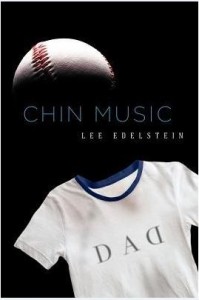
Chin1Chin Music

by Lee Edelstein

SELA House, 2012

$14.95

“Chin Music” author Lee Edelstein describes himself as a retired entrepreneur who finally has time to write.  After reading Chin Music, I wish Edelstein had found time to combine his passion for prose and the national pastime sooner.  He brings readers an inspiring story and an endearing cast of characters that are easy to read and easy to like.

Chin Music is more than just a baseball book, it’s a book about life – about tragedy, triumph and the importance of relationships.  It has mystery, history, action and even romance.   Baseball – from the Yankees of the mid-1920s, to the world of sports memorabilia, to the ball fields of today – is the thread that weaves it all together.

The story centers around Ryan Buck, a talented and tormented high school athlete. He has survived a devastating car crash that took his father’s life and his brother Michael’s left leg.  Yet Ryan, suffering survivor’s guilt that has spurred recurring nightmares and blocked memories of the accident, may be the most damaged of all.  Ryan is just beginning to find some release on the baseball diamond (exceptional speed and glove, strong arm, but alternately magnificent and miserable at the plate), when a mystery from generations past sends ripples through the Buck family’s lives and Ryan’s future.

The roots of that mystery lie in Saint Petersburg, Florida, and the 1926 New York Yankees’ Spring Training Camp.  Early in the book, Edelstein takes us back to that time and geography.  He sets the scene skillfully (and believably), working the vernacular of the day and historically accurate set points into his prose.

Chin Music’s early flashbacks prove not just essential to the story, but also informative and entertaining.  They are, in the words of the day: copacetic; the berries; or even the cat’s pajamas.   Readers meet Ryan’s great-great grandmother Zel, one of St. Petersburg’s first lady barbers (which male residents found quite revolutionary).  Zel is relegated primarily to cutting children’s hair – until Babe Ruth drops into Spud’s Barber Shop and chooses “the dame” for his daily shave and bi-weekly haircut.  As the relationship between Zel and The Babe develops, Edelstein also provides plenty of entertaining insight into the times.  Zel’s weekly budget, for example, includes nine-dollars a week boarding house rent (which covers her room, five suppers and one brunch) and seventy-cents a day for “breakfast, lunch, a Dr. Pepper, an occasional picture show, and miscellaneous items like toiletries and the chocolate candy she craves.”

Without giving away the story, the relationship between Zel and The Babe eventually involves trips to the ball park, a game-used bat and hat, a yellow flapper dress, Rum and Dr. Pepper, a few of the Babe’s hair clippings, the Sultan of Swat’s penchant for cigars, and Zel’s treasured personal journal.

From 1926 Spring Training, the story moves to the 21st century, with Ryan’s mother Susan facing the prospect of selling some of the Buck family’s Babe Ruth memorabilia (to meet Michael’s ongoing medical expenses) which has been passed down through the generations.    This brings Susan together with retired memorabilia collector/seller Sam Frank, who sums up his relationship with baseball early on, stating “Baseball is a part of me.  It’s a place I keep going back to.”   Soon, the Buck household also becomes a place Sam keeps going back to and, as he becomes closer to the family, he sees not only the potential of the Babe Ruth items to bring considerable value at auction, but also the potential of young Ryan on the ball field.

There is, of course, the need to authenticate the Babe Ruth memorabilia and to do that Susan and Sam must rely on Zel’s journal – the pages of which surface a mystery that has plagued (even divided) the Buck family for generations.  Resolution of that mystery, Sam discovers, has the potential to change the Buck family’s lives not just for now, but for generations to come.  Solving that mystery, ultimately, changes not only the Buck family, but baseball itself.

If you are looking for page-after-page of inning-by-inning baseball action, detailed accounts of bad locker room behavior, or obscure statistics like Wins Above Replacement (WAR) or Fielding Independent Pitching (FIP), Chin Music may not be the book for you.  However, if you are looking for a solid, well-written story that blends tragedy, redemption, mystery and even romance – all with a baseball hook – Chin Music is a darn good read.  BBRT recommends it – not just for baseball fans, but for anyone who likes an inspiring and entertaining tale.   Chin Music available at  http://amzn.com/dp/0988343401


Baseball Haiku

PEDs have muddied up the record books.

PEDs have muddied up the record books.

P-E-D scandal

Puts asterisk in my heart

Marks tainted records


More Baseball Haiku from BBRT on Twitter  @DavidBBRT     #BBHaiku

Tom Cheney’s Remarkable 21-Strikeout Performance

Cheney, sent 21 Orioles down swinging and looking, in a record-setting performance.

Cheney, sent 21 Orioles down swinging and looking, in a record-setting performance.

As Yu Darvish notched 14 strikeouts in seven innings yesterday, BBRT observed a lot of online chatter about his chance to reach the twenty-strikeouts in a game record of Kerry Wood and Roger Clemens. Woods and Clemens did indeed strikeout 20 batters in a nine-inning game (as did Randy Johnson in the first nine-innings – before being relieved – of an 11-inning contest).  What I didn’t read was much recognition for a slight (5’11”, 170-pound) righthander named Tom Cheney, who struck out a record 21 hitters in a single (extra inning) major league game – a 16-inning contest between the Washington Senators and Baltimore Orioles (in Baltimore) on September 12, 1962.  So, BBRT will use this post to give Cheney his “props.”

The 27-year-old Cheney began the night with a 5-8 record on the season (and a 9-18 career record).  He didn’t strike out anyone in the first inning, and had only one strikeout after two, but players later said his curveball was electric and he had total control of his fastball.  The result?  After sixteen innings,  Cheney had a complete game, 2-1 win, and a new strikeout record.

His line looked like this.

IP        H    R    ER     BB    SO

16      10    1       1        4      21

The scoreboard looked like this:

Wash.  100 000 000 000 000 1      2  10  0

Balt.    000 000 100 000 000 0      1   10 2

Cheney threw 228 pitches.

Four players fanned three times each:  Second baseman Marv Breeding; Pitcher Dick Hall; Center fielder Dave Nicholson; Right Fielder Russ Snyder.

The losing pitcher was Dick Hall, who tossed 8 1/3 innings in relief.

The game was won on a home run in the top of the 16th by Senators’ first sacker Bud Zipfel, who also drove in the Senators first-inning run (on a groundout) and went three-for-seven in the game.  The 16th inning homer was the tenth and final home run of Zipfel’s two-year, 118-game major league career (.220-10-39).

The final out was a called strike out of pinch hitter Dick Williams (yes, the Dick Williams who went on to a long career as a major league manager.).  Williams, by the way, had a 13-year (1,023-game) MLB career as a player – in which he hit .260, with 70 homers and 331 RBI.

Cheney finished the year at 7-9, 3.17, and went 19-29, 3.77 for his eight year MLB career (1957-66).

Inning by inning strikeouts for Cheney looked like this:

1st  –  0

2nd  – 1

3rd  –  3

4th  –  1

5th  –  3

6th  –  1

7th –   0

8th –   2

9th  –  2

10th – 2

11th – 2

12th – 0

13th – 0

14th – 2

15th – 1

16th – 1

2013 MLB Season through July – Points of Interest

Another month in and it’s time for BBRT to again review some 2013 MLB surprises and disappointments.  A couple of these are, of course, repetitive – as some surprises (the Pirates) appear poised to stay the course and a few disappointments (the Blue Jays)  continue to flounder.  BBRT won’t touch on all the surprises, but here’s an overview of a few things that have caught my attention through July.

NL East


Braves enjoying big lead.

Braves enjoying big lead.

Braves’ big lead in the East.  It’s a bit of surprise that the Braves are walking away with the Division – an 11-game lead as we go into the dog days (of August).  But it’s not because the Braves are surprisingly good, it’s because the rest of the division, including the division favorites – the Washington Nationals – are surprisingly bad.  In fact, the second place Nationals end August four games under .500. Overall, the Braves stand 18 games over .500, while the rest of the division is 34 games under.

Nationals’ offense.  For the preseason favorite Nationals, the culprit is a disappointing offense, which has outscored only Miami in the NL – the Nats were fifth in the NL in runs in 2012.  Lack of run support has also meant that Stephen Strasburg stands at a disappointing 5-9 in his much anticipated “no-shutdown” season, despite a 3.04 ERA.  (Strasburg was 15-6, 3.16 in 2012.)

Chris Johnson. As far as the division-leading Braves (NL’s third best in NL in runs, leading in HRs) go, the biggest surprise may be 28-year-old third baseman Chris Johnson, a .289 career hitter, leading the NL in average at .342 (six homers, 37 RBI).

B.J. Upton.  The Braves also have one of the division’s major disappointments in B.J. Upton (of the five-year, $75.2 million contract), who stands at .177-8-20, with seven steals, after 2012’s .246 – 28 HR – 79 RBI – 31 steal season with Tampa Bay.

 NL Central

Pirates’ best record in MLB.  I guess it shouldn’t be a surprise anymore that the Pirates – who last had a winning season in 1992 – continue to play very good baseball.  Pittsburgh really surprised with the recent surge past the Cardinals.   At 65-42 (.607), Pittsburgh closed July with the best record in MLB.

BBRT will watch the Pirates closely.  On August 8 of last season, the Bucs were 16 games over .500 (63-47) – and finished the year 79-83.  In 2011, the Pirates were 53-47 on July 25, and finished at 72-90.  BBRT expects the Pirates to top .500 (and make the playoffs) this year, but it ain’t over ‘til it’s over in Pittsburgh.

Francisco Liriano.  The Pirates are doing it with pitching and the biggest surprise there is Francisco Liriano, whom the Twins and White Sox gave up on.  Liriano is leading the Pirates with 11 wins (four losses), boasts a 2.16 ERA and has rung up 100 strikeouts in 95 2/3 innings – despite not making his first start until May 11.  This is the same (well, not really) Liriano whose ERA has been north of 5.00 in three of the past four seasons (34-45 record since 2009).

Ed Mujica, Jean Segura, Carlos Gomez Ryan Braun.  A few other surprises in the Division:  The Cardinals’ 29-year-old unexpected closer Ed Mujica (with 2 saves in his previous seven seasons) has 30 saves and a 2.01 ERA; the hitting of the Brewers’ 23-year-old shortstop Jean Segura (.317-12-41) and outfielder Carlos Gomez (.301-17-52, despite a seven-season career average of .255); and Ryan Braun’s suspension (Nah, we all saw that coming).

NL West


Puig boosting Dodgers.

Puig boosting Dodgers.

Dodgers’ resurgence.  The surprise in the NL West is that the Dodgers are no longer one of MLB major disappointments – thanks in great part to the call up of 22-year-old outfielder Yasiel Puig (.364-10-23, with 36 runs in 50 games); the return of veteran shortstop Hanley Ramirez (.374-11-35, with 36 runs in 51 games) and the resurgence of Zack Greinke (3-1, 2.61 in July).   LA, by playing .760 ball in July (19-6), not only climbed back into the race, but went from last place at the end of June to first place at the end of July.

Disappointing reigning World Series winners.  The West’s major disappointment is the last-place Giants (2012 World Series winners in a sweep over the Tigers).  Pitching, supposedly a San Francisco strength, has been disappointing – 12th in the NL in ERA, despite standing second in strikeouts.Matt Cain has, perhaps, fallen the shortest of expectations, standing at 6-6, 4.79 – after 2012’s 16-5, 2.79.  His 2013 ERA is more than a full fun higher than his career (nine season) mark of 3.39.  Two-time Cy Young Award winner Ted Lincecum’s 5-11, 4.61 is an improvement over last season (10-15. 5.18), but nowhere near his previous form.

Michael Cuddyer’s bat.  Michael Cuddyer continues to be another West Division surprise.  The Rockies’ outfielder – a lifetime .275 hitter – posted a .329-17-62 line through July (hitting.356 at home and .304 on the road).

Paul Goldschmidt’s 86 RBI and Pat Corbin’s 12 wins. Another pleasant West Division surprise is the Diamondbacks’ first baseman Paul Goldschmidt leading the NL with 86 RBI, to go with 24 homers and a .303 average.  In his third MLB season, the 25-year-old Goldschmidt continued to trend upward.  Arizona lefthander Pat Corbin, in just his second MLB season, is also a surprise at 12-2, 2.24.

AL East

Boston leading the East.  Boston finishing July in first place in the AL East is a bit of a surprise; most analysts predicted a third place finish behind Toronto and Tampa Bay.  Boston leads the division in runs scored and is second in the AL to Detroit in that category.


Bib Papi. Big smile. Big bat.

Bib Papi. Big smile. Big bat.

Koji Uehara abnd David Ortiz.  A couple of “veterans” are the Red  Sox’ two biggest surprise.  Since taking over at closer (from Andrew Bailey) in late June, thirty-eight-year-old right-hander Koji Uehara has appeared in 18 games (eight saves, two blown saves, two wins), throwing 19 1/3 innings, logging 28 strikeouts against just one walk, and allowing just one earned run.  Just a year younger than Uehara, DH David Ortiz’ was boasting a .324-20-68 line as of July 31.

Yankees over .500, bullpen bearing the load.  The fact that the Yankees – despite age, injuries and controversy (read A-Rod) are still over .500 (56-51) – is a surprise.  The bullpen has helped keep the Yankees in the hunt (their offense ranks 12th in the AL runs scored and 14th in average and HRs – and only Hiroki Kuroda has an ERA under 4.00 among starting pitchers). The pen, led by the ageless Mariano Rivera (34 saves, 1.60 ERA) and set up man Dave Robertson (4-1, 1.83) has also gotten strong performances from Preston Clairborne, Boone Logan and Shawn Kelley.

The Blue Jays and R.A. Dickey.   Toronto, the preseason division favorite, is the biggest disappointment, facing a 14-game deficit in the AL East race.  The starting pitching is the biggest disappointment for Jays’ fans.  Last year’s NL Cy Young winner R.A. Dickey (20-6, 2.73 for the Mets), a key off-season addition, stands at 8-11, 4.66.

Chris Davis.  No longer a total surprise, but still a bit surprising is Orioles’ first baseman Chris Davis – closing out July with a .304 average, an MLB-leading 38 homers and an MLB-leading (tied with Miguel Cabrera) 99 RBI.  Davis is probably all that stands between Cabrera and a Triple Crown repeat.

 Wil Myers.  Twenty-two-year-old Tampa Bay call up Wil Myers is also a surprise, not for how well he is doing (.331-7-27 in his first 36 games), but rather for how soon he was called up.

AL Central

Scherzer leading Tigers to top.  Detroit is on top, followed by Cleveland. No surprise there – or anywhere else in the Central standings.  What may be a bit of surprise is that Detroit’s power pitching (fourth-best AL ERA and a league-leading 932 strikeouts in 957 2/3 innings pitched) is not being led by preseason Cy Young favorite Justin Verlander (11-8, 3.88, 138 strikeouts in 143 2/3 innings).  Max Scherzer, with two less starts than Verlander (21 vs. 23), has thrown an identical 143 2/3 innings, but surpasses Verlander in wins (leading MLB at 15-1), ERA (3.01) and strikeouts (164).

Torii Hunter.  Not to be outdone by the Red Sox in terms of contribution from veterans, 38-year-old Torii Hunter continues to wield a hot bat.  Hunter, has been a reliable source of offense (and defense), but did not reach .300 for the first 15 years of his MLB career, went .313-16-92 for the Angels in 2012) and stands at .316-11-53 for Detroit this year.

AL West

Oakland at top, Angels 14 out. Oakland at the top, and the free-spending Angels 14 games out and ten games under .500 constitutes a mild surprise and a major disappointment, respectively.

Hamilton and Pujols.  The Angels clearly expected more from Josh Hamilton (.226-16-50) after his .285-43-128 for Texas in 2012.  Same for Albert Pujols, who stands at .258-17-64.

A’s infield bats.  Oakland, on the other hand is getting surprisingly positive results from its infielders: third baseman Josh Donaldson (.297-16-43); shortstop Jed Lowrie (.293-8-43) and second baseman Eric Sogard (.273-2-19).

Bartolo Colon strong at 40. On the mound, the most notable surprise is the A’s 40-year-old Bartolo Colon (14-3, 2.50).

Iwakuma and Ibanez in Seattle.  Seattle’s had a couple of surprises this far.  Right hander Hisashi Iwakuma is 10-4, with a solid 2.76 ERA; while 41-year-old Raul Ibanez finished July at .252-24-57, within striking distance of the record of 29 home runs in a season for a player after reaching age forty.

So, there are some BBRT observations on the season through July.  Looks like a fun run to October, with plenty more surprises – and certainly a few disappointments – in store. 

Wow! Unprecedented Power Display!

Gotta watch this six-year-old Little Leaguer – five at bats, five first pitch home runs.
Move over Babe Ruth, there is a new Sultan of Swat on the rise.

Old Guys Rule – Franco is Their King

Jason Giambi - historic walk off homer.

Jason Giambi – historic walk off homer.

Jason Giambi of the Cleveland Indian yesterday punched his 436th career home run in dramatic fashion.  It was a ninth-inning, pinch-hit, walk-off homer that gave the Indian a 3-2 win over the visiting Chicago White Sox.  It also made Giambi, in his 19th major league season, the oldest player to hit a walk-off homer; at 42 years, 202 days.  The record had been held by Hank Aaron, who hit a walk-off in 1976 at 42 years, 157 days of age. It was Giambi’s 7 homer of the season, to go with a .194 average and 24 RBI.

Giambi might hold the only home run record not in the pocket of the ageless wonder – Julio Franco.  Franco is the oldest player to homer in a MLB game.   He turned the trick just shy of his 49th birthday (48 years, 254 days), hitting a two-run shot off Arizona’s Randy Johnson as Franco’s Mets topped the Diamondbacks 5-3.  (Franco started at first base in that game and went two-for-three.)  Franco is also the oldest player to hit a grand slam (46 years, 308 days) – connecting as a pinch hitter for the Atlanta Braves in a 7-2 win over the Marlins on June 27, 2005.  He’s the oldest player to record a multi-homer game, belting a pair of homers on June 18, 2005 (age 46 years, 299 days), as his Atlanta Braves topped the Reds at Great American Ball Park.  Franco started at first base and went two-for-four with two homers and three RBI.  And, finally, he’s also the oldest player to hit a pinch hit home run, in the eighth inning of a Mets’ 7-2 win over the Padres at San Diego (April 20, 2006 – 47 years, 240 days old).  Note:  Only 25 MLB home runs have been hit by players 45 or older – and 20 of those belong to Franco. 

Julio Franco - Old Guys rule and he is their king!

Julio Franco – Old Guys rule and he is their king!

In this post, BBRT would also like to reflect on another Julio Franco record – the oldest player ever put in as a pinch runner (47 year, 340 days).   It came on July 29, 2006, when the Mets’ first baseman and cleanup hitter Carlos Delgado was hit by a pitch in the top of the third inning in the New Yorkers’ 11-3 win at Atlanta.  Franco came in as a pinch runner (stayed in at first base, going two-for-three) and promptly stole second base, going to third on an errant throw.  Wow?  The old guy still had wheels.  (he’s the second-oldest player to steal a base, but that’s for another post.)

Now, here’s BBRT’s blatant pitch – Julio Franco for the BB Hall of Fame.  Let’s look at his career.  Franco came to the big leagues in 1982 at age 23.  From 1982 to 1994, he played primarily as a middle infielder and DH for the Phillies, Indians, Rangers and White Sox – making three All Star teams (MVP of the 1990 All Star game) and leading the league in hitting .341 for the Rangers in 1991 (went he collected 201 hits, 15 homers, 78 RBI, 108 runs scored and 36 steals.). In 1994, when the remainder of the season was lost to a strike, Franco was in the midst of his best season.  After 112 games, he was hitting .319, with 138 hits, 20 home runs, 98 RBI, 72 runs scored, and eight steals.

Franco was determined to stay active and signed to play in Japan with the Pacific League Chiba Lotte Marines In the 1995 Japanese season, Franco hit .306 and won the league’s equivalent of the Gold Glove at first base. Franco returned to MLB in 1996, joining the Cleveland Indians and going .322-14-76 in 112 games. In August 1997, the Indians released Franco –who was hitting .284-3-25 at the time, and he finished the season with the Brewers by hitting .241 in 14 games with Milwaukee.

In 1998, at age 39, Franco was back in Japan playing for Chiba Lotte. Then in 1999, he celebrated his fortieth year by hitting for a .423 average in the Mexican League and getting one more MLB late season at bat with the Marlins.

As he moved into his forties, Franco was far from finished as a player. He played in South Korea in 2000 (age 41) and then was back in the Mexican League in 2001 (Angelopolis Tigers), where stellar play earned him a spot on the Atlanta Braves roster.  From 2001 to 2007, the ageless wonder – professional hitter and pretty darn good first sacker – played for the Braves and Mets.  He finally retired from the field in 2008, while playing for the Tigres de Quintana Roo of the Mexican League (where he hit .250 in 36 games.)

Why the Hall of Fame?  In addition to the accomplishments above, in 23 MLB seasons, Franco hit .298, with 2,586 hits, a .298 average, 173 homers, 1,285 runs, 1,194 RBI and 281 stolen bases. He also collected 618 minor league (U.S) hits, 316 in the Mexican League, 286 in Japan, 267 in the Dominican Winter League and 156 in South Korea.  Clearly, Julio Franco is a player whose skills were evident across time and geography and whose contributions and character deserve HOF consideration.

Follow me on Twitter @DavidBBRT