30 Homers Before the Break – Here’s the “Club of Clubbers”

Chris Davis in the “Club of Clubbers” 30 or more homers at the break.

In 2012, the Orioles’ Chris Davis, at age 26, had a career year – finishing with a .270 average and a career-high 33 home runs and 85 RBI.  In 2013, the 6’ 3”, 230-pound first baseman is hitting .324 and has already matched his 33 round trippers and 85 RBI of the 2012 season – with a week of games to go before the All Star break.  Here’s some background on the “30-HR before the break” club and Davis’ targets for the coming week.

First, only six players have hit more than 33 homers before the break – led by Barry Bonds 39 in 2007, when he finished with all-time MLB high of 73 dingers for the Giants.

Reggie Jackson and Mark McGwire are next with 37 pre-All Star Game homers.  Jackson for the A’s in 1969 (he finished with 47) and McGwire for the Cardinals in 1998 (finishing with 70).  Ken Griffey, Jr. of the Mariners had 35 at the break in 1998 (finishing with 56), as did Louis Gonzalez of the Diamondbacks in 2001 (ending the season with 57 homers).  Frank Howard of Senators reached 34 homers by the 1969 All Star break (finishing with 48).  We can expect Davis to move up this list over the coming week, although Bonds’ 39 seems out of reach.

Overall, 30 or more home runs before the All Star break has been achieved 34 times, by 26 different players, in MLB history (including Davis this year.)  Mark McGwire has done it most often – in 1987, 1997, 1998, and 2000.  The only others to reach the thirty mark at break time more than once are Ken Griffey, Jr. (three times); and Willie Stargell, Sammy Sosa and Barry Bonds (twice each).   Perhaps, the most surprising member of this “club of clubbers” is the Orioles’ Brady Anderson – who had 30 HRs at the break in 1996, on his way to a 50-homer season.  In his 15-year career, Anderson totaled 210 homers and his second-highest season total was 24.

McGwire is the only player to reach the 30 homer-mark before the break in both leagues (as well as for more than one team).  He achieved the feat with the A’s in in 1987 and 1997 and the Cardinals in 1998 and 2000.  McGwire holds some other distinctions among members of this club. He is the only player to be traded during a season in which he reached the 30-homer level by the break.  In 1997, McGwire had 33 homers at the All Star break and hit one more for the A’s before they traded him (July 31) to the Cardinals (where he went on to hit 24 more home runs).  McGwire is also the only rookie to reach 30 homers by the All Star break, with 33 in 1987, when the 23-year-old A’s rookie hit 49 and captured Rookie of the Year honors.

By decade, the 1950’s saw 30 homers reached before the break once; the 1960’s – five times; the 1970’s – four times; the 1980’s – three times; the 1990’s – 12 times; 2000-2009 – seven times; 2010-13 – twice.  1998 was the single most prolific year for “thirty-before-the break,” with the Cardinals’ McGwire going into the break with 37 HRs, the Mariners’ Griffey, Jr. at 35; the Cubs’ Sammy Sosa at 30; and the Padres Greg Vaughn at 30.

Here’s the full list of players with 30 or more homers at the break, with season-ending total in parenthesis.

39 HRs … Barry Bonds, Giants, 2001 (73)

37 … Reggie Jackson, A’s, 1969 (47)

37 … Mark McGwire, Cardinals, 1998 (70)

35 … Luis Gonzalez, Diamond backs, 2001 (57)

35 … Ken Griffey Jr., Mariners, 1998 (56)

34 … Frank Howard,   Senators, 1969 (48)

33 and counting, Chris Davis, Orioles, 2013

33 … Roger Maris, Yankees, 1961 (61)

33 … Sammy Sosa, Cubs, 1998 (66)

33 … Ken Griffey Jr., Mariners, 1994 (40)

33 … Matt Williams, Giants, 1994 (43)

33 … Mark McGwire, A’s, 1987 (49)

32 … Albert Pujols, Cardinals, 2009 (47)

32 … Sammy Sosa, Cubs, 1999 (63)

32 … Frank Thomas, White Sox, 1994 (38)

31 … Jose Bautista, Blue Jays, 2011 (43)

31 … David Ortiz, Red Sox, 2006 (54)

31… Jose Canseco, Devil Rays, 1999 (34)

31 … Mark McGwire, A’s & Cardinals, 1997 (58)

31 … Kevin Mitchell, Giants, 1989 (47)

31 … Mike Schmidt, Phillies, 1979 (45)

31 … Willie Mays, Giants, 1954 (41)

30 … Alex Rodriguez   , Yankees, 2007 (54)

30 … Jim Thome, White Sox, 2006 (42)

30 … Barry Bonds, Giants, 2003 (45)

30 … Mark McGwire, Cardinals, 2000 (32)

30 … Greg Vaughn, Padres, 1998 (50)

30 … Ken Griffey Jr., Mariners, 1997 (56)

30 … Brady Anderson, Orioles, 1996 (50)

30 … Dave Kingman, Mets, 1976 (37)

30 … Willie Stargell, Pirates     30, 1973 (44)

30 … Willie Stargell, Pirates, 1971 (48)

30 … Willie McCovey, Giants, 1969 (45)

30 … Harmon Killebrew, Twins, 1964 (49)
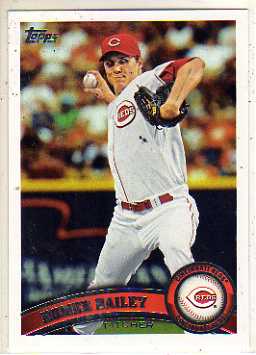
Some No-Hitter Facts and Figures

Homer Bailey – who threw 2012’s last no hitter – throws 2013’s first.

Reds’ right-hander Homer Bailey (“Homer” – unfortunate name for a pitcher) threw MLB’s first no-hitter Tuesday (July 2) night, as well as the last no-hitter of the 2012 season (September 28, 2012).  Pitching in Cincinnati’s  very hitter-friendly Great American Ballpark, Bailey shutdown the Giants 3-0 on 109 pitchers, walking just one, striking out nine. (Bailey took a perfect game into to the seventh.)  It was MLB’s 280th recognized no-hitter, and Bailey became just the 31st pitcher to throw multiple no-hitters.  A list of those hurlers follows, but first a few no-hitter factoids.

Consecutive no-hitters:  Two – by Johnny Vander Meer of the Reds, as he shut down the Boston Braves 3-0 on June 11, 1938 and the Brooklyn Dodgers 6-0 on June 15, 1938.

Two no-hitters in one season:  Johnny Vander Meer, Reds, 1938; Allie Reynolds, Yankees, 1951; Virgil Trucks, Tigers, 1952; Nolan Ryan, Angels, 1973; Roy Halladay, Phillies, 2010 (one in post-season).

Pitchers who have thrown a no-hitter in both the AL and NL Cy Young (Cleveland Spiders/NL and Boston Americans and Red Sox/AL);  Jim Bunning (Detroit Tigers/Philadelphia Phillies); Hideo Nomo (LA Dodgers/Boston Red Sox); Randy Johnson (Seattle Mariners/Arizona Diamondbacks); Nolan Ryan (Houston Astros/California Angels/Texas Rangers).

Opening Day no-hitters:  On April 16, 1940, the Indians’ Bob Feller threw the only Opening Day no-hitter, topping the White Sox 1-0 at Comiskey.

World Series no-hitter: Yankee Don Larsen’s October 8, 1956, perfect game against the Dodgers in game six of the ’56 Series is the only World Series no-hitter.  Roy Halladay threw the only other post season no-hitter to date, as he topped the Reds in game one of the 2010 NL Division Series (October 6, 2010).

Most pitchers used in a combined no-hitter:  Six.  On June 11, 2003,  Roy Oswalt started for the Astros against the Yankees, but aggravated a groin injury in the second inning (having not given up a hit).  Oswalt was followed to the mound by Pete Munro, Kirk Sarloos, Brad Lidge, Octoavio Dotel and Billy Wagner – and the six hurlers combined to no-hit the “Bombers” 8-0.

Pitchers who hit homers while pitching a no-hitter:  On June 23, 1971 Rick Wise of the Phillies went two-for-four, with two homers and three RBI, while no-hitting the Reds 4-0 in Cincinnati.  Wise is the only hurler to go deep twice while tossing a no-hit game.  And this was no easy no-no.  It was against the “Big Red Machine,” with a lineup featuring such hitters as Pete Rose, George Foster, Johnny Bench, Tony Perez, Lee May. Other pitchers to homer (once) in the midst of a no-hit game are the Indians’  Wes Ferrell, in a April 29, 1931, 9-0 no-hit win over the Saint Louis Browns and the Tigers’ Earl Wilson, in a June 26, 1962, no-hitter victory over the Angels.

Most walks in a no-hitterEleven by Blue Moon Odom and Francisco Barrios, as the White Sox topped the A’s (Odom was with the White Sox by then) 2-1 on July 28, 1976.  Odom lasted just five innings.  He was relieved – holding a 2-1 lead – after walking the lead-off hitter in the bottom of the sixth (and going 1-0 on the next batter).  Francisco Barrios came on and finished the game, allowing no hits, but walking two more in four innings of work.

Most walks in a no-hitter by one pitcher: Ten by Steve Barber in a combined no hitter.  Barber took a no-hitter, albeit with seven walks, and a 1-0 lead into the top of the ninth as his Orioles played the Tigers in Detroit on April 30, 1967.  Barber walked the first two batters in the final inning. Then a sacrifice move them to second and third.  A wild pitch followed, plating the tying run.  Barber walked the next hitter, and was relieved by Stu Miller.  Miller finished up the no-hitter, but the go ahead run scored on an error, giving the Tigers a 2-1 win without the benefit of a hit.   The Reds’ Jim Maloney also walked ten (and struck out twelve)  in no-hitting the Cubs 3-0 in ten innings on August 19, 1965.

Most walks in a nine-inning “solo” no hitter by one pitcher:  Nine by A.J. Burnett as his Marlins topped the Cubs 3-0 on May 12, 2001.  Burnett also hit one batter and threw one wild pitch.

Most no-hitters thrown under the influence of LSD:  One by Dock Ellis, see post of June 12, 2013.

Now here’s your multiple no-hitter list:


Seven no-hitters
:   Nolan Ryan

Four:  Sandy Koufax

Three:  Larry Corcoran, Bob Feller, Cy Young

Two:  Homer Bailey, Mark Buehrle, Jim Bunning, Carl Erskine, Bob Forsch, Pud Galvin, Roy Halladay, Ken Holtzman, Randy Johnson, Addie Joss, Dutch Leonard, Jim Maloney, Christy Mathewson, Hideo Noma, Alllie Reynolds, Frank Smith, Warren Spahn, Bill Stoneman, Virgil Trucks, Johnny Vander Meer,  Justin Verlander, Ed Walsh, Don Wilson

For more on no-hitters, see BBRT 2012 posts of  Sept. 29, August 16, July 15 and June 9. 


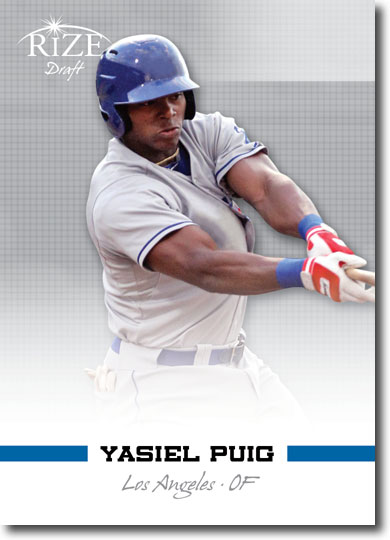
Yasiel Puig – 2013 Surprise? Well, kinda.

Another month of the MLB season in the books and it’s time for BBRT to again look at a few of 2013’s surprises and disappointments.  In past end-of-the-month posts, I’ve covered such surprises as Brewers’ shortstop Juan Segura (still hitting .326 as June closed), Matt Harvey’s great start (and he closed June at 7-1 with a NL-low 2.00 ERA); Clay Bucholz’ sub-2.00 ERA for Boston; Carlos Gomez’ new found offense with Milwaukee and the performance of the Pirates, Red Sox and A’s.   We’ve also looked at a few disappointments like R.A. Dickey, Josh Hamilton, David Price and the Blue Jays, Angels, Dodgers and Nationals.  In this post, I’ll try not to repeat those past observations and shed some light on a few new surprises that have emerged.

Yasil Puig – surprisingly good!

The number one surprise on most lists is the Dodgers 22-year-old Cuban outfielder Yasiel Puig.  No one is surprised that he’s been good since his June 3 call up, but what is surprising is just how good.  Puig has put up some impressive numbers including a .436 average in his first MLB month (26 games).  But should we be that surprised?  This is the player who, in 2012, hit .400 in nine games in the Rookie league, .327 in 14 games at High A, then hit .526 in Spring Training, followed by a .313 average with eight homers and 26 RBI at Double A before his call-up.

There’s been a lot of talk about Puig’s 44 hits (in his first MLB month) being second only to Joe DiMaggio’s 48 hits as a rookie in May of 1936.  Here’s an in-depth comparison of the first month of action for Yasil and Joe.


Size:  Puig – 6’3”, 245 lbs.; DiMaggio – 6’2”, 193 lbs.

Age:  Puig – 22: DiMaggio – 21

Games Played:  Both – 26

At bats:  Puig – 101; DiMaggio – 126

Hits: Puig – 44; DiMaggio – 48

Averagre:  Puig – 436; DiMaggio -.381

Runs: Puig – 19; DiMaggio – 30

RBI: Puig – 16; DiMaggio – 28

Doubles: Puig – 5; DiMaggio – 15

Triples: Puig – 1; DiMaggio – 4

Home Runs:  Puig – 7; DiMaggio 4.

Two surprising stat lines for a first month’s work in the majors.

The two teams with the best won-loss records for the month of June are a bit of a surprise, the Pirates and the Blue Jays both ran up 17-9 records for the month.  However, that leaves the disappointing Blue Jays still in last place in the AL East (after a dismal start), while the surprising Pirates ended June leading the NL Central and with the most wins (51) of any MLB team.  It looks like they might surprise us with their first winning season in 21 years. Go Buccos!

The NL West standings are a surprise, with Arizona leading the pack, followed by Colorado, San Diego, San Francisco and Los Angeles.  Most projections saw a near reversal of that order – but as the month closed only 4 games separated the five NL West teams, so we can expect some change.

On the morning of July 1, the very “streaky” Cleveland Indians gave their fans a surprise – sitting atop the NL Central (tied with the Tigers).  Later that day, a Detroit loss put the Indians in sole possession of the Division lead.  How the Indians will fare in the second half remains to be seen, but their surprising success thus far helps identify the Tigers – with their power hitting and power pitching making them prohibitive pre-season Central Division favorite – a 2013 disappointment through June.  (BBRT still expect the Tigers to take the Central).

Michael Cuddyer of the Rockies has also been a 2013 surprise, finishing June on 27-game hitting streak (during which he has averaged .372).  Cuddyer – a career .274 hitter – was hitting .344 with 14 home runs and 48 RBI as June came to a close.

Forty-three-year-old Yankee closer Mariano Rivera continues to surprise on his “farewell tour,” with 26 saves and a 1.55 ERA as June came to a “close.”  Perhaps more unexpected is the performance of forty-year-old Oakland starter Bartolo Colon.  Now in his 16th season, Colon is 11-2 with a 2.79 ERA.

It also a bit surprising to see three catchers hitting .320 or better at the end of June, but not so much when they are Yadier Molina (.345), Buster Posey (.322) and Joe Mauer (.320).

Then there is the ongoing American League Miguel Cabrera/Chris Davis “show.”  As of June 30, Cabrera has the AL’s number one average (.373), followed by Davis (.332); Davis is the AL home run leader (31), with Cabrera number-two (25).  Cabrera leads the AL in RBI at 82, with Davis in the two spot at 80.  The pair also rank 1 & 2 in runs scored, slugging percentage, on-base percentage and total bases.  As it stands, Cabrera is actually improving on his 2012 Triple Crown season, but may not capture the TC this year, while Davis is exceeding 2012 “career year” of .270-33-85.

The Diamondbacks’ Pat Corbin has also surprised, going 9-0, 2.22 through June.  Corbin’s performance is a big reason the Diamondbacks sit atop the tight NL West (at the end of June, Corbin was the only Arizona starting pitcher with a winning record).  First baseman Paul Goldschmidt, building off a solid 2012 was the surprise NL RBI leader as of June 30, with a .305-19-67 line.  No other Diamondback had more than 27 RBI or 7 homers.

So, there’s a look at a few 2013 MLB surprises through June.  More to come as the season progresses.

Scherzer – Twelve and Oh, A Long Way To Go


Scherzer — 12 and O and a long way to go.

The Tigers’ Max Scherzer last night became the first hurler since Roger Clemens (in 1986) to start a season 12-0.  He is also the first Tiger to accomplish that feat.  Scherzer now stands at 12-0, 3.10 ERA with 131 strikeouts (second in the AL to Yu Darvish) in 110 innings. And, how about that Tiger pitching?  As a whole, the staff is leading MLB with 736 strikeouts,  averaging 9.33 per nine innings.  Among the starters, Scherzer is at 10.69 K’s per nine, Justin Verlander at 10.21 and Anibel Sanchez at 11.13.

The next consecutive win targets for Mad Max? 

The AL record for wins to start a season is shared by Cleveland’s Johnny Allen and Baltimore’s Dave McNally – who each ran off 15 wins before their first lost.  Allen accomplished his streak in 1937 (ending the season 15-1, 2.55), while McNally’s streak came in 1969, when he went 20-7, 3.22.

The NL and MLB records for consecutive victories to start a campaign belong to Hall of Famer Rube Marquard, who ran off 19 wins for the New York Giant before his first 1912 loss.  Marquard led the NL in wins that year at 26, while losing 11 and posting a 2.57 ERA.

How about total wins before the All Star break?  Out of reach.  In 1973, White Sox knuckleballer Wilbur Wood notched a record 18 victories by the break – and didn’t make the All Star team.  (He also had 14 losses on the way to a 24-20, 3.46 record).  His 24 wins led the AL, and he was saved from leading the league in losses by team mate Stan Bahnsen, who went 18-21.  For Wood, by the way, it was the third in a string of four straight twenty-win seasons (1971-74).

For you trivia buffs, the last hurler to league his league in wins and losses in the same season was Hall of Famer Phil Niekro, who went 21-20, 3.39 for the Braves in 1979.   Phil tied for the lead in wins with none other than his brother Joe, who went 21-11, 3.00 for the Astros. The Niekro brothers are the answer to the trivia query “What two brothers have the most MLB wins?”  Phil (318) and Joe (221) combined for 539 MLB victories. (Hall of Famer Phil, notably, led the NL in losses four straight seasons, 1977-80, going 71-76 in that span.  He pitched 24 seasons (until age 48) and went 318-274, 3.35.

Toby Harrah – He Could Have Left His Glove in the Dugout

Shortstops are in the news in MLB these days – as some “difference makers” at the position are rejoining line ups in need.

Hanley Ramirez is back with the Dodgers and, after a slow start, has gone 12-for-26, with two doubles, three home runs, six runs scored and eight RBI in his past eight games.

Jose Reyes is expected to return to the Blue Jays line up this week, having missed most of the season with a severe ankle sprain.  How much will he boost the resurging Jays?  Reyes, a league batting champ as recently as 2011 and a .292 career hitter, hit .395 with one home run, five RBI and five steals (in 10 games) before his injury.

Yankee captain Derek Jeter has begun taking fielding and batting practice and is expected back – to provide offense and leadership – after the All Star break.

Then there are those difference makers going the other way.  Like the Rockies’ Troy Tulowitzki, who recent went on the DL with a broken rib – and was hitting .347, with 16 homers and 51 RBI.

Anyway, all this media coverage surrounding the off-the-field status of shortstops led BBRT to recall a day when a particular MLB shortstop had a truly different kind of on-the-field day.


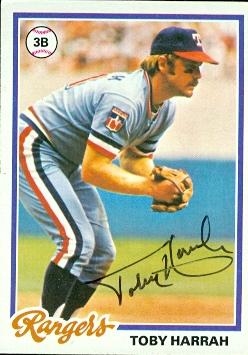
Toby Harrah – didn’t need the glove for the June 25, 1976 doubleheader – made good use of the bat though.

On this day, June 25, in 1976, Texas Rangers’ shortstop Toby Harrah played every inning of both games of a double header without ever getting a fielding chance.  Not that the ball wasn’t hit around the infield.  In game one, an 8-4 Rangers’ win over the White Sox, there were eleven infield put outs (not counting the catchers’ six putouts on strikeouts) and eight infield assists. (Second baseman Lenny Randle was most active with one putout and five assists.)  In game two, a 14-9 Rangers’ loss, there were fourteen infield put outs, twelve infield assists and three infield errors.  (Second baseman Lenny Randle was again the most active infielder with two putouts, six assists and two errors.)

On the other end of the spectrum, the most chances ever for a shortstop in a doubleheader is 25; the most in a nine-inning contests is 15 and the most in an extra-inning game is 21.

What Harrah didn’t have a chance to do with the glove, he made up for at the plate.  Apparently well rested due to inactivity in the field, Harrah finished the doubleheader with six hits in eight at bats, two home runs, two runs scored, seven RBI (five in the game one win) and one stolen base. 

For trivia buffs, by the way, Harrah and Bump wills remain the only ML player to hit back-to-back inside-the-park home runs.  It happened in the seventh inning of an 8-2 Rangers’ victory at Yankee Stadium on August 27, 1977.   (The Rangers hit a total of five homers in that game.)

Three Hits In An Inning – A Rare Batting Feat

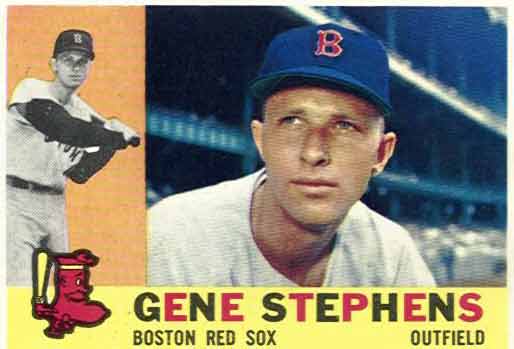
Gene Stephens first American Leaguer to collect three hits in one inning.

Sixty year ago today (June 18, 1953) Boston Red Sox left fielder Gene Stephens – a 20-year-old rookie (only 21 games the year before) – became the first American Leaguer to collect three hits in a single inning.  In the seventh inning of the Red Sox’ 23-3 win over the Tigers (at Boston), Stephens went single-double-single as the Sox plated 17 runs.  Stephens scored twice and drove in three runs that inning.  The three hits were his only safeties of the game, in which Boston collected 27 hits, as he finished three-four-six with three runs, three RBI and one walk.

Stephens’ breakout inning was remarkable in that he finished the season hitting just .205 in 78 games.  Stephen, a career .240 hitter lasted twelve seasons as a backup outfielder, playing in 964 games.  For one inning, he was truly unstoppable.

The only other AL player to collect three hits an inning also took the field for the Red Sox.  Center fielder and lead-off hitter Johnny Damon, on June 27, 2003, nearly hit for the cycle collecting a double (he later scored), a triple (two RBI and he later scored) and an RBI single, as Boston ran up a 14-run first inning against Florida (in Boston).  The game ended 25-8, with the Red Sox racking up 28 hits.    Damon came to the plate four more times in the contest, but didn’t complete the cycle – collecting two more singles.  His day went five-for-seven, with three runs scored and three RBI.  Damon hit .284 over 18 MLB seasons (1995-2012), with 2,769 hits in 2,490 games.

Three players have collected three hits in an inning in the National League – all before 1900 and ALL IN THE SAME INNING OF THE SAME GAME.   It came as the Chicago White Stockings (who later became the Cubs) scored 18 runs in the seventh inning of a 26-6 win over the Detroit Wolverines.  In the seventh inning of that that game the White Stockings’ Tom Burns collected two doubles and a home run, Fred Pfeffer smacked a double and two singles, and Ned Williamson rapped a double and two singles.  It was the final game of a three-game series in Chicago, with the White Stockings winning the first two by scores of 13-1 and 14-1.  For the season, Burns hit .294 (later finishing a 13-year MLB career at .266); Williamson hit .276 (later finishing a 13-year MLB career at .255); and Pfeffer hit .235 (later wrapping up a 16-year MLB career at .256.)

BBRT also gives a shout out and congratulations to Woodside (CA) High School Junior Brad Degnan who not only collected three hits in one inning , but rapped three homers in one inning.  It was in the 19-run first inning of Woodside’s 24-6 win over Westmoor High on April 18, 2013.  Brad, by the way, wears lucky number 13.

Happy Birthday Trevor Plouffe – and Other Players who Have Hosted Birthday “Parties”

The Minnesota Twins’ third baseman Trevor Plouffe celebrated his return from the disabled list (hadn’t played since May 21) and his 27th birthday in style yesterday – going three-for-three with a walk, double, home run,  two runs scored and three RBI; as the Twins topped the Division-leading  Tigers 6-3 in Minneapolis.

Nomar Garciaparra threw best birthday party ever – 3 HRs, 8 RBI!

Plouffe’s strong performance, however, fell short of MLB’s best “birthday party” ever.  That would be Boston Red Sox shortstop Nomar Garciaparra’s 29th birthday (July 23, 2002), when he went three-for-five with three home runs (MLB birthday record), three runs scored, eight RBI (another MLB birthday record) and a walk – as the Sox drubbed the Rays 22-4 in Boston.

Today, BBRT would like to look at some other top birthday performances by MLB hitters.

We’ll start with Kirk Gibson, who seemed determined to defy his age.  On May 28, 1994 Gibson celebrated his 37th birthday coming in as a pinch hitter in the seventh inning and hitting a game-tying three-run homer. Gibson stayed in the game in center field and hit a second round-tripper in the top of the ninth (giving the Tigers a lead they didn’t hold, losing 10-9 in ten innings).  For his birthday, Gibson finished two-for-two with two homers, four RBI and two runs scored.

A year later, the 38-year-old Gibson celebrated his birthday, with a four-hit performance (in six at bats) that included a double, two homers, two runs scored and two RBI.  For you trivia buffs, Gibson is the only MLB MVP Award winner to never make an All Star Team.

Then Phillies’ second baseman Joe Morgan also defied father time.  Batting lead off on his fortieth birthday (September 19, 1983), Morgan went four-for-five with a double, two homers, two runs scored and four RBI, as his Phillies topped the Cubs 7-6.

Birthday bashes aren’t limited to the senior set.  Cubs’ rookie first baseman Brant Brown – a .247 hitter in his five-year MLB career – had arguably his best day ever on his 25th birthday (June 22, 1996). In a 16-inning 9-6 win over the Padres in San Diego, Brown went five-for-nine with a double, home run (a two-run shot in the 16th), run scored, two RBI and a stolen base.

Then there is Kansas City DH Mike Sweeney, who turned thirty-one on July 22, 2004 and celebrated with a seven-RBI performance – a Grand Slam and a three-run blast – as his Royals topped the Tigers 13-7 in Detroit.  It was an especially good day for Sweeney who had been in a slump (two-for-twenty with just one RBI in the previous five games).  Sweeney’s line:  two-for-five, two homers, one walk, two runs scored, seven RBI.

Some other multi-homer birthdays:

Mets journeyman first baseman Jim Beauchamp collected two home runs (in a two-for-four game) on his 33rd birthday (August 21, 1972) as the Mets topped the Astros 4-2. Beauchamp scored twice and drove in three.

Albert Belle, manning left field for the Indians on his 29th birthday (August 25, 1995), went three-for-three with two home runs, two walks, three runs scored and two RBI as his Indians (at home) topped the Tigers 6-5 in eleven innings.

Ray Boone, of the multi-generational MLB Boone family, won the game for the Indians at Boston on his 28th birthday (July 27, 1951) with his second home run of the game in the top of the ninth (Cleveland won 3-2).  For the day, Boone was three-for-four, with two runs, two RBI and one walk.

Ken Harrelson did his best to keep his Kansas City Athletics in the game against the Yankees on his 23rd birthday (September 9, 1964).  Playing at first base, the Hawk went two-for-five, with two runs, three RBI and two walks.  His second homer tied the contest at 5-5 in the bottom of the ninth, and the As lost 9-7 in ten innings.

Milwaukee Brewers’ SS Jose Hernandez celebrated his 33rd birthday with two homers against the Pirates in a 5-3 Brewers’ win at Milwaukee.  The 6’ 1”, 180-pound utility man had shown some power (the homers were his 16th and 17th of the season, following a career-high 25-homer campaign the year before.)  Hernandez went two-for-two, with two homers, a walk, two runs and four RBI.

Andruw Jones was in left field for the White Sox on his 33rd birthday (April 23, 2010), when he went two-for-four with a walk, two homers, two runs, two RBI and a stolen base.  His second homer was a walk-off game winner in the bottom of the ninth in a 7-6 win over the Mariners.

Houston left fielder Derrick May turned 28 on July 14, 1996 and, in the first game of a doubleheader in New York, contributed to a 7-5, 11-inning Astros’ win, going three-for-five, with two round trippers, a walk, two runs scored, three RBI, and a stolen base for good measure.  (May totaled only five home runs for the season, .251-5-33.)

Yankee left fielder Tim Raines celebrated his 37th birthday, with two three-run homers as the Yanks topped Toronto 10-0 on September 16, 1996.  Raines went tw0-for-five, with two runs and six RBI.

Alex Rodriguez made his “Golden Birthday” (July 27, 2002) truly golden with a tenth-inning walk off grand slam as his Ranger topped Oakland 10-6 in Texas.  For the day, A-Rod was three-for-six, with two home runs (his 33rd and 34th of the season) three runs scored and five RBI.

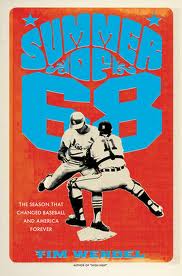
Summer of ’68 – Good Reading for the Summer of ’13


Summer of ’68: The Season that Changed Baseball, and America, Forever

By Tim Wendel

Da Capo Press, 2012 ($25)


No doubt, 1968 was one of the most challenging in America’s recent history – the assassinations of Martin Luther King and Robert Kennedy, riots in major cities, the violence surrounding the Democratic National Convention in Chicago, the Oakland shootout between the police and Black Panthers, and the public division over the Vietnam conflict.

It is against this backdrop that author Tim Wendel presents his chronicle of the 1968 MLB season – Summer of 68:  The Season that Changed Baseball and America, Forever – told primarily from the perspective of that year’s League Champions and World Series competitors, the Detroit Tigers and Saint Louis Cardinals.

I read this book while riding the bus on my annual Ballpark Tours baseball trip (see earlier posts).  It proved to be an enjoyable, thought-provoking and fast-paced read – going beyond the traditional on-the-field and in-the-locker room look at our sport, and drawing some important and interesting historical ties.

In 1968, baseball like America was making history.   For many fans, 1968 was the last pure season – when two league champions were crowned and went directly to the World Series. ( Expansion in 1969 led to Divisional play and playoffs.) It was also, for baseball, “The Year of the Pitcher” – highlighted on the field (and in Wendel’s prose) by the exploits of Denny McLain (a 31-game winner), Bob Gibson (1.12 ERA), Louis Tiant (.168 opponents’ batting average) and Don Drysdale (six consecutive shutouts and 58 consecutive scoreless innings).  Pitchers were so dominant that Carl Yastrzemski was the only American Leaguer to hit .300 – winning the batting crown at .301.  As a result, 1969 saw a smaller strike zone, lower mound and the establishment of the “save” as an official statistic.  And, there were other changes coming in the national past time, as players became increasing vocal on a wide range of issues – both within and outside the game.  Indeed, those controversies led to the resignation of Baseball Commissioner William Eckert after the 1968 season (with three years left on his contract) and marked a beginning in a shift of power toward the players.

Wendel does a fine job of tying the tumult in the nation with the changing face of baseball – and the interaction between the two.  Perhaps the most telling story of this relationship is tied to the Robert Kennedy assassination. President Lyndon Johnson had declared a National Day of Mourning (June 9) and, for some reason that is still unclear, Baseball Commissioner William Eckert decided to respond by postponing only two games on the MLB schedule:  The Angels/Yankees in New York and the Senators/Twins in Washington.  The result was a chaotic day for baseball, with some players (like the Rusty Staub, Maury Wills and Bob Aspromonte) and some teams (like the Mets, even under threat of forfeiture of the game) refusing to play.  As Wendel writes, the issue was most contentious in Cincinnati, where player representative Milt Pappas led a group opposed to playing that day’s contest against the Cardinals.  The first vote on whether to take the field was 12-12, with one player abstaining.  A second vote led to a 13-12 decision to play the game – despite continued protests from Pappas (who, within 72 hours, resigned as player representative and was traded to Atlanta).

Just as public happenings affected baseball, Wendel makes a case for baseball events impacting the public – providing a cooling escape from the controversies of the day.  As Mickey Lolich of the Tigers tells it; “I had some friends on the police.  They were in the city and had a good feel for what was going on.  They told us to please keep winning – that things were smoldering, like how it is before it starts burning all over again.  But if we could keep on winning then things might not explode like they had the year before.  In ’67, you’d see four or five guys standing on a street corner and they’d be looking for trouble.  In ’68, you’d see the same kind of guys standing on a street corner, but they’d have a transistor radio and they’d be gathered around, listening to Ernie (Harwell)  calling a Tiger game, and waiting to see if we could come back and win another one.”

Note:  1967’s Detroit riots had resulted in 43 deaths, more than 450 injuries, 7,000-plus arrests and more than 2,000 buildings burned.   Stepping back briefly into 1967, Summer of ’68 includes a look at the courage and commitment of Tiger outfielder Willie Horton, who left Tiger Stadium immediately after a June 23, 1967 doubleheader and showed up in full uniform (and at great personal risk) in one of the most strife-torn Detroit neighborhoods, urging calm amid the violence.)

In the process of exploring a changing society and the changes taking place in baseball, Wendel also provides the traditional sportswriter’s look at two of 1968’s most prominent teams – the Tigers and the Cardinals.  Through interviews with and the observation of players on both teams he gives us a look at how they made their way to the Fall Classic.

For baseball fans and trivia buffs, there is also insight into some of the 1968 season’s highlights – like a rare umpire’s ruling (on a hit batsman) that kept Don Drysdale’s string of scoreless innings and complete-game shutouts alive, Denny McLain’s “gift” home run to Mickey Mantle, Catfish Hunter’s perfect game, Frank Howard’s ten-homer week (defying the Year of the Pitcher) and Detroit Manager Mayo Smith’s then controversial move of Gold Glove center fielder Mickey Stanley to shortstop for the World Series.

Your BBRT editor also enjoyed the “Aftermath” chapter of  Summer of ’68, with Wendel giving an update on what happened to many of 1968’s principals (inside baseball and out) in the years and decades that followed.   The chapter examines the lives of such diverse characters as baseball’s Milt Pappas, Bob Gibson, Denny McLain, Curt Flood, Frank Howard and Catfish Hunter; football’s Joe Namath; basketball’s Bill Russell; Olympic runner Jim Ryun; sportscaster Roone Arledge; and political activist Tom Hayden.

All in all, Summer of ’68 is an enjoyable read – particularly for fans of the Tigers or Cardinals.  But there is also plenty for those who want to get a better feel for the culture of the nation and the state of baseball in 1968.

Dock Ellis – A Storied Career, an LSD-Fueled No-Hitter

Today (June 12) marks the 43rd anniversary of a unique – perhaps even legendary – event in MLB history.  On June 12, 1970, Pittsburgh hurler Dock Ellis – one of MLB’s true “characters” – reportedly threw a no-hitter while under the influence of LSD.   In this post, BBRT takes a look at some of the stories that make up Dock Ellis’ truly “storied” career – that 1970 no-hitter in particular.  But let me lead off with a few facts to keep in mind.  Ellis was a solid major league pitcher who ran up a 138-119 record, with a 3.46 ERA in twelve MLB seasons.  He was an All Star in 1971, when he went 19-9, 3.06 with eleven complete games in 31 starts for the Pirates (finishing fourth in the Cy Young Award balloting).  Ellis started the 1971 All Star game for the NL, opposing Vida Blue of the A’s, which – for you trivia buffs – was the first time two African-American hurlers started the All Star contest. Ellis was voted Comeback Player of the Year in 1976, when he 17-8, 3.19 for the Yankees.  Ellis, who pitched for six teams in his career (including three teams each in 1977 and 1979), won 10 or more games in a season nine times. Ellis was aa outspoken civil right advocate throughout his career.  And, after retiring, he acknowledged his substance-abuse issues and became a drug counselor.  He also worked with the Black Athletes Foundation for Sickle Cell Research and U.S. Senate Subcommittee on Public Health on the issue.

Now on to that LSD-fueled no-no. This is an often-related story – immortalized not just in print (books and news articles), but also in song (America’s Favorite Pastime by Todd Snider, Dock Ellis by Barbara Manning, and Dock Ellis’ No-No by Chuck Brodsky) and in film (the animated short film Dock Ellis and the LSD No-No, directed by Jeffrey Radice).

Click the link under the image below to view the animated film, which includes Ellis’ own account.

http://www.youtube.com/watch?v=_vUhSYLRw14


The roots of this particular performance were reportedly laid on Thursday, June 10, 1970, when Ellis was enjoying an off-day.  On Wednesday, the Pirates had wrapped up a series against the Giants in San Francisco and were scheduled to take the field next in San Diego on Friday (when Ellis’ turn in the rotation came up.) An LA native, Ellis decide that the off day offered a chance to party with some friends back home and he rented a car and headed to the City of Angels.  Wednesday night, legend has it, Ellis and friends enjoyed an evening that included LSD, marijuana and alcohol – finally winding down in the early morning hours.  As Ellis tells it, he woke up Thursday and, confident he’d have plenty of time to recover before Friday’s start, dropped another tab of LSD.

Now for the character-building turn of events.  One of the partying group informed Ellis – post LSD ingestion – that it was already Friday.  Ellis had slept away the remainder of his Thursday and he would be taking the mound in just a few hours.  The 6’3”, 200-lb. right hander (Doesn’t it seem like he should have been a lefty?) caught a shuttle flight from LA to San Diego and made to the ballpark about 90 minutes prior to game time.  To counteract the effects of the LSD, Ellis decided a sensible course would be to take a few Benzedrine tablets.  Ellis would later say he pitched primarily in a fog, throwing the ball – which felt at times small and at other times unusually heavy and large – down a “multi-colored path” to his catcher, Jerry May.   Among the stranger  “events” Ellis later reported occurring during the game were at various points believing Richard Nixon was umpiring the game; Jimi Hendrix was at the plate with a guitar for a bat; and his exclamation of “Ooh, I just scored a touchdown.” after successfully covering first on a fielding play.  His memory, like his viewpoint that day, was a bit foggy.

The final result (celebrated today) was a 2-0 win for the Pirates, with Ellis tossing nine innings, with no hits, no runs, eight walks, one hit batsman, and six strikeouts.

Remember, I indicated Ellis’ had a storied career.  Here is a snapshot of just a few of those stories.

  • Ellis, always adamant in his pursuit of the rights of and respect for African-Americans was known (during his minor league tenure) to go into the stands to confront racist hecklers.
  • In May 1, 1974 Ellis set a major league record, while attempting to “wake up” the last-place Pirates.  Angry that the Pirates would allow themselves to be intimidated by Cincinnati’s Big Red Machine and feeling the Reds did not show the Pirates proper respect, Ellis make an impassioned, expletive-laced pregame speech to his teammates in which he vowed to hit every one of the Red batters.  And, Ellis did his best to deliver.  In the top of the first, he nailed lead-off hitter Pete Rose in the ribs, and then plunked number-two batter Joe Morgan in pretty much the same spot.  Dan Dreissen was up next and (apparently pretty sure of what was headed his way) got nailed in the back while turning away from a pitch.  The next hitter, Tony Perez, proved more nimble, avoiding four attempts by Ellis (at least one reportedly behind his head) to add him to the day’s victim list. Perez walked to plate a run.  Johnny Bench was up next and after two very high, very tight pitches, Pittsburgh manager Danny Murtaugh decided (in the pursuit of public safety?) to pull Ellis from the game.  Ellis that day set a record by hitting the first three batters in a game, tied a record for three hit batsman in an inning and added to his reputation as an intimidating presence on the mound.
  • Late in the 1973 season, Ellis was photographed wearing hair curlers in the bullpen prior to a game, which did little to endear him to the baseball establishment.
  • In May of 1972, after missing a team bus to Riverfront Stadium, Ellis was denied entrance by a security guard because he lacked proper identification. (Willie Stargell and Rennie Stennett, who were with Ellis and had ID, were admitted.)  Ellis offered up his World Series ring as proof he was a Pirate and in the course of the dispute the guard maced Ellis.  Ellis was initially charged with disorderly conduct and sued for assault by the Reds (Ellis counter-sued).  Eventually, the charged were dropped and the Reds apologized.

Dock Ellis, clearly one of baseball’s most storied characters. And, by the way, does anyone else find it interesting that Dock Ellis might have been listed in the box score as Ellis D. ?

Final Day of Ballpark Tours Trip – The Minors

Final Day of Ballpark Tours’  first trip of 2013 (for info on the upcoming August trip see ballparktours.net) left Chicago just after 9:00 a.m. for a 1:05 minor league (Single A) game in Appleton, Wisconsin – the Mariners-affiliated Clinton Lumberkings versus the Brewers-affiliated Wisconsin Timber Rattlers.  The bus ride gave me a chance to make some progress on my reading:  “Summer of 68 – The season that changed Baseball, and America, Forever.”  Finished it on the finAL bus leg home, watch for the review.

Great seats and plenty of action in Appleton.

Nice little ballpark in Appleton and our tour operator got us great seats, right behind home plate.  Nice feature at the ballpark – where the food choices, by the way, were far better than Miller Park – you can order concession via cell phone right from you seat and then go to a Fast Lane to pick up your order.  Great, if you are keeping score and don’t want to miss any action while stocking up on food and beverage.

BBRT did keep score and, as in so many low minor league games, there was plenty of action.  The hometown Rattlers led 5-2 after four innings, with the Lumberkings up 6-5 a half inning later.  After 7 ½ the visitors led 8-6, but Wisconsin scored six in the bottom of the eighth and eventually won it 11-9.  Clinton scored their nine runs on 14 hits, while Wisconsin plated 11 runs on just seven hits.  The game featured four home runs (the wind was blowing left to right) – as well as 16 walks, a hit batsman, 1 error and three wild pitches.  Needless to say, there was something going on every minute.

The star of the game for Wisconsin was centerfielder Tyrone Taylor, who went two-for-three (home run/ single) in three at bats and also drew a pair of walks.  It’s just the second season for the 19-year-old, who hit .387, with two homers and 11 RBI in 18 games (rookie ball) last year.

As with all minor league games, there was also plenty going on between innings: a cheese spread race, the firing of beef sticks into the crowd, various “skill” competitions that brought fans to the field, and the obligatory charity “50-50” raffle.

The sign says it all.

For the Ballpark Tours group, one of the highlight was the Sunday Bloody Mary bar, where you received a generous pour of vodka in a Timber Rattlers mug and then put together your own Bloody Mary using a wide range of available mixed and condiments.  Your truly went with Tomato-Horseradish juice, a bit of tabasco, pepper, a beef stick, two olives, an asparagus spear, a dick pickle slice, two peppers and a celery stick.  (There was plenty more to choose from.)  The popularity of the offerings was evidenced by the high volume of souvenir mugs on the bus as we left the ballpark.


For the last leg home, we relaxed on the bus and watched the documentary “Yogi Berra – In His Own Words” on the overhead video monitors.  All in all, another great Ballpark tours excursion.