Want a little relief from all the Collective Bargaining Agreement banter? How about a look at some of the best – or most unique – relief pitching accomplishments/events? That’s one way Baseball Roundtable is passing the time, while I wait to see if – and when – players take the field in 2022.
Greatest Relief Performance Ever

Ernie Shore – Photo: Library of Congress. Harris & Ewing Collection
When talking about great relief performances, the first that usually comes to mind first is Ernie Shore’s relief outing (taking over for Babe Ruth) on June 23, 1917. Ruth, carrying a 12-4, 2.35 record (with 14 complete games in 16 starts) started on the hill for the Red Sox (in Boston.) against the Senators. Ruth, however, did not last long. He walked Senators’ lead-off batter 2B Ray Morgan and, to put it mildly, did not agree with umpire Brick Owens’ strike zone. An argument and melee ensued during which landed a punch to the side of Owens’ head. Ruth was tossed after the one batter (and later fined $100 and suspended for ten games).
In came Ernie Shore (8-7, 2.63, with nine complete games in 18 starts). Along with Shore came catcher Sam Agnew, replacing starting backstop Pinch Thomas. The Agnew-for-Thomas switch paid off quickly. Morgan attempted to steal second and was gunned down by Agnew. Shore went on to prove himself masterful in relief, retiring the next 26 batters in order, completing a perfect outing that – due to that opening walk by Ruth – is now on the books as a combined no-hitter. The Red Sox topped the Senators 4-0.
Shore ended the season 13-10, 2.22 – with 27 starts and just two relief appearances. Ruth finished the year, 24-13, 2.01, with a league-leading 35 complete games. Shore played six MLB seasons (1912, 1914-17 and 1919-20 … Giants, Red Sox, Yankees), going 65-43, 2.47 (121 starts and 39 relief outings).
Staying Pretty Darn Close to the Shore
 Now, Shore’s perfect outing deserves the top spot here, but 38-seasons later, Hal Brown of the Orioles came pretty darn close. On August 31, 1955, the Orioles faced the Indians in Cleveland. Starting for Baltimore was Bill Wright (3-5, 2.53 at the time, with 28 appearances and four complete games in eight starts). On the mound for Cleveland was rookie sensation Herb Score, 13-10, 3.21, with eight complete games in 27 starts. (The 22-year-old Score would go 16-10 and lead the American League in strikeouts with 245 that season, taking AL Rookie of the Year honors.)
It was not to be Wright’s day. In the bottom of the first, he faced seven batters, giving up five runs on three singles, two doubles and two walks – failing to record a single out. Hal Brown came on in relief and proceeded to throw eight no-hit innings (the Indians, with a 5-1 lead, did not bat in the bottom of the ninth). In his no-hit relief outing, Brown walked five and fanned ten. I rate Brown’s performance close to Shore since the Indians clearly came in with their hitting shoes on – and Brown quickly “tied those shoes up.” Those ten whiffs were also impressive, as the average strikeouts per nine innings in MLB that season was 4.4 (compared to 8.9 in 2021).
Brown finished the season, 1-4, 3.98 in seventeen games (five starts). He had a 14-season MLB career (1951-64 …. Orioles, Red Sox, Colt .45s, White Sox , Yankees – going 85-92. 3.81 (11 saves) in 211 starts and 147 relief appearances.
____________________________________________
So, there you have a couple of the all-time great relief performances. Let’s take a look at a few others that stand out for Baseball Roundtable – in no particular order.
Record-Setting Whiffs … Not so Long Ago
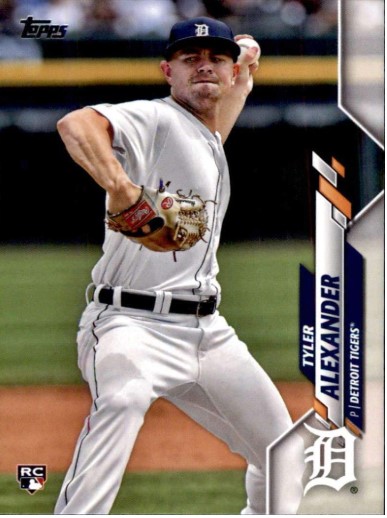 On August 2, 2020, the Tigers faced the Reds in Detroit in one of those short-season, seven-inning doubleheader matchups. Game One saw The Tigers’ Rony Garcia starting against the Reds’ Anthony DeSclafani. Garcia gave up a two-run home run to Reds’ RF Nick Castellanos in the first inning and a solo shot to Castellanos to open the top of the third. That brought Tyler Alexander in from the pen – and he did his job, fanning the first nine hitters he faced, setting an MLB record for consecutive strikeouts in a game by a reliever and tying the MLB record for most consecutive strikeouts from the first batter faced in an appearance. His whiff streak went like this:
- 2B Mike Moustakas, striking out swinging on a 2-2. Foul tip.
- 3B Eugenio Suarez, strikeout on an 0-2 pitch, taking all three strikes.
- DH Jesse Winker, strikeout an 0-2 pitch, swinging at all three strikes… ending the third.
- CF Nick Senzel, strikeout swinging on a 1-2 pitch to open the fourth inning.
- 1B Josh VanMeter, strikeout looking on an 0-2 pitch.
- SS Freddy Galvis, strikeout swinging on a 3-2 offering … an 8-pitch at bat that ended the inning.
- C Tucker Barnhart, strikeout looking on a 1-2 pitch to open the fifth inning.
- LF Shogo Akiyama, strikeout looking on a 1-2 pitch
- RF Nick Castellanos, strikeout swinging on a 2-2 pitch to end the inning.
Alexander was now in position to tie all-time record for consecutive strikeouts in a game (10 – held by Tom Seaver, Aaron Nola and Corbin Burnes) in the top of the sixth. And, it looked like he might do just that, as he had Moustakas down one-ball/two-strikes before hitting him with a pitch to end the streak. What did the next batter do? Saurez went down swinging on a 1-2 pitch. Travis Jankowski, running for Moustakas, was caught stealing during pinch hitter Matt Davidson’s at bat (Alexander to 1B C.J. Cron to 2B Jeimer Candelario). Davidson eventually walked and Carson Fulmer replaced Alexander on the mound. In his outing, Alexander three 38 strikes in 55 pitches (69/1 percent).
Alexander went 2-3, 3.96 in 14 appearances in 2020, fanning 34 batters in 36 1/3 innings. At the close of the 2021 season, the 26-year-old southpaw was 5-11, 4.13 in 68 MLB appearances over three seasons.
As a high school senior (Carroll Senior High in Southlake, Texas), Tyler Alexander was 12-1, with a 0.66 ERA. Then, in two seasons as Texas Christian University, he went 16-6, 2.71. He was a 23rd round draft pick in 2013.
Making a Good First Impression
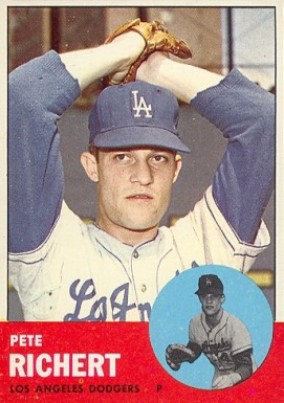 They say you only get once chance to make a first impression. Well, when it comes to taking the major-league mound, Pete Richert did just that.
Richert was signed right out of high school (Sewanhaka High School, Floral Park, Florida), where – despite his small statue – he was noted for an impressive fastball. (Adam Ulrey’s Society for American Baseball Research bio on Richert indicates Richert was 5’7” and 150 pounds in high school and 5’11”/165-pounds when he made it to the major leagues as a 22-year-old).
Richert made his MLB debut on April 12, 1962 – with the Dodgers facing the Reds in Los Angeles. Stan Williams started for the Dodgers versus Joey Jay (one of my favorite baseball names) for the Reds. With two outs in the top of the second, the Dodgers already trailed 4-0 and the Reds had another runner in scoring position. Williams was clearly not on his game having already given up two hits and four walks – and committed a balk. Dodger Manager Walt Alston called to the pen and Richert came to the mound. History was about to be made.
The first batter Richert faced was the number-three hitter in the Reds’ lineup – CF Vada Pinson. Rookie jitters? No problem. Richert fanned Pinson on three pitches.
Things didn’t get any easier for the rookie in the top of the third. First up was future Hall of Famer RF Frank Robinson. Richert struck him out on four pitches. Then came 1B Gordy Coleman – another three-pitch strikeout (but Coleman reached first on a passed ball). So, now Richert had thrown just ten MLB pitches, facing the three-four-five hitters in the Reds’ lineup and had recorded three whiffs. But he wasn’t done yet. Next up was LF Wally Post – another four-pitch strikeout. Post was followed by C Johnny Edwards. Perhaps, Richert was tiring. It took him five pitches to fan Edwards and end the inning.
Third baseman Tommy Harper led off the top of the fourth and Richert recorded another three-pitch strikeout. So, now his MLB career consisted of 22 pitches, 18 strikes, four balls and six strikeouts – and he had the MLB record for the most consecutive strikeouts at the start of an MLB career. Ironically, Reds’ starting pitcher Joey Jay (who would hit .114 for his 13-season MLB career and strikeout in 42.7% of his at bats) broke the whiff string, grounding out to first base on an 0-1 offering. Richert went 3 1/3 innings in the contest, giving up no hits, no walks and fanning seven. The Dodgers came back for an 11-7 win and Richert got the victory. Overall, Richert threw 41 pitches – 33 strikes (including balls put in play) and just eight balls.
Pete Richert is the only major leaguer with a four-strikeout inning in his MLB debut.
Richert finished his rookie season at 5-4, 3.87 (19 games, 12 starts), with 75 strikeouts in 81 1/3 innings. The two-time All Star enjoyed a 13-season MLB career (1962-74 … Dodgers, Senators, Orioles, Cardinals, Phillies) – going 80-73, 3.19 with 51 saves (429 games/122 starts).
Working Overtime … NO, Really Working Overtime
Zip Zabel. Photo: Bain News Service, Public Domain
On June 17, 1915, the Cubs faced off against the Brooklyn Robins (Dodgers) in Chicago, with Bert Humphries (3-2, 0.59) starting for the Cubs and Jeff Pfeffer (5-4, 2.61) on the mound for the Robins. With two out and one-run across in the top of the first inning, George Washington “Zip” Zabel was called on to relieve Humphries, who had been hit on the pitching hand by a line drive
To make a lo-o-o-ng story short – Zip Zabel was still on the mounds in the 19th inning, with the score knotted at 3-3. His 18 1/3 innings (nine hits, two runs, one walk, six strikeouts) remains the longest relief effort in MLB history. The Robins pushed across a run in the bottom of the nineteenth to give Zabel the win. Notably, Pfeffer (Cubs’ starter) tossed a complete game in the loss.
Zabel finished the season at 7-10, 3.20 in 36 games/17 starts. His MLB career lasted just three seasons (1913-15), all with the Cubs, and he went 12-14, 2.71, (It was reported that Zabel came up with a sore arm after his 18 1/3 inning relief stint. Zabel was 5-4, 2.25 on the season through June 17 and was 2-6, 4.15 after the outing. It was his final major-league season, although he did pitch two more season in the minors.)
Tomorrow, Tomorrow … It’s only a Day Away
Randy Johnson. Photo by SD Dirk 
On June 18, 2001, the Diamondbacks were facing the Padres in San Diego, with the Diamondbacks starting Curt Schilling on the mound against the Padres’ Woody Williams. The game was suspended in the top of the third inning, with Arizona up 1-0 – after an electrical malfunction knocked out part of the outfield lighting. The suspended game was to be completed before the following day’s regularly schedule game. Southpaw Randy Johnson was slated to start the regularly scheduled contest, but D-back’s manager Bob Brenly (with the Padres’ lineup in the resuming game set for righty Schilling) moved Johnson up to begin the suspended game. Williams returned to the mound for the Padres. Johnson pitched seven scoreless, one-hit innings for the win (3-0). More important for the record books, he fanned 16 batters, still the record for strikeouts in a single relief appearance. Notably, it was Johnson’s only relief appearance of the season and his first relief assignment since September 27, 1997.
Johnson finished the 2001 season 21-6, 2.49, with 372 strikeouts in 249 2/3 innings. The Hall of Famer enjoyed a 22-season MLB career (1988-2009 … Expos, Mariners, Astros, Diamondbacks, Yankees and Giants). He went 303-166, 3.29 and fanned 4,875 batters in 4,135 1/3 innings. In 22 seasons, he made just 15 relief appearances (603 starts).
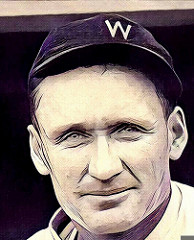
Walter Johnson. Photo by pingnews.com
If you want to know the strikeout record for an AL relief appearance (and for a relief appearance that took place on the same day the game started), that would go to another Johnson: Hall of Famer Walter Johnson. The St, Louis Browns were facing the Washington Senators in Washington on July 25, 1913. George Baumgardner(7-11, 2,47) was on the mound for St. Louis, Joe Engel (8-13, 3.67) for the Senators. Neither was around for long. Baumgardner lasted just 1/3 of an inning, giving up two runs on three hits (two home runs). Engel fared a bit better, lasting three frames and giving up four runs (three earned). Tom Hughes followed Engel, but lasted just two-thirds of an inning, before Johnson was called in with the Senators trailing 7-6. Washington tied it in the fifth, but St. Louis scored a run off Johnson to take an 8-7 lead in the seventh, only to have Washington retie then score in the eighth. The game ended in an 8-8 tie and Johnson had gone 11 1/3 innings, giving up seven hits, two runs (one earned), walking two and fanning an AL still single-game record for relief pitchers 15 batters.
One that Stands Out
Walter Johnson led the League in strikeouts an MLB-record 12 times. Ironically, despite working primarily as a starter (666 career starts/136 relief appearance). His highest single-game strikeout total came (15) came in the above noted July 25, 1913 relief appearance
Walter Johnson pitched 21 MLB seasons (1907-1927), going 417-279, 2.17. He won 20 or more games in 11 seasons ( 30+ in two of those) and led the AL in wins six times, ERA five times, strikeouts 12 times, complete games six times and shutouts seven times.
Let’s Keep that Plate Clean
The longest scoreless relief outing was fourteen innings – by the Cubs’ Bob Osborn on May 17, 1927, facing the Boston Braves (in Boston). Surprisingly, Osborn did not come into the game until ninth inning. At that point, the game was knotted 3-3. Osborn went on to pitch 14 scoreless frames, giving up just six hits (all singles), while walking two and fanning just one. The Cubs scored on a walk, sacrifice and single in the top of the 22nd inning to give Osborn a well-earned win. Braves’ starter Bob Smith went the distance – giving up four runs (three earned) in 22 innings – on 20 hits and nine walks (that was one tough day at the office). Osborn finished the season at 5-5, 4.18 in 24 appearances (12 starts). He pitched in six MLB seasons (1925-27, 1930-31 … Cubs, Pirates), going 27-17, 4.32 in 121 games (43 starts).
Shortest-ever Relief Appearance … and It Lasted an Entire MLB Career
Larry Yount, brother of Hall of Famer Robin Yount, made his MLB debut on September 15, 1971 – coming on in the top of the ninth to replace Skip Guinn (who had been pinch hit for in the previous half inning). The score was 4-1 and, if all worked out, Yount would face LF Ralph Garr, 1B Hank Aaron and C Earl Williams. All did not work out. Yount had experienced a bit of elbow pain in the bullpen warming up and, as he continued to warm up on the mound, it only got worse. He called the trainer to the mound and, after a bit of discussion, Yount walked off the field – officially registering an MLB appearance, but not tossing s single pitch. Yount pitched two more season in the minors, but never came to the major-league mound again.
Another Short Relief Appearance that Didn’t End a Career, but Did End a Game
On July 15, 2005, Mike Stanton of the Nationals was called into a game in a tough spot. It was the bottom of the tenth inning, the Nationals and Brewers were tied at 3-3 and the Brewers had runners on first and third with one out when Stanton came to the mound to take over from Luis Ayala. Conventional wisdom? Intentionally walk Lyle Overbay to load the bases and set up a possible double play. Unconventional outcome. The game resumes after Stanton’s warmup and, before tossing a pitch, Stanton balks in the winning run. Game over, without Stanton throwing a single pitch.
Stanton, for those who like to know such things, pitched 19 years in the major leagues (1989-2007 …. Braves, Yankees, Red Sox, Mets, Nationals, Giants, Rangers, Reds), appearing in 1,178 games, picking up 69 wins (63 losses), with 84 saves and a 3.92 ERA. He made one start in his career. On May 9, 1999 – for the Yankees against the Mariners – going four innings (two hits, no runs, one walk, three strikeouts) and leaving with a 4-0 lead (but getting no decision).
A Few More Short Stories
Disappointed with the major-leagues bargaining this off-season? Think about how Oliver Perez must have felt on June 29, 2018. With the Indians down 2-0 to the Athletics in the bottom of the seventh, and the Athletics threatening to break the game open (runners on second and third and two out), Indians’ manager Terry Francona brought in southpaw Perez to face left-handed (leadoff) hitter CF Dustin Fowler. Athletics’ Manager Bob Melvin countered by pinch hitting with right-handed hitter Mark Canha (who would be followed by left-handed hitting LF Matt Joyce). Now, the managerial wheels were turning. Francona had Perez intentionally walk Canha to load the bases and get to lefty Joyce. (Remember, this was with the new “wave ‘em to first” intentional walk rule, so Perez had yet to throw a pitch.) Melvin made another managerial move, having righty Chad Pinder hit for Joyce. Francona countered by pulling Perez and bringing in righty Zach McAllister. So, Perez was out of the game without tossing a pitch. He was also credited with a walk and, if that runner on third scored, it would go against his ERA. Ouch! Fortunately, McAllister fanned Pinder on four pitchers and Perez was off the hook.
There are also a few instances of pitcher actually getting a decision (win or save) without throwing a pitch. Keeping in mind that batter counts pre-1980 are not readily available, here are three such instances I could document (baseball-reference.com). I’d welcome info on any other such instances.
On April 28, 1989, The Cubs were leading the Padres 3-0 going into the bottom of the ninth – with Paul Kilgus on the mound for the Cubs and the 3-4-5 hitters due up for San Diego. Kilgus got CF Tony Gwynn on a fly to deep left, but then 1B Jack Clark doubled to right; C Benito Santiago reached on an error (Clark going to third); LF Carmello Martinez reached on a fielder’s choice (as Clark was cut down at the plate – third-baseman Curt Wilkerson to catcher Rick Wrona); and RF Luis Salazar singled Santiago home, with Martinez going to third. Manager Don Zimmer brought in Mitch Williams to face SS Garry Templeton. Before tossing a pitch to Templeton, Williams picked Martinez off second (SS Shawon Dunston covering) ending the inning and the game – and giving William a “save” without a pitch. Williams ended the season 4-4, 2.76 with 36 saves and a league-leading 76 appearances. Williams pitched in 11 MLB seasons (1986-95, 1997 … Rangers, Cubs, Phillies, Astros, Angels, Royals) going 45-58, 3.65 with 192 saves. (He had three seasons of 30 or more saves, a high of 43 in 1993).
On May 1, 2003, the Orioles faced off against the Tigers in Detroit. The game was tied at 1-1 in the bottom of the seventh, when the Tigers scored the go-ahead run off Pat Hentgen (in his fifth inning of relief). With two out and a runner (Omar Infante) on first , Orioles’ manager Mike Hargrove brought B.J . Ryan in to face Tigers’ RF Bobby Higginson. Before tossing a pitch, Ryan caught Infante off base and he was retired Ryan to 1B Jeff Conine to shortstop Deivi Cruz. The Orioles scored three in the top of the eighth to take the lead. Ryan was replaced by Buddy Groom to open the bottom of the eighth. The Orioles went on to win 5-2 and Ryan picked up an MLB victory without tossing a pitch. Ryan finished the season 4-1, 3.40 in 76 appearances. He pitched in 11 MLB seasons (1999-2009 … Reds, Orioles, Blue Jays), going 21-28, 3,37, with 117 saves in 560 appearances (all in relief). Ryan was an All Star in 2005 and 2006, saving 36 and 38 games in those two seasons, respectively,
On July 7, 2009, the Rockies took on the Nationals in Denver. The two teams went into the eighth innings tied at four apiece, with Joel Peralta (the Rockies’ fourth pitcher of the ay) on the mound for the Rox. With two outs, a runner (Austin Kearns) on first base and Washington’s leadoff hitter, lefty CF Nyjer Morgan, due up, Rockies’ manager Clint Hurdle called in southpaw Alan Embree. Before tossing a pitch, Embree caught Kearns off first and he was retired in a rundown (Embree to 1B Todd Helton to SS Troy Tulowitzki and back to Embree for the putout). Seth Smith pinch hit for Embree as The Rockies scored the winning run in the bottom of the inning,. Huston Street came in to toss a 1-2-3 ninth and Embree had a win without throwing a pitch.
Now, let’s move on to some “longer” relief accomplishments.
We’ll Never See This Again
In 1974, the Dodgers’ Mike Marshall put up the grand-daddy of all relief seasons – becoming the first reliever to win the Cy Young Award and setting the still-standing record for appearances with 106 and relief innings pitched in a season at 208 1/3. He finished the season 15-12, with a league-topping 21 saves and a 2.42 ERA. Marshall was called on to go more than one inning in 74 games (68.5 percent of the time) and toiled three or more innings 22 times. Marshall’s longest stint came on August 19, when he came on in the seventh inning of a 7-7 game against the Cubs – and went six innings, earning the win as the Dodgers topped the Cubs 8-7 in twelve innings.
In 1974, Mike Marshall took the mound every day from May 17 through May 24 (8 days) … pitching 14 2/3 innings and giving up just one earned run.
Lucky Number 13
Just two relievers have pitched in 13 consecutive games:
Mike Marshall appeared in 13 consecutive games for the Dodgers from June 18 through July 3, 1974 – going 6-0, 1.69 with two saves.
In his rookie season (1986), the Rangers’ Dale Mohorcic appeared in 13 consecutive games from August 6 through August 20 – going 0-1, 3.86 with two saves. He finished the season 2-4, 2.51, with seven saves in 58 appearances. Mohorcic played five MLB seasons (1986-90 … Rangers, Yankees, Expos), going 16-21, 3.49 with 33 saves. His best season was 1987, when he went 7-6, 2.99, with 16 saves for the Rangers.
Dale Mohorcic, who played college baseball at Cleveland State University, made his professional debut at age 22, with the low-A Victoria Mussels. He made his MLB debut in his ninth pro season, at age 30. After minor-league stops at Victoria, Dunedin (Blue Jays), Salem (Pirates), Portland (Beavers), Buffalo (Bisons), Hawaii (Islanders), Lynn (Sailors), Nashua (Pirates) and Oklahoma City (89ers).
84 Straight Saves
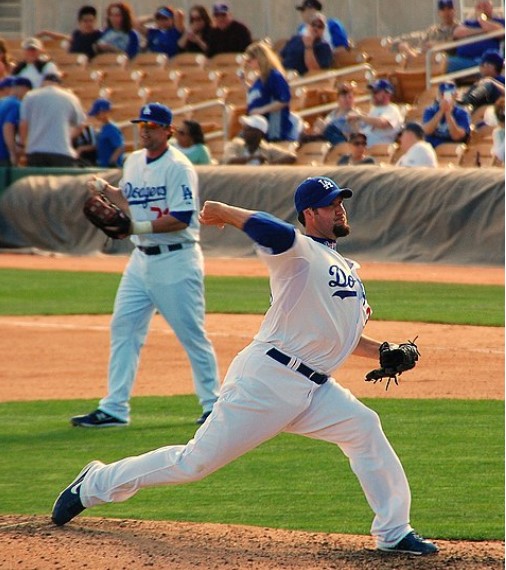
Eric Gagne. Photo: OctopusHat, CC BY-SA 2.0 <https://creativecommons.org/licenses/by-sa/2.0>, via Wikimedia Commons
From August 28, 2002 through July 3, 2004 the Dodgers’ Eric Gagne converted a record 84 consecutive save opportunities, during that stretch he appeared in 123 games, going 6-3 (the three losses did not come in “save” situations), with a 1.98 earned run average and 207 strikeouts in 132 innings.
__________
Bookends
The Blown Save that preceded the start of Eric Gagne’s 84-saves streak came against the Diamondbacks on August 26, 2002. Gagne came into the game in the ninth to protect a 3-2 Dodger lead, but a single by Steve Finley and a double by David Dellucci tied the game (the Dodgers lost 6-3 in twelve frames). The Blown Save the ended the string came on July 5, 2005 – again versus the Diamondbacks. Gagne came on in the top of the ninth to protect a 5-3 lead, but gave up two runs on a Shea Hillenbrand single, Louis Gonzalez double and Chad Tracy single.
__________
Gagne pitched in 10 MLB seasons, going 33-26, 3.47 with 187 saves. He was a three-time All Star and won the 2003 NL Cy Young Award when he went 2-3, 1.20 with 55 saves in 55 save opportunities.
A What Might Have Been Story
Eric Gagne made his MLB debut with the Dodgers in 1999, as a 23-year-old starting pitcher. In his first three seasons with LA, he was a middling 11-14, 4.61 in 56 appearances (48 starts) at the back of the Dodger rotation. Then, in 2002, Dodgers’ closer Jeff Shaw retired and Gagne was one of the arms the Dodgers took a look at for the role. The rest is history. From 2002 through 2004, he was the best in the business – earning the nickname Eric “Game Over” Gagne. In those three seasons, Gagne went 13-7, 1.79, saved 152 games in 158 opportunities and fanned 365 batters in 247 innings – making three All Star teams and picking up the 2003 NL Cy Young Award along the way. Finishing the 2004 season at 28-years-old, the sky seemed the limit. However, it was not to be. Over the next four seasons (2005-08), Gagne went 9-5, 4.28, with just 35 saves and 114 strikeouts in 113 2/3 innings.
What happened? The frailties of the human arm. First, you need to know that Gagne had Tommy John surgery (elbow) in 1997. He had elbow surgery again in 2005 and 2006 – and also had back surgery (herniated disc) in 2006. (He appeared in only 16 games in 2005-06.) Gagne also suffered a shoulder injury in 2008 (his final MLB season … Brewers).
Baseball Roundtable Obligatory Chart
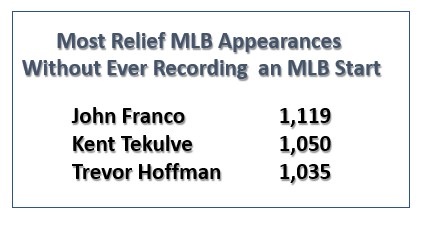
The MLB record holder in relief appearances is Jesse Orosco, who came out of the bullpen 1,248 times. Orosco, however, had four starts early in his 24-season MLB career. All-time saves leader (652) Mariano Rivera had ten starts in his first year with the Yankees and all-time leader in career wins in relief Hoyt Wilhelm made 52 starts over his 21-season MLB career. As starters, Orosco was 0-2, 6.38; Rivera was 3-3, 5.94; and Wilhelm was 19-19, 2.68 (with 20 complete games and five shutouts).
Roy for the Win
In 1959, the Pirates’ Roy Face set the (still-standing) MLB record for relief wins in a season – going 18-1, 2.70 with 10 saves. In that season, Face pitched two or more innings in 24 of his 57 relief appearances. Ten of his 18 victories came in extra-inning games; four wins came in games in which he also recorded a blown save (retroactively); his longest outing was five innings; and his lone loss came on September 11, after 17 wins to start the season.
Face began his professional career as a starting pitcher, going 69-27 in four minor-league seasons (1949-52), earning a spot on the Pirates in 1953. At the time, the Face relied on a fastball and curveball, but at about 5’8” and 160 pounds, he was not your classic fastball/curve power pitcher. And major league hitters made that clear. In 1953, Face was 6-8, 6.58 – and in 1954 he was sent back down to Double-A, where he developed the forkball that eventually defined his career.
He was back with the Pirates in 1955, working primarily as a reliever and going 5-7, 3.58 with five saves in 42 games (ten starts). From there his career as a reliever took off, and he appeared in 50 or more games in 11 of the next 12 seasons (twice leading the league in games and three times in saves).
Face ultimately played 16 MLB seasons (1953, 1955-69 …Pirates, Tigers, Expos) going 104-95, 3.48, with 191 saves.
Primary Resources: Baseball-Reference.com; Baseball-Almanac.com; Gagne to have back surgery, miss rest of season, Associated Press, July 7, 2008.
 Baseball Roundtable is on the Feedspot list of the Top 100 Baseball Blogs. To see the full list, click here.
I tweet baseball @DavidBBRT
Follow/Like Baseball Roundtable’s Facebook Page here. More baseball commentary; blog post notifications; PRIZES.
Member: Society for American Baseball Research (SABR); Negro Leagues Baseball Museum; The Baseball Reliquary.




Didnt Dean Stone win an allstar game without throwing a pitch?