Photo by candyschwartz 
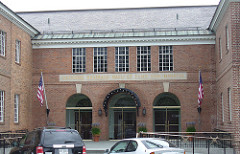
In addition to the traditional Baseball Writers Association of America (BBWAA) Hall of Fame voting, each year a group of candidates is considered by one of the Hall’s “Era” Committees, which include: Today’s Game (1988-present); Modern Baseball (1970-87); Golden Days (1950-69); and Early Baseball (1871-1949). The Today’s Game Committee recently announced the list of ten candidates to be considered for 2019 induction into the HOF – six players, three managers and one executive for induction into the Hall of Fame.
For BBRT’s take on this year’s upcoming Rookie of the Year Awards and the BBRT 2018 All-Rookie Team, click here. For a look at the Cy Young, Most Valuable Player and Manager of the Year Awards, click here.
In this post, BBRT will look at the 2019 Today’s Game Hall of Fame candidates. Before getting into the Today’s Game nominees, however, here’s a bit of background on the process.
The BBWAA Historical Overview Committee is responsible for identifying the ten candidates on each ballot and election requires that the candidate be named on 75 percent of the ballots cast by the 16 members of the Today’s Game Committee. (Voting will take place December 9.) To be eligible for consideration by the Today’s Game Committee, candidates must have made their greatest contributions to the national pastime since 1988. In addition:
- Players must have played in at least ten major league seasons and no longer be eligible for the traditional BBWAA ballot;
- Managers and umpires must have served at least ten years in MLB and be retired for at least five years or over the age of 64 and retired for at least six months;
- Executives must be retired from MLB for at least five years, although active executive over age 69 are also eligible.
This year’s nominees for consideration by the Today’s Game Committee are:
Players … Harold Baines, Albert Belle, Joe Carter, Will Clark, Orel Hershiser and Lee Smith.
Managers … Davey Johnson, Charlie Manuel and Lou Piniella.
Executives … George Steinbrenner.
Now, let’s look at each candidate and how BBRT sees their chances. Spoiler Alert: If BBRT had a ballot, I’d vote for: Lee Smith and Lou Piniella. I anticipate the same results in the Committee vote, with Harold Baines and George Steinbrenner the leading dark horse candidates.
—Would Get BBRT’s Vote – If I had One – And Most Likely to Get Committee Support—
Lee Smith (RHP) … 1980-97
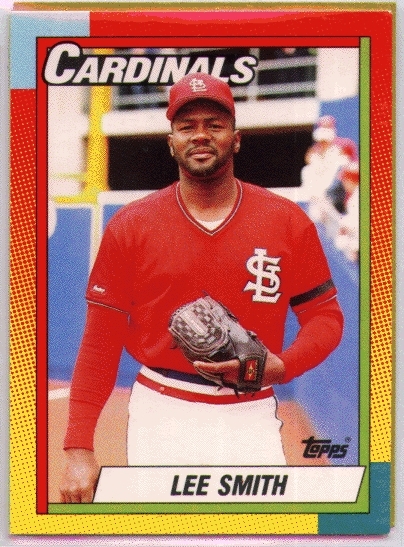 From Baseball Roundtable’s perspective, Lee Smith should already be in the Hall of Fame. However, in his 15 years on the traditional ballot, he never garnered more than 50.6 percent support – and never less than 29.9 percent.
Why does BBRT feel strongly about Lee Smith spot in the Hall? Smith’s 478 career saves put him third on the all-time list (he was number-one when he retired after the 1997 season). He recorded 13 consecutive seasons (in an 18-year career) of 25 or more saves, a 3.03 lifetime ERA and 1,251 strikeouts in 1,289 innings pitched; led his league in saves four times; made seven All Star teams; and was the Rolaids Relief Man of the Year in three seasons. Smith also is one of just 16 pitchers to appear in 1,000 or more MLB games. His 1,022 appearances put him at number 13.
Smith pitched for the Chicago Cubs (1980-87); Boston Red Sox (1988-90); St. Louis Cardinals (1990-93); New York Yankees (1993); Baltimore Orioles (1994); California Angels (1995-96); Cincinnati Reds (1996); Montreal Expos (1997).
With the third most saves all-time, Smith gets BBRT’s vote.
Lee Smith’s best season: 1991, Cardinals … 6-3, 2.34 ERA, 47 saves, 73 innings pitched, 67 strikeouts.
Lou Piniella, Manager … 1986-2010; 23 seasons
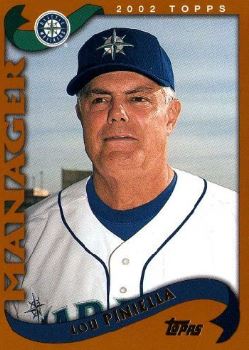 Lou Piniella managed (Yankees, Reds, Mariners, Devil Rays, Cubs) for 23 seasons. His 1,835 wins (1,713 losses) are the 14th most wins by a manager in MLB history. He led the Reds to the 1990 World Series Championship and his teams made seven post-season appearances. He also managed the Mariners to an AL-record 116 (46 losses) wins in the 2001 season. The 116 victories tied the 1906 Cubs for the most wins in an MLB season (the Cubs had just 36 losses.) Piniella was named AL Manager of the Year in 1995 and 2001 (with the Mariners) and the NL Manager of the Year in 2008 (Cubs). He finished in the top three in Manager of the Year voting six times. Piniella may be hurt by the fact that his teams finished under .500 in nine times. Still, those three Manager of the Year Awards and his 116-victory campaign with the Mariners should enable him to squeak in.
Piniella also had an 18-season MLB career as a player, hitting .291, with 1,705 hits, 102 home runs and 766 RBI. He was the 1969 Rookie of the Year with the Royals and made the post-season five times with the Yankees (two World Series Championships). Piniella hit .305-3-19 in 44 post-season games. Adding Piniella’s on-the-field career to his managerial record may give him a little extra push toward the HOF. I believe the Committee will vote him in, but it will be close.
—Dark Horse Candidates – Close, but May Fall a Bit Short—
Harold Baines (OF/DH) … 1980-2001
Harold Baines had a 22-season MLB career. He was a six-time All Star and two-time winner of the Designated Hitter of the Year Award. He is in the top 50 players all-time in hits with 2,866 (46th) and RBI with 1,628 (34th). Baines, with a .289 career average, hit .300 or better in nine seasons. He was a steady source of power with 384 home runs, never reaching 30 in a season, but hitting 20 or more home runs in ten campaigns. He drove in 100+ runs in three seasons and scored 1,299 runs in his career. Baines hit .324, with five home runs, 16 RBI and 14 runs scored in 31 post-season contests. Harold Baines played for the White Sox (1980-1989, 1996-1997, 2000-2001); Rangers (1989-1990); A’s (1990-1992); Orioles (1993-1995, 1997-2000); and Indians (1999).
Tough call here. However, the fact that Baines played more than half his games at DH works against him. (To be elected as a DH, BBRT contends you to be more than a very good hitter; you have to be an exceptional batsman.) BBRT does not expect Baines to make it this year. I believe future Era Committees – after other primary DHs make the make the Hall – may give Baines stronger consideration (2,866 hits are hard to ignore.)
Harold Baines’ best season: Baines’ best MLB campaign may have been 1999, when – at age 40 – he made his final All Star team and hit .312, with 25 home runs and 103 RBI, playing for the Orioles and Indians. That season, Baines also hit .357 (5-for-16), with one home run and four RBI in four post-season (ALDS) games.
George Steinbrenner, Executive/Owner … 1973-2010
There is no doubt that George Steinbrenner knew what it took to build a winning franchise. In his nearly 40 years as owner of the New York Yankees, Steinbrenner delivered 11 American League pennants and seven World Series Championships to the Big Apple. Still his candidacy may be hurt by his often-publicized disputes with MLB, his own players and his managers (as well as his two MLB suspensions). BBRT anticipates that Steinbrenner’s on-field success will be overshadowed by his off-field antics.
—Other Today’s Game Nominees (alphabetically)—
Albert Belle (OF) … 1989-2000
Albert Belle was a five-time All Star in a 12-season MLB career. Belle was a power hitter who could also put the ball in play (381 career homers, .295 averages). He led his league in runs scored once, doubles once, home runs once, RBI three times, total bases three times and slugging percentage twice. He is the only player to hit 50 doubles and 50 home runs in the same seasons (1995 – 52 doubles and 50 homers, both league-leading). He hit 30 or more home runs and drove in 100+ runs in eight straight seasons. He retired with 1,239 RBI and 974 runs scored. Belle also hit .405-6-14 in 18 post-season games. Belle played for the Indians (1989-1996); White Sox (1997-1998); and Orioles (1999-2000).
A degenerative hip condition cut Belle’s career and chances on the traditional Hall of Fame ballot short (not to mention corked bat and issues with the media). Those same factors are likely to preclude his getting the 75 percent vote he needs from the Committee. Two or three more solid seasons (getting to the 1,500 RBI or 450-home run mark) would have been helpful.
Albert Belle’s best season: In 1995, Belle hit .317 and led the AL in home runs (50); RBI (126); runs scored (121); doubles (50); total bases (377); and slugging percentage (.690). Note: The following season Belle went .311-48-148, with 124 runs scored – but only led the league in RBI. But what a pair of powerful back-to-back campaigns!
Joe Carter (OF/1B) … 1983-98
Joe Carter played 16 MLB seasons (Cubs, Indians, Blue Jays, Orioles, Giants). He was a five-time All Star, topped 100 RBI ten times and hit 30 or more home runs in a seasons six times. He finished his career with a .259 average (2,184 hits), 396 home runs, 1,445 RBI and 1,170 runs scored. His best season was likely 1991, when he hit .273, with 33 home runs, 108 RBI and 20 stolen bases for the Blue Jays. He led the AL in RBI in 1986, with 121 for the Indians (.302 average and 29 home runs.)
Carter’s .259 average and low base-on-balls total (527 career walks, never reaching 50 in a seasons) led to a .306 career on-base percentage – which does not seem like HOF territory to Baseball Roundtable.
Will Clark (1B) … 1985-2000
Will Clark was a six-time All Star and one-time Gold Glover in 15 MLB seasons. He was a career .303 hitter, with 2,176 hits, 284 home runs and 1,205 RBI. He led his league in runs and RBI once each. Clark hit a career high 35 home runs in 1987 and topped 20 home runs six times and 100 RBI four times. He hit .300 or better ten times, including .301 in his final season (130 games, split between the Orioles and Cardinals). In that final campaign, he hit .344-2-6 in eight post season games for the Cardinals. Overall, Clark played in 31 post season games, hitting .333-5-16.Clark played for the Giants (1986-1993); Rangers (1994-1998); Orioles (1999-2000); and Cardinals (2000).
Clark had a fine career, but his trademark was consistency, despite the .303 career average he collected “only” 2,176 hits and never won a batting title. (Clark did lead his league in RBI and Runs Scored once each.) Three-hundred long balls or 2,500 hits would have helped his cause.
Will Clark’s best season: In 1989, with the Giants, Clark hit .333, with 23 home runs, 111 RBI and a league-leading 104 runs scored – finishing second in the NL MVP balloting. He was also MVP of the NL Championship Series, hitting .650, with two home runs and eight RBI in five games.
Orel Hershiser (RHP) … 1983-2000
Orel Hershiser logged 18 seasons on the MLB mound – winning 204 games (150) losses, with a 3.48 ERA and 2,014 strikeouts in 3,130 1/3 innings. Hershiser captured the 1988 Cy Young Award (23-8, 2.26). He led his league in wins once, winning percentage once, complete games once, shutouts twice and innings pitched three times. Hershiser also won a Gold Glove in 1988 and a Silver Slugger Award in 1993 (when he hit .356 in 34 games for the Dodgers). Hershiser was a 20+ game winner once and won 15 or more games in six seasons. He was a strong 8-3, 2.59 in 22 post-season games (18 starts).
From 1985-1989, Hershiser was one of the top pitchers in the game. Over those five seasons, he was 87-56, with a 2.69 ERA. He pitched more than 230 innings in each of those seasons, leading the league in innings pitched in 1987, 1988 and 1989. In 1988, Hershiser set the MLB record for consecutive scoreless innings (59). All that work may have contributed to his 1990 shoulder surgery. Then, from 1990-2000, Hershiser went 106-86, 4.17 – a stretch that hurt his HOF chances. Note: Hershiser also led his league in losses twice and was above .500 in just nine of his 18 seasons. Hershiser played for the Dodgers (1983-1994, 2000); Indians (1995-1997); Giants (1998); and Mets (1999).
Orel Hershiser’s best season: In 1988, Hershiser led the NL in wins with 23 (eight losses), complete games (15), shutouts (8), innings pitched (267), while recording a 2.26 ER and 178 strikeouts. That season he also set an MLB record, throwing 59 consecutive scoreless innings and earned the NL Championship Series and World Series MVP Awards.
Davey Johnson, Manager … 1984-2013- 17 seasons
After a 13-season playing career, Davey Johnson managed 17 seasons in the majors. He put up a 1,372-1,071 won-lost record and his .588 winning percentage is 12th among managers with at least ten seasons at the helm. Johnson led the Mets to the 1986 World Series Championship – and made the post-season a total of six times. He was named NL Manager of the Year in 1972 and 2012. He finished in the top three in Manager of the Year voting seven times. During his playing career, Johnson was a four-time All Star and a three-time Gold Glover (2B). He finished with a .261 average, 136 home runs and 609 RBI. In 1973, Johnson hit 43 home runs, 42 as a second baseman (the single season record for the position).
BBRT speculates that the presence of Lou Piniella on the ballot (with nearly 500 more managerial victories than Johnson) dampens Johnson’s chances for election.
Charlie Manuel, Manager … 2000-13
Charlie Manuel managed the Indians (2000-2002) and the Phillies (2005-15) – winning 1,000 games (826 losses) over 12 seasons. His teams won two NL pennants (2008-2009) and the 2008 World Series Championship. He also won the NL East title five straight seasons (2007-11). His .548 winning percentage is 16th all-time among managers with at least ten years’ experience and his teams were under .500 only twice and topped 100 wins in 2011 (102-60). As a player, Manuel appeared in 242 games (outfield) over six seasons – hitting just .198, with four home runs and 43 RBI. Again, if a manager is going to get the nod from the Today’s Game Committee, Lou Piniella has the inside track.
Primary resources: MLB.com; Baseball-Reference.com
BASEBALL ROUNDTABLE MAKES TOP 100 BASEBALL BLOG LIST
 Baseball Roundtable has made the Feedspot list of the Top 1oo Baseball Blogs. To see the full list, click here.
I tweet baseball @DavidBBRT
Follow/Like the Baseball Roundtable Facebook page here.
Member: Society for American Baseball Research; The Baseball Reliquary; The Negro Leagues Baseball Museum.