 On May 3, Baseball Roundtable featured the 2018 Negro Leagues Baseball Museum’s 2018 Hall of Game honorees – Dick Allen; Eddie Murray; Jim “Mudcat” Grant; and J.R. Richard. (See that post here.) In this post, we will look at the recently announced 2018 electees to the Baseball Reliquary’s Shrine of the Eternals – which takes a more eclectic approach to the national pastime. Let me add that I am proud to be a card-carrying member of both organizations.
I’ve asked a version of the following question on this page before, but it remains the best way to introduce the Baseball Reliquary and its Shrine of the Eternals.
What do the following have in common – a pitcher who once threw a no-hitter while high on LSD; a team owner who sent a midget to the plate; a man in a chicken suit; a member of Major League Baseball’s 3,000-hit club; a MLB catcher who one season led the National League in passed balls, despite starting only 59 games behind the plate; another backstop known as much for his malapropisms as his record 71 World Series base hits; an MLB manager who won eight World Championships; a one-armed outfielder; a one-handed pitcher; a cartoon character who managed and pitched his team to more than 1,000 losses (and just a handful of wins); a baseball card designer; a surgeon; a labor leader; a statistical wizard; and more than one best-selling author?
These diverse individuals are all among the past electees to The Baseball Reliquary’s Shrine of the Eternals – an honor that recognizes individuals who have had impact on our national pastime that goes beyond statistics and touches upon the culture and character of the game. In essence, the Shrine of the Eternals is our national pastime’s fan-focused Hall of Fame. (This year, you can add a crafty southpaw, a red-headed raker and a true player to the list)
The Baseball Reliquary this week announced its latest (2018) Shrine of the Eternals electees, who will be enshrined during ceremonies slated for 2:00 p.m., Sunday July 22nd, at the Donald R. Wright Auditorium, Pasadena Central Library, 285 E. Walnut Street, Pasadena, California. If there is one thing this year’s honorees share, it’s a long tenure of excellence. Together the three have played more than 80 combined seasons in major league ballparks. Here are the electees:
Tommy John … Led all nominees – named on 44 percent of the ballots.
Southpaw Tommy John won 288 major league games in 26 MLB seasons (1963-89), 164 of those victories after undergoing the ground-breaking surgery that now bears his name – and which also earned surgeon Frank Jobe a spot in the Shrine of the Eternals in 2012.
Rusty Staub …
Daniel Joseph Staub’s red hair earned him the nickname Rusty and, in Montreal, the title Le Grand Orange. The first baseman/outfielder’s potent bat earned him a 23-season MLB career, six All Star selections and a special spot in the hearts of Expos’ and Mets’ fans.
Nancy Faust …
Nancy Faust played lively, relevant and witty organ music at sporting events for four decades (1970-2010) and was a fixture at Old Comiskey and New Comiskey (U.S. Cellular field) Parks.
Before taking a closer look at this year’s electees, the full roster of Shrine of the Eternals inductees and my own 2018 ballot, I’d like to provide a brief overview of both the Baseball Reliquary and its Shrine of the Eternals.
Spoiler Alert: Unabashed membership recommendation to follow. If you are a baseball fan, I would highly recommend you consider membership in the Baseball Reliquary – a truly free-spirited (if somewhat eccentric) organization dedicated to celebrating the human side of baseball’s history and heritage. The Baseball Reliquary is an open and fan-focused organization, committed to recognizing baseball’s place in American culture and to honoring the character and characters of the national pastime. It pursues that mission through its collection of artifacts, traveling exhibitions, ties to the Whittier College Institute for Baseball Studies and its own version of the Baseball Hall of Fame – the Baseball Reliquary Shrine of the Eternals. For more on the Baseball Reliquary, and why you should become a member, click here.
Now, to the Shrine of the Eternals. Here’s what the Reliquary has to say about this honor.
The Baseball Reliquary Shrine of the Eternals
Similar in concept to the National Baseball Hall of Fame, the Shrine of the Eternals differs philosophically in that statistical accomplishment is not the principal criterion for election. The Baseball Reliquary believes that the election of individuals on merits other than statistics and playing ability will offer the opportunity for a deeper understanding and appreciation of baseball than has heretofore been provided by “Halls of Fame” in the more traditional and conservative institutions.
Criteria for election shall be: the distinctiveness of play (good or bad); the uniqueness of character and personality; and the imprint that the individual has made on the baseball landscape. Electees, both on and off the diamond, shall have been responsible for developing baseball in one or more of the following ways: through athletic and/or business achievements; in terms of its larger cultural and sociological impact as a mass entertainment; and as an arena for the human imagination.
Each year, the Baseball Reliquary submits a list of candidates to its members and the top three vote-getters are honored. (Each member may vote for up to nine nominees.) With that background behind us, let’s take a look at the 2018 honorees. After we look at this year’s electees, I’ll also comment on BBRT’s ballot – and the nominees I voted for who did not make the final three. Note: voting percentages for all the 2018 candidates can be found at the end of this post.
_____________________________________________________________
2018 SHRINE OF THE ETERNALS HONOREES
Tommy John – LHP … (1943 – * )
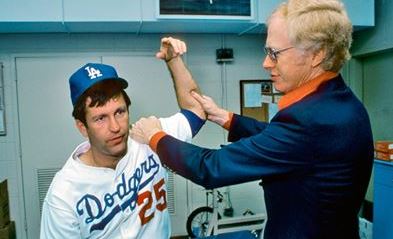
Tommy John … Courtesy of The Bsseball Reliquary
Southpaw Tommy John signed with the Cleveland Indians right out of high school (Gerstmeyer High School in Terre Haute, Indiana), where he was already known for finesse, guile, heart, work ethic and about as good a high school curve ball as the scouts had ever seen. Note: John had not only gone 28-2 on the high school mound, the 6’3”, 185-pound lefty was also a highly-recruited basketball star.
John began his pro baseball career at age 18, showing his promise by going 10-4, 3.17 in 14 games (13 starts) for the Dubuque Packers of the Class D Midwest League. Just two seasons later – at age 20 – he would make his major league debut; called up to the Indians in September (John was 15-10 at Double A/Triple A). He went 0-2, 2.21 in six games – and, most likely, did not expect he would still be pitching in the major leagues a quarter of a century later.
From 1963-74 – pitching for the Indians, White Sox and Dodgers – John went 124-106, with a 2.97 ERA. His reputation as a crafty and gutsy lefty is supported by the fact that he fanned just 1,273 batters in 2,165 2/3 innings. In 1973 and 1974, John seemed to be hitting his peak as a pitcher. In 1973, he went 16-7 – with an NL-leading .696 winning percentage and a 3.10 ERA. In 1974, by mid-July, John was 13-3, with a 2.50 ERA. (His .813 winning percentage would eventually lead all of MLB that season.)
Then, in the third inning of a July 17 start against the Montreal Expos – with the Dodgers leading 4-0 and John seemingly on his way to a 14th pre-All Star break win – disaster struck. John heard and felt a pop in his left elbow, accompanied by a sudden loss of strength in his arm. It was originally thought that John’s dead arm – his throws could no longer even reach the plate – was the result of long-term stress and might respond to rest. When more than a month passed with no improvement, John learned that he had torn the ligament in his elbow – and the general consensus was that it was beyond repaid and he would never pitch again.
Dodgers’ physician Dr. Frank Jobe suggested a new surgical procedure – replacing the torn ligament with one from another part of his body (in this case, John’s right wrist). It was a procedure no pitcher had undergone and neither Jobe nor John new exactly what to expect. During a long and arduous post-surgery rehab (John missed the entire 1975 season), John showed the same grit and tenacity that had made him a winner on the mound – and the results exceeded expectations.
The development of what is now termed “Tommy John Surgery” helped Tommy John to 14 additional major league seasons (164 additional victories). The surgery is now considered a routine procedure and has helped prolong the careers of a host of major leaguers. And, Dr. Jobe beat Tommy John to a spot in the Shrine of the Eternals by six years.
John came back in 1976 to go 10-10, 3.09 in 31 starts (207 innings). The rest, as they say, is history. John, who had 124 wins and one All Star selection in 12 seasons before the surgery, earned another 164 victories and three more All Star selections in 14 seasons after the surgery. His post-surgery record included three 20-win seasons (a high of 22 wins in 1980). He also made all of his 14 post-season appearances post-surgery – compiling a 6-3, 2.64 post-season record.
John pitched until age 46 – racking up 288 wins (231 losses), a 3.34 earned run average, 162 complete games, 46 shutouts and 2,245 strikeouts in 4,710 1/3 innings pitched. The left arm that in 1974 was thought to be damaged beyond repair, pitched more than 2,500 post-surgery innings. BBRT says “Well-played, Tommy John” – and, of your election to the Shrine of the Eternals, “Well-earned.”
Rusty Staub – 1B/OF … (1944-2018)
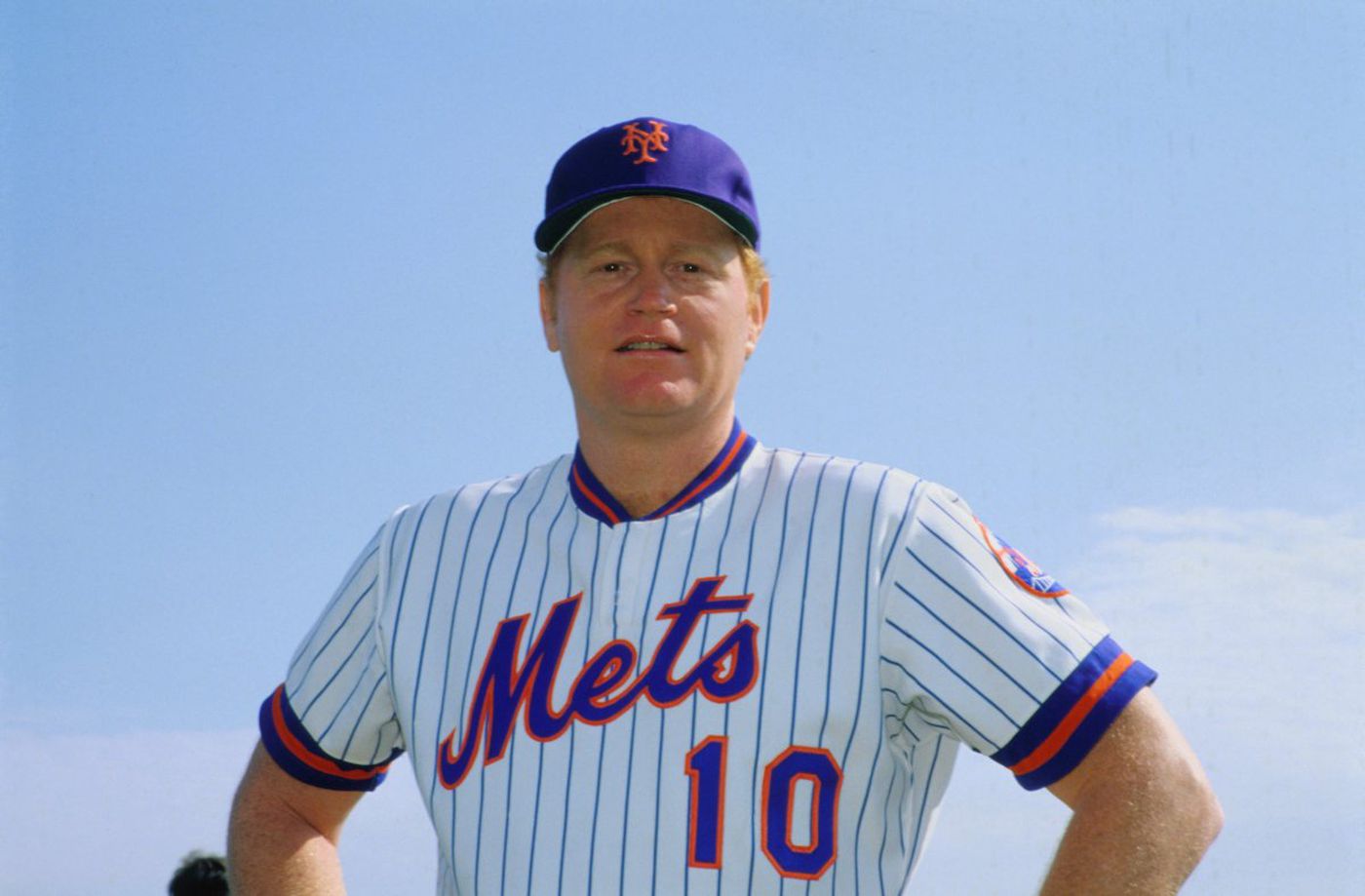
Rusty Staub … Courtesy of The Baseball Reliquary
Rusty Staub was part of the expansion Houston Astros’ youth movements and played in 150 games for the Astros as a 19-year-old (1963). While he hit only .224-6-45 that season, there was plenty of major league baseball – 22 more seasons – in his future.
In a major-league career that stretched from 1963 to 1985 – and saw Staub don the uniforms of the Astros, Expos, Mets, Tigers and Rangers – the left-handed hitter was a six-time All Star (five seasons consecutively from 1967 through 1971). He hit .300 or better five times, topped 20 home runs four times and had 100+ RBI three times. Staub joined the expansion Montreal Expos in 1960 and became the first star of the first MLB franchise located outside the United States. As an Expo from 1969 to 1971 (when he was traded to the Mets for Tim Foli, Mike Jorgensen and Ken Singleton), Staub was an All Star each season and put up a stat lines of: .302-29-79; .274-30-94; and .311-19-97. He scored 271 runs over that span. Staub was an instant fan favorite in Montreal, earning the nickname – thanks to his red hair and fan-friendly attitude (even working to learn the French language) – of Le Grande Orange. His number 10 was the first number ever retired by the Expos’ franchise.
In 1962, 18-year-old Rusty Staub starred as a member of the Durham Bulls in the Class B Carolina League. Staub led the league with 149 hits, batting .293, with 23 home runs, 93 and 115 runs scored in 140 games.
Over the course of his career, Staub played 23 MLB seasons and 2,951 games. He put up a .279 average and collected 2,716 base hits, 499 doubles, 47 triples and 292 home runs. He also scored 1,189 times and drove in 1,466 tallies.
Rusty Staub is the only MLB player to collect at least 500 base hits with four different teams – Mets, Astros, Expos, Tigers).
Staub was a fan favorite wherever he played, noted for a combination of strong baseball skills and personal character. The New York Mets (Staub played for the Mets from 1972 to 1975 and 1981 to 1985)) held Rusty Staub Day in 1986. He has been inducted into the Mets Hall of Fame; Louisiana Sports Hall of Fame; Texas Baseball Hall of Fame; and Canadian Baseball Hall of Fame.
Staub was also an acknowledged humanitarian. He established the New York Police and Fire Widows’ and Children’s Benefit Fund which, since 1986, has raised over $150 million for families of policemen, firefighters, emergency service, and port authority officers killed in the line of duty. He also established The Rusty Staub Foundation which, since 1985, (working with Catholic Charities) has raised over $17 million in support of emergency food pantries. Staub died of a heart attack on March 29, 2018, at age 73.
Nancy Faust – Chicago Sports Scene Icon … (1947 – *)
Nancy Faust may be the only person to play for the Chicago Bulls, Blackhawks and White Sox.
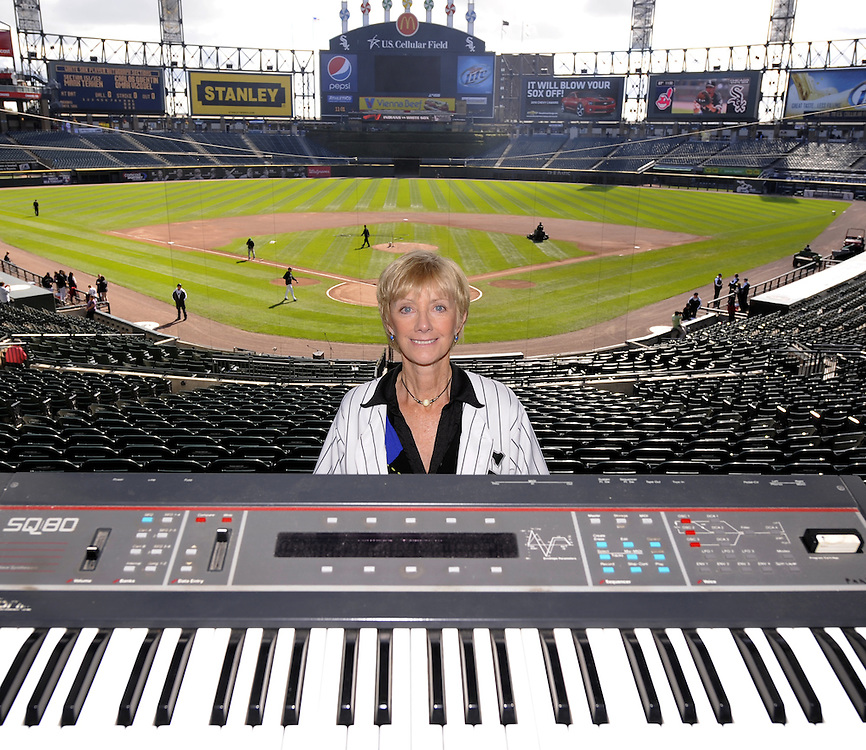
Nancy Faust – Courtesy of The Baseball Reliquary
Nancy Faust is arguably the most noted ball park organist of all time, entertaining White Sox fans with her musical talents and wit (in song selection) from 1970 to 2010.
A Chicago native, Faust began playing the organ as a youngster, under the tutelage of her mother, a professional musician. After earning a degree in psychology, Faust supported herself by playing at sporting events – while searching for a position in her chosen field. That temporary avocation turned into a life-long vocation – and psychology’s loss was Chicago baseball’s gain.
In 1970, when the White Sox went looking for a successor to Comiskey Park organist Bob Creed, the 23-year-old Faust got the job. She was an immediate hit with the fans – for both her musical talent and wit. She added rock music and popular culture (musical lines from popular television ads or shows) to the traditional ball park musical fare. For example, Faust is credited with being the first ball park organist to play snippets from the tune “Na, Na, Hey, Kiss Him Goodbye” when an opposing pitcher was vanquished from the field. It also was her version of “Take Me Out to the Ball Game” that prompted White Sox’ (and future Cubs’) announcer Harry Caray to begin leading the fans in a rousing version of the tune – a tradition he carried with him to the Cubs.
Faust’s reputation as the most notable organist in the game even earned her as story in Sports Illustrated – where she was referred to as baseball’s “Most Valuable Organist.” Recognizing her tenure and contributions, the White Sox honored her before their September 18, 2010 game at U.S. Cellular Field – which was also Nancy Faust Bobblehead Night.
Welcome to the Shrine of the Eternals, Nancy Faust – Clearly, you came to play.
__________________________________________
2018 SHRINE OF THE ETERNALS BALLOTING
Tommy John – 44%
Rusty Staub – 29%
Nancy Faust – 26.5%
Bob Costas – 25.5%
Leo Durocher – 25%
Effa Manley – 25%
J.R. Richard – 25%
John Young – 24%
Denny McLain – 23.5%
Chet Brewer – 22.5%
Fred Merkle – 21%
Lisa Fernandez – 20%
Rube Foster – 20%
Bill White – 20%
Charles M. Conlon – 19.5%
Mamie Johnson – 19.5%
Octavius V. Catto – 18%
Pete Reiser – 18%
Jim Thorpe – 18%
Rube Waddell – 18%
Dr. Mike Marshall – 17.5%
John Thorn – 17.5%
Mike Veeck – 17.5%
Rocky Colavito – 16%
Ernie Harwell – 16%
Hideo Nomo – 16%
Bing Russell – 15.5%
Janet Marie Smith – 15.5%
Tug McGraw – 14.5%
Vic Power – 14.5%
Charlie Finley – 14%
Joe Pepitone – 14%
Shorty Perez – 14%
Charley Pride – 14%
Luke Easter – 13%
Ted Kluszewski – 13%
Dave Parker – 13%
Phil Pote – 13%
Annie Savoy – 13%
Chris Von der Ahe – 13%
Kurt Bevacqua – 12.5%
Bert Campaneris – 12.5%
Masanori Murakami – 12.5%
Mo’ne Davis – 11.5%
Doris Sams – 11.5%
Oscar Gamble – 8%
Jim Creighton – 4.5%
Lenny Randle – 3.5%
George Stovey – 3%
Adolfo Phillips – 0.5%
___________________________________________
BASEBALL ROUNDTABLE’S SHRING OF THE ETERNALS BALLOT
Now, here’s a look (in alphabetical order) at the 2018 candidates BBRT voted for who didn’t make the final three. (I did vote for Tommy John.)
Rube Foster (1879-1930)
Andrew “Rube” Foster was an outstanding hurler, confined – by history – to pitching primarily for Black teams; such squads as the Chicago Union Giants, Cuban X-Giants and Philadelphia Giants. How good was Foster on the mound? Records are sketchy, but the Baseball Hall of Fame reports that, in 1902, Foster ran off a streak of 44 straight victories and the Negro League Baseball Museum credits Foster with a 54-1 record that season.
Rube Foster’s tireless efforts earned him the unofficial title of “The Father of Black Baseball.”
Foster’s contributions to the national pastime, however, went beyond the mound. In 1911, he partnered with John Schorling (son-in-law of Charles Comiskey) to establish the Chicago American (Black) Giants – who, under Foster’s leadership, became Black baseball’s most dominant team.. But Foster wasn’t done yet. In 1920, he was a key player (cited by many as THE key player) in the founding of the Negro National League. As the league flourished, Foster wore many hats. He served not only as the league’s president and treasurer, but also was the owner and manager of the Chicago American Giants – winning the NNL’s first three pennants. By 1926, his demanding schedule had taken a toll and Foster suffered a nervous breakdown. He never fully recovered and passed away prematurely in 1930. Fans might enjoy Larry Lester’s book “Rube Foster in His Time: On the Field and in the Papers with Black Baseball’s Greatest Visionary.”
Rube Foster was elected to the National Baseball Hall of Fame in 1981.
________________________________
Mamie “Peanut” Johnson (1935 – 2017)
Mamie Johnson was one of three females to play for the Indianapolis Clowns during the declining days of the Negro Leagues (and the only woman ever to pitch in the Negro Leagues). Johnson took the mound to the Clowns for three seasons (1953-55), running up a 33-8 record. Her exploits are chronicled in the children’s book “A Strong Right Arm: The Story of Mamie ‘Peanut’ Johnson,” by Michelle Y. Green.
________________________
Ted Kluszewski (1924-1988)
I love to recognize players who do something we are not likely to see again. Therefore, I again cast a ballot for Ted “Big Klu” Kluszewski – perhaps the last of the true power hitters who also practiced exceptional plate discipline. In 1954, for example, Big Klu hit .326, with 49 home runs and 141 RBI – a season made even more remarkable by the fact the Kluszewski struck out only 35 times (versus 78 walks). I doubt if we’ll ever see another player top 40 home runs without reaching 40 whiffs. Kluszewski, in fact, had a streak of four seasons (1953-56) when he hit over .300, drove in 100+ runs, bashed 35+ home runs – and struck out no more than 40 times in any season. In those four seasons, Kluszewski hit 171 home runs – and fanned 140 times. It should also be noted that Kluszewski led NL first baseman in fielding percentage every year from 1951 through 1955. Unfortunately, a back injury in 1956 hampered his performance in the later years of his career (he played until 1961).
Ted Kluszewski is noted for adding a bit of style and flair to the game, making his own intimidating fashion statement. Klu complained that his uniform jersey was too tight for his large and powerful biceps. He went on to have the sleeves cut from his jersey – exposing his bare arms from the shoulder. (This was considered a bold move at that very conforming time in the game’s history.)
Kluszewski only appeared in one post-season – hitting .391, with three homers and ten RBI in the 1958 World Series (for the White Sox). True to his form – Big Klu did not strike out even once (25 plate appearance) in the Series. For trivia buffs, left unprotected in the 1960 expansion draft, Kluszewski hit the first-ever home run for the expansion Angels (a two-run shot in the first inning of the Angels’ first game – April 11 versus the Orioles). He added a punctuation mark, by hitting the Angels’ second–ever home run (a three-run shot) the very next inning. The Angels won 7-2, and (of course) Kluszewski did not strikeout.
____________________________
Mike Marshall (1943 – *)
I should probably say Doctor Mike Marshall, since this former major league reliever (14 seasons … 1967, 1969-81) earned three college degrees, including a Ph.D. in Kinesiology from Michigan State University. Kinesiology is the study of muscle movement and Marshall used his knowledge to develop his own exercise program focused on minimizing stress, reducing injury and accelerating recovery time. While his unorthodox methods, advanced education and outspoken approach often had him at odds with baseball’s traditionalists (and may be part of the reason he pitched for nine teams in 14 seasons), they did get the job done.
The fact is, we never saw a closer quite like Mike Marshall before he came along – and we’re not likely to see one like him again. In 1974, as a Dodger, he put up the grand-daddy of all relief seasons – setting the single-season MLB records for appearances with 106 and innings pitched in relief at 208 1/3. He finished the campaign 15-12, with a league-topping 21 saves and a 2.42 ERA. That season, Marshall was called on to go more than one inning in 74 games (68.5 percent of the time); and he toiled three or more innings 22 times. He also relieved in 13 consecutive regular-season games – an MLB record later tied (1986) by the Rangers’ Dale Mohorcic. His efforts won him the 1974 Cy Young Award and Sporting News NL pitcher of the year.
Marshall holds the MLB and NL record for games pitched in relief in a season (106 – Dodgers, 1974), as well as the AL record (89 in relief – Twins, 1979 – he also had one start that year). The Blue Jays’ Mark Eichhorn tied Marshall’s AL record in 1987. Marshall led his league in games pitched four times and saves three times – finishing 97-112, 3.14 with 188 saves.
A true “fireman” from an era when closers came in to put out fires and stayed on the mound to ensure they were no flare ups, Marshall got my vote for the Shrine.
______________________________________
Pete Reiser (1919-1981)
Combine Willie Mays’ skill set (younger folks, think Mike Trout) with Pete Rose’s hustle and on-field abandon and you have Pete Reiser. In his first full MLB season (CF, Dodgers), a 22-year-old Reiser dazzled defensively and led the NL in runs scored (117), doubles (39), triples (17), batting average (.343), total bases (299) and hit by pitch (11) – tossing in 14 home runs and 76 RBI for good measure. Unfortunately, unpadded outfield walls, helmet-less at bats (the fiery Reiser was a frequent bean ball target) and aggressiveness on the base paths (Reiser twice led the NL in stolen bases and holds the NL record for steals of home in a season at seven) took their toll.
In his ten-season career, the switch-hitting Reiser endured five skull fractures, a brain injury, a dislocated shoulder and a damaged knee. He was carted off the field 11 times during his career (six times unconscious) and once actually given last rites at the stadium – and he played on. The three-time All Star retired as a player with a .295 career average, playing in 861 games over ten seasons. No telling what he might have done with padded outfield walls and batting helmets. Pete Reiser was a true – and talented – gamer. For more on Reiser, try “Pete Reiser: The Rough and Tumble Career of the Perfect Ballplayer,” by Sidney Jacobson.
____________________________________
Rube Waddell (1876-1914)
Rube Waddell is almost universally recognized as the zaniest player in MLB history – but he also was one of the best (at least when he was focused on the game). Waddell was known to: leave a ball game to chase fire engines; miss a game he was scheduled to start because he was fishing or playing marbles with neighborhood kids; bring his outfielders in to sit on the grass and then proceed to fan the side; wrestle alligators in the off-season; and (frequently) do battle with owners and managers. Waddell simply was more interested in the freedom to enjoy life and do things his way than in money or professional stability. But, when Waddell was on his game, he was arguably the best pitcher of his time. The 6’1”, 195-lb. lefty led the AL in strikeouts six consecutive seasons (1902-1907) – by a wide margin.
How good was Rube Waddell? In 1902, he joined the Philadelphia Athletics in June – making his first start on June 26 (with just 86 games left in the season). Waddell proceeded to win 24 games (the league’s second-highest total) against seven losses, with a 2.05 ERA. Despite his shortened season, he led the AL with 210 strikeouts, fifty more than the runner-up (none other than Cy Young).
In 1904, Waddell set a modern (post-1900) MLB record with 349 strikeouts that stood until 1965. Waddell, elected to the National Baseball Hall of Fame in 1946, finished with a 193-143, 2.16 stat line – leading the AL in strikeouts six times, ERA twice, wins once and complete games once. For more on Waddell, BBRT suggests: “Rube Waddell: The Zany, Brilliant Life of a Strikeout Artist,” by Allan Howard Levy and “Just a Big Kid: The Life and Times of Rube Waddell,” by Paul Proia.
_____________________________________
Bill White (1934 – *)
Bill White broke into the major leagues in 1956, as a 22-year-old first baseman/outfielder with the New York Giants. He hit .256 in 138 games and showed a combination of speed and power – 22 home runs and 15 stolen bases. After missing the 1957 season (military service), he played in the major leagues from 1958 thought 1969 (Giants, Cardinals, Phillies). Over his 13 MLB seasons, he was an All Star in five seasons and won seven Gold Gloves (1960-66) at first base. He hit .286 for his career, with 1,706 hits, 843 runs, 202 home runs, 870 RBI and 103 stolen bases. White hit 20 or more home runs in seven seasons, topped .300 four times and drove in 100+ runs four times.
After leaving the playing field, White went on to become the first African-American doing MLB play-by-play broadcasting. His broadcasting career stretched from 1970 through 1988 – one year in Philadelphia and the remainder (1971-88) with the Yankees (radio and television). He also worked several World Series for CBS radio and Monday Night Baseball for ABC Television.
White was unanimously elected to succeed A. Bartlett Giamatti as President of the National League in 1989 – the first African-American to serve in that capacity. He held that position until 1994.
White’s on-field success in the early days of baseball’s integration, as well the advances he made both in the broadcast booth and executive offices served (and can continue to serve) as an inspiration and role model for the Black athletes (and executives) that followed him. He earned my vote for his impact on the “culture” of the game. For more on Bill White, go to his autobiography: “Uppity: My Untold Story of the Games People Play.”
_____________________________________
John Young (1949-2016)
A 6’3”, 210-pound, left-handed first baseman, John Young hit .325, with four home runs, 60 RBI and 26 stolen bases (in 29 attempts) in 99 games at Single A Lakeland (Tigers’ farm team) as a twenty-year-old (in 1969). The first-round draft choice (16th overall in the 1969 draft) looked like a player with great promise – and, in fact, enjoyed a big league cup of coffee with the Tigers in 1971 (two games, four at bats, two hits, one run, one RBI, one double). A wrist injury derailed his playing career, but didn’t dampen his love for the game and he went on to a long career as a scout.
It was during his scouting days that Young developed a concern for the decline of baseball among young people – particularly in the inner cities. In response, Young came up with the concept for the RBI (Reviving Baseball in Inner Cities) program. Officially launched in 1989, the RBI program is now supported by all thirty MLB clubs and is active in approximately 200 communities. Overall, MLB teams have donated more than $30 million to the program. (The program also includes educational and life skills components.) A few RBI alumni in the major leagues include: Carl Crawford, Justin Upton, CC Sabathia, James Loney, Manny Machado and Yovani Gallardo. His good works on behalf of baseball’s future earned my vote.
_____________________________________
FULL ROSTER OF SHRINE OF THE ETERNALS INDUCTEES – INCLUDING 2018
Following is an alphabetical list of individuals who have been inducted into the Shrine of the Eternals between 1999 and 2017. Year of induction in parenthesis.
Jim Abbott (2003)
Dick Allen (2004)
Roger Angell (2010)
Emmett Ashford (2008)
Moe Berg (2000)
Sy Berger (2015)
Yogi Berra (2007)
Steve Bilko (2015)
Ila Borders (2003)
Jim Bouton (2001)
Jim Brosnan (2007)
Charlie Brown (2017)
Bill Buckner (2008)
Glenn Burke (2015)
Roberto Clemente (2004)
Steve Dalkowski (2009)
Dizzy Dean (2014)
Rod Dedeaux (2005)
Jim Eisenreich (2009)
Dock Ellis (1999)
Nancy Faust (2018)
Eddie Feigner (2013)
Mark Fidrych (2002)
Curt Flood (1999)
Ted Giannoulas (2011)
Josh Gibson (2006)
Jim “Mudcat” Grant (2012)
Pete Gray (2011)
Arnold Hano (2016)
William “Dummy” Hoy (2004)
Bo Jackson (2016)
Shoeless Joe Jackson (2002)
Bill James (2007)
Dr. Frank Jobe (2012)
Tommy John (2018)
Bill “Spaceman” Lee (2000)
Roger Maris (2009)
Marvin Miller (2003)
Minnie Minoso (2002)
Manny Mota (2013)
Don Newcombe (2016)
Lefty O’Doul (2013)
Buck O’Neil (2008)
Satchel Paige (2001)
Jimmy Piersall (2001)
Pam Postema (2000)
Jackie Robinson (2005)
Rachel Robinson (2014)
Lester Rodney (2005)
Pete Rose (2010)
Vin Scully (2017)
Rusty Staub (2018)
Casey Stengel (2010)
Luis Tiant (2012)
Bob Uecker (2017)
Fernando Valenzuela (2006)
Bill Veeck, Jr. (1999)
Maury Wills (2011)
Kenichi Zenimura (2006)
Don Zimmer (2014)
Primary Resources: The Baseball Reliquary; The Society for American Baseball Resarch; The Negro Leagues Museum; Baseball-Reference.com
I tweet baseball @DavidBBRT
Follow/Like Baseball Roundtable’s Facebook page here.
Member: Society for American Baseball Research; The Baseball Reliquary; The Negro Leagues Baseball Museum.