Time for another edition of Trivia(l) Tidbit Tuesday (on Thursday this week because of the September Wrap Up post on Tuesday). I hope you are enjoying weekly presentation of baseball occurrences that for some reason caught The Roundtable’s eye. (I’m particularly fond of unexpected performances or statistical coincidences.) These won’t necessarily be momentous occurrences, just events, statistics or coincidences that grabbed my attention. This week – since it’s October 3 – we’ll look at the events of October 3, 1947.
Note: For the September wrap, click here.
Now, today’s Tidbit.
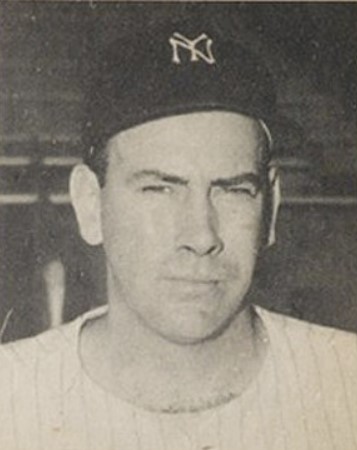 When Floyd Clifford (Bill) Bevens took the mound for the Yankees in Game Four of the 1948 World Series (October 3), it was not a World Series matchup for the ages. Bevens was coming off a 7-13, 3.82 season for the Bronx Bombers, while his mound opponent was a rookie (Harry Taylor who had gone 10-5, 3.11). Both, however, would find their way into the record books – if in a negative fashion.
Let’s start with Taylor, since the 28-year-old righty wrote his name into MLB annals the fastest – in the top of the first inning. Yankee 2B Stuffy Stirnweiss greeted Taylor abruptly, lacing his first pitch to left for a single. RF Tommy Heinrich followed with a groundball single up the middle, sending Stirnweiss to second. C Yogi Berra reached on a fielder’s choice (with all runners safe due to an error by Dodgers’ SS Pee Wee Reese). CF Joe DiMaggio next drew a four-pitch walk, forcing in a run – and Taylor’s day was done. (Hal Gregg replaced him on the mound). Fortunately for Taylor, Gregg retied 1B George McQuinn on a pop out the infield (runners holding) and then got Trivia(l) Tidbit Tuesday (rescheduled for Thursday) – Walking Your Way into the Record Books Billy Johnson to hit into a short-to second-to first double play ending the inning.
Taylor’s spot in the record book? He became one of just four pitchers to start a World Series Game and not record a single out – joining the White Sox’ Reb Russell (Game Five, 1917); Cubs’ Charlie Root (Game Two, 1935); and Cubs’ Hank Borowy (Game Seven, 1945). The Dodgers’ Bob Welch (Game Four, 1981 World Series) has since “earned” a share of this record.
Taylor, by the way, pitched in six MLB seasons (1946-48, 1950-52 … Dodgers, Red Sox), going 19021, 4.10. 1947 was his best season.
Ouch!
For those who like to know such things, the Cubs’ Charlie Root holds the record for the most runs given up as a World Series starter without recording a single out. Notably, his outing also took place on October 3 (1935). In the bottom of the first inning of Game Two against the Tigers, Root gave up a single to CF Jo-Jo White; an RBI double to C Mickey Cochrane; an RBI single to 2B Charlie Gehringer; and a two-run home to 1B Hank Greenberg. Four hits, four runs on 18 pitches without recording an out. (Of course, three of the four batters he faced ended up in the Hall of Fame.)
Now let’s move on to Bevens’ record-setting and record-tying World Series’ performance of October 3, 1947. At the time, the record for walks surrendered by a pitcher in a World Series game was nine: Athletics’ Jack Coombs versus the Cubs in Game Two of the 1910 Series. Coombs went the distance (eight hits, nine walks in a 9-3 win).
The record for the fewest hits given up by a starting pitcher in a complete game in a World Series was one: Cubs’ Ed Reulbach (Game Two, 1910, in a 7-1 win over the White Sox) and Cubs’ Claude Passeau (Game Three, 1945 in a 3-0 win over the Tigers).
On October 3, 1947, Bevens would set a new (still standing) mark for walks surrendered in a World Series game and also tie the record (which stood until Don Larsen’s 1956 perfect game) for fewest hits allowed in a World Series complete game.
In a sign of things to come, Bevens walked Dodgers’ 2B Eddie Stanky to open the game and, two outs later issued a free pass to RF Dixie Walker. Bevens then walked one in the second inning; one in the third; two in the fifth; one in the sixth; one in the seventh. As they entered the bottom of the ninth, Bevens had issues free passes, but had given up just one run and had not yet surrendered a hit.
The ninth stared out just fine, as C Bruce Edwards lined out to left on a 2-0 pitch. Then, Bevens tied the World Series record, issuing his ninth walk, on a 3-1 pitch to CF Carl Furillo. Bevens then retired 3B Spider Jorgenson on a foul pop out to first. Now, he was one out away from victory and one out away from MLB’s first World Series no-hitter. It was, however, not to be. The managerial machines starting whirring as Dodger skipper Burt Shotton used a pair of pinch hitters and a pair of pinch runners to close out the frame.
Al Gionfriddo came in to run for Furillo and an injured and gimpy Pete Reiser pinch hit for Dodgers’ pitcher Hugh Casey. Gionfriddo stole second on a 2-1 pitch to Reiser and, when Bevens went to 3-I on the always dangerous Reiser, Yankee manager Bucky Harris called for an intentional walk (giving Bevens sole possession of the World Series Walk record, which he still has). Eddie Miksis then was put in to pinch run for Reiser and Cookie Lavagetto pinch hit for Stanky. Lavagetto hit Bevens’ second offering for a two-run double – ending the no-hitter, winning the game and tagging Bevens with the loss.
Sidenote: Bevens’ ten-walk performance spared Dodger Rex Barney a spot in the record books. The very next day, Barney started against the Yankees and walked nine batters in just 4 2/3 innings, in a Brooklyn 2-1 loss.
Bevens pitched in four MLB seasons (1944-48), all for the Yankees. He went 40-36, 3.08.
Primary Resource: Baseball-Reference.com
Baseball Roundtable – Blogging Baseball Since 2012.

 Baseball Roundtable is on the Feedspot list of the Top 100 Baseball Blogs. To see the full list, click here.
Baseball Roundtable is also on the Anytime Baseball Supply Top 66 Baseball Sites list. For the full list, click here.
I tweet (on X) baseball @DavidBaseballRT
Follow Baseball Roundtable’s Facebook Page here. More baseball commentary; blog post notifications.
Member: Society for American Baseball Research (SABR); Negro Leagues Baseball Museum; The Baseball Reliquary.
P1063